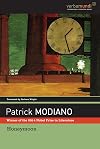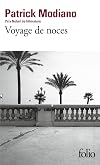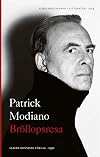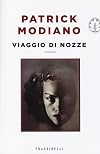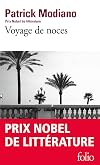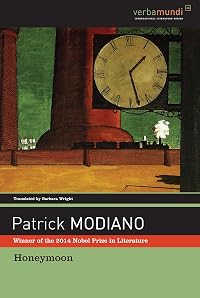
Honeymoon
by Patrick Modiano
On This Page
Description
Jean B., the narrator of Patrick Modiano's Honeymoon, is submerged in a world where day and night, past and present, have no demarcations. Having spent his adult life making documentary films about lost explorers, Jean suddenly decides to abandon his wife and career, and takes what seems to be a journey to nowhere. He pretends to fly to Rio to make another film, but instead returns to his own Parisian suburb to spend his solitary days recounting or imagining the lives of Ingrid and Rigaud, a show more refugee couple he had met twenty years before, and in whom he had recognized a spiritual anomie that seemed to reflect and justify his own. Little by little, their story takes on more reality than Jean's daily existence, as his excavation of the past slowly becomes an all-encompassing obsession.--Back cover. show lessTags
Recommendations


















Member Reviews
This short novel by Nobel Prize winner Patrick Modiano is a beautiful reverie about memory, melancholy and regret. A documentary movie maker, tired of his life of traipsing around the world after adventure and exotic cultures and locales, wonders what it's all been about, and begins to dwell upon a chance encounter he'd had many years ago with a couple 20 years his senior when he learns, by random chance, of the woman's suicide. His recreation of the couple's lives and his meditations about his own are woven together seamlessly to produce a vivid waking dream of a narrative.
The winner of the 2014 Nobel Prize in Literature is French author, Patrick Modiano, but to us in the west, an obscure writer who has written 17 books and won every major literary prize in France. When the Nobel was announced, I rushed to get a copy of one of his novels, and found only one available in English: Honeymoon. Since then, several more have surfaced, and I plan on reading those as soon as possible.
Honeymoon is a peculiar novel but intriguing, nonetheless. It tells the story of Jean B., a documentary film maker who pretends to fly to Rio, but he actually returns to his apartment in suburban Paris. His intent is to imagine the lives of two people he had met 20 years before while evading the French police and Nazis in Vichy show more France. Jean is alone, and he begins to travel with Ingrid, a Danish woman and Rigaud, a French national. His intentions quickly evolve into an obsession.
Modiano’s prose is plain and simple, but his story-telling ability more than compensates for any perceived or misperceived simplicity in his writing. The story became so real, I was sometimes startled by tidbits in the story which reminded me I was not in the France of World War II.
Jean B. seeks solitude to unravel the puzzle of the lives of Ingrid and Rigaud. Modiano writes, “I was lying on the mattress, staring at the sky and the top of the pines. I could hear shouts coming from the swimming pool, down below, and the sound of people diving. Above me, between the branches, the play of sun and shade. I let myself sink into a delightful torpor. Remembering it now, it seems to me that that was one of the rare moments in my life when I experienced a sense of well-being that I could even call Happiness. In that semi-somnolent state, occasionally interrupted by a shaft of sunlight piercing the shade of the pines and dazzling me, I considered it perfectly natural that they had taken me home with them, as if we had known each other for a long time. In any case, I had no choice. I’d just have to wait and see how things go” (19).
The young Jean B. apparently had a crush on Ingrid, and now, he tries to reassemble her life from fragments of his memory and off-hand remarks she made during their travels. While in Paris, he makes two discoveries. The first is a suicide in a Milan hotel he registered in, and the second is a list of seven people living in and around Paris with the surname, Rigaud. He must decide what to do with this information, while concealing his location from family, friends, and co-workers – some of whom awaited his arrival in Rio de Janeiro.
While Patrick Modiano uses sparse language – approaching, but not quite reaching the sparseness of Hemingway – this story is thoroughly enjoyable, with just a dash of suspense. Honeymoon is one of his more popular novels, but I await a delivery from Amazon to discover more treasures by this writer who has thankfully come to my attention. 5 stars.
--Chiron, 11/28/14 show less
Honeymoon is a peculiar novel but intriguing, nonetheless. It tells the story of Jean B., a documentary film maker who pretends to fly to Rio, but he actually returns to his apartment in suburban Paris. His intent is to imagine the lives of two people he had met 20 years before while evading the French police and Nazis in Vichy show more France. Jean is alone, and he begins to travel with Ingrid, a Danish woman and Rigaud, a French national. His intentions quickly evolve into an obsession.
Modiano’s prose is plain and simple, but his story-telling ability more than compensates for any perceived or misperceived simplicity in his writing. The story became so real, I was sometimes startled by tidbits in the story which reminded me I was not in the France of World War II.
Jean B. seeks solitude to unravel the puzzle of the lives of Ingrid and Rigaud. Modiano writes, “I was lying on the mattress, staring at the sky and the top of the pines. I could hear shouts coming from the swimming pool, down below, and the sound of people diving. Above me, between the branches, the play of sun and shade. I let myself sink into a delightful torpor. Remembering it now, it seems to me that that was one of the rare moments in my life when I experienced a sense of well-being that I could even call Happiness. In that semi-somnolent state, occasionally interrupted by a shaft of sunlight piercing the shade of the pines and dazzling me, I considered it perfectly natural that they had taken me home with them, as if we had known each other for a long time. In any case, I had no choice. I’d just have to wait and see how things go” (19).
The young Jean B. apparently had a crush on Ingrid, and now, he tries to reassemble her life from fragments of his memory and off-hand remarks she made during their travels. While in Paris, he makes two discoveries. The first is a suicide in a Milan hotel he registered in, and the second is a list of seven people living in and around Paris with the surname, Rigaud. He must decide what to do with this information, while concealing his location from family, friends, and co-workers – some of whom awaited his arrival in Rio de Janeiro.
While Patrick Modiano uses sparse language – approaching, but not quite reaching the sparseness of Hemingway – this story is thoroughly enjoyable, with just a dash of suspense. Honeymoon is one of his more popular novels, but I await a delivery from Amazon to discover more treasures by this writer who has thankfully come to my attention. 5 stars.
--Chiron, 11/28/14 show less
I'm not sure if I ever truly understood what my mother meant when she said that she gave up on The Darkroom of Damocles because the protagonist was just such an unsympathetic lunatic. But after soldiering on through the first third of this book, I think I just might know what she means. I decided to push through only because of the novel's brevity, and luckily the last two thirds were much more palatable.
The book is about this guy, Jean, who while visiting Milan remembers that 18 years earlier he was in Milan when he learned that a French woman committed suicide there. After sharing that he knew her longer ago still, the weave of the story begins. Ingrid's life backward is intertwined with Jean's life forward. That structure is not show more uninteresting, but on the downside also the only real reason to read this.
Et en français:
Je ne sais pas si j'ai compris vraiment ce que ma mère voulait dire quand elle a dit qu'elle a renoncé De donkere kamer van Damokles parce que le protagoniste était un fou antipathique. Mais après persévérer à travers le premier tiers de ce livre, je pense que je pourrais juste savoir ce qu'elle signifie. Je décidai de faire passer seulement à cause de la brièveté du roman, et heureusement, les deux derniers tiers étaient beaucoup plus acceptables.
Le sujet du livre est ce gars, Jean, qui lors de la visite de Milan se souvient que 18 ans plus tôt, il était à Milan quand il a appris qu'une femme française se suicida. Après avoir exprimé qu'il la connaissait il y a plus encore, l'entrelacement de l'histoire commence. La vie d'Ingrid en arrière est étroitement liée à la vie de Jean avant. Cette structure n’est pas sans intérêt, mais à la baisse aussi la seule vraie raison de lire ceci. show less
The book is about this guy, Jean, who while visiting Milan remembers that 18 years earlier he was in Milan when he learned that a French woman committed suicide there. After sharing that he knew her longer ago still, the weave of the story begins. Ingrid's life backward is intertwined with Jean's life forward. That structure is not show more uninteresting, but on the downside also the only real reason to read this.
Et en français:
Je ne sais pas si j'ai compris vraiment ce que ma mère voulait dire quand elle a dit qu'elle a renoncé De donkere kamer van Damokles parce que le protagoniste était un fou antipathique. Mais après persévérer à travers le premier tiers de ce livre, je pense que je pourrais juste savoir ce qu'elle signifie. Je décidai de faire passer seulement à cause de la brièveté du roman, et heureusement, les deux derniers tiers étaient beaucoup plus acceptables.
Le sujet du livre est ce gars, Jean, qui lors de la visite de Milan se souvient que 18 ans plus tôt, il était à Milan quand il a appris qu'une femme française se suicida. Après avoir exprimé qu'il la connaissait il y a plus encore, l'entrelacement de l'histoire commence. La vie d'Ingrid en arrière est étroitement liée à la vie de Jean avant. Cette structure n’est pas sans intérêt, mais à la baisse aussi la seule vraie raison de lire ceci. show less
A documentary filmmaker in Paris, Jean, abandons his unfaithful wife and disappears. Except he remains in Paris and pursues a thread of memory involving a couple that once took him in years earlier. He sneaks into his home during a celebration, witnesses his wife in a tryst with a second colleague of his, then sneaks back out. He flirts with returning home, but rents an apartment where the couple of his memory once lived. He's still living in Paris apart from his former life and the end of the story.
This is good literature. I know because it has won a prize, it is has a ghost of a storyline, and it is painfully boring. Sometimes I like or love good literature, and sometimes I don't understand. I don't understand why it's good, and even when it's explained to me, I don't understand why it is consumed.
I temi e la struttura sono quelli di sempre nei libri di Modiano. Memoria, ricerca del passato, ferite inguaribili delle guerra, solitudine della voce narrante in malinconico vagabondaggio per le strade di Parigi. Nonostante l’apparente monotonia tematica non riesco a staccarmi da questo autore (qui peraltro non alla sua prova migliore) che esercita su di me un’evidente fascinazione. E’ un fenomeno che mi è capitato molto di rado, certamente con Sebald e con pochissimi altri. In entrambi , pur trattandosi di scrittori che più diversi non potrebbero essere, riscontro la stupefacente capacità di rendere un sentire che mi appartiene in toto, di dare voce al malessere di una generazione che dalla guerra è stata solo sfiorata, ma show more sulla quale l’ombra lunga di ciò che è stato continua a persistere e non smette di accompagnarci. show less
Jan 7, 2018Italian
A pleasant little book in which the narrator, obsessed with finding out what happened to some acquaintances made during the war, drifts back and forth between the past and the present.
Jul 25, 2025 (Edited)English (UK)
Members
- Recently Added By
Lists

Backlisted
109 works; 9 members

Top Five Books of 2021
604 works; 181 members

Five star books
1,767 works; 110 members
Backlisted Podcast
65 works; 3 members
Author Information

84+ Works 11,092 Members
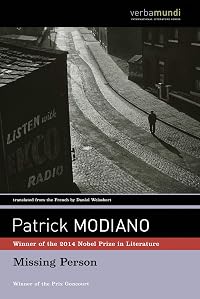
Paul Modiano is a French writer who was born on July 30, 1945, in Boulogne-Billancourt. He won the Nobel Prize for Literature in 2014 for his lifetime body of work. He previously won the Austrian State Prize for European Literature in 2012 and the Prix mondial Cino Del Duca from the Institut de France for his lifetime achievement in 2010. His show more other awards include the Prix Goncourt in 1978 for his novel Rue des boutiques obscures and the Grand prix du roman de l'Académie française in 1972 for Les Boulevards de ceinture. Modiano's works explore the traumas of the Nazi occupation of France and the puzzle of identity. His preoccupation with the theme of identity can be seen throughout many of his works including his 2005 memoir entitled Un Pedigree. Modiano was greatly influenced by his parents' relationship. His mother and father began their clandestine relationship during occupied France. Growing up, his father was absent for most of his life and his mother was away frequently while on tour acting. He was alone much of the time and went to school because of government aid. His younger brother died of a disease at age 10 and this added to his "lost identity" feelings while growing up. Modiano first came to prominence in France when he wrote the 1968 book La Place de L'Étoile. He has published over 30 works which include novels, screenplays and children's books. His other works include: La Ronde de nuit (1969), English translation: Night Rounds; Rue des boutiques obscures (1978), English translation: Missing Person; and Quartier Perdu (1984), English translation: A Trace of Malice. Although he is well known in France, only about 12 of his works have been translated into English. (Bowker Author Biography) show less
Awards and Honors
Series
Belongs to Publisher Series
Work Relationships
Is contained in
Common Knowledge
- Canonical title
- Honeymoon
- Original title
- Voyage de noces
- Original publication date
- 1992 (English translation) (English translation); 1990
- People/Characters*
- Jean; Ingrid
- Important places
- Paris, France
- Dedication
- For Robert Gallimard
- First words*
- Les jours d'été reviendront encore mais la chaleur ne sera plus jamais aussi lourde ni les rues aussi vides qu'à Milan, ce mardi-là. C'était le lendemain du 15 août. J'avais déposé ma valise à la consigne et quand j'... (show all)étais sorti de la gare j'avais hésité un instant : on ne pouvait pas marcher dans la ville sous ce soleil de plomb. [...]
- Last words*
- (Click to show. Warning: May contain spoilers.)Tampoco yo.
- Blurbers
- Copperman, Annie; Parent, Claire; Amette, Jaques-Pierre; Braudeau, Michel
- Original language*
- Français
*Some information comes from Common Knowledge in other languages. Click "Edit" for more information.
Classifications
Statistics
- Members
- 342
- Popularity
- 92,636
- Reviews
- 10
- Rating
- (3.85)
- Languages
- 6 — English, French, German, Italian, Spanish, Swedish
- Media
- Paper, Audiobook, Ebook
- ISBNs
- 27
- ASINs
- 10