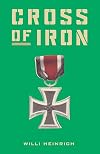
Cross of Iron
by Willi Heinrich
On This Page
Description
Tough Sergeant Steiner commanded ten men: a German rear guard trapped fifty miles behind the Russian line. Their path to survival led straight through the entire enemy army. All the murderous hazards of war blocked their march: hunger, exhaustion, terror, treachery, death. Finally, Steiner and his men were no longer fighting for Fuehrer or Fatherland, but for their naked, desperate lives...Tags
Recommendations



















Member Reviews
Very interesting novel on a German combat unit on the Eastern Front in World War II. The main character is a Sergeant Steiner who finds himself and his platoon at the start of the book left behind the advancing Russian lines by his batallion in a rear guard action. Steiner manages over the first third of the book to bring his platoon out safely and more or less still whole (two deaths). This is where he runs into his arch-nemesis in the second part--a captain Stransky who has been given command of his batallion. Stransky has just transferred at his own request from a cushy situation in France.
Stransky is arrogant, comes from the hoi polloi, has a very exaggerated sense of his own worth--and has really only one thing in mind which is to show more one day return to France with the 'Iron Cross' which would legitimize him as he sees it anyway as a war hero. Steiner and his platoon, like the rest of the companies now under his command are to him merely the pawns he needs to use to get him that Iron Cross at which time he will use his connections--primarily an uncle on the General Staff to return to his old job in France. He and Steiner do not exactly hit it off--Steiner despite his survivor skills on either side of the enemy lines is a somewhat morose, taciturn and suspicious type with not a shred of ideology about him. He doesn't have to be pushed very hard to blurt out exactly what he thinks and these displays of exasperation--oftentimes hilarious--are shared by the majority of the men in his platoon. In any case Stransky tries to pull a fast one on his regimental commander to get his Iron Cross by making a false report that he led a counterattack to retake a lost position--and it comes down to his word against Steiner's who in actual fact is the one who led the attack. Steiner's testimony doesn't support Stransky but Steiner refuses to push it and the rest of the evidence being against him Stransky is forced to retreat knowing that Steiner now has the ability to hurt him. From then on his animosity continues to grow against Steiner and he continually puts Steiner and his men in impossible positions and Steiner's platoon is little by little whittled down. In the end Stranksy will go to far--and although he will be allowed to transfer back to France it will be without his Iron Cross and with the full knowledge by him and his superiors of his own cowardice.
The position of Steiner and his men in this book can be more closely examined. There is an actual fact a seperation of two worlds--the one of the fighting soldier and the other of the army and its rules and regulations and the ideologies behind it. Heinrich as a writer takes the time and effort to constantly draw on the differences and while many of the officers treat their men with compassion and respect a gap exists even for them. The men of Steiner's platoon are not at all interested in Nazi ideology--they see the world in a very blunt and brutal way and in the aftermath of the initial success of the German invasion of the Soviet Union and after the debacle of Stalingrad they have almost no illusions that they are fighting every day for their very survival and within the unit of the platoon itself the respect given to Steiner is not because he is the sergeant--even to Steiner his rank is neither here nor there--but because he is the natural leader. Amongst themselves exists an almost anarchical society--one in which they often abuse each other--even physically and pschologically--but where they are all more or less equals and where rank doesn't matter and the exchanges between these soldiers are often very hilarious. It is this factor which gives this novel it's real pathos but also a kind of grace. show less
Stransky is arrogant, comes from the hoi polloi, has a very exaggerated sense of his own worth--and has really only one thing in mind which is to show more one day return to France with the 'Iron Cross' which would legitimize him as he sees it anyway as a war hero. Steiner and his platoon, like the rest of the companies now under his command are to him merely the pawns he needs to use to get him that Iron Cross at which time he will use his connections--primarily an uncle on the General Staff to return to his old job in France. He and Steiner do not exactly hit it off--Steiner despite his survivor skills on either side of the enemy lines is a somewhat morose, taciturn and suspicious type with not a shred of ideology about him. He doesn't have to be pushed very hard to blurt out exactly what he thinks and these displays of exasperation--oftentimes hilarious--are shared by the majority of the men in his platoon. In any case Stransky tries to pull a fast one on his regimental commander to get his Iron Cross by making a false report that he led a counterattack to retake a lost position--and it comes down to his word against Steiner's who in actual fact is the one who led the attack. Steiner's testimony doesn't support Stransky but Steiner refuses to push it and the rest of the evidence being against him Stransky is forced to retreat knowing that Steiner now has the ability to hurt him. From then on his animosity continues to grow against Steiner and he continually puts Steiner and his men in impossible positions and Steiner's platoon is little by little whittled down. In the end Stranksy will go to far--and although he will be allowed to transfer back to France it will be without his Iron Cross and with the full knowledge by him and his superiors of his own cowardice.
The position of Steiner and his men in this book can be more closely examined. There is an actual fact a seperation of two worlds--the one of the fighting soldier and the other of the army and its rules and regulations and the ideologies behind it. Heinrich as a writer takes the time and effort to constantly draw on the differences and while many of the officers treat their men with compassion and respect a gap exists even for them. The men of Steiner's platoon are not at all interested in Nazi ideology--they see the world in a very blunt and brutal way and in the aftermath of the initial success of the German invasion of the Soviet Union and after the debacle of Stalingrad they have almost no illusions that they are fighting every day for their very survival and within the unit of the platoon itself the respect given to Steiner is not because he is the sergeant--even to Steiner his rank is neither here nor there--but because he is the natural leader. Amongst themselves exists an almost anarchical society--one in which they often abuse each other--even physically and pschologically--but where they are all more or less equals and where rank doesn't matter and the exchanges between these soldiers are often very hilarious. It is this factor which gives this novel it's real pathos but also a kind of grace. show less
I liked this a lot.
It's a long novel and fairly slow in places. The opening section of the novel, where Steiner and his platoon are trapped behind enemy lines and sneak back, encountering an all-female Russian unit on the way, is probably the strongest of the novel and could even have been a a stand-alone novella.
The description of the action feels very true to real life:
- There are a lot of characters, some of which appear and disappear again very quickly. In a less realistic novel they would have been turned into a composite character.
- The initial characters are killed one by one in well described, but chaotic, military action scenes until the protagonist, Steiner, and the antagonist, Stransky, are practically the only people left. show more
- There are several loose ends and plot threads that go nowhere, such as one character being homosexual.
- Random events and 'deus ex machina' like stray shells kill characters, bringing their part of the narrative to a sudden halt.
Although the author has an annoying, to me at least, tendency to tell the reader the outcome of an event and then go back and show what happened, what holds this rather diary-like account of combat at the front together as a story is the feud between Steiner and Stransky which builds throughout the novel until a confrontation at the end.
Battle scenes are interspersed with scenes of the various characters discussing their philosophies of life and the fact that Germany is doomed and they personally are unlikely to survive the war (the real unit the story is based on and that the author served in had 700% casualties during WW2, i.e. it was wiped out and rebuilt seven times).
In places I thought the translation wasn't perhaps doing full justice to the text, seeming a bit stilted. Some of the technical word choices such as translating "sub-machine gun" as "Tommy Gun" were questionable too.
I found the very end of the novel a little unsatisfying, I won't spoil it but suffice to say the ending is left open and there are not really any answers.
For those who have seen the classic film, staring James Coburn, the novel is quite similar, or at least the first two thirds of the novel are. The ending is thematically similar to the film, leading up to a confrontation between Steiner and Stransky, but in detail it is quite different. The film is well known as having a rather bizarre and ridiculous end sequence, as the production company ran out of money forcing them to cobble something together. The novel covers similar ground but in a much more extended sequence where the company fights the Russians, and each other, in an abandoned factory.
Overall, a gripping and realistic account of war. In the end the novel is a large scale vignette of life at the front - the war was going on before the start of the story and it will continue after the end - the heroism or cowardice of the characters is futile. Which is perhaps the point. show less
It's a long novel and fairly slow in places. The opening section of the novel, where Steiner and his platoon are trapped behind enemy lines and sneak back, encountering an all-female Russian unit on the way, is probably the strongest of the novel and could even have been a a stand-alone novella.
The description of the action feels very true to real life:
- There are a lot of characters, some of which appear and disappear again very quickly. In a less realistic novel they would have been turned into a composite character.
- The initial characters are killed one by one in well described, but chaotic, military action scenes until the protagonist, Steiner, and the antagonist, Stransky, are practically the only people left. show more
- There are several loose ends and plot threads that go nowhere, such as one character being homosexual.
- Random events and 'deus ex machina' like stray shells kill characters, bringing their part of the narrative to a sudden halt.
Although the author has an annoying, to me at least, tendency to tell the reader the outcome of an event and then go back and show what happened, what holds this rather diary-like account of combat at the front together as a story is the feud between Steiner and Stransky which builds throughout the novel until a confrontation at the end.
Battle scenes are interspersed with scenes of the various characters discussing their philosophies of life and the fact that Germany is doomed and they personally are unlikely to survive the war (the real unit the story is based on and that the author served in had 700% casualties during WW2, i.e. it was wiped out and rebuilt seven times).
In places I thought the translation wasn't perhaps doing full justice to the text, seeming a bit stilted. Some of the technical word choices such as translating "sub-machine gun" as "Tommy Gun" were questionable too.
I found the very end of the novel a little unsatisfying, I won't spoil it but suffice to say the ending is left open and there are not really any answers.
For those who have seen the classic film, staring James Coburn, the novel is quite similar, or at least the first two thirds of the novel are. The ending is thematically similar to the film, leading up to a confrontation between Steiner and Stransky, but in detail it is quite different. The film is well known as having a rather bizarre and ridiculous end sequence, as the production company ran out of money forcing them to cobble something together. The novel covers similar ground but in a much more extended sequence where the company fights the Russians, and each other, in an abandoned factory.
Overall, a gripping and realistic account of war. In the end the novel is a large scale vignette of life at the front - the war was going on before the start of the story and it will continue after the end - the heroism or cowardice of the characters is futile. Which is perhaps the point. show less
Cross of Iron is a good war novel. It is set entirely in the eastern front, after the tide had turned at Stalingrad and the Germans were effectively fighting a protracted retreat back across the vastness of the Soviet Union, increasingly out-manned and out-gunned by the Red Army. The true brutality of the war in the east doesn't really come through Cross of Iron does not reflect the systematic, wanton murder of Jews, communists, civilians (see Kaputt), nor the wholesale destruction of villages and farms and the destitution of civilians left alive to eke out some sort of existence. The novel concentrates on one platoon of German soldiers left as a rear guard during a withdrawal, which then must make its way through the Red Army lines to show more get back to its own, and its subsequent engagement in trying to hold off Russian advances that eventually led to the Germans abandoning the Crimea.
The tensions in the novel comes from the interplay of personalities, the good battle and fight scenes, death that is sudden and unfair, the extreme physical and emotional pressures and fatigue that the men endure in pushing past limits they could not have believed themselves capable of, the cowardliness of some against the acceptance and understated heroism of others, and the strong bonding of a small group of men which is really what motivates them in extreme situations. War is a crucible that forges amazing bonds that will lead men to give up their lives for others, but in most cases the bonds do not survive outside that furnace. show less
The tensions in the novel comes from the interplay of personalities, the good battle and fight scenes, death that is sudden and unfair, the extreme physical and emotional pressures and fatigue that the men endure in pushing past limits they could not have believed themselves capable of, the cowardliness of some against the acceptance and understated heroism of others, and the strong bonding of a small group of men which is really what motivates them in extreme situations. War is a crucible that forges amazing bonds that will lead men to give up their lives for others, but in most cases the bonds do not survive outside that furnace. show less
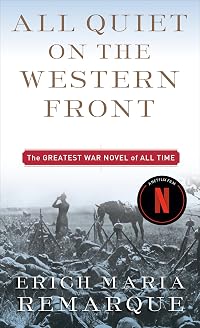
It's a tremendous war novel, richly detailed, well-paced and always convincing. Almost as good as All Quiet on the Western Front.
3447. The Cross of Iron, by Willi Heinrich (read May 22, 2001) This novel by a German who fought on the Russian front was first published in English in 1956. It is a fast-moving suspense-filled account of a platoon in Russia. The Book has echoes of All Quiet on the Western Front (which I read Nov. 4, 1957) but is written in a more florid prose. I found it hard to stop reading, though I wondered if it was "pulp fiction." This is a most powerful book and I gobbled it up. I would now like to watch the movie.
"-Non lo vede?- Il maggiore battè di nuovo la palma della mano sul tavolo facendo traballare i bicchieri.-Allora voglio spiegarglielo:la differenza consiste nel fatto che i nostri uomini non hanno più ideali. Essi non lottano più nè per la libertà nel mondo nè per conquistare l'Est,nè contro invasori o predoni,nè tanto meno per uno Stato il cui assetto politico li entusiasmi. Essi lottano unicamente per salvarsi la vita,per la loro maledetta carne infelice che portano in giro e se lei non ammette questo..- Ammutolì sotto lo sguardo freddo di Starnsky.-Le sempra poco?-gli domandò allora.
-Certo,è molto-Aggiunse Kiesel-ma non è tutto,altrimenti i nostri uomini avrebbero disertato già da lungo tempo.Forse potrei...-si rivolse show more al maggiore-completare il suo pensiero.La carne del soldato è paziente,come lo è la carta.Può essere adoperata nel modo e per lo scopo che si desidera e se ne può fare un uso buono o cattivo. Nel nostro caso se ne è fatto cattivo uso adescandola con i cosidetti valori morali;la si è assassinata e lasciata assassinare tranquillamente fin tanto che sembrava fosse ancora qui per propria volontà. Ma dietro di essa si cela anche l'onestà del soldato semplice,che si ribella e non vuole abbandonare il compagno d'armi e possiede ancora e sempre un ultimo raggio di speranza." show less
-Certo,è molto-Aggiunse Kiesel-ma non è tutto,altrimenti i nostri uomini avrebbero disertato già da lungo tempo.Forse potrei...-si rivolse show more al maggiore-completare il suo pensiero.La carne del soldato è paziente,come lo è la carta.Può essere adoperata nel modo e per lo scopo che si desidera e se ne può fare un uso buono o cattivo. Nel nostro caso se ne è fatto cattivo uso adescandola con i cosidetti valori morali;la si è assassinata e lasciata assassinare tranquillamente fin tanto che sembrava fosse ancora qui per propria volontà. Ma dietro di essa si cela anche l'onestà del soldato semplice,che si ribella e non vuole abbandonare il compagno d'armi e possiede ancora e sempre un ultimo raggio di speranza." show less
May 16, 2012 (Edited)Italian
Novela no precisamente trepidante en cuanto a acción, pero sí desde el punto de vista psicológico. El ambiente de la espera angustiosa se puede casi respirar en algunas fases. Revela por otro lado los conflictos internos entre combatientes enemigos dentro del mismo bando. Lectura recomendable.
Aug 10, 2014Spanish
Members
- Recently Added By
Author Information

39 Works 590 Members
Awards and Honors
Distinctions
Work Relationships
Has the adaptation
Common Knowledge
- Canonical title
- Cross of Iron
- Original title
- Das Geduldige Fleisch
- Alternate titles
- The Willing Flesh
- Original publication date
- 1956
- People/Characters
- Corporal Steiner
- Important places
- USSR
- Important events
- World War II (1939 | 1945); World War II, Eastern Front (1941-06-22 | 1945-05-05)
- Related movies
- Cross of Iron (1977 | IMDb)
- Dedication*
- Donazione Claudia Tavazzi
*Some information comes from Common Knowledge in other languages. Click "Edit" for more information.
Classifications
Statistics
- Members
- 325
- Popularity
- 98,340
- Reviews
- 8
- Rating
- (3.84)
- Languages
- 10 — Danish, Dutch, English, Finnish, German, Hungarian, Italian, Norwegian (Bokmål), Norwegian, Spanish
- Media
- Paper, Ebook
- ISBNs
- 23
- ASINs
- 20