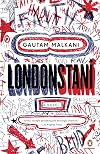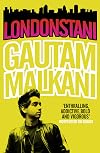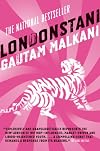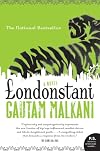
Londonstani
by Gautam Malkani
On This Page
Description
'Londonstani', Gautam Malkani's electrifying debut, reveals a Britain that has never before been explored in the novel: a country of young Asians and white boys (desis and goras) trying to work out a place for themselves in the shadow of the divergent cultures of their parents' generation. Set close to the Heathrow feed roads of Hounslow, Malkani shows us the lives of a gang of four young men: Hardjit the ring leader, a Sikh, violent, determined his caste stay pure; Ravi, determinedly show more tactless, a sheep following the herd; Amit, whose brother Arun is struggling to win the approval of his mother for the Hindu girl he has chosen to marry; and Jas who tells us of his journey with these three, desperate to win their approval, desperate too for Samira, a Muslim girl, which in this story can only have bad consequences. Together they cruise the streets in Amit's enhanced Beemer, making a little money changing the electronic fingerprints on stolen mobile phones, a scam that leads them into more dangerous waters. Funny, crude, disturbing, written in the vibrant language of its protagonists - a mix of slang, Bollywood, texting, Hindu and bastardised gangsta rap - 'Londonstani' is about many things: tribalism, aggressive masculinity, integration, cross-cultural chirpsing techniques, the urban scene seeping into the mainstream, bling bling economics, 'complicated family-related shit'. It is one of the most surprising British novels of recent years. show lessTags
Recommendations




























Member Reviews
An interesting look into London's dark side, sort of on the lines of Martin Amis. But I did not like the ending of the novel. I thought the ending was contrived - the descent into big city mafia type shenanigans was too much to believe, and I didn;t know what to make of the final confession. It is a good piece of writing, but one must question how authentic the portrayal of the rudeboy really is coming from a clean-cut, well-to-do London professional such as Malkani, who is allegedly the epitome of everything he mocks in the novel.
Set among the ‘rudeboys’ of London’s Asian community, this might look like a tough read – it’s written entirely in phonetic gangster-speak (notably the word ‘of’ is rendered as ‘a’ throughout) and there are some long, dense paragraphs to negotiate. It’s worth it though. The colloquial style reminded me of two of my favourite books, ‘Trainspotting’ and ‘Vernon God Little’. It immerses the reader in the sights and sounds of the characters’ pseudo-gangland world. It felt like putting on a pair of spectacles and seeing directly through the eyes of the narrator, Jas, and yet skilful writing ensured there were gaps around the edges of the lenses through which it was possible to glimpse his life before he got show more involved with his new, tough-guy mates.
I loved the humour – lots of acute observations, in-depth discussions on such matters as what constitutes a ‘ho’ as well as shedloads of ‘Complicated Family-Related Shit’. But it has its serious side as well, and I will remember it as a book that likes to spring surprises, ultimately challenging the reader’s assumptions. A great read, or as the rudeboys might have it: ‘Safe piece a writin, innit’. show less
I loved the humour – lots of acute observations, in-depth discussions on such matters as what constitutes a ‘ho’ as well as shedloads of ‘Complicated Family-Related Shit’. But it has its serious side as well, and I will remember it as a book that likes to spring surprises, ultimately challenging the reader’s assumptions. A great read, or as the rudeboys might have it: ‘Safe piece a writin, innit’. show less
Revise your Hinglish before diving into the everyday life of a "rudeboy" member of a small-time asian gang in west London. Jas, the nerd-turned-tough guy, is desperate to be accepted by the other members of the gang even if it means renouncing a less violent and culturally different nature. Misfits never lasts of course, and as the gang rises and falls we experience how integration backfires for these second-generation immigrants, sticking to values both more modern and ironically more conservative than their parents, detesting everyone who might even look like a "coconut": a person brown in the outside but white in the inside...
Once the novelty of the language has sunk in, however, this story lacks a bit in depth and even the quite show more unexpected twist at the end fails to hide the fact that there is hardly any end to speak of... But said twist clearly makes what's "special" about Londonstani and I rather like the fact that it's hidden so far at the end. show less
Once the novelty of the language has sunk in, however, this story lacks a bit in depth and even the quite show more unexpected twist at the end fails to hide the fact that there is hardly any end to speak of... But said twist clearly makes what's "special" about Londonstani and I rather like the fact that it's hidden so far at the end. show less
It's an interesting look at thuggish second and third generation South Asian teens in the suburbs of London. The author's going for a Clockwork Orange feel, the boys speak a mix of English, Hindi, Punjabi and Urdu, you'll need that glossary at the back of the book.
The author's laughing at them all along, and he sets up a cultural scene in which the boys rebel against the multiculturalism and "tolerance" of their parents by being atavistically fundamentalist and protective of old community dividing lines.
Anyway, I enjoyed it.
The author's laughing at them all along, and he sets up a cultural scene in which the boys rebel against the multiculturalism and "tolerance" of their parents by being atavistically fundamentalist and protective of old community dividing lines.
Anyway, I enjoyed it.
If conflict is what drives a novel, Gautam Malkani's debut, Londonstani, has plenty of fuel. Throw in a narrator who tells the story with perception and humor in an argot comprised of English, Punjabi and urban slang and you're in for an intriguing ride, even if the payoff might leave you skeptical.
Londonstani addresses a variety of internal, generational, racial, religious and societal conflict. The story is told entirely from the viewpoint of Jas, who is in his late teens. He lives in the Hounslow district of London, an area bordering Heathrow Airport with a significant immigrant population, many from India and South Asia. They call themselves "desis," a term stemming from the Indian diaspora. But there aren't just desis. Jas and his show more cohorts watch out for their blud (blood/kin), bredren (brother), bruv (brother) and bhanjis (sisters). They scorn the goras (whites), coconuts (someone with brown skin who acts like they're white), pendhus (fools) and spods (boring inferiors).
Jas' language is such an admixture that Malkani provides a glossary. While somewhat cumbersome at first, the reader eventually picks up on the flow of the jargon, profanity and patter. And it is in this flow, most often when Jas is in a stream of consciousness, that we find the flashes of humor and insight that expose and explore the conflicts.
At heart, Jas is a perceptive and intelligent nerd. Yet he has quelched those attributes in a successful effort to join a small gang of "rudeboys," the desi version of gangstas who pride themselves on their style and fashion. From the standpoint of his favorite teacher and parents -- and perhaps himself at times -- Jas is throwing away his talents and opportunities to immerse himself in this urban youth culture.
His rudeboy group is led by Hardjit, a Sikh body builder who loves to fight. The other two members are Armit, a Hindu nationalist, and Ravi, who brags about his sexual exploits, seemingly more imagined than real. While subordinate to Hardjit they clearly rank higher than Jas. Yet as tough and independent as they wish to appear, all four still live at home. The classy BMW they ride around in is owned by Ravi's mom. They are part of "the informal economy," reprogramming stolen mobile phones to earn some money here and there.
The rudeboys themselves are an amalgamation of conflicting cultural notions. Their independence leads them to distance themselves from some of their parents' traditions. This inevitably leads to what Jas calls "complicated family-related shit." At the same time, they are proud of their heritage and their "desiness." One of the sad historical legacies they tend to embrace is detest for their Muslim counterparts. Thus, when Hardjit fights it is to stomp a gora for allegedly referring to them as "Pakis" and in a pre-arranged battle with his counterpart in a Muslim rudeboy group.
The latter scene leads an old school teacher to attempt to rescue Hardjit's group, or at least Jas. He hooks the four up with Sanjay, a former desi student who studied economics at Cambridge. Sanjay introduces the group to "Bling Bling economics," takes Jas in particular under his wing and the boys are soon living large as they them move from being menial cogs in the stolen phone trade to relatively significant players.
Sanjay also helps Jas achieve one of his dreams, dating Samira, the fittest (best looking) Muslim girl around. Jas has to hide that relationship from his friends, who believe it wrong to date a Muslim. Samira's brothers take a similar view of Muslim girls going out with non-Muslims. The reelationship eventually becomes fraught with trouble for Jas, his friends and their burgeoning mobile phone enterprise.
Malkani adeptly combines the threads of each of these elemental struggles into a generally workable whole. Readers will undoubtedly have differeing opinions on a surprising plot twist at the end. Some may think it bolsters the novel's impact. Others will see it as not much more than a highly improbable contrivance. I lean toward the former but freely admit there's merit in the latter. Yet even if the end might ring hollow, it does not utterly invalidate Jas' unique voice and perspective on life and conflict in a thoroughly multicultural environment.
Originally posted at http://prairieprogressive.com/2006/07/08/book-review-londonstani-2006/ show less
Londonstani addresses a variety of internal, generational, racial, religious and societal conflict. The story is told entirely from the viewpoint of Jas, who is in his late teens. He lives in the Hounslow district of London, an area bordering Heathrow Airport with a significant immigrant population, many from India and South Asia. They call themselves "desis," a term stemming from the Indian diaspora. But there aren't just desis. Jas and his show more cohorts watch out for their blud (blood/kin), bredren (brother), bruv (brother) and bhanjis (sisters). They scorn the goras (whites), coconuts (someone with brown skin who acts like they're white), pendhus (fools) and spods (boring inferiors).
Jas' language is such an admixture that Malkani provides a glossary. While somewhat cumbersome at first, the reader eventually picks up on the flow of the jargon, profanity and patter. And it is in this flow, most often when Jas is in a stream of consciousness, that we find the flashes of humor and insight that expose and explore the conflicts.
At heart, Jas is a perceptive and intelligent nerd. Yet he has quelched those attributes in a successful effort to join a small gang of "rudeboys," the desi version of gangstas who pride themselves on their style and fashion. From the standpoint of his favorite teacher and parents -- and perhaps himself at times -- Jas is throwing away his talents and opportunities to immerse himself in this urban youth culture.
His rudeboy group is led by Hardjit, a Sikh body builder who loves to fight. The other two members are Armit, a Hindu nationalist, and Ravi, who brags about his sexual exploits, seemingly more imagined than real. While subordinate to Hardjit they clearly rank higher than Jas. Yet as tough and independent as they wish to appear, all four still live at home. The classy BMW they ride around in is owned by Ravi's mom. They are part of "the informal economy," reprogramming stolen mobile phones to earn some money here and there.
The rudeboys themselves are an amalgamation of conflicting cultural notions. Their independence leads them to distance themselves from some of their parents' traditions. This inevitably leads to what Jas calls "complicated family-related shit." At the same time, they are proud of their heritage and their "desiness." One of the sad historical legacies they tend to embrace is detest for their Muslim counterparts. Thus, when Hardjit fights it is to stomp a gora for allegedly referring to them as "Pakis" and in a pre-arranged battle with his counterpart in a Muslim rudeboy group.
The latter scene leads an old school teacher to attempt to rescue Hardjit's group, or at least Jas. He hooks the four up with Sanjay, a former desi student who studied economics at Cambridge. Sanjay introduces the group to "Bling Bling economics," takes Jas in particular under his wing and the boys are soon living large as they them move from being menial cogs in the stolen phone trade to relatively significant players.
Sanjay also helps Jas achieve one of his dreams, dating Samira, the fittest (best looking) Muslim girl around. Jas has to hide that relationship from his friends, who believe it wrong to date a Muslim. Samira's brothers take a similar view of Muslim girls going out with non-Muslims. The reelationship eventually becomes fraught with trouble for Jas, his friends and their burgeoning mobile phone enterprise.
Malkani adeptly combines the threads of each of these elemental struggles into a generally workable whole. Readers will undoubtedly have differeing opinions on a surprising plot twist at the end. Some may think it bolsters the novel's impact. Others will see it as not much more than a highly improbable contrivance. I lean toward the former but freely admit there's merit in the latter. Yet even if the end might ring hollow, it does not utterly invalidate Jas' unique voice and perspective on life and conflict in a thoroughly multicultural environment.
Originally posted at http://prairieprogressive.com/2006/07/08/book-review-londonstani-2006/ show less
I was very willing to roll with this book; it reminded me of other books I've read about youth and gangs (whether criminal gangs or just social bullies); it involved a tough-voiced narrator who has some reservations about the gang, and that he is afraid they will find out. In some ways, this reminded me of a contemporary and more violent version of Blubber, by Judy Blume, one of the first books I read as a child that made me nauseous to complete, due to my own fear of other kids. A plot twist I didn't anticipate, and which meant that I kept thinking about Londonstani for a few days after I'd finished it, trying to figure out its implications. I couldn't come to a satisfactory conclusion--so it just felt a bit chea, and as if the twist show more was a quick way to end the book without wrestling with a more complex or realistic ending. show less
Author adeptly combines the threads of each of these elemental struggles into a generally workable whole. Book nicely handles variety of internal, generational, racial, religious, and societal conflicts.
more @ http://toogood2read.blogspot.com/2006/10/londonstani-by-gautam-malkani.html
more @ http://toogood2read.blogspot.com/2006/10/londonstani-by-gautam-malkani.html
Members
- Recently Added By
Published Reviews
As a point of distinction, Malkani, a Financial Times writer, can’t help but to occasionally wax economic, provocatively suggesting that the materialism and misogyny of hip-hop culture that these sons embrace may very well be of a stripe indistinct from that of their status-obsessed, dowry-doting parents. The globalization of gangsta as appropriated by the mainstream: I mean, greed’s good, show more innit? show less
added by paradoxosalpha
Lists

Top Five Books of 2013
1,562 works; 721 members
Author Information

3+ Works 468 Members
Common Knowledge
- Original title
- Londonstani
- Important places
- Hounslow, London, England, UK
- Dedication
- For my wife Monica and in memory of Mum.
- First words
- Serve him right he got his muthafuckin face fuck'd, shudn't b callin me a Paki, innit.
- Last words
- (Click to show. Warning: May contain spoilers.)But Jazzy Jas Man can do better than fuckin Thank you. I shoot her a look an give it, - Shukriya.
Classifications
Statistics
- Members
- 458
- Popularity
- 66,506
- Reviews
- 9
- Rating
- (3.42)
- Languages
- 7 — Danish, Dutch, English, French, Italian, Norwegian (Bokmål), Russian
- Media
- Paper, Ebook
- ISBNs
- 17
- ASINs
- 4