On This Page
Description
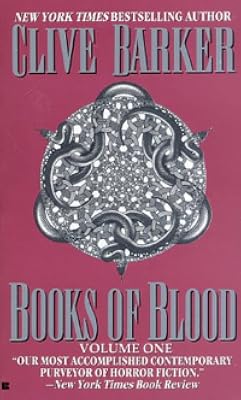
EVERYBODY IS A BOOK OF BLOOD;WHEREVER WE'RE OPENED, WE'RE RED. Clive BarkerFew authors can claim to have marked a genre so thoroughly and personally that their words have leaked into every aspect of modern pop culture. Clive Barker is such an author, and the Books of Blood marked his debut - his coming out to the world - in brilliant, unforgettable fashion. Crossroad Press is proud to present Clive Barker's "Books of Blood" in digital for the first time.The Books of Blood combine the show more ordinary with the extraordinary while radiating the eroticism that has become Barker's signature. Weaving tales of the everyday world transformed into an unrecognizable place, where reason no longer exists and logic ceases to explain the workings of the universe, Clive Barker provides the stuff of nightmares in packages too tantalizing to resist.Never one to shy away from the unimaginable or the unspeakable, Clive Barker breathes life into our deepest, darkest nightmares, creating visions that are at once terrifying, tender, and witty. The Books of Blood confirm what horror fans everywhere have known for a long time: We will be hearing from Clive Barker for many years to come.This first volume contains the short stories : "The Book of Blood," "The Midnight Meat Train," "The Yattering and Jack," "Sex, Death, and Starshine," and "In the Hills, the Cities," as well as the original introduction to volumes one, two, and three by Ramsey Campbell, and a new introduction by author David Niall Wilson. show lessTags
Recommendations














Member Reviews
‘They were good at the game of giants. It took many centuries of practice: every ten years making the figure larger and larger. One always ambitious to be larger than the other. Ropes to tie them all together, flawlessly. Sinews . . ligaments . . . There was food in its belly . . . there were pipes from the loins, to take away the waste. The best-sighted sat in the eye-sockets, the best voiced in the mouth and throat. You wouldn’t believe the engineering of it.’show more
‘I don’t,’ said Judd, and stood up.
‘It is the body of the state,’ said Vaslav, so softly his voice was barely above a whisper, ‘it is the shape of our lives.’
There was a silence. Small clouds passed over the road, soundlessly shedding their mass to the air.
‘It was a miracle,’ he said. It was as if he realized the true enormity of the fact for the first time.
What an enjoyable set of stories, culminating in a work of genius. There's definitely a pulpy quality to his writing - his prose is unsubtle, with some purple descriptions of horrors and the occasional one of emotion but mostly focused on action - but he really pulls it off, with great ideas and a sprinkling of (again, unsubtle) parallels to real world situations that give you a little to chew on. The Midnight Meat Train is probably the most clearly pulp horror style story in the book but it's playing on an effective horror about being defenceless and lacking escape on a train while also hinting at the destruction of marginalised people to keep big cities running. He also has a good sense of humour - The Yattering and Jack and Sex, Death and Starshine are clearly lighthearted (especially the first) even though they also contain horrific moments. A friend objected to the politics of Pig Blood Blues but it reminded me most of something like The Wicker Man - the ex-copper main character does some "heroic" things but the whole setup seems designed to mock him and present him as to an extent intruding on a fine society, while also poking holes in the particular kind of hierarchies "rehabilitative" prisons have and the strange cult around young boys that exists through society. Barker's gayness also shines through - as an undercurrent in that story, very explicitly in the final story.
In the Hills, the Cities is a brilliant story. It has a brilliantly horrific concept at the heart of it that will stay with you forever while surrounding it with so many unsubtle parallels around our relationship with nature, the state, the pain of breakups and arguments, the desire to be part of something bigger (not a coincidence one of the characters is wanting to go across Yugoslavia to see religious icons despite being gay), the Cold War, endless competition, the meaningless of a certain kind of harmless dinner table politics, being gay, tradition, having no future, the desperation to impose normality on human tragedy... everything is explicitly stated, pretty much, and yet the more you think about it the more you see the connections and realise there's much more to it than you thought. I can't say enough good words about it. You should absolutely read it for yourself, even if it's the only story from this you read. Incredible. show less
This review first appeared on scifiandscary.com: https://www.scifiandscary.com/carry-on-screaming-books-of-blood-volume-1-by-cliv...
Clive Barker burst onto the horror scene in 1984 with the publication of the six ‘Books of Blood’ collections of short stories. It’s a different kind of horror to the books I’ve covered so far in ‘Carry on Screaming’. Barker’s stories are certainly gory, but nothing like the crazed excesses of Herbert, Smith or Hutson. He is closest in tone to fellow Liverpudlian Ramsey Campbell, but was rightly praised as a fresh new voice in horror. His work in these stories still isn’t really like anything else out there. It’s darkly imaginative, incredibly graphic, psychologically chilling and show more shockingly honest. Barker’s fiction got much longer and more focussed on fantasy than horror later in his career. I much prefer his early work, which still feels powerful and original.
This first volume contains six stories which are very different from each other. It’s hard to say which is my favourite. With the exception of the opener ‘The Book of Blood’ which I’m not so keen on, they’re all excellent.
‘The Midnight Meat Train’ is an atmospheric and disgustingly graphic blend of New York crime tale and Lovecraftian horror. ‘The Yattering and Jack’ is a delicious black comedy about a demon and the man it torments. ‘Pig Blood Blues’ combines convincing characters with an utterly grotesque concept. If I described the plot you’d think it sounded ridiculous, but it works perfectly. ‘Sex, Death and Starshine’ is a ghost story with a heavy dose of body horror. It contains one of the most disturbing sex scenes I’ve ever read. Finally, ‘In the Hills, the Cities’ is a masterpiece of imagination. It’s breathtaking in its scope and completely chilling.
That one slim book could contain so much terror is an incredible achievement. That it’s the first of six such volumes is kind of mindblowing. Just like ‘The Rats’, ten years earlier, its publication marks the start of a new era in British horror. The nasties of 70s and early 80s continued, but Barker paved the way for a more psychological, emotional kind of horror. Later writers like Neil Gaiman owe him a huge debt.
show less
Clive Barker burst onto the horror scene in 1984 with the publication of the six ‘Books of Blood’ collections of short stories. It’s a different kind of horror to the books I’ve covered so far in ‘Carry on Screaming’. Barker’s stories are certainly gory, but nothing like the crazed excesses of Herbert, Smith or Hutson. He is closest in tone to fellow Liverpudlian Ramsey Campbell, but was rightly praised as a fresh new voice in horror. His work in these stories still isn’t really like anything else out there. It’s darkly imaginative, incredibly graphic, psychologically chilling and show more shockingly honest. Barker’s fiction got much longer and more focussed on fantasy than horror later in his career. I much prefer his early work, which still feels powerful and original.
This first volume contains six stories which are very different from each other. It’s hard to say which is my favourite. With the exception of the opener ‘The Book of Blood’ which I’m not so keen on, they’re all excellent.
‘The Midnight Meat Train’ is an atmospheric and disgustingly graphic blend of New York crime tale and Lovecraftian horror. ‘The Yattering and Jack’ is a delicious black comedy about a demon and the man it torments. ‘Pig Blood Blues’ combines convincing characters with an utterly grotesque concept. If I described the plot you’d think it sounded ridiculous, but it works perfectly. ‘Sex, Death and Starshine’ is a ghost story with a heavy dose of body horror. It contains one of the most disturbing sex scenes I’ve ever read. Finally, ‘In the Hills, the Cities’ is a masterpiece of imagination. It’s breathtaking in its scope and completely chilling.
That one slim book could contain so much terror is an incredible achievement. That it’s the first of six such volumes is kind of mindblowing. Just like ‘The Rats’, ten years earlier, its publication marks the start of a new era in British horror. The nasties of 70s and early 80s continued, but Barker paved the way for a more psychological, emotional kind of horror. Later writers like Neil Gaiman owe him a huge debt.
show less
Reflecting back after 14 years, Barker writes:
"I look at these pieces and I don't think the man who wrote them is alive in me anymore.... We are all our own graveyards I believe; we squat amongst the tombs of the people we were. If we're healthy, every day is a celebration, a Day of the Dead, in which we give thanks for the lives that we lived; and if we are neurotic we brood and mourn and wish that the past was still present.
Reading these stories over, I feel a little of both. Some of the simple energies that made these words flow through my pen--that made the phrases felicitous and the ideas sing--have gone. I lost their maker a long time ago."
It’s been so long since I’ve read these that reading them now is almost like show more experiencing them for the first time all over again. Having a shoddy memory mainly sucks, but in the case of book re-reads, it holds its gifts.
I do remember some things though – like when this came out, Barker was making his way on the horror scene big time, heavily endorsed by King himself, who said: “I have seen the future of horror, and his name is Clive Barker.” This quote was even used, with an actor voiceover, for the Hellraiser’s trailer years later. It is used, of course, on the Books of Blood as a selling point.
Barker has since demonstrated extreme versatility in genre and form; you’re more than likely now of days to find his imaginative tombs lining the shelves in a fantasy section rather than a horror one. When he erupted onto the scene he did so with big bangs – the Books of Blood series being one of the biggest.
Immediately it’s clear Barker possesses a beautiful and poetic prose. If you asked me what stood out the most about this anthology, I’d answer that first: writing style. Altering rhythm to fit the story and not become repetitive, there’s emphasis where there should be, distance when that fits, all the while weaving both sides together naturally.
The opening story, ‘The Book of Blood,’ is almost indecisive on where it wanted to go, but ultimately the end is a horrific, well-written arrival. Twisted, surreal, somewhat mystical, the tone for the rest of the anthology is accurately set. Basically the dead have highways by which they travel, and on one of these highways, at an interval, is a house. Inside that house is a poser boy pretending dangerously to be something he isn’t, joined by a paranormal investigator who goes in being duped but leaves exalted. And of course the dead are there. They’re ready to share their stories, how they ended up on this particular path, their personal damnations, so won’t you listen? 3.5/5
In the Midnight Meat Train, Kaufman ends up traveling a dangerous path of his own. The man has loved, cherished, and longed for New York city from afar his entire life, but now that he’s finally planted his roots in the Big Apple, he finds only bitter tastes. Kaufman soon discovers a hidden aspect of the city; apparently one man’s horror is another man’s paradise. It’s grim, it’s brutal, there are gory details but nothing just for cheap shock value. Tension is severely taut in this one. I was chewing my lip and sitting wide eyed at a particular scene at the end. Dark and gritty finale - some disturbing stuff and interesting too. 4/5
The Yattering and the Jack is whimsical and mildly amusing. The story shows the POV of a lower-level repulsive type of demon who is trying to ruin a man’s life and break him in the process. To his annoyance, this man seems to have no breaking point. There were amusing areas but I didn’t outright laugh. Que Sera, Sera…3/5
‘Pig Blood Blues’ starts off reminding me of those redundant school type movies that glorified in teen rebellion in the 80’s and 90’s. You know, the one where a decent person starts at a new school, wanting to teach and do well, but the kids are hellions and the governing figures don’t seem to give a damn. Then the other adults start getting a bit too out there with some of the kids, and flashes of the Wicker Man start burning in my head. Finally it just ends up leaving me with the memory of those nasty little pigs from that Hannibal scene in the movie. Quite disturbing. 3/5
Sex, Death and Starshine is my personal favorite. It revives the old magic of the theatre, a love which apparently transcends death for the dearly departed. I give little thought toward theatre, but Barker is a fan in real life, and it shows through his words as he convincingly weaves his web on yours truly. I also ended up feeling the nostalgia, the magic. There’s some cheesiness I’d like to dust off from the second half, but the story shines the strongest because of a subtle, still eeriness that one can’t put into effective words. 4/5
For the last offering, ‘In the Hills, the Cities,’ I liked the beginning banter between the two mains but became bored after. I dug the unique plot creation and the sociological, potent basis of it, but couldn’t hold focus in between that. 2/5
Overall this anthology is the ideal length – a groovy, gory intro story followed by five tales that offer disturbing doses of disturbed reality in completely different ways. This anthology deserves to be read and known, Barker did a great job creating unease and clearly has a poetic license to boot. show less
"I look at these pieces and I don't think the man who wrote them is alive in me anymore.... We are all our own graveyards I believe; we squat amongst the tombs of the people we were. If we're healthy, every day is a celebration, a Day of the Dead, in which we give thanks for the lives that we lived; and if we are neurotic we brood and mourn and wish that the past was still present.
Reading these stories over, I feel a little of both. Some of the simple energies that made these words flow through my pen--that made the phrases felicitous and the ideas sing--have gone. I lost their maker a long time ago."
It’s been so long since I’ve read these that reading them now is almost like show more experiencing them for the first time all over again. Having a shoddy memory mainly sucks, but in the case of book re-reads, it holds its gifts.
I do remember some things though – like when this came out, Barker was making his way on the horror scene big time, heavily endorsed by King himself, who said: “I have seen the future of horror, and his name is Clive Barker.” This quote was even used, with an actor voiceover, for the Hellraiser’s trailer years later. It is used, of course, on the Books of Blood as a selling point.
Barker has since demonstrated extreme versatility in genre and form; you’re more than likely now of days to find his imaginative tombs lining the shelves in a fantasy section rather than a horror one. When he erupted onto the scene he did so with big bangs – the Books of Blood series being one of the biggest.
Immediately it’s clear Barker possesses a beautiful and poetic prose. If you asked me what stood out the most about this anthology, I’d answer that first: writing style. Altering rhythm to fit the story and not become repetitive, there’s emphasis where there should be, distance when that fits, all the while weaving both sides together naturally.
The opening story, ‘The Book of Blood,’ is almost indecisive on where it wanted to go, but ultimately the end is a horrific, well-written arrival. Twisted, surreal, somewhat mystical, the tone for the rest of the anthology is accurately set. Basically the dead have highways by which they travel, and on one of these highways, at an interval, is a house. Inside that house is a poser boy pretending dangerously to be something he isn’t, joined by a paranormal investigator who goes in being duped but leaves exalted. And of course the dead are there. They’re ready to share their stories, how they ended up on this particular path, their personal damnations, so won’t you listen? 3.5/5
In the Midnight Meat Train, Kaufman ends up traveling a dangerous path of his own. The man has loved, cherished, and longed for New York city from afar his entire life, but now that he’s finally planted his roots in the Big Apple, he finds only bitter tastes. Kaufman soon discovers a hidden aspect of the city; apparently one man’s horror is another man’s paradise. It’s grim, it’s brutal, there are gory details but nothing just for cheap shock value. Tension is severely taut in this one. I was chewing my lip and sitting wide eyed at a particular scene at the end. Dark and gritty finale - some disturbing stuff and interesting too. 4/5
The Yattering and the Jack is whimsical and mildly amusing. The story shows the POV of a lower-level repulsive type of demon who is trying to ruin a man’s life and break him in the process. To his annoyance, this man seems to have no breaking point. There were amusing areas but I didn’t outright laugh. Que Sera, Sera…3/5
‘Pig Blood Blues’ starts off reminding me of those redundant school type movies that glorified in teen rebellion in the 80’s and 90’s. You know, the one where a decent person starts at a new school, wanting to teach and do well, but the kids are hellions and the governing figures don’t seem to give a damn. Then the other adults start getting a bit too out there with some of the kids, and flashes of the Wicker Man start burning in my head. Finally it just ends up leaving me with the memory of those nasty little pigs from that Hannibal scene in the movie. Quite disturbing. 3/5
Sex, Death and Starshine is my personal favorite. It revives the old magic of the theatre, a love which apparently transcends death for the dearly departed. I give little thought toward theatre, but Barker is a fan in real life, and it shows through his words as he convincingly weaves his web on yours truly. I also ended up feeling the nostalgia, the magic. There’s some cheesiness I’d like to dust off from the second half, but the story shines the strongest because of a subtle, still eeriness that one can’t put into effective words. 4/5
For the last offering, ‘In the Hills, the Cities,’ I liked the beginning banter between the two mains but became bored after. I dug the unique plot creation and the sociological, potent basis of it, but couldn’t hold focus in between that. 2/5
Overall this anthology is the ideal length – a groovy, gory intro story followed by five tales that offer disturbing doses of disturbed reality in completely different ways. This anthology deserves to be read and known, Barker did a great job creating unease and clearly has a poetic license to boot. show less
I've been looking over various reviews of this collection and it seems like everyone has a different opinion on what the best and worst stories are, which surely says something about it's quality. I have my favorites, but I don't think there's a bad story in the lot and recommend it as an excellent introduction to Barker's horror writing.
"The Book of Blood"
We start with a very short framing story of the dead taking revenge upon a fake medium. It's only a few pages long, but it's well-realized and sets the perfect tone for the collection.
"The Midnight Meat Train"
An office drone stumbles into a nightmare of murder, cannibalism, and an ancient pact between the world above and the world below. It's probably the goriest of the stories (what show more else would you expect with a title like "Midnight Meat Train"?), but it's also one of the most complex.
"The Yattering and Jack"
A demon is sent to corrupt the soul of what appears to be the most boring and oblivious man on the planet. As the story progresses we discover that Jack is not as blind as he seems and is actually engaging in psychological warfare against the servant of Hell. There's a subtle humor to this one that makes it my favorite story in the collection.
"Pig Blood Blues"
A former police officer goes to work at a juvenile detention centre where some very hinky things are occuring. There's a tinge of folk horror to this one that gives it some interest, but it's my least favorite.
"Sex, Death and Starshine"
When a production of Twelfth Night is hampered by a famous but talentless leading lady, a mysterious benefactor comes forward to help improve things. An odd story of passions that survive death.
"In the Hills, The Cities"
Two bickering tourist are witness to a strange event: the inhabitants of two remote villages bind themselves together to form two giants and engage in ritual combat. I'm not sure I really get this one, but it has some very striking imagery. show less
"The Book of Blood"
We start with a very short framing story of the dead taking revenge upon a fake medium. It's only a few pages long, but it's well-realized and sets the perfect tone for the collection.
"The Midnight Meat Train"
An office drone stumbles into a nightmare of murder, cannibalism, and an ancient pact between the world above and the world below. It's probably the goriest of the stories (what show more else would you expect with a title like "Midnight Meat Train"?), but it's also one of the most complex.
"The Yattering and Jack"
A demon is sent to corrupt the soul of what appears to be the most boring and oblivious man on the planet. As the story progresses we discover that Jack is not as blind as he seems and is actually engaging in psychological warfare against the servant of Hell. There's a subtle humor to this one that makes it my favorite story in the collection.
"Pig Blood Blues"
A former police officer goes to work at a juvenile detention centre where some very hinky things are occuring. There's a tinge of folk horror to this one that gives it some interest, but it's my least favorite.
"Sex, Death and Starshine"
When a production of Twelfth Night is hampered by a famous but talentless leading lady, a mysterious benefactor comes forward to help improve things. An odd story of passions that survive death.
"In the Hills, The Cities"
Two bickering tourist are witness to a strange event: the inhabitants of two remote villages bind themselves together to form two giants and engage in ritual combat. I'm not sure I really get this one, but it has some very striking imagery. show less
It's easy to see the quality horror fans attribute to Barker's early work. He's an excellent writer, and his ideas are jaw-droppingly creative and original, at times.
[N.B. This review includes images, and was formatted for my site, dendrobibliography -- located here.]
Personally, however, I don't connect much with it. After a couple of his books, it's hard to put my finger on why. Part of it, I think, is I find his prose too clinical and passive, his use of uncommon words and phrases too hand-me-that-Thesaurus. Some of his stories are affected by personal pathos, too. There're no interesting or realistic female characters in any of his early stories that I've read, for example: They all amount to being described as worthless whores not show more just by characters, but by the narration itself. Their only personality traits are being dumb and craving sex with everything. (Granted, in a lot of Barker stories, you'll find all anyone craves is sexual depravity, but at least one gender is granted a will.)
The first (1984) Books of Blood volume was a mixed bag for me. Often, I'd find myself interested in the idea behind a story, but bored by the execution where nothing much surprises you and it's told with such a passive interest by a narrator who spends too much time philosophically dwelling on coagulating blood coating everything and pooling everywhere.
I loved 'Pig Blood Blues.' This story focused on a horrific mystery being investigated by a new teacher at a juvenile remand center. The center's isolation from the outside world felt genuine, and, as a reader, there was this uneasy, goddanged creepy sense of no escape, of no alternative but facing the impossible pig-god-whatever, of laying down with it in its fetid pen. *eugh* It's all pigs, decay, Lovecraftian cults, death worship--and the obligatory weird sexy stuff.
That one left me with some shivers.
The rest, however...the introductory tale, 'the Book of Blood,' gave context to the series that was interesting, but heavily suffered from the passive writing style with nothing much happening. Both 'the Midnight Meat Train'--where a serial killer stalks New York to feed flesh to the living, once-human foundation--and 'the Yattering and Jack'--where a lower-echelon demon must drive the soul from a very straight-faced, que-sera-sera man using madness--had the typical, interesting set-ups, but then...where do they go? Every turn and every page and every encounter is incredibly predictable, taking the interesting set-up and doing nothing beyond the pitch.
'In the Hills, the Cities': Two sister-towns in rural Yugoslavia form living giants to enact a traditional battle against one another. A bad year for both towns' harvests and livelihoods cause some inherent structural issues for both fleshy giants. Two young lovers complain about one another and see the aftermath. Cool set-up: The end.
'Sex, Death and Starshine'--woah. A theater puts on its last play, a rendition of Shakespeare's Twelfth Night, to a supernatural audience come to bid the building adieu. Neil Gaiman very clearly took a lot of influence from this story for his award-winning 19th issue of Sandman. I liked it, but the misogyny and characterization collapsing to rush the goofy ending affected my enjoyment some.
So, I've read and been let down by two Barker books so far. So much of his work sounds really danged cool and ground-breaking, though, that I refuse to give up. I might just need to step away from his bloody, bloody '80s horror and try his dark fantasy '90s tales. show less
[N.B. This review includes images, and was formatted for my site, dendrobibliography -- located here.]
Personally, however, I don't connect much with it. After a couple of his books, it's hard to put my finger on why. Part of it, I think, is I find his prose too clinical and passive, his use of uncommon words and phrases too hand-me-that-Thesaurus. Some of his stories are affected by personal pathos, too. There're no interesting or realistic female characters in any of his early stories that I've read, for example: They all amount to being described as worthless whores not show more just by characters, but by the narration itself. Their only personality traits are being dumb and craving sex with everything. (Granted, in a lot of Barker stories, you'll find all anyone craves is sexual depravity, but at least one gender is granted a will.)
The first (1984) Books of Blood volume was a mixed bag for me. Often, I'd find myself interested in the idea behind a story, but bored by the execution where nothing much surprises you and it's told with such a passive interest by a narrator who spends too much time philosophically dwelling on coagulating blood coating everything and pooling everywhere.
I loved 'Pig Blood Blues.' This story focused on a horrific mystery being investigated by a new teacher at a juvenile remand center. The center's isolation from the outside world felt genuine, and, as a reader, there was this uneasy, goddanged creepy sense of no escape, of no alternative but facing the impossible pig-god-whatever, of laying down with it in its fetid pen. *eugh* It's all pigs, decay, Lovecraftian cults, death worship--and the obligatory weird sexy stuff.
That one left me with some shivers.
The rest, however...the introductory tale, 'the Book of Blood,' gave context to the series that was interesting, but heavily suffered from the passive writing style with nothing much happening. Both 'the Midnight Meat Train'--where a serial killer stalks New York to feed flesh to the living, once-human foundation--and 'the Yattering and Jack'--where a lower-echelon demon must drive the soul from a very straight-faced, que-sera-sera man using madness--had the typical, interesting set-ups, but then...where do they go? Every turn and every page and every encounter is incredibly predictable, taking the interesting set-up and doing nothing beyond the pitch.
'In the Hills, the Cities': Two sister-towns in rural Yugoslavia form living giants to enact a traditional battle against one another. A bad year for both towns' harvests and livelihoods cause some inherent structural issues for both fleshy giants. Two young lovers complain about one another and see the aftermath. Cool set-up: The end.
'Sex, Death and Starshine'--woah. A theater puts on its last play, a rendition of Shakespeare's Twelfth Night, to a supernatural audience come to bid the building adieu. Neil Gaiman very clearly took a lot of influence from this story for his award-winning 19th issue of Sandman. I liked it, but the misogyny and characterization collapsing to rush the goofy ending affected my enjoyment some.
So, I've read and been let down by two Barker books so far. So much of his work sounds really danged cool and ground-breaking, though, that I refuse to give up. I might just need to step away from his bloody, bloody '80s horror and try his dark fantasy '90s tales. show less
Part the first of Clive Barker’s short story collection aptly named The Books of Blood. The dead have stories to tell, but rather than scribing their tales on paper they carve their stories upon human flesh. Volume 1 consists of five very different short stories which are sure to please most fans of the horror genre. If a Lovecraftian tale starring a subway serial killer is your bag, than look no further than ’The Midnight Meat Train’. In the mood for comedic horror? Try ’The Yattering and Jack’, the story of a lesser demon who is just not terribly good at his chosen vocation. I suspect volume 2 will be finding a home on my eBook Shelf very soon.
Clive Barker gets his literary career started not with a bang, but with a splatter. While horror has always had certain roots within the flesh--the mouldering cadaver concealed in a crypt or the pale skin of a maiden stalked by a vampire--Barker brings a few new jolts into the intersection of horror and the carnal.
The whole series gets a nice introduction with "The Book of Blood." There is a common horror trope of presenting the story as a text left behind by a victim, such as a diary. This story of a fake psychic and the woman who is studying his powers manages to use that dusty old convention in a way that is both nasty and satisfying.
In "The Yattering and Jack," a demon faces off against the man he would tempt to damnation. The show more man, though, is no pious religious figure, but a rather dull merchant living in a suburb of London. The mismatch of the two adverseries makes for a confrontation that is both horrifying and humorous.
"Pig Blood Blues" is set in a reform school housing troubled boys. When one staff member begins to suspect that things are even worse then they seem, he begins to investigate and turns up the awful death of one of the previous "students." But he's not prepared for what he discovers after that.
"In the Hills, the Cities" features one of Barker's more imaginative, downright Cyclopean, transformations of the body. When two lovers wander off the beaten path in their travels around Eastern Europe, they discover the terror of communal action made flesh in all the wrong ways. show less
The whole series gets a nice introduction with "The Book of Blood." There is a common horror trope of presenting the story as a text left behind by a victim, such as a diary. This story of a fake psychic and the woman who is studying his powers manages to use that dusty old convention in a way that is both nasty and satisfying.
In "The Yattering and Jack," a demon faces off against the man he would tempt to damnation. The show more man, though, is no pious religious figure, but a rather dull merchant living in a suburb of London. The mismatch of the two adverseries makes for a confrontation that is both horrifying and humorous.
"Pig Blood Blues" is set in a reform school housing troubled boys. When one staff member begins to suspect that things are even worse then they seem, he begins to investigate and turns up the awful death of one of the previous "students." But he's not prepared for what he discovers after that.
"In the Hills, the Cities" features one of Barker's more imaginative, downright Cyclopean, transformations of the body. When two lovers wander off the beaten path in their travels around Eastern Europe, they discover the terror of communal action made flesh in all the wrong ways. show less
Members
- Recently Added By
Lists

LGBTQIA Horror
172 works; 7 members

Books Read in 2013
1,630 works; 51 members

Paperbacks from Hell
382 works; 9 members

Books Read in 2022
5,168 works; 114 members

BlackDog's Complete Paperbacks From Hell List
639 works; 3 members
Author Information

381+ Works 57,041 Members
Critics of the horror story have frequently called Clive Barker the "British Stephen King". Born in Liverpool in 1952, Barker attended the University of Liverpool but moved to London in 1977, where he worked as a commercial artist and became involved with the avant-garde theatrical community. Primarily a playwright during this period, he also show more produced short fiction that he would eventually publish as part of his six-volume collection titled Books of Blood (1984-85). More than any other author of contemporary horror fiction, Barker has had a major impact on the direction of the genre. He has introduced strong elements of sex and graphic violence into his fiction, but these elements are employed with an artistic objective. Barker underscores his work with complex subtextual metaphors and artistic allusions. Preoccupied with the craft of writing and with its effect on the reader, Barker is an innovator of formula and genre, often parodying the former in order to change the philosophical contour of the latter. Barker has achieved commercial success not only with his short fiction but also with his novels, which tend to be epic in scope and to blend elements of horror with those of high fantasy. Barker is one of the more influential voices in horror cinema, having written and directed a number of films. His printed works include The Candle in the Cloud, Absolute Midnight, The Scarlet Gospels, and Black is the Devil's Rainbow: Tales of a Journeyman. His films include Dread, Tortured Souls: Animae Damanatae, and Hellraiser. (Bowker Author Biography) Clive Barker was born in October, 1952, in Liverpool, England, and graduated from Liverpool University. While a student, the resourceful Barker formed a theater company as an outlet for his career as a budding playwright. After minor success with several plays such as "Frankenstein in Love," Barker vaulted onto the horror fiction scene with the publication of his short stories, "The Books of Blood." Later books such as "The Damnation Game," "Imajica," and "Everville" have further established his reputation as a Master of Horror. Barker gained further popularity with several motion picture projects. Unhappy with previous film versions of his works, he chose to direct the successful movie "Hellraiser," which generated a string of sequels. In addition to writing and directing, Barker has produced several of the movies in both the "Hellraiser" and "Candyman" series. Besides his writing and film activities, the multitalented Barker is an actor and illustrator, with several published volumes of his artwork. Barker is a recipient of British Fantasy awards and a World Fantasy award, and resides in Los Angeles. (Bowker Author Biography) show less
Some Editions
Series

Belongs to Publisher Series
Knaur Horror (1830)
Knaur Taschenbuch (1830)
J'ai lu (2452)
Work Relationships
Is contained in
Contains
Common Knowledge
- Canonical title
- Books of Blood, Vol. 1
- Original title
- Books of Blood, Vol. 1
- Alternate titles*
- Veren kirjat osa 1; Veren kirja; Keskiyön lihajuna; Supatus ja Jack; Sianveren blues; Seksiä, kuolemaa ja tähtien loistetta (show all 7); Kukkuloilla kaupungit
- Original publication date
- 1984
- Related movies
- Book of Blood (2008 | IMDb); The Midnight Meat Train (2008 | IMDb); Tales From the Darkside: The Yattering and Jack (1987 | s4e7 | IMDb); Books of Blood (2020 | IMDb)
- Dedication
- To my Mother and Father
- First words
- The Dead Have Highways.
- Last words
- (Click to show. Warning: May contain spoilers.)He interrupted neither with his name.
- Original language*
- Englisch
- Disambiguation notice*
- Verschenen als: Tunnel van de dood en andere verhalen (1987), Seks, dood en stralende sterren (1994), De Helse Wedstrijd (1995)
*Some information comes from Common Knowledge in other languages. Click "Edit" for more information.
Classifications
Statistics
- Members
- 1,538
- Popularity
- 14,930
- Reviews
- 32
- Rating
- (3.91)
- Languages
- 13 — Czech, Dutch, English, Finnish, French, German, Greek, Hungarian, Italian, Polish, Portuguese, Spanish, Turkish
- Media
- Paper, Audiobook, Ebook
- ISBNs
- 39
- ASINs
- 16