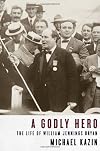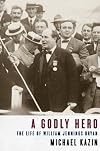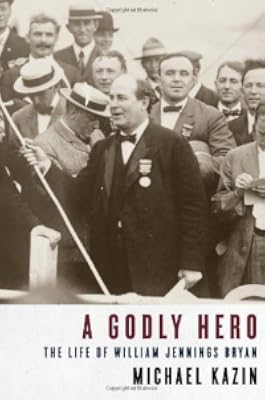
A Godly Hero: The Life of William Jennings Bryan
by Michael Kazin
On This Page
Description
ONE OF THE BEST BOOKS OF THE YEAR: THE WASHINGTON POST, CHICAGO TRIBUNE, LOS ANGELES TIMES, ST. LOUIS POST-DISPATCH.Politician, evangelist, and reformer William Jennings Bryan was the most popular public speaker of his time. In this acclaimed biography—the first major reconsideration of Bryan’s life in forty years–award-winning historian Michael Kazin illuminates his astonishing career and the richly diverse and volatile landscape of religion and politics in which he rose to fame.
show more Kazin vividly re-creates Bryan’s tremendous appeal, showing how he won a passionate following among both rural and urban Americans, who saw in him not only the practical vision of a reform politician but also the righteousness of a pastor. Bryan did more than anyone to transform the Democratic Party from a bulwark of laissez-faire to the citadel of liberalism we identify with Franklin D. Roosevelt. In 1896, 1900, and 1908, Bryan was nominated for president, and though he fell short each time, his legacy–a subject of great debate after his death–remains monumental. This nuanced and brilliantly crafted portrait restores Bryan to an esteemed place in American history.
. Biography & Autobiography. Religion & Spirituality. Nonfiction. Politics. show less
Tags
Recommendations

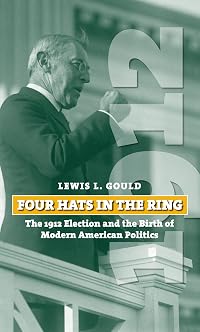
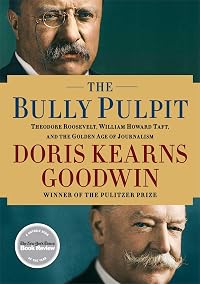


Member Reviews
In Michael Kazin’s political biography of the great American champion of the common man at the turn of the nineteenth century, the key to the problem of William Jennings Bryan comes early in the book. This is when Kazin presents us with this quote from his subject relating to the compartmentalization Bryan and his followers had between their sentimental faith, and their comfortable secular existence: “As a rule we disbelieve all fact and theories for which we have no use.” While this might be a workable way of life for the average person (if not very wise), the reality is that Bryan as an aspiring national political leader badly needed a theory on which to base a political strategy that was more than well-intended moralism and the show more politics of identity, and to get him to fifty-percent-plus-one of the votes cast.
This is just part of the tragedy of man in Kazin’s view, who is most interested in Bryan as a last expression of a time when belief in revealed religion went hand in hand with progressive politics, and which is a comment on contemporary politics with its sharp divide between conventional religiosity (where identity trumps all) and today’s progressivism of personal liberation, redistribution and environmental concern. Bryan’s non-interest (to put the best spin on matters) regarding issues of racial equality makes it impossible to draw connections between him and a Martin Luther King (the closest modern comparison), and renders him a dead end from the modern progressive perspective. On the whole, one is left with the sense that Bryan’s thinking is so much of the nineteenth century that it just seems unhelpful to anachronistically drag the man and his attitudes into the current day.
One question that Kazin’s line of argument also begs is whether Bryan could be viewed as a precursor to the contemporary protest politics of the so-called Tea Party. The man had sufficient proportion and good will that this seems unfair, but Bryan would not be the first person to complete a trajectory from the progressive to the reactionary in mentality. Bryan’s inveterate conflict with corporate interests would also make him an inconvenient hero for modern conservatism.
The other question that I still have coming away from this book is Bryan’s real attitude towards Catholicism. On one hand he was an enthusiastic prohibitionist, which is usually a litmus test for nativist, anti-papist, thinking. On the other, as a Democrat, Bryan knew that his electoral success depended at least in part on the Catholic vote. Perhaps this is just another example of an unsystematic thinker ignoring a structural issue, or it might be a commentary on how Bryan and his wife sanitized the record in regards to what they truly felt. show less
This is just part of the tragedy of man in Kazin’s view, who is most interested in Bryan as a last expression of a time when belief in revealed religion went hand in hand with progressive politics, and which is a comment on contemporary politics with its sharp divide between conventional religiosity (where identity trumps all) and today’s progressivism of personal liberation, redistribution and environmental concern. Bryan’s non-interest (to put the best spin on matters) regarding issues of racial equality makes it impossible to draw connections between him and a Martin Luther King (the closest modern comparison), and renders him a dead end from the modern progressive perspective. On the whole, one is left with the sense that Bryan’s thinking is so much of the nineteenth century that it just seems unhelpful to anachronistically drag the man and his attitudes into the current day.
One question that Kazin’s line of argument also begs is whether Bryan could be viewed as a precursor to the contemporary protest politics of the so-called Tea Party. The man had sufficient proportion and good will that this seems unfair, but Bryan would not be the first person to complete a trajectory from the progressive to the reactionary in mentality. Bryan’s inveterate conflict with corporate interests would also make him an inconvenient hero for modern conservatism.
The other question that I still have coming away from this book is Bryan’s real attitude towards Catholicism. On one hand he was an enthusiastic prohibitionist, which is usually a litmus test for nativist, anti-papist, thinking. On the other, as a Democrat, Bryan knew that his electoral success depended at least in part on the Catholic vote. Perhaps this is just another example of an unsystematic thinker ignoring a structural issue, or it might be a commentary on how Bryan and his wife sanitized the record in regards to what they truly felt. show less
A well-written biography that neither lionizes nor destroys its subject. Each issue of controversy was dealt with in an even-handed manner, which helped me immensely, as Bryan has always been somewhat of an historical/religious enigma to me. My only concern was that Kazin was not entirely consistent with his portrayal of some events (i.e. positive spin on event in one chapter, negative recollection in next chapter). However, that concern is completely outweighed by the treatment of the subject. Highly recommended for those interested in politics, the intersection of religion and politics, liberalism, and those rare creatures known as public evangelical Christian liberals.
I must admit that I have never been a big William Jennings Bryan fan. He always struck me as a bit a whack job. In A Godly Hero, Michael Kazin reminds us that the Great Commoner played an important role in transforming the Democratic Party from the conservative, states-rights policies of Grover Cleveland to the liberal, national party associated with Franklin Roosevelt. Ironically, Kazin sees Bryan as a conservative figure that considered corporate-driven industrialization a radical force that could destroy American families, the Jeffersonian economy of farmers and mechanics, and the very project of democracy itself.
Kazin dismisses any lingering claims that the Boy Orator was selected as a dark horse in 1896, arguing instead that the show more crafty and ambitious Bryan had been actively working for the nomination for a year prior to the convention. By 2014 standards that would make him a late- comer, but in 1896 it was an early start. Having been nominated by the Democratic Party, Bryan ran an electrifying and novel campaign, but one that had only the slimmest possibility of success. In defeat Bryan’s supporters bonded to their hero. No other losing politician enjoyed such devoted loyalty. So potent was his spell, that the Democrats wheeled him out for two more drubbings. When not campaigning, Bryan worked his way through the lecture circuit advocating prohibition. Although his third loss more or less disqualified him from a fourth nomination in 1912, he was instrumental in steering the convention towards New Jersey Governor Woodrow Wilson. Kazin argues that Bryan exercised some influence on the New Freedom, and it should be as much a part of his legacy as his other projects. A Godly Hero finds one major flaw in its subject: He failed to stand for racial justice and too often sided with Jim Crow.
President Wilson acknowledged both Byran's support in the 1912 convention and his standing in the party by appointing him secretary of state. Bryan, who had campaigned in 1900 on an anti-imperialism message, wanted the United States to deviate from Roosevelt's jingoism and Taft's dollar diplomacy, by adopting a moral foreign policy. He succeeded to some extent in tempering Wilson's heavy hand in Latin America. But Kazin draws attention to the tension this created for the nation's chief diplomat. Despite his own views and preferences, he still had to serve his president.
When it comes to World War I Bryan stumbled badly in the estimation of his biographer. Bryan argued that the British bore prime responsibility for the loss of American life when a German submarine torpedoed the Lusitania in May 1915. Even before the sinking, he expressed concern that Wilson's British-leaning policy compromised American neutrality. Critical of both the British blockade and the German U-Boat campaign, he argued before the cabinet that any American citizens who traveled on belligerent ships did so at their own peril. Then, when the crisis occurred, Bryan choked. Instead of using the sinking as a platform to protest the American failure to uphold neutrality, he bowed to the president's wishes and signed a strongly worded threat to Germany that he himself had objected to. Then, he resigned in such a friendly manner that it did nothing to sharpen the differences between him and the chief executive. Following his departure from the cabinet, Bryan continued to serve Wilson. Bryan campaigned for Wilson in the 1916 election, and might have played a decisive role in the president's reelection.
After the United States entered the war, Bryan attacked profiteers and made it a point not to castigate German citizens.
Bryan's reputation might have been improved if he had gone down in a blaze of glory protesting Wilson Administration's policy. Of course, such a course was complicated by the fact that he had signed the note to Germany, a fact that leaves Kazin scratching his head. On the other hand, Bryan was a politician and wanted his party to remain in power. He had worked his whole life to see a strong Democratic administration in the White House that would use the federal government as a tool to bring about economic justice. Wilson might be wrong on war, but he was still vastly superior to a Republican president in either the mold of either Roosevelt or Taft.
From my blog: http://gregshistoryblog.blogspot.com show less
Kazin dismisses any lingering claims that the Boy Orator was selected as a dark horse in 1896, arguing instead that the show more crafty and ambitious Bryan had been actively working for the nomination for a year prior to the convention. By 2014 standards that would make him a late- comer, but in 1896 it was an early start. Having been nominated by the Democratic Party, Bryan ran an electrifying and novel campaign, but one that had only the slimmest possibility of success. In defeat Bryan’s supporters bonded to their hero. No other losing politician enjoyed such devoted loyalty. So potent was his spell, that the Democrats wheeled him out for two more drubbings. When not campaigning, Bryan worked his way through the lecture circuit advocating prohibition. Although his third loss more or less disqualified him from a fourth nomination in 1912, he was instrumental in steering the convention towards New Jersey Governor Woodrow Wilson. Kazin argues that Bryan exercised some influence on the New Freedom, and it should be as much a part of his legacy as his other projects. A Godly Hero finds one major flaw in its subject: He failed to stand for racial justice and too often sided with Jim Crow.
President Wilson acknowledged both Byran's support in the 1912 convention and his standing in the party by appointing him secretary of state. Bryan, who had campaigned in 1900 on an anti-imperialism message, wanted the United States to deviate from Roosevelt's jingoism and Taft's dollar diplomacy, by adopting a moral foreign policy. He succeeded to some extent in tempering Wilson's heavy hand in Latin America. But Kazin draws attention to the tension this created for the nation's chief diplomat. Despite his own views and preferences, he still had to serve his president.
When it comes to World War I Bryan stumbled badly in the estimation of his biographer. Bryan argued that the British bore prime responsibility for the loss of American life when a German submarine torpedoed the Lusitania in May 1915. Even before the sinking, he expressed concern that Wilson's British-leaning policy compromised American neutrality. Critical of both the British blockade and the German U-Boat campaign, he argued before the cabinet that any American citizens who traveled on belligerent ships did so at their own peril. Then, when the crisis occurred, Bryan choked. Instead of using the sinking as a platform to protest the American failure to uphold neutrality, he bowed to the president's wishes and signed a strongly worded threat to Germany that he himself had objected to. Then, he resigned in such a friendly manner that it did nothing to sharpen the differences between him and the chief executive. Following his departure from the cabinet, Bryan continued to serve Wilson. Bryan campaigned for Wilson in the 1916 election, and might have played a decisive role in the president's reelection.
After the United States entered the war, Bryan attacked profiteers and made it a point not to castigate German citizens.
Bryan's reputation might have been improved if he had gone down in a blaze of glory protesting Wilson Administration's policy. Of course, such a course was complicated by the fact that he had signed the note to Germany, a fact that leaves Kazin scratching his head. On the other hand, Bryan was a politician and wanted his party to remain in power. He had worked his whole life to see a strong Democratic administration in the White House that would use the federal government as a tool to bring about economic justice. Wilson might be wrong on war, but he was still vastly superior to a Republican president in either the mold of either Roosevelt or Taft.
From my blog: http://gregshistoryblog.blogspot.com show less
An excellent biography of Bryan, this book pulls no punches and really gets at the paradoxical nature of the man. Bryan doesn't fit comfortably into our understanding of American political figures, being an extremely religious liberal who may be best known today for the caricatured portrayal of him in "Inherit the Wind," but Kazin's able to bring life to the man and his ideas. Recommended.
Biography is a merciless unmasker. Leon Edel, Henry James’s biographer, slightly altered one of the master’s phrases to declare that the biographer uncovers the “figure under the carpet.” In the Edelian biography, the biographer ferrets out the facts of private life that the subject has carefully concealed and reveals the unconscious motivations—or at least unspoken—impulses that Freud has taught him to look for.
Hamlet may not have know about seems, madam, but biography is all about the difference between appearance and reality. At least since the 1920s, the world has been a stage in which the players strut and fret but also repress and inhibit themselves. Eugene O’Neill adopted masks for “The Great God Brown” and show more “Strange Interlude” in order to emphasize the divided self, the inner and outer, that society, he believed, had to reckon with.
But this Freudian fuss about the divided self is not applicable to one and all and, in fact, ought to be burlesqued—as Groucho Marx does in “Coconuts”: “Pardon me,” he announces, “while I have a strange interlude.” Indeed, the way Groucho always mugs for the camera with his painted-on mustache reminds us that no matter what character he is playing he is always Groucho.
And so it was with William Jennings Bryan a.k.a. “The Great Commoner,” the standard bearer of the working class, three-times the Democratic Party nominee (1896, 1900, 1908, the scourge of corporations, the nemesis of Wall Street, and in popular lore, the fundamentalist whom Clarence Darrow humiliated in the Scopes Monkey Trial in Dayton, Tennessee.
Any biographer looking to detect contradictions in character, discrepancies between his private and public behavior, or scandal of any kind, will be sorely disappointed. Bryan made lots of money but never invested in the stock market; a charismatic politician and preacher, he turned away adoring women and not only remained faithful to his wife but was downright uxorious. He loved to lecture about Jesus Christ, and there was a good deal about Bryan that was Christ-like. One of the best features of Michael Kazin’s biography is his quotations from people who wrote to Bryan—not only the poor and downtrodden but wealthy businessmen and people of all classes who saw him as a kind of savior.
Bryan was not a fundamentalist in the contemporary sense of the term, Mr. Kazin demonstrates. Unlike the Christian right, he did not side with the Republican Party. And though he opposed evolution and believed communities had the right to ban its teaching in schools, he was not a literalist; that is, if the earth was created in six days, those days, he suggested when Darrow cross-examined him, would be eons in our terms. Bryan correctly saw that Darwinism could be interpreted as a noxious in its social consequences, with “survival of the fittest” interpreted to mean that society had no obligation to help the weak. He was also disturbed by idea of eugenics which many believers in evolution adopted because, again, under the guise of developing a more healthy species, the disadvantaged would be marked for elimination.
So the caricature of Bryan the religious zealous and naïve Democrat is destroyed in this learned and gracefully written biography even as Bryan the man and the orator takes on a stature that makes him a precusor of the New Deal (many of Bryan’s colleagues and followers gravitated to Roosevelt after their leader died).
But what intrigues me even more is what Mr. Kazin’s book does for the genre of biography. It is often charged that biography is reductive, that it restricts our sense of history by according to much attention to individuals. But just the opposite can be true, especially when Mr. Kazin applies his understanding to what historians such as Richard Hoftstadter have said about populist and progressive movements in the early 20th century. In Bryan, the biographer finds a figure who had an appeal that cut across supposedly divided voting blocs: the populists (working class), the progressives (middle class). Indeed, a lot of TR’s rhetoric, Bryan himself pointed out, was pure Bryanism even though TR despised Bryan.
Why was Bryan so popular, even though he failed three times to capture the presidency? He was a great speaker, to be sure—even being able to make the transition from addressing large crowds without the aid of microphones to, in his last years, triumphing in the medium of radio. He could make a political position seem like a sacred principle, so that his belief that the country should go off the gold standard and increase the money supply by minting silver coins became the equivalent of Christ throwing the money changers (the Republicans) out of the temple: “You shall not press down upon the brow of labor this crown of thorns, you shall not crucify mankind upon a cross of gold.” This speech, given to the 1896 Democratic convention, was punctuated by Bryan’s stepping back from the podium, pulling his hands away from his brow, and extending them straight out from his body, holding the Christlike pose for perhaps five seconds, Mr. Kazin reports.
Bryan spoke to the “heart of America,” his wife Mary said. “But that answer is too sentimental,” Mr. Kazin objects:
It fails to grasp the historical context for Bryan’s popularity and neglects the fact that he often challenged his audiences with political talks—from recitals of the Cross of Gold speech to long critiques of World War I and arguments for prohibition and woman suffrage. Neither does it explain what he meant to these Americans—in small cities as well as crossroads villages—that other well known speakers on moral topics did not.
What is that historical context that Mr. Kazin finds so important? Bryan came of age before the advent of modernism, before the likes of John Reed and the bohemian left ridiculed him as an old fogey, before the disjunction between a Christian left and secular reformers became so wide that many of the commoners Bryan called on in building the Democratic Party have deserted it, understanding that their faith has been deemed a subject of ridicule.
Bryan had his blind spots. For him, African Americans hardly existed. Even after it was no longer politically expedient to side with Southerners who formed a large part of his core constituency, Bryan seemed incapable of seeing the injustice of segregation.
Mr. Kazin thinks Bryan was right to oppose America’s entry into World War I because it led to Communism, fascism, and much else that was evil. But would not entering have been sensible? Would the German kaiser’s victory have been a better outcome? Mr. Kazin does not consider the question.
Other than doing justice to Bryan, what is the warrant for this biography. I find it in Mr. Kazin’s juxtaposition between John Reed’s magazine, “The Masses,” and Bryan’s, “The Commoner. The former was irreverent and witty and the latter earnest and righteous. Even in his declining days, however, Bryan was able to “embellish his reputation among people that John Reed could never reach. “I want you to know that I am one of the thousands of young men in this country that you have helped into lofty conceptions of life and its meaning,” a Presbyterian minister in Michigan wrote to Bryan. Mr. Kazin concludes that Bryan represented the “yearning for a society run by and for ordinary people who lead virtuous lives. As everyone who heard him could attest, Bryan made significant public issues sound urgent, dramatic, and clear, and he encourage citizens to challenge the motives and interests of the most powerful people in the land. That is a quality absent among our recent leaders, for all their promises to leave no man, woman, or child behind.”
It seems to me that in such sentences Mr. Kazin is using biography not only to describe a man but also to show how history was once made. show less
Hamlet may not have know about seems, madam, but biography is all about the difference between appearance and reality. At least since the 1920s, the world has been a stage in which the players strut and fret but also repress and inhibit themselves. Eugene O’Neill adopted masks for “The Great God Brown” and show more “Strange Interlude” in order to emphasize the divided self, the inner and outer, that society, he believed, had to reckon with.
But this Freudian fuss about the divided self is not applicable to one and all and, in fact, ought to be burlesqued—as Groucho Marx does in “Coconuts”: “Pardon me,” he announces, “while I have a strange interlude.” Indeed, the way Groucho always mugs for the camera with his painted-on mustache reminds us that no matter what character he is playing he is always Groucho.
And so it was with William Jennings Bryan a.k.a. “The Great Commoner,” the standard bearer of the working class, three-times the Democratic Party nominee (1896, 1900, 1908, the scourge of corporations, the nemesis of Wall Street, and in popular lore, the fundamentalist whom Clarence Darrow humiliated in the Scopes Monkey Trial in Dayton, Tennessee.
Any biographer looking to detect contradictions in character, discrepancies between his private and public behavior, or scandal of any kind, will be sorely disappointed. Bryan made lots of money but never invested in the stock market; a charismatic politician and preacher, he turned away adoring women and not only remained faithful to his wife but was downright uxorious. He loved to lecture about Jesus Christ, and there was a good deal about Bryan that was Christ-like. One of the best features of Michael Kazin’s biography is his quotations from people who wrote to Bryan—not only the poor and downtrodden but wealthy businessmen and people of all classes who saw him as a kind of savior.
Bryan was not a fundamentalist in the contemporary sense of the term, Mr. Kazin demonstrates. Unlike the Christian right, he did not side with the Republican Party. And though he opposed evolution and believed communities had the right to ban its teaching in schools, he was not a literalist; that is, if the earth was created in six days, those days, he suggested when Darrow cross-examined him, would be eons in our terms. Bryan correctly saw that Darwinism could be interpreted as a noxious in its social consequences, with “survival of the fittest” interpreted to mean that society had no obligation to help the weak. He was also disturbed by idea of eugenics which many believers in evolution adopted because, again, under the guise of developing a more healthy species, the disadvantaged would be marked for elimination.
So the caricature of Bryan the religious zealous and naïve Democrat is destroyed in this learned and gracefully written biography even as Bryan the man and the orator takes on a stature that makes him a precusor of the New Deal (many of Bryan’s colleagues and followers gravitated to Roosevelt after their leader died).
But what intrigues me even more is what Mr. Kazin’s book does for the genre of biography. It is often charged that biography is reductive, that it restricts our sense of history by according to much attention to individuals. But just the opposite can be true, especially when Mr. Kazin applies his understanding to what historians such as Richard Hoftstadter have said about populist and progressive movements in the early 20th century. In Bryan, the biographer finds a figure who had an appeal that cut across supposedly divided voting blocs: the populists (working class), the progressives (middle class). Indeed, a lot of TR’s rhetoric, Bryan himself pointed out, was pure Bryanism even though TR despised Bryan.
Why was Bryan so popular, even though he failed three times to capture the presidency? He was a great speaker, to be sure—even being able to make the transition from addressing large crowds without the aid of microphones to, in his last years, triumphing in the medium of radio. He could make a political position seem like a sacred principle, so that his belief that the country should go off the gold standard and increase the money supply by minting silver coins became the equivalent of Christ throwing the money changers (the Republicans) out of the temple: “You shall not press down upon the brow of labor this crown of thorns, you shall not crucify mankind upon a cross of gold.” This speech, given to the 1896 Democratic convention, was punctuated by Bryan’s stepping back from the podium, pulling his hands away from his brow, and extending them straight out from his body, holding the Christlike pose for perhaps five seconds, Mr. Kazin reports.
Bryan spoke to the “heart of America,” his wife Mary said. “But that answer is too sentimental,” Mr. Kazin objects:
It fails to grasp the historical context for Bryan’s popularity and neglects the fact that he often challenged his audiences with political talks—from recitals of the Cross of Gold speech to long critiques of World War I and arguments for prohibition and woman suffrage. Neither does it explain what he meant to these Americans—in small cities as well as crossroads villages—that other well known speakers on moral topics did not.
What is that historical context that Mr. Kazin finds so important? Bryan came of age before the advent of modernism, before the likes of John Reed and the bohemian left ridiculed him as an old fogey, before the disjunction between a Christian left and secular reformers became so wide that many of the commoners Bryan called on in building the Democratic Party have deserted it, understanding that their faith has been deemed a subject of ridicule.
Bryan had his blind spots. For him, African Americans hardly existed. Even after it was no longer politically expedient to side with Southerners who formed a large part of his core constituency, Bryan seemed incapable of seeing the injustice of segregation.
Mr. Kazin thinks Bryan was right to oppose America’s entry into World War I because it led to Communism, fascism, and much else that was evil. But would not entering have been sensible? Would the German kaiser’s victory have been a better outcome? Mr. Kazin does not consider the question.
Other than doing justice to Bryan, what is the warrant for this biography. I find it in Mr. Kazin’s juxtaposition between John Reed’s magazine, “The Masses,” and Bryan’s, “The Commoner. The former was irreverent and witty and the latter earnest and righteous. Even in his declining days, however, Bryan was able to “embellish his reputation among people that John Reed could never reach. “I want you to know that I am one of the thousands of young men in this country that you have helped into lofty conceptions of life and its meaning,” a Presbyterian minister in Michigan wrote to Bryan. Mr. Kazin concludes that Bryan represented the “yearning for a society run by and for ordinary people who lead virtuous lives. As everyone who heard him could attest, Bryan made significant public issues sound urgent, dramatic, and clear, and he encourage citizens to challenge the motives and interests of the most powerful people in the land. That is a quality absent among our recent leaders, for all their promises to leave no man, woman, or child behind.”
It seems to me that in such sentences Mr. Kazin is using biography not only to describe a man but also to show how history was once made. show less
Michael Kazin's book is an insightful effort to rehabilitate William Jennings Bryan for our times. Seeking to dispel the image from Mencken of the fundamentalist bigot, he argues that Bryan is a pivotal figure in the transformation of the Democratic Party into the liberal force it became in American politics. While he relies on heavily on previous Bryan biographers for much of his details, his great strength is in his placement of Bryan within the context of his times. This allows him to demonstrate Bryan's impact in the movements and developments of his times, showing him to be a more significant figure than a thrice-defeated presidential candidate might otherwise warrant. The result is the best single-volume biography of Bryan show more available, one that should be read by everyone interested in this oft-caricatured historical figure. show less
I am a huge fan of A Godly Hero. It is dense and takes a while to plow through, but provides a great overview of Bryan's life, how he evolved as a man, and how he became a household name. Kazin necessarily goes further by detailing life in the Gilded Age and how Bryan's populist politics fit into the period.
Kazin fills a gap in historical research by providing the biography of a man who ran for President multiple times, but never made it to the White House. History concentrates on the winners, but as Kazin convincingly argues, Bryan did as much as anyone else when defining a devoutly Christian populism for America that lingers in American politics today.
Kazin's book is both academic and readable. I recommend it for anyone seeking a show more deeper understanding of this time period and how Bryan shaped America's thinking during it. show less
Kazin fills a gap in historical research by providing the biography of a man who ran for President multiple times, but never made it to the White House. History concentrates on the winners, but as Kazin convincingly argues, Bryan did as much as anyone else when defining a devoutly Christian populism for America that lingers in American politics today.
Kazin's book is both academic and readable. I recommend it for anyone seeking a show more deeper understanding of this time period and how Bryan shaped America's thinking during it. show less
Members
- Recently Added By
Lists

yesting 123
3 works; 1 member
Author Information

18+ Works 989 Members
Michael Kazin is a professor of history at Georgetown University and editor of Dissent. He is the award-winning author of American Dreamers: How the Left Changed a Nation, A Godly Hero: The Life of William Jennings Bryan, America Divided: The Civil War of the 1960s (with Maurice Isserman), The Populist Persuasion: An American History, and Barons show more of Labor. show less
Awards and Honors
Notable Lists
Common Knowledge
- People/Characters
- Willis J. Abbot; Charles Francis Adams; Henry Addams; Jane Addams; Emilio Aguinaldo; Nelson Aldrich (show all 80); W. R. Alexander; William V. Allen; John Peter Altgeld; John Baer; Joseph W. Bailey; Ray Stannard Baker; Henry Ward Beecher; Cyrus Bell; Edward Bellamy; August Belmont; Perry Belmont; Grace Bennett; Philo S. Bennett; Helen Berger; Johann von Bernstorff; Theodore Bilbo; A. E. Birge; Winifred Black; James G. Blaine; Richard Bland; Horace Boies; Evangeline Booth; José Bordas Valdez; Gutzon Borglum; Jeremiah Botkin; James E. Boyd; Louis Brandeis; George Brennan; Cotter Bride; Dan Bride; Charles Wayland Bryan (brother); Grace Bryan (daughter); John Bryan (grandson); Mariah Jennings Bryan (mother); Mary Baird Bryan (wife); Ruth Bryan (daughter); Silas Bryan (father); William Jennings Bryan; William Jennings Bryan, Jr.; Louise Bryant; William Cullen Bryant; James Bryce; Patrick J. Buchanan (referenced); John F. Burns; Julius Burrows; George W. Bush; Archie Butt (Major Archibald W. Butt); Andrew Cameron; Robert E. Campbell; Joseph G. Cannon; Vabar Cardarbian; John Carlisle; Andrew Carnegie; Venustiano Carranza; Willa Cather; Carrie Chapman Catt; Thomas 'Champ' Clark; Henry Clay; Grover Cleveland; Frank Cobb; Bourke Cochran; Francis Cockrell; John Commons; William Connell; Calvin Coolidge; George W. Cornell; Charles Coughlin; James Cox; Jacob Coxey; James Creelman; Charles Crisp; Richard Croker; Charles Culberson; James Dahlman
- Important places
- Belgium; USA; Illinois, USA; Nebraska, USA
Classifications
- Genres
- Nonfiction, History, Biography & Memoir, General Nonfiction, Religion & Spirituality
- DDC/MDS
- 973.91 — History & geography History of North America United States 1901- World Wars and Depression Era (1901-1953)
- LCC
- E664 .B87 .K39 — History of the United States United States Late nineteenth century, 1865-1900 Biography
- BISAC
Statistics
- Members
- 370
- Popularity
- 84,699
- Reviews
- 10
- Rating
- (3.87)
- Languages
- English
- Media
- Paper, Audiobook, Ebook
- ISBNs
- 5
- ASINs
- 6