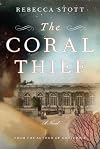
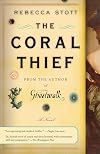
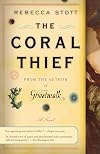
The Coral Thief
by Rebecca Stott
On This Page
Description
In her virtuosic debut, Ghostwalk, Rebecca Stott unfolded an extraordinary and true mystery involving Isaac Newton and set in seventeenth-century Cambridge. The Coral Thief is another intriguing mystery and love story, centering on pre-Darwinian theories of evolution and set in Paris right after Napoleon's surrender at Waterloo.Upon his arrival in Paris, where he has come to study anatomy, Daniel Connor, a young medical student from Edinburgh, finds that his letters of introduction and show more precious coral specimens have been stolen by the beautiful woman with whom he shared a stagecoach. But when he begins searching for his lost items---and the alluring woman who stole them---Daniel is thrust into a tumultuous, underground world of philosopher thieves obsessed with the emerging theories of evolution. As he is pulled into their plot to steal a precious jewel from the Jardin des Plantes, and as he falls in love with the mysterious coral thief, Daniel is introduced to a radical theory of evolution that irrevocably changes his conception of the world in which he lives.
As riveting and beautifully rendered as Ghostwalk, The Coral Thief is a provocative and tantalizing mix of history, love, and philosophy.
. show less
Tags
Recommendations
















Member Recommendations

Member Reviews
It is rare these days for a work of fiction to merit my highest praise. This one held my interest, and the author did not think she was writing War and Peace. In fact, it could have been a bit longer, but that wasn't required. She told the story through the first person narration of a young scientist arriving in Paris in the early nineteenth century, simultaneous with Napoleon being transported to St. Helena. She brings the period to life well, and her characters are dynamic and charismatic. When the young scientist has the precious coral and documents stolen as he is on his way to meet Cuvier for a chance to work in the amazing Natural History museum, he finds himself suddenly with one foot in the scientific establishment and one foot show more in the underbelly of Paris. Mix in a dose of Lamarck and Cuvier disagreeing about the fixity of species, and you have the ingredients for a compelling novel. This is it. show less
I was excited to receive my copy of this book (courtesy of the Early Reviewers program) because it sounded like such a delicious read: a young Englishman is on his way to Paris in 1815 with important letters of introduction, a manuscript and some specimens but before he can complete his journey, they are stolen by a mysterious woman. He quickly stumbles into even more mysteries as he tries to reconcile his old beliefs and way of life with what he's experiencing in post-revolutionary Paris.
Stott's descriptions are stunning -- I devoured passages about life in Paris, of the Jardin de Plantes, memories of the guillotine and of so many citizens' longing for the return of Napoleon. There is a quiet, dreamy quality to the prose which pulls show more you in, wanting to know more.
And yet this dreamy quality does not suit the characters or the suspense of the novel. Neither the young narrator, the mysterious philosopher-thief he meets nor any of her compatriots ever become real characters. Their desires and actions are dulled by the languor of the book. Only the convict-turned-policeman, Jagot, demands (and deserves) any real attention. show less
Stott's descriptions are stunning -- I devoured passages about life in Paris, of the Jardin de Plantes, memories of the guillotine and of so many citizens' longing for the return of Napoleon. There is a quiet, dreamy quality to the prose which pulls show more you in, wanting to know more.
And yet this dreamy quality does not suit the characters or the suspense of the novel. Neither the young narrator, the mysterious philosopher-thief he meets nor any of her compatriots ever become real characters. Their desires and actions are dulled by the languor of the book. Only the convict-turned-policeman, Jagot, demands (and deserves) any real attention. show less
 This review was written for LibraryThing Early Reviewers.
Rebecca Stott's The coral thief offers a fascinating glimpse of life and the scientific community in Paris in 1815 immediately after Napoleon is exiled. The narrator, Daniel Connor, travels from the University of Edinburgh to be an assistant to the famous Georges Cuvier, professor of comparative anatomy at the Jardin des Plantes. On the train to Paris, a fellow passenger, Lucienne Bernard, not only captivates Connor but steals coral and fossil specimens which he brought to use as credentials. Connor soon discovers that Bernard is a noted thief who is wanted by Henri Jagot, an imposing bureau chief. While Connor falls in love with Bernard, he is also under pressure to betray her.
As Connor begins work at the Jardin des Plantes, the show more author introduces a discussion of evolutionary theory of the time which has its fruition in Darwinian theory later in the century. The conflict between the new evolutionary ideas and traditional science and religion provides a
philosophical underpinning to the novel.
When Lucienne Bernard involves Daniel Connor in a plot to steal a diamond from the heavily guarded Jardin des Plantes, the cleverly written story builds suspense to the end. show less
As Connor begins work at the Jardin des Plantes, the show more author introduces a discussion of evolutionary theory of the time which has its fruition in Darwinian theory later in the century. The conflict between the new evolutionary ideas and traditional science and religion provides a
philosophical underpinning to the novel.
When Lucienne Bernard involves Daniel Connor in a plot to steal a diamond from the heavily guarded Jardin des Plantes, the cleverly written story builds suspense to the end. show less
This review was written for LibraryThing Early Reviewers.The Coral Thief is a (very) smart historical thriller set in post-revolutionary Paris. To call the book a thriller is a small stretch, although there are heroes, villains, and a final confrontation between the two. The real pillars that support the book, however, are the rich history of a tumultuous post-Napoleon Paris, the emerging science of evolution, and the battle waged by the established scientific community against it.
The main character is Daniel Connor, a naive but well educated student coming from a provincial English home to the bright lights of Paris to study under the respected, if not respectful, Georges Cuvier. On his journey, his letters of introduction, along with several precious gifts (one of which is the Coral of the show more title) are stolen by a mysterious and alluring woman. Without his entrance into Paris's academic world, Connor, befriended by an established but somewhat rogue surgeon by the name of Fin, tastes a life of food, wine, and women he has never experienced.
He eventually finds the thief, one Lucienne Bernard, whose plan seemed obvious from the start: to distract Connor long enough that he may open his mind beyond the narrow established science community. The two start an affair, but there are complications. Bernard is pursued for sins of her past by a nefarious ex-thief-cum-inspector named Jagot. Bernard also has a young precocious daughter attending a school in Paris. Daniel straddles two worlds as he works with Cuvier while learning much more from Bernard and her rebellious underworld acquaintances. As Jagot draws the net more tightly, time will run out for this delicate balance.
This book will be very entertaining if you like some history and philosophy tossed in with your adventure. It moves well, and paints a wonderful picture of Paris during this time. If you like your thrillers with gadgets and plans a la Mission Impossible, you won't find that here. You will find a solid page turner, and you'll feel like you traveled back in time in the process. Stott's writing style moves quickly while still painting a rich portrait of the time and place. I will certainly read her again. show less
The main character is Daniel Connor, a naive but well educated student coming from a provincial English home to the bright lights of Paris to study under the respected, if not respectful, Georges Cuvier. On his journey, his letters of introduction, along with several precious gifts (one of which is the Coral of the show more title) are stolen by a mysterious and alluring woman. Without his entrance into Paris's academic world, Connor, befriended by an established but somewhat rogue surgeon by the name of Fin, tastes a life of food, wine, and women he has never experienced.
He eventually finds the thief, one Lucienne Bernard, whose plan seemed obvious from the start: to distract Connor long enough that he may open his mind beyond the narrow established science community. The two start an affair, but there are complications. Bernard is pursued for sins of her past by a nefarious ex-thief-cum-inspector named Jagot. Bernard also has a young precocious daughter attending a school in Paris. Daniel straddles two worlds as he works with Cuvier while learning much more from Bernard and her rebellious underworld acquaintances. As Jagot draws the net more tightly, time will run out for this delicate balance.
This book will be very entertaining if you like some history and philosophy tossed in with your adventure. It moves well, and paints a wonderful picture of Paris during this time. If you like your thrillers with gadgets and plans a la Mission Impossible, you won't find that here. You will find a solid page turner, and you'll feel like you traveled back in time in the process. Stott's writing style moves quickly while still painting a rich portrait of the time and place. I will certainly read her again. show less
This review was written for LibraryThing Early Reviewers.Rebecca Stott scores another high mark for her second novel, The Coral Thief. Set in Paris in 1815 shortly after the final fall of Napoleon, the story draws together Daniel Connor, a Scottish student of comparative anatomy, with a cast of striking French characters including a fascinating philosopher-thief who is also a beautiful woman and something of a changeling. If this introduction makes this historical novel sound peculiar or even unique, well and good -- that is just what it is. Meticulously researched, the novel leads us into the intellectual ferment regarding the origin of species diversity that preceded the publication of Darwin's work on natural selection. The topic seems very current, and the almost religious fervor with show more which it was discussed in the early 19th Century seems to reflect the same kind of emotional arguments we hear today from the evolutionists and the advocates of intelligent design. Stott creates a compelling ambience in her descriptions of post-Napoleonic Paris. Artworks stolen from the great capitals of Europe are being carted out of the Louvre and returned to their rightful owners. The city is full of French veterans, many of them grievously wounded at Waterloo. It is a time when the normal order and boundaries of society, even French society, were loosened. There was room for philosopher-thieves and their protagonists in the security bureaucracy. Stott has found just the right pace and length to tell her story well and to develop her characters to the point of interest but not to excess. We have to take a few matters on faith -- for example, what makes Daniel Connor so attractive? I enjoyed Stott's willingness to move forward with her story without feeling bound to tie up every loose end. The ultimate effect is a masterfully written story that held my interest throughout and that transported me into a fascinating moment in the history of a great city. This is Paris before Hausmann, a Paris without electricity, a Paris of narrow streets contrasted with the striking new Jardin des Plantes. This world is lost to us now, but Rebecca Stott brings it back to life in this fine novel. show less
This review was written for LibraryThing Early Reviewers.If you like your summer reading laced with intrigue and a bit of intellectual history, this book should definitely be on your list. The characters, particularly Lucienne Bernard (the "coral thief" of the title), are engaging and appealing and the plot generally satisfying, though it does shift rather abruptly in tone from a suspenseful denouement to a somewhat disappointing epilogue at the very end of the book. Stott brilliantly conveys the heady atmosphere of scientific discovery and political reform in post-Napoleonic Paris and its life-changing effect on the narrator, a young Scottish medical student through whose adventures the reader becomes acquainted with some of the great minds of the age, both philosophical (the professors show more researching the marvels of the natural world at the academically renowned Jardin des Plantes ) and criminal (the head of the Surete, laboring over his own taxonomy of thieves, from among whose ranks he himself has only recently been recruited). As she did in her earlier book Ghostwalk (set in Isaac Newton's Cambridge), Stott successfully blends fact and fiction to bring to life a significant moment in the evolution of human thought and to celebrate the spirit of independent inquiry that drives it. show less
Daniel Connor, an Englishman studying medicine in Edinburgh, is travelling to Paris to take up a position with the renowned naturalist Georges Cuvier at the Jardin des Plantes. On the mail coach to Paris a mysterious beautiful woman sits next to him and through her talk of natural history she introduces him to a new way of seeing the world. When Daniel wakes up, she is gone, and with her his bag of precious specimens and letters of introduction. When he reports the theft he learns that she is a notorious thief called Lucienne Bernard and the chief of police, Jagot, enlists Daniel to act as his eyes and ears in case she reappears. When she finally does, Daniel is drawn into a dangerous game of cat and mouse ...
The subject matter at the show more heart of the book is intriguing to say the least, and reading the book proved both thought-provoking and stimulating; however, the execution leaves more to be desired as there are several aspects that are less than convincing (the love affair and the jewel theft, for example). Despite the beautiful and almost lyrical prose in places, there's no getting away from the fact that Daniel is a weak character, letting himself be manipulated by others, especially Lucienne, and the plot plods along for the majority of the novel, only to pick up pace right at the end. Early nineteenth-century Paris is painted in a palette of colours and the book is rich in atmosphere, evoking a city picking itself up after the terrors of the Revolution, with painful memories lingering just under the surface of everyday life, the scars barely healed. Apart from the prose I mostly enjoyed the debates, usually initiated and led by Lucienne, about the impending revolution in scientific thought, foreshadowed here by Lamarck's theory of transformism (also known as transmutation) and continued almost half a century later by Charles Darwin.
Accompanying the narrative centred on Daniel is an account of Napoleon's journey to St Helena after the defeat at Waterloo, throwing up some interesting aspects about the man, not the emperor, general and statesman. show less
The subject matter at the show more heart of the book is intriguing to say the least, and reading the book proved both thought-provoking and stimulating; however, the execution leaves more to be desired as there are several aspects that are less than convincing (the love affair and the jewel theft, for example). Despite the beautiful and almost lyrical prose in places, there's no getting away from the fact that Daniel is a weak character, letting himself be manipulated by others, especially Lucienne, and the plot plods along for the majority of the novel, only to pick up pace right at the end. Early nineteenth-century Paris is painted in a palette of colours and the book is rich in atmosphere, evoking a city picking itself up after the terrors of the Revolution, with painful memories lingering just under the surface of everyday life, the scars barely healed. Apart from the prose I mostly enjoyed the debates, usually initiated and led by Lucienne, about the impending revolution in scientific thought, foreshadowed here by Lamarck's theory of transformism (also known as transmutation) and continued almost half a century later by Charles Darwin.
Accompanying the narrative centred on Daniel is an account of Napoleon's journey to St Helena after the defeat at Waterloo, throwing up some interesting aspects about the man, not the emperor, general and statesman. show less
Members
- Recently Added By
Lists

Books Read in 2015
3,299 works; 126 members

BingoDOG - Scientists in Fiction
111 works; 17 members
Author Information

18+ Works 3,355 Members
Rebecca Stott is an affiliated scholar in the Department of History and Philosophy of Science at Cambridge University.
Some Editions
Awards and Honors
Awards
Common Knowledge
- Canonical title
- The Coral Thief
- Original title
- The Coral Thief
- Original publication date
- 2009
- People/Characters
- Daniel Connor; Lucienne Bernard; Henri Jagot; Davide Silveira; Alain Saint-Vincent; Manon Laforge (show all 9); Delphine Bernard; Sophie Duvaucel; William 'Fin' Robertson
- Important places
- Paris, France
- Important events
- Napolen sent into exile to St Helena (1815)
- Epigraph
- Once grant that species [from] one genus may pass into each other ... & whole fabric totters & falls
Charles Darwin, Notebook C, 1838 - Dedication
- To Jacob
- First words
- When at the age of twenty-one I traveled to Paris from Edinburgh by mail coach, carrying in my luggage three rare fossils and the bone of a mammoth, I still believed time traveled in straight lines.
- Last words
- (Click to show. Warning: May contain spoilers.)Perhaps we all do. There's a grandeur in that.
- Publisher's editor
- Dunseath, Kirsty; Spiegel, Cindy
- Original language
- English UK
Classifications
Statistics
- Members
- 509
- Popularity
- 58,788
- Reviews
- 89
- Rating
- (3.27)
- Languages
- 6 — Dutch, English, Finnish, French, German, Italian
- Media
- Paper, Audiobook, Ebook
- ISBNs
- 20
- ASINs
- 8