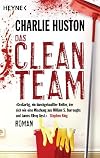
The Mystic Arts of Erasing All Signs of Death
by Charlie Huston
On This Page
Description
Webster Filmore Goodhue has found temporary work as one of the mop-up crew for the Los Angeles County crime division. In other words, he cleans up grisly crime scenes for the cops. When the daughter of a recent Malibu suicide victim asks for his help cleaning up after her brother has gotten into a little trouble, every cell in Web’s brain is telling him to turn her down. But she’s very attractive, and before he knows it, he’s well on his way to getting his face kicked in, facing down show more some gun-toting L.A. cowboys, and hanging on for dear life. And that’s only the beginning.. show less
Tags
Recommendations

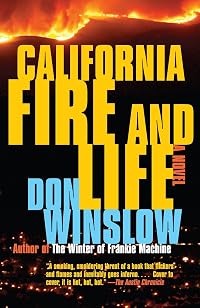
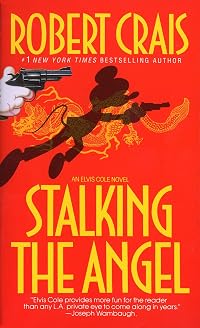
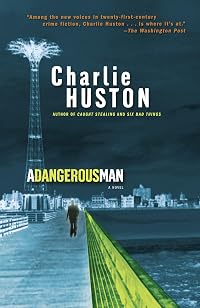
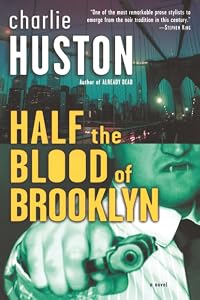
Member Recommendations

Member Reviews
First there was 'chick-lit.' Then there was 'hick-lit.' I hereby dub a new sub-genre: dick-lit. No, it's not about sex, porny-readers. I'm thinking of such books as The Goldfinch, Less Than Zero, Catcher In the Rye, and others whose titles escape me because it isn't a genre I read and enjoy. Usually.
In the way that chick-lit is about women in their twenties finding their way, finding a job and finding a man (not necessarily in that order), dick-lit is about men in their twenties working out their lives, finding a job and finding a woman (usually in that order). In this particular sub-genre, they also tend to be unlikable during the process. Webster, the protagonist, has good reason to be unlikable. As the story comes together, the show more reader starts to understand, if not necessarily applaud, Web's behavior and his travels on a sort of redemption arc. Of course, this is not the silly-girly redemption arc in chick-lit where she becomes An Entirely Different Awesome Person Embracing Change, but more like a 2.0 person, still with their dysfunctional history, still a fuck-up--just not as much of one.
"I closed my eyes for a moment, when I opened them it was gone. I looked down the street, knowing it must have just turned the corner, but unable to keep myself from thinking other thoughts. Thinking about the Flying Dutchman. Ghost ships. Haunted freighters, lost souls that manifest and dissolve, unbidden. Just the usual."
Don't read the blurb. It's a disaster of a description that gives a lot of the development away, and gets details wrong to boot. The story is set around Webster, an adult who has been freeloading on his best and life-long friend, Chev. Narrative is from Web's point of view, but because Web is focused on the here and now, explanations and mental digressions are in short supply. The reader is essentially dropped in on a teaser scene in a motel, and then returns to where the story begins with Web and Chet are squabbling like an old married couple. It becomes clear that Web is in immediate need of employment, so he takes a day-job cleaning up after messy deaths with their friend, Po Sin.
In some ways it reads like a script, dialogue-heavy with little visual background. The one thing about Huston's writing is that he is violently allergic to quotation marks (at least, I presume that's the reason), so the structure may make or break your enjoyment of the book:
I looked at the number.
--Caller unknown. Probably a customer. Let me get this for you.
--Do not pick that up.
I flipped the phone open.
--White Lightning Tattoo.
Chev jammed a hand in his pocket, going for his keys.
--Asshole!
I nodded my head, phone at my ear, backing from the door.
--A string of barbed wire? Around your biceps? Yea, sure, we can do that.
Chev turned the key.
--Do not say another word.
I covered the mouthpiece with my hand.
--No, it's cool, I can handle this.
He pushed the door open.
--Give me the phone.
I took my hand from the mouthpiece.
--Sure, sure we can do that wire around your arm. We can also tattoo lameass poser wannabe on your forehead.
Chev came at me, grabbing for the phone.
I held it over my head, screaming.
--Or how about you just get a unicorn on your hip so people will know what a real man you are!
What can I say? I liked it. I liked the feel of realness in the relationship between best friends, and in the dialogue between them. I like how the male friendship was portrayed with Chet as wells as with Po. I especially liked it when Web's friends continued to hold him accountable. I liked gradually finding out about Web through his interactions, rather than being told. The work was kind of fascinating, giving a voyeuristic insight into messy deaths, and I really wouldn't have minded more detail there. The humor was a little adolescent at time, punching and shoving and generally being sarcastic assholes. When Web encountered someone even more dickish than himself, I admit I laughed out loud a few times at the way Web talked to him.
There's also a complicated crime-situation thing going on where Web unsurprisingly plays the clueless hero. Since the book was a nominee for both an Edgar and Anthony Award, I'll assume it qualifies as a mystery, although there's really a certain sort of screwball dark comedy to it.
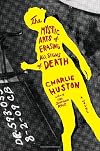
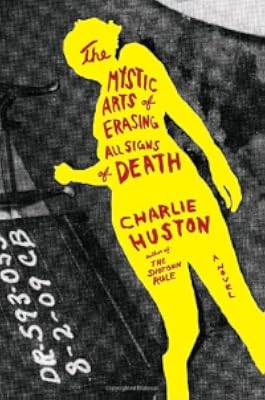
By the way, thought the cover looks like a dead woman, I'm almost certain everyone who died in the book was male. Just sayin', publishers.
Dicks. show less
In the way that chick-lit is about women in their twenties finding their way, finding a job and finding a man (not necessarily in that order), dick-lit is about men in their twenties working out their lives, finding a job and finding a woman (usually in that order). In this particular sub-genre, they also tend to be unlikable during the process. Webster, the protagonist, has good reason to be unlikable. As the story comes together, the show more reader starts to understand, if not necessarily applaud, Web's behavior and his travels on a sort of redemption arc. Of course, this is not the silly-girly redemption arc in chick-lit where she becomes An Entirely Different Awesome Person Embracing Change, but more like a 2.0 person, still with their dysfunctional history, still a fuck-up--just not as much of one.
"I closed my eyes for a moment, when I opened them it was gone. I looked down the street, knowing it must have just turned the corner, but unable to keep myself from thinking other thoughts. Thinking about the Flying Dutchman. Ghost ships. Haunted freighters, lost souls that manifest and dissolve, unbidden. Just the usual."
Don't read the blurb. It's a disaster of a description that gives a lot of the development away, and gets details wrong to boot. The story is set around Webster, an adult who has been freeloading on his best and life-long friend, Chev. Narrative is from Web's point of view, but because Web is focused on the here and now, explanations and mental digressions are in short supply. The reader is essentially dropped in on a teaser scene in a motel, and then returns to where the story begins with Web and Chet are squabbling like an old married couple. It becomes clear that Web is in immediate need of employment, so he takes a day-job cleaning up after messy deaths with their friend, Po Sin.
In some ways it reads like a script, dialogue-heavy with little visual background. The one thing about Huston's writing is that he is violently allergic to quotation marks (at least, I presume that's the reason), so the structure may make or break your enjoyment of the book:
I looked at the number.
--Caller unknown. Probably a customer. Let me get this for you.
--Do not pick that up.
I flipped the phone open.
--White Lightning Tattoo.
Chev jammed a hand in his pocket, going for his keys.
--Asshole!
I nodded my head, phone at my ear, backing from the door.
--A string of barbed wire? Around your biceps? Yea, sure, we can do that.
Chev turned the key.
--Do not say another word.
I covered the mouthpiece with my hand.
--No, it's cool, I can handle this.
He pushed the door open.
--Give me the phone.
I took my hand from the mouthpiece.
--Sure, sure we can do that wire around your arm. We can also tattoo lameass poser wannabe on your forehead.
Chev came at me, grabbing for the phone.
I held it over my head, screaming.
--Or how about you just get a unicorn on your hip so people will know what a real man you are!
What can I say? I liked it. I liked the feel of realness in the relationship between best friends, and in the dialogue between them. I like how the male friendship was portrayed with Chet as wells as with Po. I especially liked it when Web's friends continued to hold him accountable. I liked gradually finding out about Web through his interactions, rather than being told. The work was kind of fascinating, giving a voyeuristic insight into messy deaths, and I really wouldn't have minded more detail there. The humor was a little adolescent at time, punching and shoving and generally being sarcastic assholes. When Web encountered someone even more dickish than himself, I admit I laughed out loud a few times at the way Web talked to him.
There's also a complicated crime-situation thing going on where Web unsurprisingly plays the clueless hero. Since the book was a nominee for both an Edgar and Anthony Award, I'll assume it qualifies as a mystery, although there's really a certain sort of screwball dark comedy to it.
By the way, thought the cover looks like a dead woman, I'm almost certain everyone who died in the book was male. Just sayin', publishers.
Dicks. show less
Web is down and out in Los Angeles. Unemployed and embittered, he's been alienating everyone around him, including the friend in whose apartment he's been staying. When the opportunity to work cleaning up after dead bodies arises, he takes it and soon finds himself getting more than he bargained for, including a turf war between rival cleaners and a sexy woman mixed up with questionable characters.
It's a premise that sounds like Raymond Chandler by way of Chuck Palahniuk, to use the regional parlance. Which isn't far off the mark, though Huston's writing is less stylized than either of those two authors. What it does present is a fun, if gory, romp through the underbelly of Los Angeles, and a protagonist who is just self-reflective show more enough to be sympathetic. Though the tradition of getting in over your head in LA is well-worn at this point, Huston finds enough new twists and angles to keep it fresh. show less
It's a premise that sounds like Raymond Chandler by way of Chuck Palahniuk, to use the regional parlance. Which isn't far off the mark, though Huston's writing is less stylized than either of those two authors. What it does present is a fun, if gory, romp through the underbelly of Los Angeles, and a protagonist who is just self-reflective show more enough to be sympathetic. Though the tradition of getting in over your head in LA is well-worn at this point, Huston finds enough new twists and angles to keep it fresh. show less
 This review was written for LibraryThing Early Reviewers.
from Jordan:
Charlie Huston's The Mystic Art of Erasing All Signs of Death is, despite its tediously lengthy title, a fantastic piece of modern crime fiction. The story follows Webster "Web" Goodhue as he tries to navigate the choppy waters of life after personal tragedy by confronting and overcoming grief.
To summarize it too thoroughly would spoil some of the slow reveals of Web's troubled past, but centers on Web getting a job as a crime scene cleaner, which is an interesting framework for a novel in a genre that generally relies very heavily on detectives, private investigators, and the like. Needless to say, Web is unknowingly pulled into other people's criminal endeavors. While the specifics of Web's emotional transformation are show more novel and atypical, the underpinnings of mental health methodologies are true to form. The plot and its resolutions are messy, but I found them to be emotionally resonant and apropos of the story being told.
The story takes place in LA, but it's neither in the realm of glitz and glamour via celebrity nor the seedy opposite side of TV/movie production. As someone who's lived in Los Angeles, it's an accurate representation of a certain facet of the common man.
Overall, it was a very fast read. I'd very much recommend it to anyone who enjoys crime/noir fiction as well as anyone who has had to cope with sudden loss. show less
Charlie Huston's The Mystic Art of Erasing All Signs of Death is, despite its tediously lengthy title, a fantastic piece of modern crime fiction. The story follows Webster "Web" Goodhue as he tries to navigate the choppy waters of life after personal tragedy by confronting and overcoming grief.
To summarize it too thoroughly would spoil some of the slow reveals of Web's troubled past, but centers on Web getting a job as a crime scene cleaner, which is an interesting framework for a novel in a genre that generally relies very heavily on detectives, private investigators, and the like. Needless to say, Web is unknowingly pulled into other people's criminal endeavors. While the specifics of Web's emotional transformation are show more novel and atypical, the underpinnings of mental health methodologies are true to form. The plot and its resolutions are messy, but I found them to be emotionally resonant and apropos of the story being told.
The story takes place in LA, but it's neither in the realm of glitz and glamour via celebrity nor the seedy opposite side of TV/movie production. As someone who's lived in Los Angeles, it's an accurate representation of a certain facet of the common man.
Overall, it was a very fast read. I'd very much recommend it to anyone who enjoys crime/noir fiction as well as anyone who has had to cope with sudden loss. show less
Web Goodhue is what many might refer to as a loser. A former schoolteacher turned full time slacker, Web divides his time between surviving off handouts and pissing off anyone he comes in contact with. Things begin to change rapidly, however, when his friend and roommate loses what remains of his patient understanding and forces him to take a job with a mutual acquaintance. This plunges Web into the bizarre and gruesome world of Crime Scene Cleaning, launching him on a frantic and brutal journey that will force him to examine his few crumbling relationships, re-evaluate his life, confront hidden memories of a traumatic past, and deliberate on the best way to clean brains and skull fragments out of shag carpeting.
The Mystic Arts of show more Erasing All Signs of Death is one of the few stand-alone novels of Charlie Huston, the popular crime fiction author responsible for the successful Hank Thompson and Joe Pitt series. Departing once again from his popular serialized novels, Huston has created a wonderfully captivating story of self-discovery and evaluation with enough criminally insane characters and violently graphic murder scenes to please even the most jaded pulp fan.
The majority of the book’s success rests on the shoulders of the main character Web, whose first-person narration guides us through his personal journey. Web is the perfect anti-hero, displaying anti-social behaviors and poorly motivated decision-making that repel the thought of emulation, yet with a level of self-awareness and confusion that never risks alienating the reader. The slow reveal of the source of his post-traumatic disorder not only explains his behavior without excusing it, but its revelation is a surprisingly human and believable scene, and a true testament to Huston’s mastery of true-to-life dialogue and the frailty of human emotion. Also, his sudden relationship with the daughter of the suicide victim of his first crime scene cleanup, while convenient for the advancement of the story, is far from contrived or easily explained away.
Nevertheless, this is a gritty crime story, and Web’s road to emotional discovery is heavily paved with ruthless killers, street-hardened hoods, delusional criminals, and a wide variety of inventively graphic deaths. The title of the book refers to the newly chosen career path of Web’s, Crime Scene Cleanup, and a good portion of the story dwells on the darkly humorous potential inherent in scraping up and hauling away the aftermath of violent crimes and messy suicides. From detailed explanations of how to get blood off wallpaper to the results of committing suicide with a pipe-bomb suppository, Mystic Art dwells in so much bloody minutiae that the reader will occasionally wish they had a hazmat suit of their own. Of course, this sort of detail could easily devolve into a tedious grocery list of factual data reminiscent of Chuck Palahniuk’s works, but Huston never comes close to overwhelming or boring his audience with the research he obviously put into the novel.
Charlie Huston is well known for delivering top-notch work, and The Mystic Arts of Erasing All Signs of Death is no different. It is an unflinching exercise in gallows humor and crime drama with a solid plot and remarkable yet wholly believable characters. Not only will you enjoy it, but you might even learn how to detect blood splatter on upholstery. show less
The Mystic Arts of show more Erasing All Signs of Death is one of the few stand-alone novels of Charlie Huston, the popular crime fiction author responsible for the successful Hank Thompson and Joe Pitt series. Departing once again from his popular serialized novels, Huston has created a wonderfully captivating story of self-discovery and evaluation with enough criminally insane characters and violently graphic murder scenes to please even the most jaded pulp fan.
The majority of the book’s success rests on the shoulders of the main character Web, whose first-person narration guides us through his personal journey. Web is the perfect anti-hero, displaying anti-social behaviors and poorly motivated decision-making that repel the thought of emulation, yet with a level of self-awareness and confusion that never risks alienating the reader. The slow reveal of the source of his post-traumatic disorder not only explains his behavior without excusing it, but its revelation is a surprisingly human and believable scene, and a true testament to Huston’s mastery of true-to-life dialogue and the frailty of human emotion. Also, his sudden relationship with the daughter of the suicide victim of his first crime scene cleanup, while convenient for the advancement of the story, is far from contrived or easily explained away.
Nevertheless, this is a gritty crime story, and Web’s road to emotional discovery is heavily paved with ruthless killers, street-hardened hoods, delusional criminals, and a wide variety of inventively graphic deaths. The title of the book refers to the newly chosen career path of Web’s, Crime Scene Cleanup, and a good portion of the story dwells on the darkly humorous potential inherent in scraping up and hauling away the aftermath of violent crimes and messy suicides. From detailed explanations of how to get blood off wallpaper to the results of committing suicide with a pipe-bomb suppository, Mystic Art dwells in so much bloody minutiae that the reader will occasionally wish they had a hazmat suit of their own. Of course, this sort of detail could easily devolve into a tedious grocery list of factual data reminiscent of Chuck Palahniuk’s works, but Huston never comes close to overwhelming or boring his audience with the research he obviously put into the novel.
Charlie Huston is well known for delivering top-notch work, and The Mystic Arts of Erasing All Signs of Death is no different. It is an unflinching exercise in gallows humor and crime drama with a solid plot and remarkable yet wholly believable characters. Not only will you enjoy it, but you might even learn how to detect blood splatter on upholstery. show less
This crime novel begins with a graphic nipple piercing and the author pulls it off with his usual twisted charm. Welcome to the hard-boiled world of novelist [Charlie Huston]! His main character, Web Goodhue quits his teaching job and drops out of life, preferring to lay-about, mooch off his best friend and read sci-fi novels. Another friend finds him employment, with a crime-scene cleanup crew and shortly after starting, Web finds himself embroiled in a dangerous, tangled mess, which involves an attractive young client and a psycho L.A. cowboy. As Web wades through this swamp of humanity, he begins to find his own way and starts to pull his life back in order.
Huston draws some very memorable characters. I liked Po Shin, his mentor show more and I admired the the life of Web’s father, an aging Hollywood screenwriter. There are some great movie references from the 70s, (my favorite period in film). Huston’s prose is riddled with incredible profanity, which he somehow pulls-off, much like the staccato dialogue in a Tarantino film.
This is a good story. It may not be my favorite of his novels (that honor goes to Already Dead & Six Bad Things) but one thing is for sure, no one is writing crime fiction this consistently entertaining. Can’t wait to see what he does next! show less
Huston draws some very memorable characters. I liked Po Shin, his mentor show more and I admired the the life of Web’s father, an aging Hollywood screenwriter. There are some great movie references from the 70s, (my favorite period in film). Huston’s prose is riddled with incredible profanity, which he somehow pulls-off, much like the staccato dialogue in a Tarantino film.
This is a good story. It may not be my favorite of his novels (that honor goes to Already Dead & Six Bad Things) but one thing is for sure, no one is writing crime fiction this consistently entertaining. Can’t wait to see what he does next! show less
This review was written for LibraryThing Early Reviewers.Eating and reading often go well together. An entertaining book and a good meal can make for a thoroughly enjoyable experience. Unless the book happens to be Charlie Huston’s gruesome thriller The Mystic Arts of Erasing All Signs of Death.
When his roommate tires of his freeloading, Webster “Web” Fillmore Goodhue gets a job in the cutthroat world of trauma-scene cleanup and soon finds himself knee-deep in blood and guts. The detached, sarcastic former teacher discovers that he is not only good at the job but actually enjoys the quasi-solitude of the Tyvek suit and labor that has immediate and obvious results. Soon after his first assignment — a disgusting scene of roach hordes and impossibly nauseating smells, Web’s second show more cleanup finds him in the unenviable position of interacting with Soledad, the grieving daughter of a gun-inflicted-suicide victim.
The pair’s discussion quickly veers into flirtation. Po Sin, Web’s literally larger than life Chinese boss, warns his young protégé to steer clear of the comely Soledad. “And people in her situation, they are prone to acting in ways they would not under normal circumstances. Start doing shit like talking to the help about their personal tragedies. Situations like that can become quickly awkward.”
Web’s situation quickly spirals out of control in Huston’s 21st-century interpretation of the classic noir. Thanks primarily to events related to the femme fatale, Web routinely receives threats and beatings as he sinks deeper into a dizzying conspiracy. Masterfully manipulating stereotypes, Huston populates his Los Angeles with fascinating complex, fully realized individuals — many worthy of their own books.
Beginning in his prologue, Huston immediately thrusts the reader into a maelstrom of confrontation and dark humor.
Unable to control his sarcastic tendencies, most of Web’s beatings result from his inability to shut up.
Despite self-aware prose and excessive gore, The Mystic Arts of Erasing All Signs of Death barrels at a frenetic and exciting pace to a satisfying, inconclusive threads-akimbo conclusion on page 280. Unfortunately, L.A. resident Huston, in typical Hollywood fashion, felt compelled to tie up all of his dangling story lines and rambles on for another 40 pages, sanitizing his otherwise deliciously dirty world.
Even with its faults, The Mystic Arts of Erasing All Signs of Death successfully introduces a fascinating new protagonist in a thoroughly entertaining novel. Just don’t read it while eating.
This review originally appeared in the San Antonio Current January 28, 2009. show less
When his roommate tires of his freeloading, Webster “Web” Fillmore Goodhue gets a job in the cutthroat world of trauma-scene cleanup and soon finds himself knee-deep in blood and guts. The detached, sarcastic former teacher discovers that he is not only good at the job but actually enjoys the quasi-solitude of the Tyvek suit and labor that has immediate and obvious results. Soon after his first assignment — a disgusting scene of roach hordes and impossibly nauseating smells, Web’s second show more cleanup finds him in the unenviable position of interacting with Soledad, the grieving daughter of a gun-inflicted-suicide victim.
--At least he left a note.
I didn’t say anything, too occupied at the moment with working my Scotch-Brite pad over the speckles of blood on the surface of her dad’s desk.
She picked another almond from the large bowl of them on the table next to the wingback chair near the the hallway door.
-- I mean, I knew he was sick. But I’m glad he left the note anyway. So I know for sure why he did it. Sort of.
She dropped the almond back in the bowl, picked out another.
-- You think anyone would lie about that? I mean, no one would lie on their suicide note, would they?
I replaced the lamp I’d taken from the desk, minus the silk shade that had been sprayed, and looked over at her.
-- You want to be a little more enigmatic with your questions? Seriously, if you try a little harder I might get curious or something.
The pair’s discussion quickly veers into flirtation. Po Sin, Web’s literally larger than life Chinese boss, warns his young protégé to steer clear of the comely Soledad. “And people in her situation, they are prone to acting in ways they would not under normal circumstances. Start doing shit like talking to the help about their personal tragedies. Situations like that can become quickly awkward.”
Web’s situation quickly spirals out of control in Huston’s 21st-century interpretation of the classic noir. Thanks primarily to events related to the femme fatale, Web routinely receives threats and beatings as he sinks deeper into a dizzying conspiracy. Masterfully manipulating stereotypes, Huston populates his Los Angeles with fascinating complex, fully realized individuals — many worthy of their own books.
Beginning in his prologue, Huston immediately thrusts the reader into a maelstrom of confrontation and dark humor.
Then I looked at much larger bloodstains on the sheets of the queen-size bed and the flecks of blood spattered on the wall. I looked at the floor to see what I’d crushed underfoot, half expecting cockroaches, and found dozens of scattered almonds instead. I listened as the door closed behind me and locked. I watched as Soledad walked toward the bathroom and the dude snagged her by the hand before she could go in.
-- I asked, Is this the asshole?
I pointed at myself.
-- Honestly, in most circumstances, in any given room on any given day, I’d say, Yeah, I’m the asshole here. But in this particular scenario, and I know we just met and all, but in this room here?
I pointed at him.
-- I’m more willing to give you the benefit of the doubt and say that you’re the asshole.
He looked at Soledad.
-- So, yeah, he’s the asshole then?
Unable to control his sarcastic tendencies, most of Web’s beatings result from his inability to shut up.
Despite self-aware prose and excessive gore, The Mystic Arts of Erasing All Signs of Death barrels at a frenetic and exciting pace to a satisfying, inconclusive threads-akimbo conclusion on page 280. Unfortunately, L.A. resident Huston, in typical Hollywood fashion, felt compelled to tie up all of his dangling story lines and rambles on for another 40 pages, sanitizing his otherwise deliciously dirty world.
Even with its faults, The Mystic Arts of Erasing All Signs of Death successfully introduces a fascinating new protagonist in a thoroughly entertaining novel. Just don’t read it while eating.
This review originally appeared in the San Antonio Current January 28, 2009. show less
The Mystic Arts of Erasing All Signs of Death is my first book by Charlie Huston. It will not be my last. This was an incredibly fun read, although I'm not really sure why that was the case. It's a novel full of horrible things happening to broken people, and no one in the book is more damaged than the protagonist, Web Goodhue.
Web is an apprentice crime scene cleaner and professional asshole. However, both of those jobs are recent developments in his life and Huston does a phenominal job of showing just how Web got to be that way. Much of the book is focused on Web attempting to come to terms with his past, desperately hoping for some sort of catharsis.
And did I mention there's a pretty good crime story in here too? Web's very first job show more as a cleaner leads him down the rabbit hole into a world of competing guilds, redneck hijackers, and this being set in L.A., the dark side of Hollywood. It's a neat little plot that keeps the book moving without ever getting in the way of the study into Web's character. show less
Web is an apprentice crime scene cleaner and professional asshole. However, both of those jobs are recent developments in his life and Huston does a phenominal job of showing just how Web got to be that way. Much of the book is focused on Web attempting to come to terms with his past, desperately hoping for some sort of catharsis.
And did I mention there's a pretty good crime story in here too? Web's very first job show more as a cleaner leads him down the rabbit hole into a world of competing guilds, redneck hijackers, and this being set in L.A., the dark side of Hollywood. It's a neat little plot that keeps the book moving without ever getting in the way of the study into Web's character. show less
This review was written for LibraryThing Early Reviewers.Members
- Recently Added By
Author Information

52+ Works 8,409 Members
Awards and Honors
Awards
Common Knowledge
- Canonical title
- The Mystic Arts of Erasing All Signs of Death
- Original title
- The mystic arts of erasing all signs of death
- Original publication date
- 2009-01-13
- People/Characters
- Webster Fillmore Goodhue; Chev; Dot; Lincoln Lake Crows aka L.L.; Soledad Nye; Gabe (show all 8); Jaime; Po Sin
- Important places
- California, USA; Los Angeles, California, USA; Los Angeles County, California, USA; Malibu, California, USA
- Related movies
- All Signs of Death (2010 | IMDb)
- Dedication
- Sweet Virginia again on the sharp edge of a flat world.
- First words
- I'm not sure where one should expect to find the bereaved daughter of a wealthy Malibu suicide in need of a trauma cleaner long after midnight, but safe to say a trucker motel down the 405 industrial corridor of oil refinerie... (show all)s and chem plants in Carson was not on my list of likely locales.
- Last words
- (Click to show. Warning: May contain spoilers.)He bumps the volume up, and I turn and leave the room, the raised voices of brawling families following me down the hall as I go to bathe his daughter.
- Blurbers
- King, Stephen
Classifications
Statistics
- Members
- 841
- Popularity
- 32,637
- Reviews
- 69
- Rating
- (3.84)
- Languages
- English, Finnish, German, Spanish
- Media
- Paper, Audiobook, Ebook
- ISBNs
- 16
- ASINs
- 6