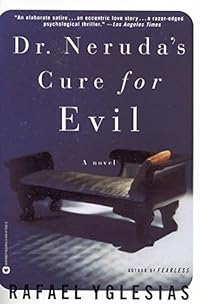
Dr. Neruda's Cure for Evil
by Rafael Yglesias
On This Page
Description
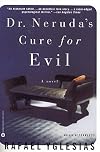
A suspenseful novel of ideas that explores the limitations of science, the origins of immorality, and the ultimate unknowability of the human psyche Rafael Neruda is a brilliant psychiatrist renowned for his effective treatment of former child-abuse victims. Apart from his talent as an analyst, he's deeply empathetic--he himself has been a victim of abuse. Gene Kenny is simply one more patient that Dr. Neruda has "cured" of past trauma. And then Kenny commits a terrible crime. Desperate show more to find out why, Dr. Neruda must shed the standards of his training, risking his own sanity in uncovering the disturbing secrets of Kenny's former life. Structured as actual case studies and steeped in the history of psychoanalysis, Dr. Neruda's Cure for Evil is Yglesias's most formally and intellectually ambitious novel. This ebook features a new illustrated biography of Rafael Yglesias, including rare photos and never-before-seen documents from the author's personal collection. show lessTags
Recommendations























Member Reviews
Keep in mind that this rating only applies to me - I don't recommend it to everyone. Now having mentioned the obvious disclaimer, I can say that this one of the few books I have earmarked for re-reading. If you are interested in psycho-analysis, then there's plenty of stuff here.
The book has three main parts, which correspond to three main stories, but embedded in each part are numerous other stories touching on the issues of child abuse, the prescribing of Ritalin for children, and the banal evil of people who manage to make getting ahead in life their main priority. That's what makes the book so rich, that and the perceptive psychological insights.
One element that made me uneasy was the narrator's incestuous relationship with his show more mother. Because the narrator has the same name as the author, and the characters that are the narrator's parents correspond almost exactly to the author's real parents, it made me feel a bit voyeuristic and embarrassed.
Again, I stress that this is not a novel with a simple plot that goes from beginning to end, but a collection of experiences that surround the life of the protagonist. For me this was a rich reading experience. show less
The book has three main parts, which correspond to three main stories, but embedded in each part are numerous other stories touching on the issues of child abuse, the prescribing of Ritalin for children, and the banal evil of people who manage to make getting ahead in life their main priority. That's what makes the book so rich, that and the perceptive psychological insights.
One element that made me uneasy was the narrator's incestuous relationship with his show more mother. Because the narrator has the same name as the author, and the characters that are the narrator's parents correspond almost exactly to the author's real parents, it made me feel a bit voyeuristic and embarrassed.
Again, I stress that this is not a novel with a simple plot that goes from beginning to end, but a collection of experiences that surround the life of the protagonist. For me this was a rich reading experience. show less
I have been fascinated with the work of psychologists and psychiatrists since the time in high school when I saw Robert Redford's film Ordinary People, which centers on a young man's visits to his psychiatrist, to my current fascination with HBO's In Treatment starring Gabriel Byrne as a troubled psychiatrist dealing with his patients, his failing marriage and his own crisis of faith in psychotherapy. I suppose I should include the time I spent watchingg The Bob Newhart Show, too. Sigmund Freud's talking cure makes for fascinating theatre, whether it works or not.
A psychiatrist who attempts to cure evil has lots to offer someone with an interest in the field, even a skeptical interest. Make him the novel's narrator and you have Rafael show more Yglesias's, Dr. Neruda's Cure for Evil. As the narrator and title character explains, in order to understand and evaluate what happens to patients in therapy we must understand the doctor treating them. The first part of the novel looks at the significant events in Dr. Neruda's childhood. The second looks at one of Dr. Neruda's patients who succeed in coming to grips with the world only to find his own so full of evil that he could not face living in it. The final section describes Dr. Neruda's attempt to cure the evil mentioned in part two.
I enjoyed part one, thought part two fascinating, but found part three unconvincing. Mr. Iglesias's novel is at its best when the focus is on the work of psychotherapy. A novel about work is a rare thing these days, unless the work is somehow related to criminology. That all three parts of Dr. Neruda's Cure for Evil feature the work of psychotherapy make for a refreshing change. In the first, young Rafael Neruda undergoes psychotherapy after a failed suicide attempt. His doctor becomes his professional mentor after he enters a career as a psychotherapist in part two. In the final part, Dr. Neruda puts his professional reputation on the line in an attempt to cure two people whom he classifies as evil.
Dr. Neruda treats patients with extreme problems, abused and severely traumatized children much like he was himself. Their cases and their treatment are fascinating reading. In part two Dr. Neruda treats a more average patient, with what appear to be a run-of-the-mill set of neurosis as a favor to a friend and for the chance it offers him to take a break from his more serious work. These two sections of the novel worked for me, but the third section went astray as it went into uncharted territory. When Dr. Neruda encounters two people who are comfortable in their success in spite of their clear sadistic characters, he concludes that they are evil and that he must cure them. While Mr. Yglesias portrays even this fantastic section of his novel with a convincing realism, I found it a hard pill to swallow. But, two out of three ain't bad, as they say. show less
A psychiatrist who attempts to cure evil has lots to offer someone with an interest in the field, even a skeptical interest. Make him the novel's narrator and you have Rafael show more Yglesias's, Dr. Neruda's Cure for Evil. As the narrator and title character explains, in order to understand and evaluate what happens to patients in therapy we must understand the doctor treating them. The first part of the novel looks at the significant events in Dr. Neruda's childhood. The second looks at one of Dr. Neruda's patients who succeed in coming to grips with the world only to find his own so full of evil that he could not face living in it. The final section describes Dr. Neruda's attempt to cure the evil mentioned in part two.
I enjoyed part one, thought part two fascinating, but found part three unconvincing. Mr. Iglesias's novel is at its best when the focus is on the work of psychotherapy. A novel about work is a rare thing these days, unless the work is somehow related to criminology. That all three parts of Dr. Neruda's Cure for Evil feature the work of psychotherapy make for a refreshing change. In the first, young Rafael Neruda undergoes psychotherapy after a failed suicide attempt. His doctor becomes his professional mentor after he enters a career as a psychotherapist in part two. In the final part, Dr. Neruda puts his professional reputation on the line in an attempt to cure two people whom he classifies as evil.
Dr. Neruda treats patients with extreme problems, abused and severely traumatized children much like he was himself. Their cases and their treatment are fascinating reading. In part two Dr. Neruda treats a more average patient, with what appear to be a run-of-the-mill set of neurosis as a favor to a friend and for the chance it offers him to take a break from his more serious work. These two sections of the novel worked for me, but the third section went astray as it went into uncharted territory. When Dr. Neruda encounters two people who are comfortable in their success in spite of their clear sadistic characters, he concludes that they are evil and that he must cure them. While Mr. Yglesias portrays even this fantastic section of his novel with a convincing realism, I found it a hard pill to swallow. But, two out of three ain't bad, as they say. show less
I read this book many years ago, but it still comes to mind, the themes and scenes are vivid both descriptively and emotionally.
This is like two books in one. The first part covers the character's youth like a 'memoir'. The second part covers recent events in his life. Both halves are distinct but come together to create a very real personality.
Ratings
Members
- Recently Added By
Author Information
14+ Works 1,384 Members
Rafael Yglesias was born on May 12, 1954. He dropped out of high school to finish his first novel, Hide Fox, and All After, which was published in 1972. He wrote three novels by the age of twenty-one and then stopped writing books between 1976 and 1984 to concentrated on starting a family. During this time, he made a living by writing screenplays. show more His other books include Hot Properties, Only Children, The Murderer Next Door, Fearless, and Dr. Neruda's Cure for Evil. A Happy Marriage won the 2009 Los Angeles Times Book Prize for Fiction. In 1992, he resumed writing screenplays. The first to be produced, Fearless, was an adaptation of his novel of the same title. He also wrote the screenplays for Death and the Maiden, Les Miserables, From Hell, and Dark Water. (Bowker Author Biography) show less
Awards and Honors
Awards
Classifications
Statistics
- Members
- 134
- Popularity
- 243,146
- Reviews
- 4
- Rating
- (3.64)
- Languages
- English, German, Portuguese
- Media
- Paper, Audiobook, Ebook
- ISBNs
- 11
- ASINs
- 2