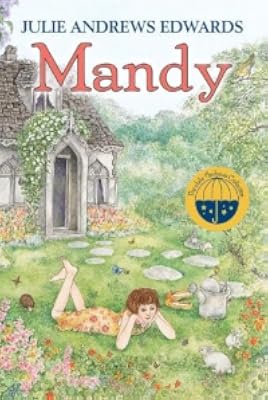
Mandy
by Julie Edwards
On This Page
Description
Longing for a place of her own, a ten-year-old orphan creates a secret home in a deserted cottage in the village of St. Martin's Green.Tags
Recommendations


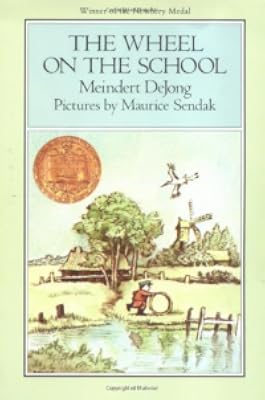
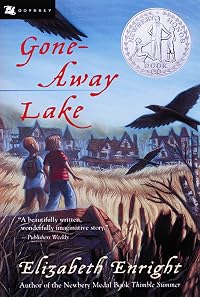
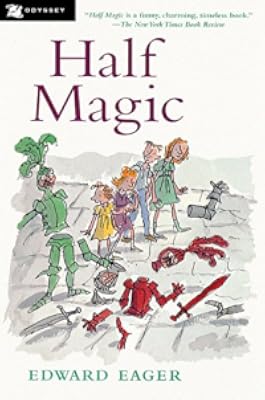
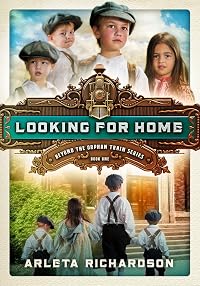





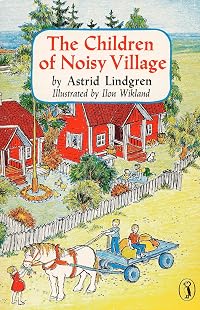
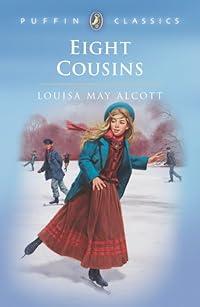
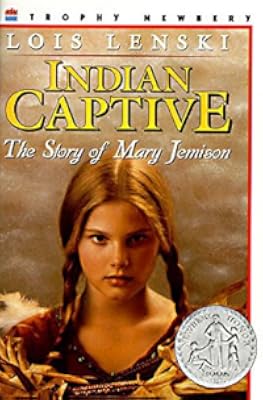
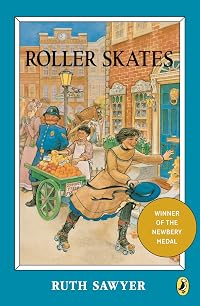

Member Recommendations
20
Member Reviews
While this review indicates a 2019 read date, I own a copy that I reread often.
Spoilers. This book brought me so much joy and wonder when I read it as a child. I took it into the rain with me, even, and was saddened to learn what water damage can do to a book. I was delighted, however, to learn that I could still read the water-warped words (unintentional alliteration! I feel so cool) perfectly once it dried, and the illustrations only seemed a bit washed out. The front cover came off at some point, too, but I kept reading the copy I had. I marveled at the glorious, lush descriptions of gardens, estates, and gardening and house chores. I regularly ignored Sue, Mandy's roommate at the orphanage, and Jonathan, the son of the couple that show more takes Mandy in. I thought so often reading this as a kid, that Matron just didn't understand Mandy and the cottage was perfect. I always worried about Mandy when she got sick, and the story ending always warmed my heart. I grew out of the book, as it were, when I was probably thirteen or so.
In recent months, I've wanted to read it, so I put in an order at a bookstore. As an adult, um...yeah. I was kind of conflicted about which star rating to give it, and finally settled on three. I'd say this takes place in 1800s rural England, but I was definitely wondering at parts "what adult would do that, even back then?" followed by, "um, maybe it was really different in the 1800s and that was normal." Maybe Dickenson-style orphanages were more common. (muses a bit) So. As an adult, I still delighted in the rich descriptions of the work of gardening and the pride that working hard to clean a dwelling can bring. I was filled with joy at each illustration, large or small. I looked for tiny details, even, and they were indeed there. But I also thought the adults favored Mandy to an unrealistic degree, that she was often rude to Sue, and that there were no real consequences for some serious things Mandy was doing. Hence my frequent thought "maybe things were different in the 1800s." Or maybe Mandy is indeed written unrealistically.
I don't understand why Jonathan was in the book--now that I write that, I realize it was probably solely to give Mandy a sibling. She had two doting parent figures quickly and unrealistically. Jonathan took the whole "we're taking care of a sick, strange, orphaned girl who broke into your dad's new cottage repeatedly to garden and deep clean" pretty well. On reread as adult, this is a clear adoption fantasy. It's so well-written that, had I not read the book's introduction, I'd have guessed the author was writing about herself. I need to stop guessing that. More likely, it's a Little Orphan Annie retelling, sugar-coated and with no dog. It's mentioned Mandy's a terrific singer, but not if she has red hair. Hm. And I'm not poking fun--my youth musical theater career started when I was eleven because I could sing. Here, though, I was kind of surprised Mandy wasn't more smug--it fits with her character. (shrugs)
This book had a profound effect on me as a reader, as a kid. I love descriptions in novels of houses and gardens, and this book is what began it. I write short stories as a hobby, and when someone lives in a nice house, I give the character a garden that will remind me positively of the one described and cared for in this book. If I were to read this again, and I'm still deciding, I'd read it for the descriptions and ignore the story I think. I'm glad I reread it now though. show less
Spoilers. This book brought me so much joy and wonder when I read it as a child. I took it into the rain with me, even, and was saddened to learn what water damage can do to a book. I was delighted, however, to learn that I could still read the water-warped words (unintentional alliteration! I feel so cool) perfectly once it dried, and the illustrations only seemed a bit washed out. The front cover came off at some point, too, but I kept reading the copy I had. I marveled at the glorious, lush descriptions of gardens, estates, and gardening and house chores. I regularly ignored Sue, Mandy's roommate at the orphanage, and Jonathan, the son of the couple that show more takes Mandy in. I thought so often reading this as a kid, that Matron just didn't understand Mandy and the cottage was perfect. I always worried about Mandy when she got sick, and the story ending always warmed my heart. I grew out of the book, as it were, when I was probably thirteen or so.
In recent months, I've wanted to read it, so I put in an order at a bookstore. As an adult, um...yeah. I was kind of conflicted about which star rating to give it, and finally settled on three. I'd say this takes place in 1800s rural England, but I was definitely wondering at parts "what adult would do that, even back then?" followed by, "um, maybe it was really different in the 1800s and that was normal." Maybe Dickenson-style orphanages were more common. (muses a bit) So. As an adult, I still delighted in the rich descriptions of the work of gardening and the pride that working hard to clean a dwelling can bring. I was filled with joy at each illustration, large or small. I looked for tiny details, even, and they were indeed there. But I also thought the adults favored Mandy to an unrealistic degree, that she was often rude to Sue, and that there were no real consequences for some serious things Mandy was doing. Hence my frequent thought "maybe things were different in the 1800s." Or maybe Mandy is indeed written unrealistically.
I don't understand why Jonathan was in the book--now that I write that, I realize it was probably solely to give Mandy a sibling. She had two doting parent figures quickly and unrealistically. Jonathan took the whole "we're taking care of a sick, strange, orphaned girl who broke into your dad's new cottage repeatedly to garden and deep clean" pretty well. On reread as adult, this is a clear adoption fantasy. It's so well-written that, had I not read the book's introduction, I'd have guessed the author was writing about herself. I need to stop guessing that. More likely, it's a Little Orphan Annie retelling, sugar-coated and with no dog. It's mentioned Mandy's a terrific singer, but not if she has red hair. Hm. And I'm not poking fun--my youth musical theater career started when I was eleven because I could sing. Here, though, I was kind of surprised Mandy wasn't more smug--it fits with her character. (shrugs)
This book had a profound effect on me as a reader, as a kid. I love descriptions in novels of houses and gardens, and this book is what began it. I write short stories as a hobby, and when someone lives in a nice house, I give the character a garden that will remind me positively of the one described and cared for in this book. If I were to read this again, and I'm still deciding, I'd read it for the descriptions and ignore the story I think. I'm glad I reread it now though. show less
I remembered this only vaguely from childhood, so it was good to re-read it. It certainly has a somewhat dated feel to it, but still enjoyable. The orphan Mandy longs for a place of her own and finds it: over the wall behind the orphanage, through the forest, she finds an abandoned cottage with a room entirely decorated in seashells. Mandy sets about making the place hers, evading her friend Sue and buying or "borrowing" items to clean the cottage and weed and plant the garden. When Mandy falls ill and heads to the cottage, only Sue knows where to find her, and the new owner of the estate, Bill, rescues her and brings her home. Mandy recuperates at Cranston Hall with Bill and Ann and their son Jonathan; she celebrates Christmas with show more them but then must return to the orphanage. Of course, unbeknownst to Mandy, this is only so that adoption papers can be put in order, and she gets to go live with the Fitzgeralds permanently. Then, having gotten her dearest wish, she asks if they can give the cottage to the other orphanage children, as a place of their own to come and play. Mandy has a quiet strength of character, adventurous independence, and a generous spirit. show less
This book is intriguing because Mandy (whose dreaminess and imagination I identify with) discovers a cottage and turns it into something of her own. She's doing this for all manner of psychological reasons related to the loss of her familly, but I just loved hearing about how she fixed up that cottage.
Ten-year-old Mandy feels lost among the thirty children who live in the old stone orphanage. She dreams of a home of her own, a place where she belongs. When Mandy climbs over the high orphanage wall to explore the outside, she is lucky enough to find a tiny deserted cottage hidden in the forest. With a few "borrowed" items, the cottage becomes a refuge. To guard her secret, Mandy even lies -- but when she falls terribly sick, no one knows where she is. No one, that is, except for a special admirer she didn't know she had.
I received this book as a gift when I was small (around 7 maybe?), and read the HECK out of it! The front cover is completely gone, and I doodled on the inside at some point. I'm not an orphan myself, but somehow this character really spoke to me, about wanting a secret place all of her own. Something she could be proud of, and take care of. I have wonderful gardens and stone-paved walkways in my mind, inspiration from Mandy!
I LOVED this book as a kid. And then, as often happens, I completely forgot about it until a few months ago when someone casually mentioned it on a podcast. So I tracked down a copy (this is when I learned that Julie Andrews wrote it, and I'm still recovering from the realization that Julie Andrews was even more steeply rooted in my childhood than I thought) and really enjoyed revisiting it. All I remembered about this book was all the gardening and keeping house at a secret cottage in the woods, which was my favorite part to revisit, too.
Mandy, a ten-year-old orphan, finds an abandoned cottage in the woods near her orphanage. For an entire summer, she tends the garden and cleans the cottage, pretending that it is her home. She keeps it secret from everyone, even her best friend at the orphanage, and does some lying and even some stealing (dishes and silverware) in order to keep up the pretense. When she is discovered, however, it ends up leading to something even better.
There's just something magical and appealing about a secret garden, and Mandy is such a great character -- likable, though flawed. The language feels a little dated in places (the girls say things like "Golly!" and "That would be just super!") The date is never specified, but I'd guess the story is set show more in the '50s (it was first published in 1971). All in all, a very enjoyable read, and one I would recommend to readers who enjoy The Secret Garden, Anne of Green Gables, and other childhood classics. show less
There's just something magical and appealing about a secret garden, and Mandy is such a great character -- likable, though flawed. The language feels a little dated in places (the girls say things like "Golly!" and "That would be just super!") The date is never specified, but I'd guess the story is set show more in the '50s (it was first published in 1971). All in all, a very enjoyable read, and one I would recommend to readers who enjoy The Secret Garden, Anne of Green Gables, and other childhood classics. show less
Members
- Recently Added By
Lists

Favorite Childhood Books
1,651 works; 519 members

Satori Smiles Children's Book List
262 works; 7 members

4th Grade Books
312 works; 5 members

Reading Rainbow
193 works; 10 members

Frequently sought stories - Name that Book group
149 works; 11 members

Authors from England
147 works; 4 members

Torchlight & Build Your Library Level 1
29 works; 1 member

Build Your Library Level 3
30 works; 1 member

Book Worlds We'd Like To Visit
322 works; 158 members

Books We Loved As Children
603 works; 253 members

EGBERTINA'S List of childhood books worthy of merit or unspeakable delight
155 works; 7 members

Favorite Kids Books (chapter, middle grade)
170 works; 4 members
Author Information

107+ Works 10,949 Members
Julie Andrews was born in Walton-on-Thames, England, on October 1, 1935. She is a film and stage actress. She came to the United States at the age of 19 to star in The Boyfriend on Broadway. Some of her other stage performances include My Fair Lady, Camelot and Victor/Victoria. She has starred is numerous movies including The Sound of Music, show more Thoroughly Modern Millie, 10, Victor/Victoria, The Princess Diaries, and Shrek. She won an Oscar for Mary Poppins, her very first motion picture appearance. She received a Lifetime Achievement Award from the British Academy of Film and Television and in 2000 the title of Dame was bestowed upon her by Queen Elizabeth II for lifetime achievements in the arts and humanities. She is the author or co-author of numerous children's books including Mandy, The Last of the Really Great Whangdoodles, Dumpy the Dump Truck, Dumpy Saves Christmas, Little Bo: The Story of Bonnie Boadicea, Little Bo in France and The Very Fairy Princess Series. She also published an autobiography, Home: A Memoir of My Early Years, in 2008. (Bowker Author Biography) show less
Some Editions
Awards and Honors
Awards
Series
Belongs to Publisher Series
Work Relationships
Is contained in
Common Knowledge
- Canonical title
- Mandy
- Original title
- Mandy
- Original publication date
- 1971
- People/Characters
- Mandy; Sue; Matron Bridie; Bill Fitzgerald; Ann Fitzgerald
- Dedication
- for jenny
because i promised - First words
- On the outskirts of a pretty country village called St. Martin's Green, there stands a large, white house called St. Martin's Orphanage.
- Last words
- (Click to show. Warning: May contain spoilers.)She had found what she had been looking for all her life.
Classifications
- Genres
- Children's Books, Fiction and Literature, Kids
- DDC/MDS
- 823.914 — Literature & rhetoric English & Old English literatures English fiction 1900- 1901-1999 1945-1999
- LCC
- PZ7 .E2562 .M — Language and Literature Fiction and juvenile belles lettres Fiction and juvenile belles lettres Juvenile belles lettres
- BISAC
Statistics
- Members
- 2,355
- Popularity
- 8,378
- Reviews
- 35
- Rating
- (4.16)
- Languages
- English, German
- Media
- Paper, Audiobook
- ISBNs
- 19
- ASINs
- 12