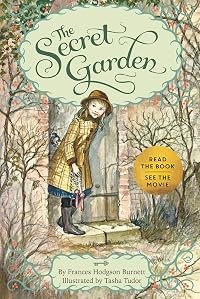
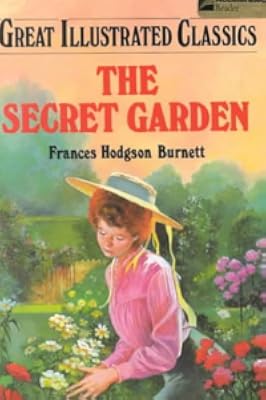
The Secret Garden
by Frances Hodgson Burnett
On This Page
Description
Ten-year-old Mary comes to live in a lonely house on the Yorkshire moors and discovers an invalid cousin and the mysteries of a locked garden.Tags
Recommendations







Member Recommendations




Member Reviews
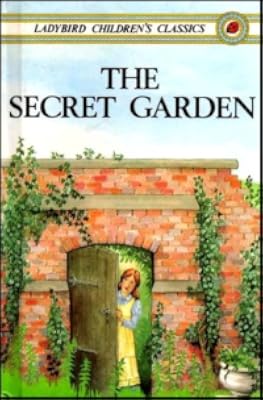
When bad-tempered Mary Lennox is orphaned, she is taken from India to the moors of Yorkshire to live at her uncle Archibald Craven's lonely manor house. The estate holds more than one mystery for Mary to solve, but all of the mysteries hinge on the mysterious walled garden, locked up by Mr. Craven ten years ago. Can Mary find a way to get in? What will she discover there, if she does?
I think the thing that keeps me coming back to this book is that it can be read on so many different levels. It has a great plot that is perennially attractive to children -- what child doesn't long to solve a mystery and discover a secret place that is theirs alone? And if you go a little deeper, there's a lot of fascinating character development as Mary show more goes from someone completely unlikeable to a true heroine. There are interesting themes, like the healing power of nature, the danger of living up to negative expectations, and the importance of human connections. I'm always drawn to this book in the springtime, and I think I always will be, no matter how old I am. Readers of all ages will connect with this lovely story. show less
I think the thing that keeps me coming back to this book is that it can be read on so many different levels. It has a great plot that is perennially attractive to children -- what child doesn't long to solve a mystery and discover a secret place that is theirs alone? And if you go a little deeper, there's a lot of fascinating character development as Mary show more goes from someone completely unlikeable to a true heroine. There are interesting themes, like the healing power of nature, the danger of living up to negative expectations, and the importance of human connections. I'm always drawn to this book in the springtime, and I think I always will be, no matter how old I am. Readers of all ages will connect with this lovely story. show less
This was a lot more delightful than I expected, completely charmed me. I love nature in my reading generally and plants are extra special to me, so I lapped up all those lovely, loving descriptions of the Secret Garden and surrounding moor.
I also liked Burnett's treatment of the children Mary and Colin. They both started off as entitled, obnoxious brats -- who actually suffered deeply. I would hate to be around them but you can't help but feel sympathy. Then friendship and observing wonderful things in the world around them inspired them, transforming their fears and trauma. They began to learn there was a different way, not only giving them pleasure but also competency. I was reminded of those places people go now, to farms to do show more chores and spend time with horses or other animals as therapy.
Sure it was a sappy story. But come on, we all could be a bit more sappy. And a bit more happy. Hard to begrudge a children's book for letting readers share in that fresh sense of newly discovered joy. show less
I also liked Burnett's treatment of the children Mary and Colin. They both started off as entitled, obnoxious brats -- who actually suffered deeply. I would hate to be around them but you can't help but feel sympathy. Then friendship and observing wonderful things in the world around them inspired them, transforming their fears and trauma. They began to learn there was a different way, not only giving them pleasure but also competency. I was reminded of those places people go now, to farms to do show more chores and spend time with horses or other animals as therapy.
Sure it was a sappy story. But come on, we all could be a bit more sappy. And a bit more happy. Hard to begrudge a children's book for letting readers share in that fresh sense of newly discovered joy. show less
A little white girl named Mary Lennox was born in India and lived there until she was ten - when cholera swept through the household and her parents both died (along with many servants). Mary was both coddled and neglected in India, and when she is sent to her uncle's house in Yorkshire, her treatment is much the same: she has food and clothing, but no parental or familial love, no education, and no children her own age to play with. She is blamed for her nasty temperament, but after a while in Yorkshire, she begins exploring the gardens, and finds the secret garden that was locked up after her uncle's wife died. She also discovers another child in the house - her cousin, Colin - who was expected to die at birth, and who has been show more largely bedridden since, despite the fact that there is nothing physically wrong with him; his grieving father provided medical care and other basics, but withheld his own love and attention. With the help of another Yorkshire boy, Dickon, Mary gets Colin out of the house and into the secret garden, where the fresh air and change of mindset provide the "magic" for them both to grow strong and healthy.
There are beautiful descriptions of the Yorkshire moors and flora and fauna, but colonialism pervades the narrative, with much talk of "natives" and assumed white/British superiority (see quotes below).
Quotes
The native servants she had been used to in India were not in the least like this. They were obsequious and servile and did not presume to talk to their masters as if they were their equals. (ch. IV)
"You thought I was a native! You dared! You don't know anything about natives! They are not people - they're servants who must salaam to you." (Mary to Martha, ch. IV)
"People never like me and I never like people," [Mary] thought. (ch. IV)
"I'm lonely," she said. She had not known before that this was one of the things which made her feel sour and cross. (ch. IV)
"He knows a good many things out of books but he doesn't know anything else." (Mary to Dickon, about Colin, ch. XV)
She was not used to anyone's tempers but her own. (ch. XVII)
"He's been spoiled till salt won't save him. Mother says as th' two worst things as can happen to a child is never to have his own way - or always to have it." (Martha to Mary, ch. XVIII)
That afternoon the whole world seemed to devote itself to being perfect and radiantly beautiful and kind to one little boy. (ch. XXI)
...the immense, tender, terrible, heart-breaking beauty and solemnity of Eggs. (Dickon and the robins, ch. XXV)
When new beautiful thoughts began to push out the old hideous ones, life began to come back to him....Two things cannot be in one place. "Where you tend a rose, my lad, a thistle cannot grow." (ch. XXVII)
He had not meant to be a bad father, but he had not felt like a father at all. (Archibald Craven, ch. XXVII) show less
There are beautiful descriptions of the Yorkshire moors and flora and fauna, but colonialism pervades the narrative, with much talk of "natives" and assumed white/British superiority (see quotes below).
Quotes
The native servants she had been used to in India were not in the least like this. They were obsequious and servile and did not presume to talk to their masters as if they were their equals. (ch. IV)
"You thought I was a native! You dared! You don't know anything about natives! They are not people - they're servants who must salaam to you." (Mary to Martha, ch. IV)
"People never like me and I never like people," [Mary] thought. (ch. IV)
"I'm lonely," she said. She had not known before that this was one of the things which made her feel sour and cross. (ch. IV)
"He knows a good many things out of books but he doesn't know anything else." (Mary to Dickon, about Colin, ch. XV)
She was not used to anyone's tempers but her own. (ch. XVII)
"He's been spoiled till salt won't save him. Mother says as th' two worst things as can happen to a child is never to have his own way - or always to have it." (Martha to Mary, ch. XVIII)
That afternoon the whole world seemed to devote itself to being perfect and radiantly beautiful and kind to one little boy. (ch. XXI)
...the immense, tender, terrible, heart-breaking beauty and solemnity of Eggs. (Dickon and the robins, ch. XXV)
When new beautiful thoughts began to push out the old hideous ones, life began to come back to him....Two things cannot be in one place. "Where you tend a rose, my lad, a thistle cannot grow." (ch. XXVII)
He had not meant to be a bad father, but he had not felt like a father at all. (Archibald Craven, ch. XXVII) show less
I had completely forgotten that this book includes quite a few darker moments. The death of Mary's parents in the opening, the treatment of servants in India and in England, the treatment of Colin by his father, etc. The two main children are horribly spoiled and cruel to others, but that does make their transformations all the more powerful. Above all, I love the writing about nature and the appreciation for growth and earth that the book focuses on.
Freaking loved this!! I had grown up watching the Hallmark version of this on repeat with my best friend and I must say... it followed the book pretty faithfully (minus the ending where the three kids meet up 10 years later). This is the perfect book to read in the spring and it made me really want to get outside and start working on my garden. There were a couple dated references (Indians being referred to as black and sub-human) that weren't cool but... it was a product of its time. For those unfamiliar with the premises, it basically follows a ten year old girl who was raised in India who is orphaned when cholera kills both her British parents. She is sent to live with a distant uncle in England who she has never met. She is a show more spoiled girl, used to getting her way, but she befriends a local boy who is so good humored and into nature that she starts to turn into a good little girl. Before long there is another spoiled boy who comes into the mix. Will he change his ways too? Wonderful, great for kids and adults alike. It definitely holds up! show less
Well, this was a delightful revisiting!
I first read The Secret Garden so many years ago now that I had no idea what happened in it by the time my lovely new edition arrived in the mail the other week. (I do actually still have the old edition that belonged to my sister and I; she's now reclaimed it to read to her daughter, so it all ends happily.)
And, I was lying in bed, reading the opening chapters, with the usual interruptions ("your pajamas are on the stairs... please don't jump on the bed when I'm reading... have you brushed your teeth yet?" etc), when Mr Bear (all of five-and-a-half years old) looked at the book and asked what it was about.
"It's a kid's book," I replied, thinking that would be the end of it. "Read it to me," he show more said.
So, at approximately one chapter a night (minus nights when I wasn't taking him to bed, or when he was away visiting his grandmother up to coast during school holidays, or when there just wasn't enough time to read a chapter that night), we finished it this week, nearly six weeks after it arrived. (Talk about cutting it fine with the deadline to get my review in!)
I did ask him what his favourite part was (I was rather hoping for my outrageously appalling attempts at Yorkshire accents; he did specifically ask for the "funny voices"[*] after a week or two of reading) and he looked a bit puzzled at me and refused to be drawn out for this review. So all opinions are my own (dagnabbit, I was hoping for an easy way out).
I do have to say that I was incredibly impressed that it (mostly) kept his attention through all 27 chapters. For a book written nearly 100 years ago, that's quite a feat! I did have to explain some words, and some concepts (how wonderful that "orphan" is a difficult concept in this day and age!).
It's a luscious paean to nature and spring and all its glories. (I'd love to see what the garden would have really looked like, but given the glorious descriptions, reality might actually disappoint me.) And it's wonderful to see Mary and Colin change from spoilt brats to beautiful children as the secret garden and nature works its magic on them.
I do have to admit that the mysticism at the end left me a bit cold, but I was so swept up in the story by that time that it is a minor quibble. Thanks to Penguin for the brand new (shiny!) copy. I shall hold onto it for Mr Bear to read to his children.
* My apologies to all people with real Yorkshire accents. It's a beautiful accent, I really did murder it. show less
I first read The Secret Garden so many years ago now that I had no idea what happened in it by the time my lovely new edition arrived in the mail the other week. (I do actually still have the old edition that belonged to my sister and I; she's now reclaimed it to read to her daughter, so it all ends happily.)
And, I was lying in bed, reading the opening chapters, with the usual interruptions ("your pajamas are on the stairs... please don't jump on the bed when I'm reading... have you brushed your teeth yet?" etc), when Mr Bear (all of five-and-a-half years old) looked at the book and asked what it was about.
"It's a kid's book," I replied, thinking that would be the end of it. "Read it to me," he show more said.
So, at approximately one chapter a night (minus nights when I wasn't taking him to bed, or when he was away visiting his grandmother up to coast during school holidays, or when there just wasn't enough time to read a chapter that night), we finished it this week, nearly six weeks after it arrived. (Talk about cutting it fine with the deadline to get my review in!)
I did ask him what his favourite part was (I was rather hoping for my outrageously appalling attempts at Yorkshire accents; he did specifically ask for the "funny voices"[*] after a week or two of reading) and he looked a bit puzzled at me and refused to be drawn out for this review. So all opinions are my own (dagnabbit, I was hoping for an easy way out).
I do have to say that I was incredibly impressed that it (mostly) kept his attention through all 27 chapters. For a book written nearly 100 years ago, that's quite a feat! I did have to explain some words, and some concepts (how wonderful that "orphan" is a difficult concept in this day and age!).
It's a luscious paean to nature and spring and all its glories. (I'd love to see what the garden would have really looked like, but given the glorious descriptions, reality might actually disappoint me.) And it's wonderful to see Mary and Colin change from spoilt brats to beautiful children as the secret garden and nature works its magic on them.
I do have to admit that the mysticism at the end left me a bit cold, but I was so swept up in the story by that time that it is a minor quibble. Thanks to Penguin for the brand new (shiny!) copy. I shall hold onto it for Mr Bear to read to his children.
* My apologies to all people with real Yorkshire accents. It's a beautiful accent, I really did murder it. show less
In this classic work of children’s literature, the healing properties of wild nature and the pleasing physical labor of revitalizing a neglected garden transform an under-parented, ill-mannered girl and an under-parented, invalid boy into happy, productive people. Author Frances Hodgson Burnett writes particularly well about the importance of cultivation and care for gardens and children alike. Yet, although many readers love this book, I found it slow-moving at the beginning (before sickly, “hysterical” Colin entered the story) and loaded with toxic positivity at the end.
Members
- Recently Added By
Published Reviews
ThingScore 100
This book is an ode to love, friendship and the unsurpassed beauty found in nature that fills every one of us with hope. It is inspiring, tender and guarantees the reader is going to relive the magic when you delve into the pages of this tale and find it as enchantingly satisfying as you expected. The Secret Garden is unmissable.............
added by Almatar
Lists

Favorite Childhood Books
1,646 works; 518 members
1001 Children's Books You Must Read Before You Grow Up
774 works; 101 members

BBC Big Read
191 works; 46 members
501 Must-Read Books
529 works; 72 members

Classics you know you should have read but probably haven't
421 works; 408 members
NPRs Ultimate Backseat Bookshelf: 100 Must-Reads for kids 9-14
222 works; 30 members

Read the book and saw the movie
1,170 works; 195 members

Best middle grade books
130 works; 24 members

Books Set in Great Britain
191 works; 13 members

Childhood Favorites
427 works; 24 members

Elevenses
316 works; 88 members

Garden-fiction
67 works; 20 members
Best of British Literature
226 works; 41 members

Comfort Reads
221 works; 41 members

Five books to read aloud to your kids
35 works; 17 members
Honey For a Child's Heart
1,152 works; 25 members
my children books reading list-from 100 great books
101 works; 7 members
Mensa for Kids Excellence in Reading Award Program (Grades 4-6)
64 works; 9 members
Ambleside Books
459 works; 18 members

Female Protagonist
1,056 works; 57 members

Hayao Miyazaki's 50 Recommended Children's Books
48 works; 6 members
Children's Classics Worth Reading
68 works; 9 members

Books About Girls
219 works; 17 members
Satori Smiles Children's Book List
262 works; 7 members

Folio Society
831 works; 53 members

CCE 1000 Good Books List
1,033 works; 12 members
BBC Big Read
100 works; 10 members

4th Grade Books
312 works; 5 members

Blue Pyramid 1,276 Best Books of All Time
1,248 works; 32 members

Necessary & Exquisite
30 works; 4 members
Spring Books
12 works; 2 members

Favorite children's chapter books
15 works; 1 member
LibraryThingers' 1001 Books You Must Read Before You Die
442 works; 30 members

Third-Culture-Kid Lit
10 works; 2 members

KID BOOKS
54 works; 1 member

Out of Copyright
244 works; 14 members
Novels featuring Orphans
76 works; 10 members

Puffin Books 70th anniversary handbook recommendations
537 works; 10 members

Most Popular Young Adult Lit on LT
100 works; 4 members
6th Grade
68 works; 4 members
Books Mentioned in The Wedding Planner's Daughter series
107 works; 2 members

AP Lit
363 works; 6 members

Mustich's 1000 Books to Read Before You Die: A Life Changing List
1,001 works; 19 members

Check Library
176 works; 1 member
EGBERTINA'S List of childhood books worthy of merit or unspeakable delight
155 works; 6 members

Read Aloud Revival
108 works; 4 members
Before Austen Comes Aesop
318 works; 9 members
Novels/Poems/Short Stories/Anything Storytelling Related
112 works; 2 members
The Five Books That Represent Us
391 works; 148 members

Books Read in 2020
4,379 works; 124 members

The Playful Pioneers
166 works; 1 member

Favorite Kids Books (chapter, middle grade)
168 works; 4 members
Classical Conversations Challenge A Exposition
10 works; 2 members

Spring Reading
11 works; 1 member

Recommended Reading List
219 works; 1 member

AR Level 6 in cloudLibrary
77 works; 1 member

Ambleside Online Year 4
46 works; 1 member
'Books You Can't Live Without: The Top 100', The Guardian, 2007
156 works; 7 members
Our Favorite Comfort Reads
334 works; 200 members

Books We Love to Reread
688 works; 296 members

2024 Reads
31 works; 1 member
BitLife
212 works; 4 members
Book Worlds We'd Like To Visit
322 works; 158 members
Children's Literature 1900 - 1950 in order
413 works; 8 members

Book Titles Mentioned In Newberry Medal And Honor Books
884 works; 3 members
Books We Loved As Children
603 works; 252 members

Books Read in 2024
4,623 works; 126 members

1970s
657 works; 23 members

Books You Read For University
184 works; 3 members

Books Read in 2023
5,547 works; 145 members
Recommended Reading : 600 Classics Reviewed, Editors of Salem Press, 2015
634 works; 6 members
The Story of the World: Activity Book Four: The Modern Age
333 works; 2 members

Books Read in 2016
4,666 works; 199 members

READ IN 2021
239 works; 4 members

Fictional Characters With Disabilities
43 works; 9 members
Literature About Women and Girls
394 works; 39 members

A Novel Cure
742 works; 23 members
Carole's List
445 works; 13 members
Female Author
1,234 works; 67 members

20th Century Literature
1,161 works; 54 members

Books Read in 2013
1,630 works; 51 members

1910s
90 works; 16 members

Lit Lattes Ep 002
12 works; 1 member
Victorian Period
113 works; 10 members
...read all, pay nowt (Books set in Yorkshire)
86 works; 14 members
Books tagged unread
41 works; 1 member
Books tagged favorites
390 works; 30 members

Unread books
1,063 works; 87 members

Books tagged "feel good"
129 works; 20 members
Sense of place
156 works; 13 members

University literature
145 works; 5 members
Stories Featuring Passages, Gateways and Doors
39 works; 11 members

Biggest Disappointments
606 works; 163 members

Top Five Books of 2018
802 works; 265 members

Top 100 to Read before you Die
109 works; 7 members
Overdue Podcast
806 works; 9 members

for you little gardener and lover of trees
14 works; 2 members

Books Read in 2017
4,249 works; 130 members

Recommend the 20 best books you've read in the last five years
2,168 works; 606 members

Kindness
13 works; 1 member

Enfants sans
14 works; 1 member
Books Read in 2015
3,299 works; 129 members
Favourite Books
1,819 works; 316 members
Books That Changed Me
158 works; 47 members
Best Domestic Fiction
77 works; 6 members

Garden
23 works; 2 members

Top Five Books of 2012
55 works; 11 members

Top Five Books of 2014
1,064 works; 398 members
Children's Fantasy
73 works; 10 members
Author Information

Frances Hodgson Burnett wrote for children and adults, publishing both plays and novels. She was born in Manchester, England, on November 24, 1849. Her father, who owned a furniture store, died when she was only four years old. Her mother struggled to keep the family business running while trying to raise five children. Finally, because of the show more failing Manchester economy, the family sold the store and immigrated to the United States. In 1865 they settled just outside of Knoxville, Tennessee. Hoping to offset her family's continuing financial troubles, Burnett began to submit her stories to women's magazines. She was immediately successful. In the late 1860s her stories were published in nearly every popular American magazine. Burnett helped to support her family with income from the sale of her stories, even saving enough to finance a trip back to England, where she stayed for over a year. In 1879, Burnett published her first stories for children; two of her most popular are A Little Princess and The Secret Garden. In contrast to an extremely successful career, Burnett's personal life held many challenges. Her son Lionel was diagnosed with tuberculosis at age 15, from which he never recovered. His death inspired several stories about dead or dying children. Burnett lived her later years on Long Island, New York. She died in 1924. (Bowker Author Biography) show less
All Editions
Some Editions
Awards and Honors
Awards
Notable Lists
BBC's Big Read (51)
Series
Belongs to Publisher Series
Work Relationships
Is contained in
Is retold in
Has the (non-series) sequel
Has the adaptation
The Secret Garden: A Picture Book Classic Based on the Original Story by Frances Hodgson Burnett by Jean Fischer
Reading & Training : Frances Hodgson Burnett : The secret garden {2008} [book + sound recording] by CIDEB
Is abridged in
Is expanded in
Is parodied in
Inspired
Has as a study
Has as a student's study guide
Has as a teacher's guide
Common Knowledge
- Canonical title
- The Secret Garden
- Original title
- The Secret Garden
- Original publication date
- 1911
- People/Characters
- Mary Lennox; Dickon Sowerby; Martha Sowerby; Colin Craven; Archibald Craven; Susan Sowerby (show all 10); Ben Weatherstaff; Mrs Sarah Ann Medlock; Dr Craven; Bob Haworth
- Important places
- Misselthwaite Manor, Yorkshire, England, UK; Yorkshire, England, UK; England, UK; India
- Important events
- Cholera Epidemic (1900)
- Related movies
- The Secret Garden (1975 | IMDb); ABC Weekend Specials: The Secret Garden (1977 | s15e1 | IMDb); Hallmark Hall of Fame: The Secret Garden (1987 | IMDb); The Secret Garden (1988 | IMDb); The Secret Garden (1993 | IMDb); The Secret Garden (1999 | IMDb) (show all 8); The Secret Garden (2020 | IMDb); The Secret Garden (1949 | IMDb)
- First words
- When Mary Lennox was sent to Misselthwaite Manor to live with her uncle, everybody said she was the most disagreeable-looking child ever seen.
- Quotations
- The seeds Dickon and Mary had planted grew as if fairies had tended them. Satiny poppies of all tints danced in the breeze by the score, gaily defying flowers which had lived in the garden for years and which it might be conf... (show all)essed seemed rather to wonder how such new people had got there. And the roses—the roses! Rising out of the grass, tangled round the sundial, wreathing the tree trunks, and hanging from their branches, climbing up the walls and spreading over them with long garlands falling in cascades—they came alive day by day, hour by hour. Fair, fresh leaves and buds— and buds—tiny at first, but swelling and working Magic until they burst and uncurled into cups of scent delicately spilling themselves over their brims and filling the garden air.
And over walls and earth and trees and swinging sprays and tendrils the fair green veil of tender little leaves had crept, and in the grass under the trees and the gray urns in the alcoves and here and there everywhere were t... (show all)ouches or splashes of gold and purple and white and the trees were showing pink and snow above his head and there were fluttering of wings and faint sweet pipes and humming and scents and scents. And the sun fell warm upon his face like a hand with a lovely touch. And in wonder Mary and Dickon stood and stared at him.
They always called it Magic and indeed it seemed like it in the months that followed--the wonderful months--the radiant months--the amazing ones. Oh! the things which happened in that garden! If you have never had a garden yo... (show all)u cannot understand, and if you have had a garden you will know that it would take a whole book to describe all that came to pass there. At first it seemed that green things would never cease pushing their way through the earth, in the grass, in the beds, even in the crevices of the walls. Then the green things began to show buds and the buds began to unfurl and show color, every shade of blue, every shade of purple, every tint and hue of crimson. In its happy days flowers had been tucked away into every inch and hole and corner. Ben Weatherstaff had seen it done and had himself scraped out mortar from between the bricks of the wall and made pockets of earth for lovely clinging things to grow on. Iris and white lilies rose out of the grass in sheaves, and the green alcoves filled themselves with amazing armies of the blue and white flower lances of tall delphiniums or columbines or campanulas. "She was main fond o' them--she was", Ben Weatherstaff said.
It was the sweetest, most mysterious-looking place any one could imagine. The high walls which shut it in were covered with the leafless stems of climbing roses which were so thick that they were matted together. Mary Lennox ... (show all)knew they were roses because she had seen a great many roses in India. All the ground was covered with grass of a wintry brown and out of it grew clumps of bushes which were surely rosebushes if they were alive. There were numbers of standard roses which had so spread their branches that they were like little trees. There were other trees in the garden, and one of the things which made the place look strangest and loveliest was that climbing roses had run all over them and swung down long tendrils which made light swaying curtains, and here and there they had caught at each other or at a far-reaching branch and had crept from one tree to another and made lovely bridges of themselves. There were neither leaves nor roses on them now and Mary did not know whether they were dead or alive, but their thin gray or brown branches and sprays looked like a sort of hazy mantle spreading over everything, walls, and trees, and even brown grass, where they had fallen from their fastenings and run along the ground. It was this hazy tangle from tree to tree which made it all look so mysterious. Mary had thought it must be different from other gardens which had not been left all by themselves so long; and indeed it was different from any other place she had ever seen in her life.
There had once been a flowerbed in it, and she thought she saw something sticking out of the black earth- -some sharp little pale green points. She remembered what Ben Weatherstaff had said and she knelt down to look at them.... (show all) "Yes, they are tiny growing things and they might be crocuses or snowdrops or daffodils," she whispered. She bent very close to them and sniffed the fresh scent of the damp earth. She liked it very much. "Perhaps there are some other ones coming up in other places," she said. "I will go all over the garden and look." She did not skip, but walked. She went slowly and kept her eyes on the ground. She looked in the old border beds and among the grass, and after she had gone round, trying to miss nothing, she had found ever so many more sharp, pale green points, and she had become quite excited again. "It isn't a quite dead garden," she cried out softly to herself. "Even if the roses are dead, there are other things alive." She did not know anything about gardening, but the grass seemed so thick in some of the places where the green points were pushing their way through that she thought they did not seem to have room enough to grow. She searched about until she found a rather sharp piece of wood and knelt down and dug and weeded out the weeds and grass until she made nice little clear places around them. "Now they look as if they could breathe," she said, after she had finished with the first ones. "I am going to do ever so many more. I'll do all I can see. If I haven't time today I can come tomorrow." She went from place to place, and dug and weeded, and enjoyed herself so immensely that she was led on from bed to bed and into the grass under the trees.
To let a sad thought or a bad one get into your mind is as dangerous as letting a scarlet fever germ get into your body. If you let it stay there after it has got in you may never get over it as long as you live.
I do not know enough about the wonderfulness of undiscovered things to be able to explain how this had happened to him. Neither does anyone else yet.
There was a wooden box on the table ... full of neat packages. "Mr Craven sent it to you," said Martha.... There were two or three games and there was a beautiful little writing-case with a gold monogram on it and a gold pen ... (show all)and ink-stand.
"Let's ask Mrs Medlock for a pen and ink and some paper" [said Mary]. "I've got some of my own," said Martha. "I bought 'em so I could print a bit of a letter to Mother of a Sunday. I'll go and get it." ... Martha returned w... (show all)ith her pen and ink and paper. - Last words
- (Click to show. Warning: May contain spoilers.)And by his side with his head up in the air and his eyes full of laughter walked as strongly and steadily as any boy in Yorkshire—Master Colin!
- Original language
- English
- Disambiguation notice
- This is the work for the original text. Please do not combine movies, adaptations, or other shortened editions to this work. Thanks!
Classifications
- Genres
- Children's Books, Fiction and Literature, Kids
- DDC/MDS
- 813.4 — Literature & rhetoric American literature in English American fiction in English Later 19th Century 1861-1900
- LCC
- PZ7 .B934 .S — Language and Literature Fiction and juvenile belles lettres Fiction and juvenile belles lettres Juvenile belles lettres
- BISAC
Statistics
- Members
- 42,247
- Popularity
- 62
- Reviews
- 611
- Rating
- (4.13)
- Languages
- 31 — Arabic, Bosnian, Catalan, Chinese, Czech, Danish, Dutch, English, Estonian, Finnish, French, German, Galician, Greek, Hebrew, Hungarian, Indonesian, Italian, Japanese, Korean, Latvian, Lithuanian, Norwegian (Nynorsk), Norwegian (Bokmål), Polish, Russian, Spanish, Swedish, Turkish, Ukrainian, Portuguese (Portugal)
- Media
- Paper, Audiobook, Ebook
- ISBNs
- 1,187
- UPCs
- 16
- ASINs
- 373