On This Page
Description
Coming-of-age novels about girls are too often full of "sugar and spice and everything nice." Claudine is the happy exception. Claudine is a mischievous 15-year-old, full of her sex and rampaging through the dusty corridors of a parochial school in provincial France.Tags
Recommendations

























Member Recommendations



Member Reviews
This was Colette’s first novel, published in 1900 when she was 27, and which would become a 4-part series of ‘Claudine’ books. Ostensibly the book was co-authored with her first husband, and rake that he was, he likely steered the content towards the provocative end. However, the major voice here in this book is almost certainly Colette’s, and it’s interesting to find that the books were likely semi-autobiographical.
If so, what an interesting school she must have attended! Claudine’s teacher openly carries on a lesbian love affair with an assistant (one that Claudine herself originally desired, turning their tutoring sessions into dates), and the superintendent brazenly gropes and pursues the young girls. Aware of her show more sexuality but not about to swoon over a guy or fall victim to the superintendent, Claudine is an interesting combination of sharp, sassy, and cynical. She tends to control her environment and the friends around her – flirtatious Anais, clueless Marie, and little Luce, who idolizes and loves her. The narration is through her unique voice, and often with an inner voice in response to what other characters say or do. It’s sentimental in the sense that this is her last year before she will leave the country for Paris and never see these people again, and yet she is tough and far from cloying about it.
It’s not ‘high fiction’, but it is an entertaining, tight story, and transplants you to life in one of these schools at the time, preparing for and taking exams, creating a gala ball to honor a dignitary, and engaging in the everyday lives of kids and their various attractions and jealousies. show less
If so, what an interesting school she must have attended! Claudine’s teacher openly carries on a lesbian love affair with an assistant (one that Claudine herself originally desired, turning their tutoring sessions into dates), and the superintendent brazenly gropes and pursues the young girls. Aware of her show more sexuality but not about to swoon over a guy or fall victim to the superintendent, Claudine is an interesting combination of sharp, sassy, and cynical. She tends to control her environment and the friends around her – flirtatious Anais, clueless Marie, and little Luce, who idolizes and loves her. The narration is through her unique voice, and often with an inner voice in response to what other characters say or do. It’s sentimental in the sense that this is her last year before she will leave the country for Paris and never see these people again, and yet she is tough and far from cloying about it.
It’s not ‘high fiction’, but it is an entertaining, tight story, and transplants you to life in one of these schools at the time, preparing for and taking exams, creating a gala ball to honor a dignitary, and engaging in the everyday lives of kids and their various attractions and jealousies. show less
Decided to read this as it kept appearing on lists of books/authors I should have read. I can almost see what the appeal might have been when this book was first published, however, a lousy, dated British translation and a modern view on bullying make this less interesting to read now. Claudine 50 years ago may have seemed bright and flirtatious and risqué, today she comes off as an obnoxious, spoiled "mean girl". I probably would have enjoyed this more had I read it in French, the British slang was so out of place in a French novel!
The first novel written by Colette was attributed to her husband Willy when it was first published in 1900. Colette later said that her husband Henri Gauthier-Villars (Willy) had found a draft of her first novel and suggested how his wife could improve it, in order to get it published. There is no doubt that "Willy" a notable figure in the literary world would have been able to find a way of publishing the novel, which he did under his own name. The question which remains unanswered is how much input he had in the final text. The novel is largely autobiographical and tells the story of 15 year old Claudine's final year at school. It could only have been written by someone who had experienced that final year and is written in the first show more person. It reveals the burgeoning sexuality of a young girl eager to launch into a lesbian relationship with a nineteen year old woman and her frustration when the object of her affections is stolen from her by the head teacher. Claudine however is in control of her situation she is learning about life while still involved in all the frivolities of a fifteen year old schoolgirl. This is related with such candour and such pride that the reader feels it could only have been written by Colette.
The book today reads as a light and frothy entertainment with an underlying knowingness of the sexual mores of the time. Claudine is fortunate in going to a village school where the majority of the girls are farmer's daughters. She is intelligent and has a talent for singing, drawing and french composition and her father is a naturalist/scientist certainly belonging to the middle class, therefore Claudine is able to dominate her fellow students and to hold her own with the teachers. Claudine loves the scratchy working village which is surrounded by glorious countryside. She is left very much to her own devices by her father as there is no mother figure in evidence. Apart from arithmetic and problem solving Claudine finds the schoolwork a breeze, especially as she is plundering her fathers library at home; educating herself.
We meet Claudine roaming through the countryside on her way to school and follow her through her lessons. The headmistress has hired a new teacher and a teaching assistant and Colette describes them:
"As for Mademoiselle Sergent, she seemed anything but kindly and I augured ill of that redhead. She has a good figure, with well rounded bust and hips, but she is flagrantly ugly. Her face is puffy and permanently crimson and her nose is slightly snub between two small black eyes deep-set and suspicious......... her assistant the pretty Aimée Lanthenay attracts me as much as her superior repels me......... "Little Mademoiselle Lanthenay, your supple body seeks and demands an unknown satisfaction. If you were not an assistant Mistress at Montigny you might be - I'd rather not say"
Claudine attempts to seduce Aimée, but is eventually rejected when Aimée enters a lesbian relationship with Mademoiselle Sergent. There are two new male teachers hired for the boys school next door, who attract the attention of the elder girls. There are two big events in the book one of which is the 15 year olds matriculation examinations which take place in a town a couple of hours train journey away and Claudine and her close group of friends must endure two days of being examined. This is a fascinating episode that homes in on the trials and tribulations of this two day event. The nervousness of the girls, the characters of the examiners, who stage a one day oral examination and the worry of the teachers who do what they can to help their pupils are all brought to our attention through the eyes of Claudine. The other event is the welcoming committee back in Montigny for a Deputy of the French Senate when the whole village is "en fête" and Claudine has a starring role as a singer and speechmaker at the village school.
The competition between the girls in Claudine's class is intense, tricks are played, physical intimidation is rife and Claudine is master of it all. They try to outdo each other in making themselves attractive and/or seductive. Every new item of clothing, every look, every nuance towards elder girls or men is dissected in the mind of Claudine. She follows meticulously the exchanges between AImée and Mademoiselle Sergent, spying on them when she can. Colette does a marvellous job of placing the reader inside the head of a precocious fifteen year old girl, but she also informs the readers of the situation of those girls, who are dependent on the goodwill of their teachers, but more dependent on the men who might eventually choose them for marriage. They must also tread a fine line with some local dignitaries who might press them for favours or worse.
Colette portrays school and village life in lively fashion. Through Claudine she is amused, sometimes bored by the petty restrictions, but always passionately involved in the life around her. Claudine's forthright expression of her thoughts and feelings are seductive in themselves and her connection with the village and its natural surrounds are well portrayed. The novel pushed heavily by Wily was a success, even a bit of a sensation. Colette said that he encouraged her to spice up her story and no doubt was able to proof read for her; there were three more novels continuing the story. I read an English translation by Antonia White in a penguin edition - 4 stars. show less
The book today reads as a light and frothy entertainment with an underlying knowingness of the sexual mores of the time. Claudine is fortunate in going to a village school where the majority of the girls are farmer's daughters. She is intelligent and has a talent for singing, drawing and french composition and her father is a naturalist/scientist certainly belonging to the middle class, therefore Claudine is able to dominate her fellow students and to hold her own with the teachers. Claudine loves the scratchy working village which is surrounded by glorious countryside. She is left very much to her own devices by her father as there is no mother figure in evidence. Apart from arithmetic and problem solving Claudine finds the schoolwork a breeze, especially as she is plundering her fathers library at home; educating herself.
We meet Claudine roaming through the countryside on her way to school and follow her through her lessons. The headmistress has hired a new teacher and a teaching assistant and Colette describes them:
"As for Mademoiselle Sergent, she seemed anything but kindly and I augured ill of that redhead. She has a good figure, with well rounded bust and hips, but she is flagrantly ugly. Her face is puffy and permanently crimson and her nose is slightly snub between two small black eyes deep-set and suspicious......... her assistant the pretty Aimée Lanthenay attracts me as much as her superior repels me......... "Little Mademoiselle Lanthenay, your supple body seeks and demands an unknown satisfaction. If you were not an assistant Mistress at Montigny you might be - I'd rather not say"
Claudine attempts to seduce Aimée, but is eventually rejected when Aimée enters a lesbian relationship with Mademoiselle Sergent. There are two new male teachers hired for the boys school next door, who attract the attention of the elder girls. There are two big events in the book one of which is the 15 year olds matriculation examinations which take place in a town a couple of hours train journey away and Claudine and her close group of friends must endure two days of being examined. This is a fascinating episode that homes in on the trials and tribulations of this two day event. The nervousness of the girls, the characters of the examiners, who stage a one day oral examination and the worry of the teachers who do what they can to help their pupils are all brought to our attention through the eyes of Claudine. The other event is the welcoming committee back in Montigny for a Deputy of the French Senate when the whole village is "en fête" and Claudine has a starring role as a singer and speechmaker at the village school.
The competition between the girls in Claudine's class is intense, tricks are played, physical intimidation is rife and Claudine is master of it all. They try to outdo each other in making themselves attractive and/or seductive. Every new item of clothing, every look, every nuance towards elder girls or men is dissected in the mind of Claudine. She follows meticulously the exchanges between AImée and Mademoiselle Sergent, spying on them when she can. Colette does a marvellous job of placing the reader inside the head of a precocious fifteen year old girl, but she also informs the readers of the situation of those girls, who are dependent on the goodwill of their teachers, but more dependent on the men who might eventually choose them for marriage. They must also tread a fine line with some local dignitaries who might press them for favours or worse.
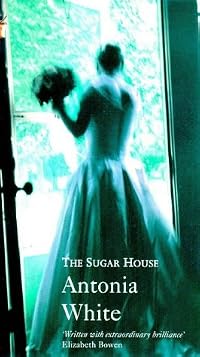
Colette portrays school and village life in lively fashion. Through Claudine she is amused, sometimes bored by the petty restrictions, but always passionately involved in the life around her. Claudine's forthright expression of her thoughts and feelings are seductive in themselves and her connection with the village and its natural surrounds are well portrayed. The novel pushed heavily by Wily was a success, even a bit of a sensation. Colette said that he encouraged her to spice up her story and no doubt was able to proof read for her; there were three more novels continuing the story. I read an English translation by Antonia White in a penguin edition - 4 stars. show less
I think I’m drawn to older lesbian books more so than contemporary because it’s reassurance that there’s always been women who love women so its harder to invalidate. The side effect of this is also positive because lots of these tell stories without making a big deal of it, though they usually end in tragedy. Claudine à l’école didn’t have some sapphique endgame, but didn’t end with invalidating Claudine’s lesbianism at least. It’s a story about deep relationships between women, without saying the word lesbian (or gay or whatever else) once. None of the characters make a big deal of it, and none of the obstacles to her relationship come from a place of homophobia (the biggest obstacle’s literally another woman). show more This was refreshing compared to the near-trauma porn that people churn out today.
That being said I read this in French and it took a really really long time, and I’m not sure I gained anything reading it in French, because there aren’t any language-specific tricks or anything. The prose is lovely, but I found myself looking forward to it ending really soon after it started. Next time I want to read an aimless story about chaotic girls I will just reread Azumanga Diaoh, which is honestly the closest comparison I can make. Similar to Azumanga though, there were a lot of disturbing references to relationships with (pedophilic) adult men… I don’t want to read about them perving on teenagers unless it casts some sort of critical eye, and I’m not sure if Colette had that given the historical context of this work.
I really did like the protagonist, Claudine, though. She has a bad attitude, and is sort of an asshole. Some people might find her frustrating, but I liked that Colette went to lengths to ensure she has no redeeming qualities, it’s a looooot funnier than the alternative.
I got to read a beautiful old copy of this from my university, it was from 1929, published by Albin Michel, and H. Mirande’s illustrations really improved the book for me. I’m attaching my favorites before I have to return it. show less
That being said I read this in French and it took a really really long time, and I’m not sure I gained anything reading it in French, because there aren’t any language-specific tricks or anything. The prose is lovely, but I found myself looking forward to it ending really soon after it started. Next time I want to read an aimless story about chaotic girls I will just reread Azumanga Diaoh, which is honestly the closest comparison I can make. Similar to Azumanga though, there were a lot of disturbing references to relationships with (pedophilic) adult men… I don’t want to read about them perving on teenagers unless it casts some sort of critical eye, and I’m not sure if Colette had that given the historical context of this work.
I really did like the protagonist, Claudine, though. She has a bad attitude, and is sort of an asshole. Some people might find her frustrating, but I liked that Colette went to lengths to ensure she has no redeeming qualities, it’s a looooot funnier than the alternative.
I got to read a beautiful old copy of this from my university, it was from 1929, published by Albin Michel, and H. Mirande’s illustrations really improved the book for me. I’m attaching my favorites before I have to return it. show less
Here is a young heroine with a keen, socially observant eye who is shockingly, innocently, perfectly coquettish. Despite its popularity, it must have ruffled some feathers at the time -- this novel acknowledges high-school age girls as being sexually aware (however limitedly so).
Something about the girls' little idiosyncratic communication tics really get at the amusement inherent in being a teenage girl. There are some hilariously concise descriptions of such occurrences as barely stifled laughs, conspiratorial glances, and little gloaty "I know something" dances.
Although this is a predecessor of such dreck as the Gossip Girl and Pretty Little Liars series of YA books, its heroine is admirably self-aware and while she may come across show more as shallow, it's made clear that she is diamond-sharp and as introspective as she is aware of the motivations and designs of those around her. Claudine is bitingly funny and simply charming. show less
Something about the girls' little idiosyncratic communication tics really get at the amusement inherent in being a teenage girl. There are some hilariously concise descriptions of such occurrences as barely stifled laughs, conspiratorial glances, and little gloaty "I know something" dances.
Although this is a predecessor of such dreck as the Gossip Girl and Pretty Little Liars series of YA books, its heroine is admirably self-aware and while she may come across show more as shallow, it's made clear that she is diamond-sharp and as introspective as she is aware of the motivations and designs of those around her. Claudine is bitingly funny and simply charming. show less
A suitable tonic after several YA-friendly tales of childhood and growing up. Colette was much more interested in representing life as it really is, with bullying, flirting, lesbian relationships, and everything else you might imagine.
Strong narrative voice and engaging heroine; sullied by the sordidness.
Members
- Recently Added By
Lists

The Guardian's 1000 Novels Everyone Must Read
1,005 works; 546 members

Favorite Coming of Age Novels.
164 works; 51 members

Best School Stories
219 works; 22 members

1900s (Decade, not century)
73 works; 17 members

Europe
205 works; 6 members

Schwob Nederland
207 works; 2 members
Author Information

278+ Works 12,663 Members
Some Editions
Awards and Honors
Notable Lists
Series

Belongs to Publisher Series
Le livre de poche (0193)
Ullstein (25516)
Work Relationships
Is contained in
Common Knowledge
- Canonical title
- Claudine at School
- Original title
- Claudine à l'école
- Original publication date
- 1900; 1966 (English: Briffault) (English: Briffault)
- People/Characters
- Toby-chien, petit bull bringé (a little brindle French bulldog); Claudine; Sidonie Landoy (épouse Robineau-Duclos, puis épouse Colette | "maman", "Sido", "ma chère âme"); Mademoiselle Sergent; Kiki-la-Doucette, chat des Chartreux (a Chartreux tomcat); Aimée Lanthenay (Mademoiselle Aimée Lanthenay) (show all 46); Capitaine Jules-Joseph Colette ("papa", "Colette"); Marie Belhomme; Elle et Lui, seigneurs de moindre importance (She and He, lords of lesser importance); Monsieur Rabastiens; Juliette Robineau-Duclos ("ma soeur aux longs cheveux", la demi-soeur); Luce Lanthenay; Une vieille chatte persane bleue (an old blue Persian she-cat); Achille Robineau-Duclos ("Beauté", le demi-frère aîné); Une jeune chatte noire, qui est une sorte d'énergumène (a young black she-cat, quite an oddball); Léopold Colette ("Léo", le frère); Une chienne bull (a French bulldog bitch); Sidonie Gabrielle Colette ("Gabri", "la petite", "Minet-Chéri", "Mon joyau tout-en-or", plus tard Madame Colette); Une chienne de berger (a sheepdog bitch); Colette de Jouvenel ("Bel-Gazou", la fille de Colette); Le lieutenant bleu (the blue lieutenant); Bertrand de Jouvenel, le beau-fils aîné; Une minuscule terrière anglaise noir et feu (a black-and-tan toy-terrier bitch); Renaud de Jouvenel, le beau-fils cadet; Jules Robineau-Duclos ("Le sauvage", le premier mari de Sido); Le grand-père Landoy; La "fille de mon père"; Mme Bruneau, une dame de Saint-Sauveur; Adrienne Septmance, domestique des Colette; Henriette Boisson, domestique des Colette; Nana Bouilloux ("La petite Bouilloux"); La Toutouque,chienne bouledogue; Maurice ("l'ami"); L'expéditionnaire du notaire; le curé de Saint-Sauveur-en-Puisaye; Adrienne Saint-Alban, amie de Sido; Pati-Pati, chienne brabançonne; Bâ-tou, once du Tchad; Bellaude, chienne beauceronne; Moune, chatte persane bleue; Kamaralzaman, fruit des amours de Moune et d'un matou rayé ("moumou"); Noire du Voisin, la chatte noire du voisin; La Noire, une autre chatte noire; Cinq matous; Beau-Garçon, chat castré; Un hibou grand-duc plus haut qu'un chien de chasse ("le veilleur")
- Important places
- Paris, France; Montigny, Bourgogne-Franche-Comté, France; Saint-Sauveur-en-Puisaye, Bourgogne-Franche-Comté, France; France; Varetz, Nouvelle-Aquitaine, France
- Related movies
- Le blé en herbe (1954 | IMDb); Le blé en herbe (1990 | IMDb)
- Epigraph*
- "La collaboration de Willy et Colette Willy ayant pris fin, il devenait indispensable de rendre à chacun la part qui lui est due et de remplacer la signature unique de ce volume par celles de Willy et Colette Wily.
Des ra... (show all)isons purement typographiques ont voulu que mon nom fût placé avant celui de Colette Willy, alors que toutes les raisons, littéraires et autres, eussent éxigé que som nom prît la première place" WILLY - First words
- En haut d'une maison neuve, on m'ouvrit un atelier vaste comme une halle, pourvu d'une large galerie à mi-hauteur, tendu de ces broderies de Chine que la Chine exécute pour l'Occident, à grands motifs un peu bâclés, asse... (show all)z belles.
- Et pourquoi cesserais-je d'etre de mon village?
'The eleven o'clock postman brought nothing. If Farou didn't write last night before going to bed, it's because he'd had a late rehearsal.'
La maison était grande, coiffée d'un grenier haut.
'Are you going fishing, Vinca?'
The door that opened to me on the top floor of a new building gave access to a big, glass-roofed studio, as vast as a covered market. - Last words
- (Click to show. Warning: May contain spoilers.)Je n'en suis qu'à étancher une soif optique de pureté dans les transparences qui l'évoquent, dans les bulles, l'eau massive, et les sites imaginaires retranchés, hors d'atteinte, au sein d'un épais cristal.
(Click to show. Warning: May contain spoilers.)As one pretended to read and the other to sew, their sole desire was to refrain from speech, and allow those inner reserves, which the man had not dared to affront, to subside and sink to rest, relying on silence to foster their frail, new-born security.
(Click to show. Warning: May contain spoilers.)Mais peut-être ne retrouvera-t-elle pas sa subtilité d'enfant, et la supériorité de ses sens qui savent goûter un parfum sur la langue, palper une couleur et voir - "fine comme un cheveu, fine comme une herbe"- la ligne d'un chant imaginaire.
(Click to show. Warning: May contain spoilers.)'Neither a hero, nor yet an executioner ... A little pain, a little pleasure ... That's all I shall have given her, that and nothing else ... nothing ...'
(Click to show. Warning: May contain spoilers.)I can only use the word to quench an optical thirst for purity in the transparencies that evoke it - in bubbles, in a volume of water, and in the imaginary latitudes entrenched, beyond reach, at the very centre of a dense crystal. - Original language
- French
- Disambiguation notice
- This is not "Claudine's House"/"My Mother's House" (La maison de Claudine), but "Claudine at school" (Claudine à l'école)
*Some information comes from Common Knowledge in other languages. Click "Edit" for more information.
Classifications
Statistics
- Members
- 499
- Popularity
- 59,920
- Reviews
- 11
- Rating
- (3.68)
- Languages
- 11 — Danish, Dutch, English, French, German, Italian, Lithuanian, Polish, Spanish, Swedish, Turkish
- Media
- Paper, Audiobook, Ebook
- ISBNs
- 33
- ASINs
- 33