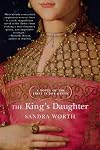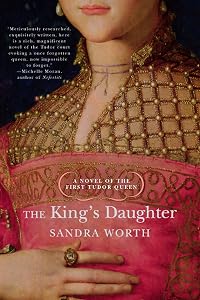
The King's Daughter
by Sandra Worth
On This Page
Description
In this groundbreaking novel, award-winning author Sandra Worth vibrantly brings to life the people's Queen, "Elizabeth the Good." Seventeen-year-old Elizabeth of York trusts that her beloved father's dying wish has left England in the hands of a just and deserving ruler. But upon the rise of Richard of Gloucester, Elizabeth's family experiences one devastation after another: her late father is exposed as a bigamist, she and her siblings are branded bastards, and her brothers are taken into show more the new king's custody, then reportedly killed. But one fateful night leads Elizabeth to question her prejudices. Through the eyes of Richard's ailing queen she sees a man worthy of respect and undying adoration. His dedication to his people inspires a forbidden love and ultimately gives her the courage to accept her destiny, marry Henry Tudor, and become Queen. While her soul may secretly belong to another, her heart belongs to England... show lessTags
Recommendations







Member Reviews
Elizabeth of York was the eldest daughter of King Edward IV and Elizabeth Woodville, his reviled queen. Her unhappy relationship with her own mother was only relieved by a brief happy period as lady in waiting to Queen Anne, Richard III's wife. Richard was dazzling to Elizabeth, a kind and good man whom she grew to love.
When Richard was killed in battle by the man who would become Henry VII, Elizabeth's heart was broken. She was forced to marry Henry because she embodied the end of the great Plantagenet line and lent authenticity to Henry's less-than-royal bloodline. They had one thing in common, though. Henry's scheming and domineering mother, Margaret Beaufort, is easily as hated as Elizabeth Woodville ever was.
Margaret Beaufort was show more the engineer of the Tudor reign. Without her, Henry would never had become king. She was Elizabeth's cross to bear for her entire marriage. Her mother-in-law oversaw every single aspect of her life. It was no better than imprisonment for Elizabeth.
But Elizabeth had a kind and loving nature, remembered by history as "Elizabeth the Good." She loved her children and did her best to instill in them the virtues of kindness and benevolence. Her love for England and its people led her to accept her position in life and to endure with grace and dignity, though she was sickened by her husband's bloody reign.
In The King's Daughter, Sandra Worth opens a window into the life of one of history's least known women. She was truly royal and that showed in her acceptance of the difficulties of her life. This is a detailed and well researched novel with engaging characters and rich background. I particularly liked her portrayal of Richard III as a clear thinking, honest man who never wanted the crown and whose heartbreak and grief over the loss of his wife and child drove him to throw his life away. show less
When Richard was killed in battle by the man who would become Henry VII, Elizabeth's heart was broken. She was forced to marry Henry because she embodied the end of the great Plantagenet line and lent authenticity to Henry's less-than-royal bloodline. They had one thing in common, though. Henry's scheming and domineering mother, Margaret Beaufort, is easily as hated as Elizabeth Woodville ever was.
Margaret Beaufort was show more the engineer of the Tudor reign. Without her, Henry would never had become king. She was Elizabeth's cross to bear for her entire marriage. Her mother-in-law oversaw every single aspect of her life. It was no better than imprisonment for Elizabeth.
But Elizabeth had a kind and loving nature, remembered by history as "Elizabeth the Good." She loved her children and did her best to instill in them the virtues of kindness and benevolence. Her love for England and its people led her to accept her position in life and to endure with grace and dignity, though she was sickened by her husband's bloody reign.
In The King's Daughter, Sandra Worth opens a window into the life of one of history's least known women. She was truly royal and that showed in her acceptance of the difficulties of her life. This is a detailed and well researched novel with engaging characters and rich background. I particularly liked her portrayal of Richard III as a clear thinking, honest man who never wanted the crown and whose heartbreak and grief over the loss of his wife and child drove him to throw his life away. show less
England in the 15th century isn’t exactly a stable place to be if you’re royalty. The Wars of the Roses leave the throne bouncing back and forth between the Yorkists and the Lancastrians. Princess Elizabeth of York spends much of her time in and out of sanctuary, hiding while her father, Edward IV, defends his throne. After her father’s death, her younger brother is crowned Edward V- and he, along with younger brother Richard, are sent to the Tower of London by their uncle, who becomes King Richard III of England. What happens to the boys after that is one of the great historical mysteries, and no one is able to say for certain whether one or both of them died in the Tower. The final outcome of the Wars of the Roses is determined show more at Bosworth Field, and Henry Tudor, a Lancastrian, beats Richard III and becomes Henry VII of England. In an effort to legitimize his seat on the throne and end the wars once and for all, Henry marries Elizabeth.
The King’s Daughter by Sandra Worth is Elizabeth’s story. Elizabeth of York holds an interesting place in history: she is the only Queen of England to have been daughter, sister, niece, wife, and mother of kings of England. Yet she doesn’t receive much attention- she certainly doesn’t receive the same level of attention as the wives of her son (Henry VIII). But that doesn’t make her any less important. It was for her sake that subjects were willing to accept Henry on the throne.
For me, The King’s Daughter was everything that a historical fiction novel should be: it’s a new take on a familiar story, and every single character is absolutely believable. I studied history in college, and my interest has always been with British monarchs. But I don’t know much about monarchs preceding Henry VIII, and this book made me want to run for my history books, and order books on monarchs that predate my books on the Tudors. My curiosity is piqued, and I want to know more.
One of the things I loved most about this novel is that it didn’t fall into the traps that plague many historical novels: tawdry (and unbelievable) love scenes, and women with 21st century sensibilities. Certainly, there were strong women at the time. Henry’s mother, Margaret Beaufort, was one of them- and Worth’s portrayal of Margaret Beaufort is historically accurate. But Elizabeth herself was kind of a doormat in some ways, and that’s okay. Worth doesn’t portray her as weak and insipid, but as the type of woman who knows to pick and choose her battles- and she does so with dignity and class. And in regard to my first point, there is one scene I can recall in the novel that involves physical intimacy, but it’s not particularly titillating. There were scandals and intrigues enough during this time that it’s not necessary to invent more.
I highly, highly recommend this book. It’s one of the best historical fiction novels I’ve read in a long time. show less
The King’s Daughter by Sandra Worth is Elizabeth’s story. Elizabeth of York holds an interesting place in history: she is the only Queen of England to have been daughter, sister, niece, wife, and mother of kings of England. Yet she doesn’t receive much attention- she certainly doesn’t receive the same level of attention as the wives of her son (Henry VIII). But that doesn’t make her any less important. It was for her sake that subjects were willing to accept Henry on the throne.
For me, The King’s Daughter was everything that a historical fiction novel should be: it’s a new take on a familiar story, and every single character is absolutely believable. I studied history in college, and my interest has always been with British monarchs. But I don’t know much about monarchs preceding Henry VIII, and this book made me want to run for my history books, and order books on monarchs that predate my books on the Tudors. My curiosity is piqued, and I want to know more.
One of the things I loved most about this novel is that it didn’t fall into the traps that plague many historical novels: tawdry (and unbelievable) love scenes, and women with 21st century sensibilities. Certainly, there were strong women at the time. Henry’s mother, Margaret Beaufort, was one of them- and Worth’s portrayal of Margaret Beaufort is historically accurate. But Elizabeth herself was kind of a doormat in some ways, and that’s okay. Worth doesn’t portray her as weak and insipid, but as the type of woman who knows to pick and choose her battles- and she does so with dignity and class. And in regard to my first point, there is one scene I can recall in the novel that involves physical intimacy, but it’s not particularly titillating. There were scandals and intrigues enough during this time that it’s not necessary to invent more.
I highly, highly recommend this book. It’s one of the best historical fiction novels I’ve read in a long time. show less
There is no shortage of drama in Elizabeth’s life. I very much appreciated that, at least so far as I could tell, Worth did not try to infuse the story with any additional drama, as some historical novelists attempt to do. In fact, she paints nearly all of her characters - including Richard and Henry as complex and human, instead of as evil monsters. Elizabeth Woodville and Lady Margaret Beaufort are not looked upon kindly, but even then Worth seems to be painting them as Elizabeth of York might have seen them, instead of as if she herself had an agenda as to what they did or did not do.
Everything in the novel was very believable, if it is not precisely how things happened, it certainly could have been. No wild, untoward leaps seem to show more have been taken with the history, and everything the characters did seemed internally consistent with how Worth wrote them, including the relationship between Elizabeth and Henry.
I really enjoyed reading “The King’s Daughter.” It is an example of solidly good historical fiction (and Worth wrote a loooong author’s note in the back explaining her research and what may and may not be true. I looove that). I read “The King’s Daughter” in under 48 hours, which means it is the book to successfully pull me completely out of my book funk, which is absolutely fabulous. I will definitely be looking for more of Worth’s work.
For the full review: http://www.devourerofbooks.com/2008/11/the-kings-daughter-book-review/ show less
Everything in the novel was very believable, if it is not precisely how things happened, it certainly could have been. No wild, untoward leaps seem to show more have been taken with the history, and everything the characters did seemed internally consistent with how Worth wrote them, including the relationship between Elizabeth and Henry.
I really enjoyed reading “The King’s Daughter.” It is an example of solidly good historical fiction (and Worth wrote a loooong author’s note in the back explaining her research and what may and may not be true. I looove that). I read “The King’s Daughter” in under 48 hours, which means it is the book to successfully pull me completely out of my book funk, which is absolutely fabulous. I will definitely be looking for more of Worth’s work.
For the full review: http://www.devourerofbooks.com/2008/11/the-kings-daughter-book-review/ show less
Elizabeth of York has the rare distinction of having been the daughter of a king, sister of a king, niece of a king, wife of a king and mother of a king. But despite this pedigree, she does not receive the same copious amounts of ink as her more famous Tudor relatives like Katherine of Aragorn, Anne Boleyn, Katherine Howard or Elizabeth I.
Elizabeth grew up lavished in luxury with a loving father, Edward IV, who was devoted to her and her siblings. Her mother, Bess Woodville, was always something of a dark shadow in her life as she always seemed harsh and solemn as well as schemeing and manipulative. But Elizabeth's life takes a dramatic turn when at seventeen her father dies and her mother makes a grab for the throne,claiming to be show more securing the title for her son before he came of age. Bess was expressly going against her husband's sanctioned will as he had clearly appointed his brother, Richard III, to the that position. Bess and Richard III would then engage in a tug ot war over whose authority would reign supreme in England. When Bess comes out on the loosing end of the fight, she moves her family to a monastery where she claims sanctuary for herself and her family. Richard III declares himself king on the claim that his brother Edward IV's marriage to Bess Woodville was never valid because Edward IV was already married.
Eventually Bess and Richard III would reconcile and Elizabeth would serve as one of Anne Neville's (Richard's wife) companions. The two women would grow close and Elizabeth would begin to see a different side of Richard III than she had previously believed. She sees him as a man of principle who she had gravely misunderstood. She understands why her father entrusted the throne to him and comes to trust his decision making. She discovers that she has fallen in love with him and his wife Anne encourages this affection as she is herself dying and wants Richard to have a trusthworthy and loyal companion. But that union is not to be because after Anne dies, Richard III loses his hold on the monarchy to a usurper. Henry VII.
From the outset, it becomes obvious very quickly that the author is sympathetic to Richard III. She presents him in a very flattering light and he is seen as a man whose downfall was his trusting nature and desire to do what was right. I thought this was very interesting as I have rarely seen him represented as being so noble. Historians and literature have not been kind to him as he was presented as a hunch backed deformed character whose moral character was questionable.
This book is brilliantly crafted and very well written and every page brings with it more interesting discoveries. I could barely put the book down because Elizabeth was such an interesting character whose assessments of situations and people was very interesting and enlightening. In my opinion, one of the weaknesses of the story was the way in which Richard is presented as almost flawless. This makes his character lack true complexity as he seemed almost one dimensional. Whereas Henry VII, Margaret Beaufort, Bess Woodville and many of the other characters may have had a basic representation in the book, they were allowed dimensions to their personality. For example, though Henry VII was brutal and avaricious, we saw him as having loving moments with his wife and children. But with Richard, it seemed like he was just a bit too perfect. I realize that the story was told through the eyes of Elizabeth who is supposed to be in love with him but it did not seem in line wth her character to not realize and document his failings. And this brings me to another weakness in the book. Elizabeth is supposed to have fallen in love with Richard and that love was the catalyst that made her assent to marry Henry VII despite her misgivings about him. We are led to believe that her love for Ricahrd III, leads her to marry Henry VII because she saw this as a way to save England from it warring past. Respectfully, I just did not buy that story line. Not enough interaction was shown between them for her to suddenly be head over heels with Richard. I understand that she may have come to respect him and see him in a totally different light but I just did not buy that she was in love with Richard. But despite the aforementioned, I thought this was a marvelous read and one of the best books I have read this year. I can't wait to see if the author will explore the Tudors further as her take on history is very, very interesting. Great historical fiction. show less
Elizabeth grew up lavished in luxury with a loving father, Edward IV, who was devoted to her and her siblings. Her mother, Bess Woodville, was always something of a dark shadow in her life as she always seemed harsh and solemn as well as schemeing and manipulative. But Elizabeth's life takes a dramatic turn when at seventeen her father dies and her mother makes a grab for the throne,claiming to be show more securing the title for her son before he came of age. Bess was expressly going against her husband's sanctioned will as he had clearly appointed his brother, Richard III, to the that position. Bess and Richard III would then engage in a tug ot war over whose authority would reign supreme in England. When Bess comes out on the loosing end of the fight, she moves her family to a monastery where she claims sanctuary for herself and her family. Richard III declares himself king on the claim that his brother Edward IV's marriage to Bess Woodville was never valid because Edward IV was already married.
Eventually Bess and Richard III would reconcile and Elizabeth would serve as one of Anne Neville's (Richard's wife) companions. The two women would grow close and Elizabeth would begin to see a different side of Richard III than she had previously believed. She sees him as a man of principle who she had gravely misunderstood. She understands why her father entrusted the throne to him and comes to trust his decision making. She discovers that she has fallen in love with him and his wife Anne encourages this affection as she is herself dying and wants Richard to have a trusthworthy and loyal companion. But that union is not to be because after Anne dies, Richard III loses his hold on the monarchy to a usurper. Henry VII.
From the outset, it becomes obvious very quickly that the author is sympathetic to Richard III. She presents him in a very flattering light and he is seen as a man whose downfall was his trusting nature and desire to do what was right. I thought this was very interesting as I have rarely seen him represented as being so noble. Historians and literature have not been kind to him as he was presented as a hunch backed deformed character whose moral character was questionable.
This book is brilliantly crafted and very well written and every page brings with it more interesting discoveries. I could barely put the book down because Elizabeth was such an interesting character whose assessments of situations and people was very interesting and enlightening. In my opinion, one of the weaknesses of the story was the way in which Richard is presented as almost flawless. This makes his character lack true complexity as he seemed almost one dimensional. Whereas Henry VII, Margaret Beaufort, Bess Woodville and many of the other characters may have had a basic representation in the book, they were allowed dimensions to their personality. For example, though Henry VII was brutal and avaricious, we saw him as having loving moments with his wife and children. But with Richard, it seemed like he was just a bit too perfect. I realize that the story was told through the eyes of Elizabeth who is supposed to be in love with him but it did not seem in line wth her character to not realize and document his failings. And this brings me to another weakness in the book. Elizabeth is supposed to have fallen in love with Richard and that love was the catalyst that made her assent to marry Henry VII despite her misgivings about him. We are led to believe that her love for Ricahrd III, leads her to marry Henry VII because she saw this as a way to save England from it warring past. Respectfully, I just did not buy that story line. Not enough interaction was shown between them for her to suddenly be head over heels with Richard. I understand that she may have come to respect him and see him in a totally different light but I just did not buy that she was in love with Richard. But despite the aforementioned, I thought this was a marvelous read and one of the best books I have read this year. I can't wait to see if the author will explore the Tudors further as her take on history is very, very interesting. Great historical fiction. show less
This is a historical fiction novel about Elizabeth of York, daughter of England's King Edward IV, wife of King Henry VII, and mother of King Henry VIII. Told in first person narrative, the story follows Elizabeth from her childhood to her death at the age of 37.
It is important to understand that author Sandra Worth was taking a chance here: many of the characters that appear in The King's Daughter (Elizabeth Woodville, Richard III, Henry VII, et al) have sharply divided both historians and historical fiction readers for years and as the old saying goes, you simply cannot please everyone all of the time.
Being relatively open-minded when it comes to any of these historical figures often frees me to read many books that might offend show more others, although I freely admit to being particular downright picky about historical fiction in general. Writers such as Sharon Kay Penman, Dorothy Dunnett and, more recently, Michelle Moran have set the bar, as it were, quite high. As a result, I am more critical than perhaps I ought to be when picking up a historical novel.
Perhaps The King's Daughter and I started off on the wrong foot. The word "woe!" is uttered four times within the first six pages. Melodramatic, thought I.
I also took exception to the good versus evil characterizations in the novel. Elizabeth Woodville, the mother of Elizabeth of York, is not just portrayed as ambitious, she is downright evil. Every nasty historical rumor ever uttered about this controversial woman was played out in this novel. She is a practicing witch, a hateful mother who engages in out-and-out physical cat fights with her daughter, a scheming harridan who would pimp out her virgin daughter to obtain throne of England. While there is enough historical evidence to conclude that Woodville was ambitious to a fault, the heaps of evil attributed to her in The King's Daughter ends up detracting from Worth's argument: that it was her ambition that significantly contributed to the ultimate demise of the Yorkists.
Richard III and Queen Anne, on the other hand, are presented as veritable saints. Not simply good people with only honorable intentions, but with a domesticity that could have been much more convincing were it not so drenched in saccharine. The perfect King, so in love with his perfect Queen, living in a fairy tale that the evil Lancastrians want to destroy. Again, a sound premise that was taken to a theatrical extreme.
It must be said that Worth did not scrimp on the research for this novel. While there is no absolute evidence for many of the conclusions she reaches in the novel, this is quite within the historical fiction author's purveyance. The conclusions may have been more convincing, in my opinion, with more subtlety. It is indeed possible that Elizabeth harbored a love for her uncle and wished to marry him, but passages such as "We were never alone again after Anne's death, but our hearts were one each time our eyes met" were ever-so-slightly over the top.
I felt the novel greatly improved as the chapters went by. Once Richard kicked the bucket and Woodville headed off to the nunnery, things became far less melodramatic. Worth's characterization of Henry VII was temperate and because of this, quite believable. In fact, the novel improved so much that I even found flashes of absolute brilliance, such as the references to Machiavelli during Henry's reign. (Loved that!)
The basics of this novel are present: good research and plausible conclusions. I can't help but think that if Worth had just scaled it back a bit on the characterizations, this would have a very good piece of historical fiction instead of a fairy tale-esque melodrama.
Whether or not you seek out a copy of The King's Daughter is going to depend entirely on your taste in historical fiction. If you've come to expect the quality of Penman, you might feel this one misses the mark, at least for the first half of the novel. But if you're more flexible with your historical fiction and can overlook the initial histrionics, you'll likely enjoy this read. show less
It is important to understand that author Sandra Worth was taking a chance here: many of the characters that appear in The King's Daughter (Elizabeth Woodville, Richard III, Henry VII, et al) have sharply divided both historians and historical fiction readers for years and as the old saying goes, you simply cannot please everyone all of the time.
Being relatively open-minded when it comes to any of these historical figures often frees me to read many books that might offend show more others, although I freely admit to being particular downright picky about historical fiction in general. Writers such as Sharon Kay Penman, Dorothy Dunnett and, more recently, Michelle Moran have set the bar, as it were, quite high. As a result, I am more critical than perhaps I ought to be when picking up a historical novel.
Perhaps The King's Daughter and I started off on the wrong foot. The word "woe!" is uttered four times within the first six pages. Melodramatic, thought I.
I also took exception to the good versus evil characterizations in the novel. Elizabeth Woodville, the mother of Elizabeth of York, is not just portrayed as ambitious, she is downright evil. Every nasty historical rumor ever uttered about this controversial woman was played out in this novel. She is a practicing witch, a hateful mother who engages in out-and-out physical cat fights with her daughter, a scheming harridan who would pimp out her virgin daughter to obtain throne of England. While there is enough historical evidence to conclude that Woodville was ambitious to a fault, the heaps of evil attributed to her in The King's Daughter ends up detracting from Worth's argument: that it was her ambition that significantly contributed to the ultimate demise of the Yorkists.
Richard III and Queen Anne, on the other hand, are presented as veritable saints. Not simply good people with only honorable intentions, but with a domesticity that could have been much more convincing were it not so drenched in saccharine. The perfect King, so in love with his perfect Queen, living in a fairy tale that the evil Lancastrians want to destroy. Again, a sound premise that was taken to a theatrical extreme.
It must be said that Worth did not scrimp on the research for this novel. While there is no absolute evidence for many of the conclusions she reaches in the novel, this is quite within the historical fiction author's purveyance. The conclusions may have been more convincing, in my opinion, with more subtlety. It is indeed possible that Elizabeth harbored a love for her uncle and wished to marry him, but passages such as "We were never alone again after Anne's death, but our hearts were one each time our eyes met" were ever-so-slightly over the top.
I felt the novel greatly improved as the chapters went by. Once Richard kicked the bucket and Woodville headed off to the nunnery, things became far less melodramatic. Worth's characterization of Henry VII was temperate and because of this, quite believable. In fact, the novel improved so much that I even found flashes of absolute brilliance, such as the references to Machiavelli during Henry's reign. (Loved that!)
The basics of this novel are present: good research and plausible conclusions. I can't help but think that if Worth had just scaled it back a bit on the characterizations, this would have a very good piece of historical fiction instead of a fairy tale-esque melodrama.
Whether or not you seek out a copy of The King's Daughter is going to depend entirely on your taste in historical fiction. If you've come to expect the quality of Penman, you might feel this one misses the mark, at least for the first half of the novel. But if you're more flexible with your historical fiction and can overlook the initial histrionics, you'll likely enjoy this read. show less
Elizabeth of York is the daughter of Edward IV, niece of Richard III, sister to Richard V and wife to Henry VII. With a tree of kings in her family you would think that Elizabeth would have been a strong, confident woman. Not so. Elizabeth was a very meek, subservient woman, which frustrated me at times. She deferred to all the men in her life to make her choices and lets her husband’s overbearing mother rule the roost. As you can tell from this passage on page 174:
“Mother, don’t you understand? We are captives, you and I. Though you may roam more freely than I, we are both watched by Tudor spies, and they report back on everything we say or do. I cannot take back the reins of the household from Henry’s mother. I have no show more influence on him. He hates the House of York. ‘Tis only his mother and Morten he trusts. Their advice has been to give me honorable captivity, but tighter than what Henry received in Brittany, for in the end he escaped. I am not even permitted to write letters—though whom I would write to is a matter for consideration. Everyone I would write to is dead”
We see Elizabeth grow from a young girl in love with Sir Thomas Stafford, one of the guards, to taking her father’s advice and becoming the queen that he knew she would be by logically marrying Henry VI. Her only joy in life was the birth of her kind, sweet son, Prince Arthur. Elizabeth was much loved by her people and was the only reason that Henry VI was tolerated. We also have a glimpse into young Henry VIII’s early life. Elizabeth knew right away that young Henry would not be a good, kind leader that Arthur would be and feared that he would be cruel to his people. If you know anything about this history and know what happens.
I enjoyed reading The King’s Daughter. It blended fiction with historical facts seamlessly and without overburdening the reader. Ms. Worth’s description of places, people and things bring you right into the folds of the late 1400’s. show less
“Mother, don’t you understand? We are captives, you and I. Though you may roam more freely than I, we are both watched by Tudor spies, and they report back on everything we say or do. I cannot take back the reins of the household from Henry’s mother. I have no show more influence on him. He hates the House of York. ‘Tis only his mother and Morten he trusts. Their advice has been to give me honorable captivity, but tighter than what Henry received in Brittany, for in the end he escaped. I am not even permitted to write letters—though whom I would write to is a matter for consideration. Everyone I would write to is dead”
We see Elizabeth grow from a young girl in love with Sir Thomas Stafford, one of the guards, to taking her father’s advice and becoming the queen that he knew she would be by logically marrying Henry VI. Her only joy in life was the birth of her kind, sweet son, Prince Arthur. Elizabeth was much loved by her people and was the only reason that Henry VI was tolerated. We also have a glimpse into young Henry VIII’s early life. Elizabeth knew right away that young Henry would not be a good, kind leader that Arthur would be and feared that he would be cruel to his people. If you know anything about this history and know what happens.
I enjoyed reading The King’s Daughter. It blended fiction with historical facts seamlessly and without overburdening the reader. Ms. Worth’s description of places, people and things bring you right into the folds of the late 1400’s. show less
The King's Daughter recounts the life of Elizabeth of York, daughter of Edward IV, sister to Edward V and wife to Henry VII and mother to Henry VIII. This is all pretty much well known history and enough reviewers and the product page recap the main story line I don't want to rehash it again. Worth's version of Elizabeth's life, told in the first person POV, just ended up for this reader to be a sodding, boring mess - I ended up skimming through the last 200 pages.
The goodies were really really good and the baddies were really really bad. Elizabeth herself was so pure and perfect I was waiting for her to cut her finger so I could see if she would bleed sugar, while her mother Elizabeth Woodville was practicing witchcraft when she show more wasn't busy running into sanctuary. Her son Arthur is pure as the driven snow, while young Harry (the future Henry VIII) is a borderline child sociopath. As for Henry's mother Margaret Beaufort - well the only person I can think of to portray her in the movie is Cruella de Vil. Honestly, Henry VII is the only character who got a fair shake in this one.
As for historical accuracy and the author's research from her notes, I am not a historian so I'm not one to judge. However, the bit about proving to Henry VII that she was a virgin has no historical basis that I've heard of, nor does the author mention in her notes where she picked up that bit of supposition from. Worse yet, is the unrequited love (and never-ending even after death) Elizabeth holds for her uncle Richard.
To top it all off, way too much melodrama and "woe" is me from both Elizabeth's (mother and daughter) and over the top prose. Here we have Elizabeth's reaction after Ann (that would be Queen Ann Richard's wife) as she tells niece Elizabeth her uncle will need her,
"I felt as if a shutter had been thrown open, pouring in brilliant light. The sleepless nights, the pounding of my heart each time King Richard drew near; my shyness in his presence...."
Elizabeth's mother giving her advice on keeping her husband in line,
"You'd know what to do -- you'd get into bed and lick that king of yours until he stops listening to his mother and turns to you". Eeeewwww.
Get the point? It is unfortunate, as so little is really known about Elizabeth of York's life and a well written fleshed out novel on her is sorely lacking - however, this is not it. While its certainly not the worst historical ever written, IMO it's far from the best as well. If you're dead set on reading this, get it from the library first and then buy it if you love it. show less
The goodies were really really good and the baddies were really really bad. Elizabeth herself was so pure and perfect I was waiting for her to cut her finger so I could see if she would bleed sugar, while her mother Elizabeth Woodville was practicing witchcraft when she show more wasn't busy running into sanctuary. Her son Arthur is pure as the driven snow, while young Harry (the future Henry VIII) is a borderline child sociopath. As for Henry's mother Margaret Beaufort - well the only person I can think of to portray her in the movie is Cruella de Vil. Honestly, Henry VII is the only character who got a fair shake in this one.
As for historical accuracy and the author's research from her notes, I am not a historian so I'm not one to judge. However, the bit about proving to Henry VII that she was a virgin has no historical basis that I've heard of, nor does the author mention in her notes where she picked up that bit of supposition from. Worse yet, is the unrequited love (and never-ending even after death) Elizabeth holds for her uncle Richard.
To top it all off, way too much melodrama and "woe" is me from both Elizabeth's (mother and daughter) and over the top prose. Here we have Elizabeth's reaction after Ann (that would be Queen Ann Richard's wife) as she tells niece Elizabeth her uncle will need her,
"I felt as if a shutter had been thrown open, pouring in brilliant light. The sleepless nights, the pounding of my heart each time King Richard drew near; my shyness in his presence...."
Elizabeth's mother giving her advice on keeping her husband in line,
"You'd know what to do -- you'd get into bed and lick that king of yours until he stops listening to his mother and turns to you". Eeeewwww.
Get the point? It is unfortunate, as so little is really known about Elizabeth of York's life and a well written fleshed out novel on her is sorely lacking - however, this is not it. While its certainly not the worst historical ever written, IMO it's far from the best as well. If you're dead set on reading this, get it from the library first and then buy it if you love it. show less
Members
- Recently Added By
Lists

al.vick-wishlist-historical fiction
129 works; 1 member

Books about King Henry VIII
17 works; 13 members
Author Information

8 Works 991 Members
Awards and Honors
Common Knowledge
- Canonical title
- The King's Daughter
- Original publication date
- 2008-12-02
- People/Characters
- Elizabeth of York; Anne Neville, Queen Consort of England; Richard III, King of England; Edward IV, King of England; Elizabeth Woodville, Queen Consort of England; Lady Margaret Beaufort (show all 8); Henry VII, King of England; Arthur, Prince of Wales
- Important places
- England, UK
- Important events
- Wars of the Roses (1455 | 1485)
- Epigraph
- Four things come not back: the spoken word, the sped arrow, the neglected opportunity, the past. -- old saying, circa 750 A.D.
- Dedication
- This book is dedicated to my daughter Emily
- First words
- Hoodman's Bluff was so much fun with my father!
- Last words
- (Click to show. Warning: May contain spoilers.)"Richard!" I cried.
- Blurbers
- Moran, Michelle
Classifications
Statistics
- Members
- 245
- Popularity
- 133,168
- Reviews
- 18
- Rating
- (3.53)
- Languages
- English, German
- Media
- Paper, Ebook
- ISBNs
- 6
- ASINs
- 3