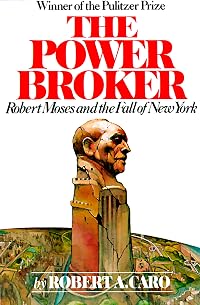
The Power Broker: Robert Moses and the Fall of New York
by Robert A. Caro
On This Page
Description
PULITZER PRIZE WINNER • A modern American classic, this huge and galvanizing biography of Robert Moses reveals not only the saga of one man’s incredible accumulation of power but the story of his shaping (and mis-shaping of twentieth-century New York. One of the Modern Library’s hundred greatest books of the twentieth century.Robert Caro's monumental book makes public what few outsiders knew: that Robert Moses was the single most powerful man of his time in the City and in the show more State of New York. And in telling the Moses story, Caro both opens up to an unprecedented degree the way in which politics really happens—the way things really get done in America's City Halls and Statehouses—and brings to light a bonanza of vital information about such national figures as Alfred E. Smith and Franklin D. Roosevelt (and the genesis of their blood feud), about Fiorello La Guardia, John V. Lindsay and Nelson Rockefeller.
But The Power Broker is first and foremost a brilliant multidimensional portrait of a man—an extraordinary man who, denied power within the normal framework of the democratic process, stepped outside that framework to grasp power sufficient to shape a great city and to hold sway over the very texture of millions of lives. We see how Moses began: the handsome, intellectual young heir to the world of Our Crowd, an idealist. How, rebuffed by the entrenched political establishment, he fought for the power to accomplish his ideals. How he first created a miraculous flowering of parks and parkways, playlands and beaches—and then ultimately brought down on the city the smog-choked aridity of our urban landscape, the endless miles of (never sufficient) highway, the hopeless sprawl of Long Island, the massive failures of public housing, and countless other barriers to humane living. How, inevitably, the accumulation of power became an end in itself.
Moses built an empire and lived like an emperor. He was held in fear—his dossiers could disgorge the dark secret of anyone who opposed him. He was, he claimed, above politics, above deals; and through decade after decade, the newspapers and the public believed. Meanwhile, he was developing his public authorities into a fourth branch of government known as "Triborough"—a government whose records were closed to the public, whose policies and plans were decided not by voters or elected officials but solely by Moses—an immense economic force directing pressure on labor unions, on banks, on all the city's political and economic institutions, and on the press, and on the Church. He doled out millions of dollars' worth of legal fees, insurance commissions, lucrative contracts on the basis of who could best pay him back in the only coin he coveted: power. He dominated the politics and politicians of his time—without ever having been elected to any office. He was, in essence, above our democratic system.
Robert Moses held power in the state for 44 years, through the governorships of Smith, Roosevelt, Lehman, Dewey, Harriman and Rockefeller, and in the city for 34 years, through the mayoralties of La Guardia, O'Dwyer, Impellitteri, Wagner and Lindsay, He personally conceived and carried through public works costing 27 billion dollars—he was undoubtedly America's greatest builder.
This is how he built and dominated New York—before, finally, he was stripped of his reputation (by the press) and his power (by Nelson Rockefeller). But his work, and his will, had been done. show less
Tags
Recommendations



Member Recommendations
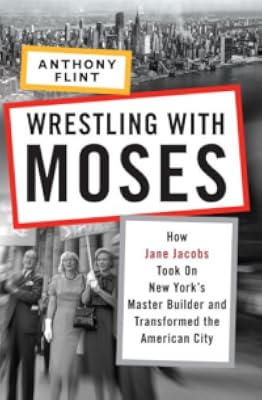
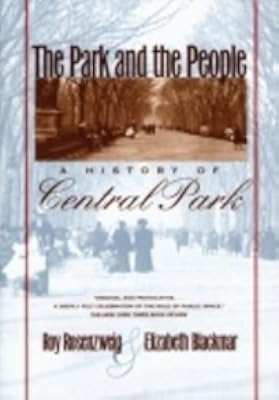
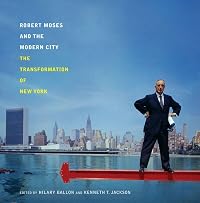
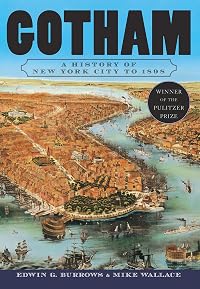
bjappleg8 I was struck by the parallels between Hoover and Moses -- two men, neither holding elected office, who began their careers full of idealistic ambitions but ultimately corrupted by the power they obtained and wreaking havoc on the lives of so many who crossed them.
Member Reviews
Robert Caro's exhaustively researched 1974 Pulitzer prize-winning examination of the life and career of Robert Moses, who spent decades reshaping New York City by building parks, bridges, roads, and housing projects, and in the process acquired so much power that no one could stop him from doing basically whatever he wanted with the landscape of the city, even when they really should have.
Moses is a fascinating subject, and he comes across here as a man possessed of incredible drive and vision, with a real genius both for engineering works and political maneuvering, but also as a man utterly seduced by the love of power, blinded by his own arrogance, disturbingly ruthless, and deeply callous towards and contemptuous of the public he was show more meant to be serving -- a man who accomplished impressive things but also did massive amounts of damage to both individual people and the city as a whole.
Caro goes into all of it, good, bad, and complicated, in deep and specific detail. The resulting work is a hell of a tome: 1160 pages, not even counting the extensive end matter. It's not a quick read, either. It took me about three and a half weeks to finish it, and I don't think I've ever taken that long to finish a book, even one this length, in my entire life. Not when I was reading it straight through rather than picking it up intermittently, anyway. But even if it's far from zippy, it's surprisingly absorbing. Yes, there were parts where my attention waned, but far fewer than I'd have expected, given how very detailed it is, especially considering that I have no personal connection to, and only the vaguest familiarity with, NYC.
I think what really makes the book so engaging is that the story of Robert Moses ends up touching on so many big, broad, important topics far beyond the man himself, interesting as he was: the changing nature of cities over the course of the 20th century, the question of whether parks should exist primarily for the preservation of nature or for human recreation, the often devastating ways in which America has become utterly dominated by the car, the complex and disillusioning ways in which the business of government gets done, the outsized influence that individual personality quirks and petty feuds can have on the course of history, the pernicious ways in which racism and classism have shaped urban development, the corrupting influence of power, the extent to which public opinion is a product of the press, and the nature of human hubris.
Lots of food for thought here, in other words, and even though it ate up the better part of a month during which I otherwise might have read half a dozen other books, I am very glad I picked it up.
Also, immense props to Robert Caro, because I can barely imagine what a truly staggering amount of work must have gone into this. show less
Moses is a fascinating subject, and he comes across here as a man possessed of incredible drive and vision, with a real genius both for engineering works and political maneuvering, but also as a man utterly seduced by the love of power, blinded by his own arrogance, disturbingly ruthless, and deeply callous towards and contemptuous of the public he was show more meant to be serving -- a man who accomplished impressive things but also did massive amounts of damage to both individual people and the city as a whole.
Caro goes into all of it, good, bad, and complicated, in deep and specific detail. The resulting work is a hell of a tome: 1160 pages, not even counting the extensive end matter. It's not a quick read, either. It took me about three and a half weeks to finish it, and I don't think I've ever taken that long to finish a book, even one this length, in my entire life. Not when I was reading it straight through rather than picking it up intermittently, anyway. But even if it's far from zippy, it's surprisingly absorbing. Yes, there were parts where my attention waned, but far fewer than I'd have expected, given how very detailed it is, especially considering that I have no personal connection to, and only the vaguest familiarity with, NYC.
I think what really makes the book so engaging is that the story of Robert Moses ends up touching on so many big, broad, important topics far beyond the man himself, interesting as he was: the changing nature of cities over the course of the 20th century, the question of whether parks should exist primarily for the preservation of nature or for human recreation, the often devastating ways in which America has become utterly dominated by the car, the complex and disillusioning ways in which the business of government gets done, the outsized influence that individual personality quirks and petty feuds can have on the course of history, the pernicious ways in which racism and classism have shaped urban development, the corrupting influence of power, the extent to which public opinion is a product of the press, and the nature of human hubris.
Lots of food for thought here, in other words, and even though it ate up the better part of a month during which I otherwise might have read half a dozen other books, I am very glad I picked it up.
Also, immense props to Robert Caro, because I can barely imagine what a truly staggering amount of work must have gone into this. show less
FUCKING EXHAUSTING but I did it. IT is so difficult to spend so long with such an awful person, day in day out, lists of people he killed, lists of things he destroyed, lists of peoples lives ruined larger and longer than McCarthy, including his own brother and sister, countless interesting young people who could have done something interesting -- everything that I hate about New York is directly the result of this one person who ran New York based on his petty, racist, vile whims. I read the 23 page long rebuttal Robert Moses sent out on publication of this book -- and he doesn't deny anything! Calling Little Flower LaGuardia a racial slur? He meant it affectionately! His wife who became a sickly recluse who was unable to leave her show more home? So what if she is! Stole from his brother's trust and left him to die penniless and in a shoebox with no elevator because he didn't like that his brother wasn't a frothing racist? Won't even acknowledge he had a brother! I read this right after reading Aberration in the Heartland of the Real, a book about the same length, and also a biography -- about Timothy McVeigh. I would much rather spend the 67 hours I spent on this audiobook with Timothy McVeigh than spend another single second with Robert Moses, he is that terrible.
Great book, will never read it again, it's just too depressing. And there is no catharsis because this book would have been another 1,000 pages long if he had kept any of the part about Jane Jacobs, who finally dealt the killing blow to Robert Moses' ideology. But I kind of wish he would have included it, just so the readers could have some sense of triumph at the final vanquishing of this absolute terrible authoritarian racist sociopath. show less
Great book, will never read it again, it's just too depressing. And there is no catharsis because this book would have been another 1,000 pages long if he had kept any of the part about Jane Jacobs, who finally dealt the killing blow to Robert Moses' ideology. But I kind of wish he would have included it, just so the readers could have some sense of triumph at the final vanquishing of this absolute terrible authoritarian racist sociopath. show less
A potted history of a city, and a multitude of mini biographies are all contained within a shockingly in-depth biography of a single man. A man who shaped one of the biggest cities in the world in large, literally concrete ways. This is an amazing work, and I cannot begin to understand how Caro managed to pull this all together into a cohesive, readable book.
It is long, at times tedious, often shocking, and always illuminating, but definitely most interesting if you have more than a passing familiarity with New York City. I have only visited once, and thus miss a lot of the subtleties of Moses’ machinations. Nevertheless, this was a rewarding book to read, and I wish it were possible for me to visit NYC again (not happening on *this* show more timeline), and pay attention to all the places mentioned.
Caro is an adept writer, at first coaxing admiration from the reader for the young Moses, which quickly cools to a disdain for the forceful and underhanded means in which mature Moses conducts much of his dealings. However, by the end, while the author seems sympathetic to the elderly man, this feeling did not transfer to me. I felt nothing but contempt for the old man mourning his loss of power.
While Caro is a fine writer, this book is from 1974, and some language he uses is absolutely past its sell-by date. Disconcertingly so. Nevertheless, it’s an utterly overwhelming book, and a staggering accomplishment by an author. show less
It is long, at times tedious, often shocking, and always illuminating, but definitely most interesting if you have more than a passing familiarity with New York City. I have only visited once, and thus miss a lot of the subtleties of Moses’ machinations. Nevertheless, this was a rewarding book to read, and I wish it were possible for me to visit NYC again (not happening on *this* show more timeline), and pay attention to all the places mentioned.
Caro is an adept writer, at first coaxing admiration from the reader for the young Moses, which quickly cools to a disdain for the forceful and underhanded means in which mature Moses conducts much of his dealings. However, by the end, while the author seems sympathetic to the elderly man, this feeling did not transfer to me. I felt nothing but contempt for the old man mourning his loss of power.
While Caro is a fine writer, this book is from 1974, and some language he uses is absolutely past its sell-by date. Disconcertingly so. Nevertheless, it’s an utterly overwhelming book, and a staggering accomplishment by an author. show less
"Oh, he never earned a dollar in his life and now we’ll have to pay this [bill]." — Bella Moses
Very indulgent. Caro wielding the pen like a broom; sweeping emotional language in a narrative that alternates between Erstürmen and Stúrm und Dráng. Yet, when fewer than 100 pages remain, and with the character of Moses fixed within the "Mosaic" frame, how is it that our subject, age 74 (in 1962), can declaim, "Perceptive journalists sense that the public has tired of hearing Aristides called "The Just," and therefore yell for his ostracism [. . .] There is a notable tendency in the press to cut officials to one size in a sort of bed of Procrustes," (980). This is Moses sermonizing the biographer, albeit unintentionally.
Anne Carson, show more in Autobiography of Red, describes the function of the Homeric Epithet as a mnemonic constraint, which remained in place until Stesichorus, breaking from those wine-dark shores, called a child "bruiseless." That was over 2000 years ago. After nearly as much time spent reading Caro's text, we are similarly tiring of the epithet, "RM: Power Broker." Moses, in direct quotation, rarely comes off so simple. (We are similarly frustrated when, reading our own obituaries, the most significant episodes of our lives are efficiently summarized in a single sentence.) The biographer is constructing something not unlike the bed of Procrustes, whose subjects are stretched or amputated to fit a given length. Though he might, with due diligence, build a bed to fit the man just right, he has to be arrogant enough to forget its primary function as a torture device show less
A thorough and damning chronology of the Manhattan Machiavelli that from the mid-'20s to the late '60s cast an authoritarian shadow over Long Island and Manhattan. The megalomania-truly a quest for power in spite of sense or reason-could be the effective plot for a modern opera. Loathing common people - even harboring racist and anti-Semitic notions - he steamrolled and bulldozed for more parkways, parks, and bridge although he himself didn't even drive. He cruelly impoverished his own brother and grew physically deaf even as he was metaphorically deaf to the please of he cruelly displaced over the tenure of several NYC mayors.
Also interesting is the story of Flushing Meadows Park, the fourth largest public park in New York City, show more created out of the sites of the 1939/1940 and 1964/1965 New York World's Fairs. Earlier, The Meadows were a dump famously characterized as "a valley of ashes" in F. Scott Fitzgerald's The Great Gatsby. show less
Also interesting is the story of Flushing Meadows Park, the fourth largest public park in New York City, show more created out of the sites of the 1939/1940 and 1964/1965 New York World's Fairs. Earlier, The Meadows were a dump famously characterized as "a valley of ashes" in F. Scott Fitzgerald's The Great Gatsby. show less
An epic and important--but undeniably hard to read--classic in urban planning. Moses is one of the most infamous people in 20th century planning and the history of New York, and much of that credit is due to Caro's classic. In a sprawling, 1,161-page (!) narrative, the author takes us through Moses' life from an upper-crust childhood and through the frustrating times of trying to establish a career, before we get into the jobs that actually cemented his legacy over a decades-long grasp of power building parks, beaches, highways (so many highways!), tunnels, and his beloved bridges. Once he got to that point, Moses was openly corrupt, physically and verbally violent toward subordinates, and an avowed racist.
If that wasn't enough, his show more life and pet projects were heavily subsidized throughout early adulthood by his wealthy mother, never seeming to appreciate this advantage or even understand how everyday New Yorkers, the users of his public works, lived without them. As a result, playgrounds weren't located in poor and working-class neighborhoods, highways were chronically congested from their opening day, mass transit was left without investment for decades, and worst of all, literally thousands of New Yorkers had their homes taken and bulldozed, all because Moses didn't consider the individual to matter in the face of building great works. Those factors all contribute to the full story of who Robert Moses was, and it's important they are in the story, but it does make this hard to read in some points. Nevertheless I am glad this hefty biography exists, for the benefit of the history of planning and what not to do as a practitioner. show less
If that wasn't enough, his show more life and pet projects were heavily subsidized throughout early adulthood by his wealthy mother, never seeming to appreciate this advantage or even understand how everyday New Yorkers, the users of his public works, lived without them. As a result, playgrounds weren't located in poor and working-class neighborhoods, highways were chronically congested from their opening day, mass transit was left without investment for decades, and worst of all, literally thousands of New Yorkers had their homes taken and bulldozed, all because Moses didn't consider the individual to matter in the face of building great works. Those factors all contribute to the full story of who Robert Moses was, and it's important they are in the story, but it does make this hard to read in some points. Nevertheless I am glad this hefty biography exists, for the benefit of the history of planning and what not to do as a practitioner. show less
In the middle of New York City, a man sits on an island in the headquarters of a bridge and tunnel authority, collecting tolls without end from the drivers passing through, his vaunting dictatorial powers to build and regulate parks, roads and any facilities he pleases written into indefeasible bond contracts protected against interference from city or state by the US Constitution: a man who plotted with sociopathic genius his way to arbitrary power through the unsuspected minutiae of city government, to the point where NYC became his own Sim City.
This is a compelling study of the man who shaped New York's built environment. A domineering, misanthropic narcissist who used every trick in the book to "get things done", Robert Moses show more deployed corruption, abuse of power, blackmail, legal chicanery, slander and more to ensure he got his way as he constructed parks, highways, bridges, apartment blocks and prestige projects. His highways failed to relieve traffic; his improvements often systematically and maliciously neglected minority populations; he callously condemned natural areas and communities that got in his way to demolition or ruination; he left a trail of appalled and ruined people behind him while long garnering almost unwavering public and press support. It is really something to write a 1,100-page book about a city planner that reads as a thrilling page-turner: on every page the reader will find fascinating material about how one man, who was decisively rejected on the only occasion he sought an elected position, was able to do so much and amass so much power, what kind of character that took, and what it cost the people and the city around him. show less
This is a compelling study of the man who shaped New York's built environment. A domineering, misanthropic narcissist who used every trick in the book to "get things done", Robert Moses show more deployed corruption, abuse of power, blackmail, legal chicanery, slander and more to ensure he got his way as he constructed parks, highways, bridges, apartment blocks and prestige projects. His highways failed to relieve traffic; his improvements often systematically and maliciously neglected minority populations; he callously condemned natural areas and communities that got in his way to demolition or ruination; he left a trail of appalled and ruined people behind him while long garnering almost unwavering public and press support. It is really something to write a 1,100-page book about a city planner that reads as a thrilling page-turner: on every page the reader will find fascinating material about how one man, who was decisively rejected on the only occasion he sought an elected position, was able to do so much and amass so much power, what kind of character that took, and what it cost the people and the city around him. show less
Members
- Recently Added By
Published Reviews
ThingScore 83
added by danielx
However, Caro's tremendous, artfully compiled detail, based on dozens of interviews and exhaustive source-hunting, ensure that "The Power Broker" will be acclaimed as the definitive monument to Moses, as well as a key study of the web of political figures connected with, and against, Moses' career.
added by Richardrobert
From time to time Mr. Caro feels that he ought to explain why Moses is what he is and his narrative is occasionally marred by vulgar Freudianisms in the Leon Edel manner. This is a pity because the chief interest of biography is not why men do what they do, which can never be known unless one turns novelist the way Freud did when he wrote Leonardo, but what they do. One does not want a theory show more explaining Moses's celebrated vindictiveness when examples of that vindictiveness are a matter of interesting record. For instance, after a run-in with Mayor Jimmy Walker, Moses tore down the Casino in Central Park because Walker had patronized it; yet the building itself was a charming relic of the previous century and the people's property. Prematurely, he razed a yacht club because the members "were rude to me." Shades of Richard Nixon! Petty revenge was certainly behind his desire to remove the Battery's most famous landmark-the Aquarium in the old fort known as Castle Garden...
Finally, in looking back over all that Robert Moses has done to the world we live in and, more important, the way that he did it by early mastering the twin arts of publicity and of corruption, one sees in the design of his career a perfect blueprint for that inevitable figure, perhaps even now standing in the wings of the Republic, rehearsing to himself such phrases as "law and order," "renewal and reform," "sacrifice and triumph," the first popularly elected dictator of the United States. show less
Finally, in looking back over all that Robert Moses has done to the world we live in and, more important, the way that he did it by early mastering the twin arts of publicity and of corruption, one sees in the design of his career a perfect blueprint for that inevitable figure, perhaps even now standing in the wings of the Republic, rehearsing to himself such phrases as "law and order," "renewal and reform," "sacrifice and triumph," the first popularly elected dictator of the United States. show less
added by SnootyBaronet
Lists

100 books to read in a lifetime
102 works; 37 members

Top Five Books of 2018
802 works; 265 members

Good Nonfiction about New York City
62 works; 10 members

Books recommended by Barack Obama
295 works; 28 members
Top Five Books of 2017
757 works; 230 members

Modern Library 100 Best Nonfiction Books
100 works; 8 members

Obama Reads
181 works; 3 members

Non-Fiction Worth Reading
1,015 works; 261 members

Tablet Magazine's List of 101 Great Jewish Books
103 works; 9 members

Dim Sum Lunch Reading
43 works; 2 members

TED 2013 Summer Reading List
190 works; 13 members

Favourite Books
1,819 works; 316 members

Mustich's 1000 Books to Read Before You Die: A Life Changing List
1,001 works; 19 members

Books Read in 2017
4,249 works; 129 members

To be read
1 work; 1 member

Ryan Holiday's Books To Base Your Life On
97 works; 2 members

Books Read in 2024
4,623 works; 126 members

Top Five Books of 2024
795 works; 264 members
Books That Changed Our Perspective
423 works; 168 members

Five star books
1,755 works; 107 members
Author Information

20+ Works 14,885 Members
Robert Allan Caro was born October 30, 1935 in New York. He went to Princeton University, where he majored in English and became managing editor of The Daily Princetonian. Caro began his professional career as a reporter with the New Brunswick Daily Home News. He took a brief leave to work for the Middlesex County Democratic Party as a publicist. show more He went on to six years as an investigative reporter with the Long Island newspaper Newsday. Robert Caro then went on to write about influential people in New York. His work The Power Broker was a biography on New York urban planner Robert Moses, that highlighted the fight for a proposed bridge across Long Island Sound from Rye to Oyster Bay. He then went on to write about Lyndon Johnson's life in a 5 volume set. Caro's books portray Johnson as a complex character who he also saw as a visionary progressive. He enjoyed writing about politicians and their use of power. For his biographies, he has won two Pulitzer Prizes in Biography, the National Book Award, the Francis Parkman Prize which is awarded by the Society of American Historians to the book that "best exemplifies the union of the historian and the artist" two National Book Critics Circle Awards, the H.L. Mencken Award, the Carr P. Collins Award from the Texas Institute of Letters, and a Gold Medal in Biography from the American Academy of Art and Letters. In October 2007, Caro was named a "Holtzbrinck Distinguished Visitor" at the American Academy in Berlin. In 2010, he received the National Humanities Medal from President Obama, the highest award in the humanities given in this country and in 2012 his title Passage of Power: The Years of Lyndon Johnson made the New York Times Best Seller List. (Bowker Author Biography) show less
Some Editions
Awards and Honors
Awards
Distinctions
Notable Lists
Series
Belongs to Publisher Series
Vintage Books (V-2024)
Work Relationships
Common Knowledge
- Canonical title
- The Power Broker: Robert Moses and the Fall of New York
- Original publication date
- 1974
- People/Characters
- Robert Moses; Nelson Rockefeller; Franklin Delano Roosevelt; Fiorello La Guardia; Al Smith
- Important places
- New York, New York, USA; Long Island, New York, USA; New York, USA
- Dedication
- FOR INA
and for DR. JANET G. TRAVELL - First words
- As The captain of the Yale swimming team stood beside the pool, still dripping after his laps, and listened to Bob Moses, the team's second-best freestyler, he didn't know what shocked him more—the suggestion or the fact th... (show all)at it was Moses who was making it.
- Quotations
- You can draw any kind of picture you want on a clean slate and indulge your every whim in the wilderness in laying out a New Delhi, Canberra, or Brasilia, but when you operate in an overbuilt metropolis, you have to hack your... (show all) way with a meat ax.
- Last words
- (Click to show. Warning: May contain spoilers.)Why weren’t they grateful?
- Publisher's editor
- Hourigan, Katherine; Gottlieb, Robert
- Original language
- English
- Canonical DDC/MDS
- 974.7040924
- Canonical LCC
- NA9085.M68
Classifications
- Genres
- History, Biography & Memoir, General Nonfiction, Nonfiction
- DDC/MDS
- 974.7040924 — History & geography History of North America Northeastern United States (New England and Middle Atlantic states) New York
- LCC
- NA9085 .M68 — Fine Arts 2599.5-2599.9 Architectural criticism Architecture Aesthetics of cities. City planning and beautifying
- BISAC
Statistics
- Members
- 3,740
- Popularity
- 4,276
- Reviews
- 66
- Rating
- (4.54)
- Languages
- English
- Media
- Paper, Audiobook, Ebook
- ISBNs
- 14
- UPCs
- 1
- ASINs
- 18