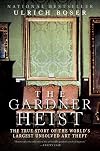
The Gardner Heist: The True Story of the World's Largest Unsolved Art Theft
by Ulrich Boser 
On This Page
Description
"Boser cracks the cold case of the art world's greatest unsolved mystery."- Vanity Fair One museum, two thieves, and the Boston underworld: the riveting story of the 1990 Gardner Museum robbery, the largest unsolved art theft in history. Perfect for fans of the Netflix series This is a Robbery: The World's Biggest Art Heist! Shortly after midnight on March 18, 1990, two men broke into the Isabella Stewart Gardner Museum in Boston and committed the largest art heist in history. They stole a show more dozen masterpieces, including one Vermeer, three Rembrandts, and five Degas. But after thousands of leads, hundreds of interviews, and a $5 million reward, not a single painting has been recovered. Worth as much as $500 million, the missing masterpieces have become the Holy Grail of the art world and their theft one of the nation's most extraordinary unsolved mysteries. Art detective Harold Smith worked the theft for years, and after his death, reporter Ulrich Boser decided to pick up where he left off. Traveling deep into the art underworld, Boser explores Smith's unfinished leads and comes across a remarkable cast of characters, including a brilliant rock 'n' roll art thief and a golden-boy gangster who professes his innocence in rhyming verse. A tale of art and greed, of obsession and loss, The Gardner Heist is as compelling as the stolen masterpieces themselves. show lessTags
Recommendations



































Member Recommendations



Member Reviews
If you've ever spent any time in Boston at all (and quite possibly even if you haven't) you are likely aware that it's the sight of the greatest unsolved art robbery in history: the pillaging of the Isabella Stewart Gardner museum in the very early hours of 18 March 1990. Two thugs dressed as policemen conned their way into the museum, handcuffed the two underqualified security guards, and made their way through the building, ultimately leaving with thirteen works of art (some masterpieces, some minor works, valued at anywhere between $300-500 million).
Ulrich Boser's The Gardner Heist (HarperCollins, 2009) delves deeply into the story of the theft itself, but concentrates more on the aftermath and the whodonit aspect of the crime: after show more becoming (as he freely admits) wildly obsessed with the robbery, Ulrich attempts to do what Boston police, the FBI and other authorities have failed to do for the last nineteen-plus years - solve the case and recover the missing objects. Boser doesn't manage to crack the case, but he does offer some tantalizing clues, and takes us deep into the Boston underworld in the process.
His search leads him to seek out and interview various people connected in different ways with Boston's criminal element (including more than a few of the criminals themselves, although he quickly discovers that a great many of those suspected of having connections to the Gardner robbery have met untimely and often violent ends). We meet Donald Turner (serving a prison sentence until the mid-2030s), who bears a spitting image to one of the robbers and one of whose known associates (now dead) looks an awful lot like the other intrude. Boser introduces us to criminal lawyer Marty Leppo and confessed art thief Myles Connor, as well as to a whole cast of fascinating characters from both sides of the Atlantic who have sought to solve the case. This makes for good reading, even if some of Boser's actions (i.e. flying to Ireland hoping to run into Whitey Bulger) seem mildly preposterous.
There are so many unanswered questions about the Gardner thefts (including more than a few raised by Boser in this book) - who were the actual robbers? Why have the two guards acted so strangely since the events of that night? (if I had to guess, I'd say the fact that there are so many murders connected with this case probably has a little something to do with it). And of course the big kahuna: just where are the missing artworks? Given the still-unsolved nature of the case, Boser isn't in a position to answer any of these questions, and at times his obsession (again, as he notes in the book) cost him a little bit of perspective (his description of dreaming about the missing paintings, and his fanciful conversation with a fictional criminal mastermind who organized the caper, were a bit much.
Overall, a very good synopsis of the theft and those connected with it, and also a neat little mini-biography of "art detective" Harold Smith, whose files Boser used to begin his investigations into the case. A fitting subject for the next book, perhaps.
The FBI still maintains an open case-file for this crime, and you can read their report, see photos of the missing artworks and descriptions of the suspects here. Return of the art brings a $5 million reward.
http://philobiblos.blogspot.com/2010/01/book-review-gardner-heist.html show less
Ulrich Boser's The Gardner Heist (HarperCollins, 2009) delves deeply into the story of the theft itself, but concentrates more on the aftermath and the whodonit aspect of the crime: after show more becoming (as he freely admits) wildly obsessed with the robbery, Ulrich attempts to do what Boston police, the FBI and other authorities have failed to do for the last nineteen-plus years - solve the case and recover the missing objects. Boser doesn't manage to crack the case, but he does offer some tantalizing clues, and takes us deep into the Boston underworld in the process.
His search leads him to seek out and interview various people connected in different ways with Boston's criminal element (including more than a few of the criminals themselves, although he quickly discovers that a great many of those suspected of having connections to the Gardner robbery have met untimely and often violent ends). We meet Donald Turner (serving a prison sentence until the mid-2030s), who bears a spitting image to one of the robbers and one of whose known associates (now dead) looks an awful lot like the other intrude. Boser introduces us to criminal lawyer Marty Leppo and confessed art thief Myles Connor, as well as to a whole cast of fascinating characters from both sides of the Atlantic who have sought to solve the case. This makes for good reading, even if some of Boser's actions (i.e. flying to Ireland hoping to run into Whitey Bulger) seem mildly preposterous.
There are so many unanswered questions about the Gardner thefts (including more than a few raised by Boser in this book) - who were the actual robbers? Why have the two guards acted so strangely since the events of that night? (if I had to guess, I'd say the fact that there are so many murders connected with this case probably has a little something to do with it). And of course the big kahuna: just where are the missing artworks? Given the still-unsolved nature of the case, Boser isn't in a position to answer any of these questions, and at times his obsession (again, as he notes in the book) cost him a little bit of perspective (his description of dreaming about the missing paintings, and his fanciful conversation with a fictional criminal mastermind who organized the caper, were a bit much.
Overall, a very good synopsis of the theft and those connected with it, and also a neat little mini-biography of "art detective" Harold Smith, whose files Boser used to begin his investigations into the case. A fitting subject for the next book, perhaps.
The FBI still maintains an open case-file for this crime, and you can read their report, see photos of the missing artworks and descriptions of the suspects here. Return of the art brings a $5 million reward.
http://philobiblos.blogspot.com/2010/01/book-review-gardner-heist.html show less
In 1990, two thieves dressed as policemen gained access to the Isabella Stewart Garnder Museum, trussed up the night guards, and made off with impressive loot, including works by Rembrandt, Vermeer, and a Chinese ku. Since then, the heist has never been solved, though many - such as Harold Smith - have pursued leads for decades that takes them from the Boston mob to the IRA. Ulrich Boser finds himself fascinated and starts pursuing leads both promising and fantastical, taking him into the seedy underbelly of art and museum theft.
This is a fascinating tale - not only of an unsolved mystery but also how we can become obsessed. Would art be as beautiful if it were not so valuable? When does collecting become almost like an addiction, and show more why does possessing art make us feel a connection with the creator? The book was almost as fascinating for Boser's eventual obsession with the case as it was for the mystery of what could have happened in March 1990. It actually becomes a bit repetitive as lead after lead becomes a dead end and he has to swing back around to the beginning all over again. I also wondered what may have changed: for example, it was written before Whitey Bulger's apprehension, and I have to think that aspects that dealt with him need an update. Still, for anyone interested in art and true crime, this story of the investigation has a lot to offer. show less
This is a fascinating tale - not only of an unsolved mystery but also how we can become obsessed. Would art be as beautiful if it were not so valuable? When does collecting become almost like an addiction, and show more why does possessing art make us feel a connection with the creator? The book was almost as fascinating for Boser's eventual obsession with the case as it was for the mystery of what could have happened in March 1990. It actually becomes a bit repetitive as lead after lead becomes a dead end and he has to swing back around to the beginning all over again. I also wondered what may have changed: for example, it was written before Whitey Bulger's apprehension, and I have to think that aspects that dealt with him need an update. Still, for anyone interested in art and true crime, this story of the investigation has a lot to offer. show less
While Boston slept with a hangover from St. Patrick’s Day mayhem, on March 17, 1990, two thieves, disguised as policeman, convinced a security guard at the Isabella Stewart Gardner museum to let them enter. Quickly taping and tying the guards in the basement, the two thugs then went on a leisurely 81 minute stroll throughout the museum where they slashed Rembrandts from the frames, punched and poked canvases, unscrewed a case holding a Napoleonic flag, and in the wake left glass and paint chips on the richly carpeted floors. In so doing, they raped and pillaged 13 incredibly valuable works of art that have never been recovered.
Rapidly increasing in value, they are now valued at a whopping 500 million. Uninsured, the loss greatly stung show more the Gardner museum. Irreplaceable, the loss continues to sting all who can no longer enjoy Vermeer’s The Concert or Rembrandt’s one and only seascape The Storm on the Sea of Galilee.
Perhaps forever gone is the ability to observe the white-whipped waves as they violently assault the deck of the ship, to feel the terror of the disciples as the fear for their life, to hear the wind as it slashes the mast and renders the boat tempest tossed.
Forever gone? To the right of the canvas, the image of a sick disciple as he dramatically clings to the side of the ship and vomits into the sea, while behind him the halo of Christ shines above a serene face that will soon calm the waters.
And, look at that clever Rembrandt! What a silly fellow! He is smack dab in the middle of the turmoil. Tam on his head, turquoise shirt on his body, he looks out at us as if to say “Here I am!” “I’m right where I belong, in the sea of Galilee with Christ and these guys!” “I’m hanging out with the good company of Christ!”
Forever gone? Destroyed? Sitting in a garbage dump? Hidden for all to appreciate except a wealthy, selfish connoisseur who delights in his hidden treasure? Rotting away in a damp warehouse? Neglected in storage, surrounded by flakes of paint chips from the 1600’s?
Boser’s well written book is hard to put down, yet it took more time than usual for me to read because it was packed with so many intriguing details.
The author provides interesting biographical details of the wealthy Isabella who, like the Fricks, the Woolworths and The Havemeyers collected art, not only for the sake of beauty, but primarily for the social status it brought.
Boser takes the reader on a wild ride into the underbelly of the art world where mobs use stolen art as a means to broker lighter sentences, where dealers scam the rich by double dipping, where the collection and theft of art is a fever that reaches near death proportions
HIGHLY recommended. show less
Rapidly increasing in value, they are now valued at a whopping 500 million. Uninsured, the loss greatly stung show more the Gardner museum. Irreplaceable, the loss continues to sting all who can no longer enjoy Vermeer’s The Concert or Rembrandt’s one and only seascape The Storm on the Sea of Galilee.
Perhaps forever gone is the ability to observe the white-whipped waves as they violently assault the deck of the ship, to feel the terror of the disciples as the fear for their life, to hear the wind as it slashes the mast and renders the boat tempest tossed.
Forever gone? To the right of the canvas, the image of a sick disciple as he dramatically clings to the side of the ship and vomits into the sea, while behind him the halo of Christ shines above a serene face that will soon calm the waters.
And, look at that clever Rembrandt! What a silly fellow! He is smack dab in the middle of the turmoil. Tam on his head, turquoise shirt on his body, he looks out at us as if to say “Here I am!” “I’m right where I belong, in the sea of Galilee with Christ and these guys!” “I’m hanging out with the good company of Christ!”
Forever gone? Destroyed? Sitting in a garbage dump? Hidden for all to appreciate except a wealthy, selfish connoisseur who delights in his hidden treasure? Rotting away in a damp warehouse? Neglected in storage, surrounded by flakes of paint chips from the 1600’s?
Boser’s well written book is hard to put down, yet it took more time than usual for me to read because it was packed with so many intriguing details.
The author provides interesting biographical details of the wealthy Isabella who, like the Fricks, the Woolworths and The Havemeyers collected art, not only for the sake of beauty, but primarily for the social status it brought.
Boser takes the reader on a wild ride into the underbelly of the art world where mobs use stolen art as a means to broker lighter sentences, where dealers scam the rich by double dipping, where the collection and theft of art is a fever that reaches near death proportions
HIGHLY recommended. show less
I very much enjoyed the details of this book, how so much of the mystery of what happened to these works of art is truly, tantalizingly unsolved. It's heartbreaking to imagine the works damaged or destroyed. Not so much to imagine that they are in the hands of appreciative criminals. Author has a very curious way of inserting himself, and his obsession with the case, into the story in surprising spots. He was most definitely obsessed, and reveals some very odd behavior that stemmed from this driving need to crack the case...which never happens. Though he does not neatly lay out his clear theory it does become fairly obvious who he thinks the mystery began with. I hope that in my lifetime this one is solved to satisfaction. Meanwhile, I show more will visit the Isabella Stewart Gardner Museum again with even more appreciation. show less
Written nearly 20 years after the theft of over a dozen works of art from the Isabella Stewart Gardner museum in Boston, this is the author's story of his involvement late in the game, when he himself grew determined to find out what happened to the missing art, and try to return it. Boser started out to write a feature story about Harold Smith, an insurance investigator who had been on the Gardner case for years. After meeting Smith, and being granted access to his voluminous files, Boser himself "caught the bug" and decided to pick up the investigation himself when Smith died within a few weeks of their meetings. The book is well put together, and quite readable, but ultimately unsatisfying as a there is no real suspense, and no show more resolution. After re-interviewing dozens of witnesses and potential leads, traveling all round the country as well as England and Ireland, Boser came no closer to finding the paintings or the thieves than his predecessors, and put himself in jeopardy of succumbing to an obsession, if not in actual danger of winding up dead, as had so many of the people who might have been involved in the heist and its aftermath. Boser did a good job of summarizing the known facts and the years of searching done before he came on the scene. He also illuminated the bizarre world of art collection, theft and recovery---that was probably the most fascinating part of the story. But his own efforts seemed unfocused and unskilled, and weren’t all that interesting to read about. Knowing that nearly 10 years after this book was published the frames of so many masterpieces still hang empty in the Gardner Museum didn’t help, either.
Review written September 2018 show less
Review written September 2018 show less
This book grabbed me by the ears and wouldn't let me go until the last page was turned.
I love the Gardner. Years ago, I went there without knowing anything about the robbery, and just loved the charm of the empty frames on the wall. At the same time, the museum seems almost frenetic, the way the art looks thrown on the walls. Once I realized why those frames were empty, I was hooked. I looked up the stolen pieces, tried to remember if I'd seen them somewhere. I was almost certain I had, but where?
Maybe that's why I liked this so much. Because I can absolutely see myself getting as lost in the mystery as Smith or Boser did.
Seriously.
I love the Gardner. Years ago, I went there without knowing anything about the robbery, and just loved the charm of the empty frames on the wall. At the same time, the museum seems almost frenetic, the way the art looks thrown on the walls. Once I realized why those frames were empty, I was hooked. I looked up the stolen pieces, tried to remember if I'd seen them somewhere. I was almost certain I had, but where?
Maybe that's why I liked this so much. Because I can absolutely see myself getting as lost in the mystery as Smith or Boser did.
Seriously.
I've been to the Isabella Stewart Gardner Museum multiple times and have always loved the place, but have also felt sad whenever I visited some of the rooms where the reminders of the stolen masterpieces and artifacts are still left in place.
This is a wonderful piece of researched investigative reporting that attempts to identify all the possible leads the FBI, the police and an amazing man, Harold Smith and then additional investigative follow ups by the author himself. He presents us with profiles of all the individuals who were suspected at some point or other with orchestrating, leading or being involved in the theft of the masterpieces. In addition to the profiles, we are presented with the journeys that stolen art sometimes take, show more from being reintroduced into the market and sold, to being traded as collateral in the underworld among terrorist organizations and the mafia. What I found interesting was the debunking of the theory I had that stolen masterpieces are often bought by private collectors who want to keep them for themselves in specially built basements.
We may never know for sure where all the masterpieces are, and it is very likely that some of them may be damaged beyond repair, but as long they aren't found, the hope still lives that they will be found one day. I sincerely hope that will happen in my lifetime, because I'd love to see them restored to their rightful place in the Gardner museum. show less
This is a wonderful piece of researched investigative reporting that attempts to identify all the possible leads the FBI, the police and an amazing man, Harold Smith and then additional investigative follow ups by the author himself. He presents us with profiles of all the individuals who were suspected at some point or other with orchestrating, leading or being involved in the theft of the masterpieces. In addition to the profiles, we are presented with the journeys that stolen art sometimes take, show more from being reintroduced into the market and sold, to being traded as collateral in the underworld among terrorist organizations and the mafia. What I found interesting was the debunking of the theory I had that stolen masterpieces are often bought by private collectors who want to keep them for themselves in specially built basements.
We may never know for sure where all the masterpieces are, and it is very likely that some of them may be damaged beyond repair, but as long they aren't found, the hope still lives that they will be found one day. I sincerely hope that will happen in my lifetime, because I'd love to see them restored to their rightful place in the Gardner museum. show less
Members
- Recently Added By
Lists

Really Good Narrative Non-Fiction
65 works; 24 members

True Crime
216 works; 16 members

Best books read in 2011
200 works; 51 members

So You Want to Run a Museum...
8 works; 1 member
Author Information

3+ Works 815 Members
Ulrich Boser is a LibraryThing Author, an author who lists their personal library on LibraryThing.
Awards and Honors
Awards
Common Knowledge
- Canonical title
- The Gardner Heist: The True Story of the World's Largest Unsolved Art Theft
- Original title
- The Gardner Heist
- Original publication date
- 2009
- People/Characters
- Isabella Stewart Gardner; Johannes Vermeer; Rembrandt, Harmenszoon van Rijn, 1606-1669; Edgar Degas; Édouard Manet
- Important places
- Boston, Massachusetts, USA; Isabella Stewart Gardner Museum, Fenway Court, Boston, Massachusetts, USA; Massachusetts, USA
- Important events
- Isabella Stewart Gardner Museum Heist (1990-03-18)
- Dedication
- For Nora, Leila, and Sonja
- First words
- On the east side of Palace Road, just beyond the harsh glare of a sodium streetlight, two men sat in a small, gray hatchback.
- Last words
- (Click to show. Warning: May contain spoilers.)The emotion filled my chest as I walked outof the room, padded down the stairs, and headed all the way home.
- Original language
- English US
Classifications
Statistics
- Members
- 642
- Popularity
- 45,147
- Reviews
- 36
- Rating
- (3.54)
- Languages
- English
- Media
- Paper, Audiobook, Ebook
- ISBNs
- 10
- ASINs
- 6