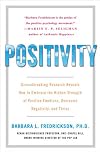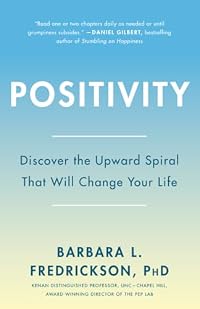
Positivity: Groundbreaking Research Reveals How to Embrace the Hidden Strength of Positive Emotions, Overcome Negativity, and Thrive
by Barbara Fredrickson
On This Page
Description
A psychologist explains how to create a richer, healthier, more fulfilling life through a process called the upward spiral that incorporates innovative techniques for using positivity to influence relationships, health, and work.Tags
Recommendations
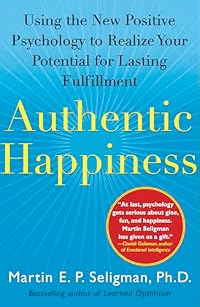
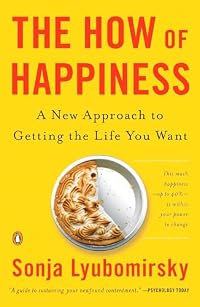
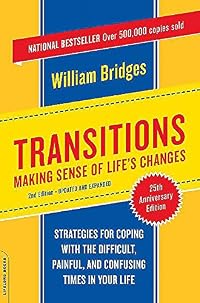
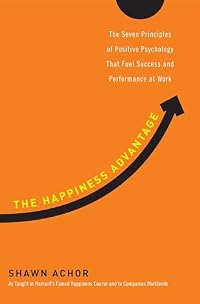


Member Recommendations
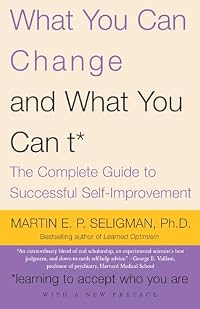
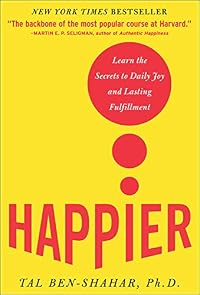
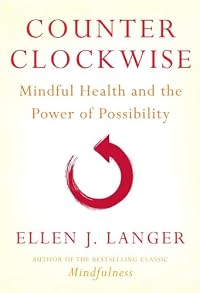
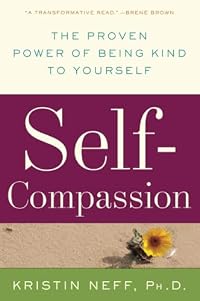
krazy4katz I actually like Buddha's Brain better, so I assume people who like Positivity (and some of the people who don't) might like this one.
Member Reviews
(46) I tried. I really tried. I even took the positivity ratio test a bunch of days in a row. I intrinsically agree with the premise of this book written by a positive psychology researcher at UNC of all places. It's just the tone. The painful tone of writers of self-help books. I don't have the words. Its this combination of smugness, mixed with false modesty, dashed with a tinge of elitism, and topped with 'I'm so happy I can help you be happy.' It actually generates feelings of negativity in me. But I am sure this says more about me, rather than the book.
I like that she gave many different options for generating heartfelt positivity - permission to do things that bring you joy, mindfulness, nature, noticing, connection. Those are show more things I can relate to. There is nothing worse than being told there is only one way - i.e. you must meditate, you must keep a gratitude journal or any journal for that matter, and please, please don't make me make a 'positivity portfolio.' That's what the Apple Photos 'curated for you'' feature on your phone is for.
Despite my snarkiness, I do think I took some things away from this book. Negativity is contagious and I definitely choose to indulge in it with my colleagues more than I should. I can change my mental habits which will likely change my outlook, productivity, and relationships. But I actually think that engaging with art and literature has done this more for me than reading a dry dumbed down scientific self-help book any day. show less
I like that she gave many different options for generating heartfelt positivity - permission to do things that bring you joy, mindfulness, nature, noticing, connection. Those are show more things I can relate to. There is nothing worse than being told there is only one way - i.e. you must meditate, you must keep a gratitude journal or any journal for that matter, and please, please don't make me make a 'positivity portfolio.' That's what the Apple Photos 'curated for you'' feature on your phone is for.
Despite my snarkiness, I do think I took some things away from this book. Negativity is contagious and I definitely choose to indulge in it with my colleagues more than I should. I can change my mental habits which will likely change my outlook, productivity, and relationships. But I actually think that engaging with art and literature has done this more for me than reading a dry dumbed down scientific self-help book any day. show less
Barbara Fredrickson teaches at UNC-Chapel Hill, where I got my PhD in another field; I've been aware of her work in positive psychology for years because a handful of my students took her classes--and they all LOVED them. I recently ran across an interview with Fredrickson and liked her discussion of how imprecise a term "happy" is and how inadequate various measures of it are, so I decided to read her book.
I probably should have read her scholarly articles instead (and I probably will, eventually). I totally agree with her message and think her research is extremely valuable, but the book itself tries so hard to reach a nonspecialist audience that it sometimes seemed to be written for not-very-bright apes. I found its vagueness about show more methodology frustrating during the first half, which mainly reports on a whole bunch of studies: it does have footnotes, thank heavens, but I was bothered by the fact that I found them much more interesting and compelling than the main text.
If you are already committed to meditation/mindfulness, and especially if you're familiar with lovingkindness meditation, and/or if you've read books along the lines of Jon Kabat-Zinn's Full Catastrophe Living, I doubt you'll be especially surprised by the findings or strategies this book presents. show less
I probably should have read her scholarly articles instead (and I probably will, eventually). I totally agree with her message and think her research is extremely valuable, but the book itself tries so hard to reach a nonspecialist audience that it sometimes seemed to be written for not-very-bright apes. I found its vagueness about show more methodology frustrating during the first half, which mainly reports on a whole bunch of studies: it does have footnotes, thank heavens, but I was bothered by the fact that I found them much more interesting and compelling than the main text.
If you are already committed to meditation/mindfulness, and especially if you're familiar with lovingkindness meditation, and/or if you've read books along the lines of Jon Kabat-Zinn's Full Catastrophe Living, I doubt you'll be especially surprised by the findings or strategies this book presents. show less
Admittedly, I was not in the correct mindset for this book: having read it at the behest of my employer and not seeking it out to enhance my life. However, I remain open to Fredrickson's approach and find merit in her central idea that that positivity is a state of mind that can be encouraged and expanded by mindful meditation and monitoring of responses to our daily environment/interactions. Negativity is not something to be avoided (as that is a fool's errand), but mitigated in seemingly small, yet overall monumental ways. Using her "Positivity Self Test" (which can be taken online at positivityratio.com) or by merely reflecting upon your day, note the situations/people that elicited overall negative emotions. Do this for an extended show more period of time to see what occurs frequently (depends on how constant your life is) and brainstorm small changes you can make to these continual events/interactions that would improve them, even marginally so. On the flip side, recognize what frequently inspires moments of positivity and actively work towards increasing those while being aware of additional opportunities to genuinely enjoy small segments of your day. Engaging in this self reflection, followed by enacting minor improvements will eventually lead to an upward spiral in which your mindset will be largely positive. Negative events/interactions will still occur, but you will be able to absorb/move past them with increased ease (obviously with a limit). Sure, this method makes sense to me - the mind is powerful and attitude really does have a significant impact on overall outlook. But jesus, this would have been an excellent and compelling essay (if written by someone else, but based on her and others' research), but this book is just bad. Well, that's not fair, the point was evident. show less
Positivity: Discover the Upward Spiral That Will Change Your Life by Barbara L. Fredrickson explains her research into how positivity affects people's lives. I took a Coursera course taught by Fredrickson several years ago, but I didn't read Positivity until recently. Positivity illustrates her findings and conclusions in an easy to understand way that left me wondering what the research has shown since Fredrickson wrote Positivity. It's always important to understand that science is always evolving. Fredrickson's underlying principles of positivity's effect on one's life seem to be sound and, frankly, just make a lot of sense. I enjoyed reading Positivity even during the moments when I felt skeptical and found myself at my keyboard show more looking up things to see what the science has revealed since it was published. Fredrickson's work and presentation inspired me to look for the positive in my life. show less
I don't know why I am so hostile towards this book. I think it might be very helpful, but I just became angry reading it, so my 2.5 stars might be unfair. The premise of this book is that the ratio of positive to negative moments in your life makes a big difference in how expansive and fulfilling your life can be. The author, an internationally respected professor at the University of North Carolina at Chapel Hill says that she has discovered a "tipping point". If your positivity/negativity ratio is above 3, you prosper. Below that, you don't. The first half of the book focuses on validating her theory and proving to her general audience that she arrived at it through rigorous scientific testing and interactions with other very famous show more people. It took a long time, with somewhat repetitive writing to make that point, although this is by no means a long book. By the time I got to the second half of the book, I was already angry. Maybe that means this book is written for someone exactly like me! The second half of the book has practical suggestions for decreasing your negativity and increasing your positivity so that your ratio rises above 3. While some of the suggestions are useful, I remain skeptical. On the other hand, after taking her positivity ratio test, it seems I am in need of some positivity, so perhaps I will try to follow her advice for a month and see how it goes. Not particularly well-written but potentially helpful for people who need to make just a bit more effort to get the most out of their lives. show less
This book didn't feel like a typical "self-help" book. It felt like something that, by applying the ideas in this book can actually make a difference in my life. So, three days before finishing this book, I went to the web site, and have been taking the positivity test daily since then. So far, my scores fluctuate wildly. Just taking the test causes me to think about my day, and my attitude towards it.
"Positivity doesn't mean we should follow the axioms 'Grin and bear it' or 'Don't worry, be happy.' Those are simply superficial wishes." (Page 6)
"Your mild and feeling pleasant states are far more potent than you think. We know now that they alter your mind and body in ways that can literally help you create your best life." (Page 6)
There show more are ten forms of Positivity: Joy, gratitude, serenity, interest, hope, pride, amusement, inspiration, awe, and love. (Page 39)
"Positivity is not simply a property of individuals, resilience runs through the social fabric of communities. This is because positivity knows no boundaries. It runs between us as much as it runs within us." (Page 117)
"So, I invite you to study your days. Study your routines. Pay special attention to the circumstances that you find yourself in day in and day out, or with any degree of regularity. Honestly examine how those circumstances make you feel. What patterns do you see? Where does your gratuitous negativity accumulate? Where does your heartfelt positivity spring forth? Develop an eye for your own land mines and wellsprings." (Page 148-149)
"With the starter dough of honest negativity, rumination creates an expanding rat's nest of gratuitous negativity that usurp your mental space." (Page 164) I liked this sentence because I enjoy making sourdough bread & thus, have a feel for how the starter expands.
"Fairly neutral activities can break the cycle of rumination and allow you to step out of your downward spiral." (Page 165)
"Years ago, Oprah popularized the idea of keeping a gratitude journal. She encouraged people to write down five things they love each day." (Page 187)
Chapter 10: Increase Positivity
- Sincerity Matters
- Enter Positive Psychology
- Find Positive Meaning
- Savor Goodness
- Count Your Blessings
- Kindness Counts
- Follow Your Passions
- Dream About Your Future
- Apply Your Strengths
- Connect with Others
- Connect with Nature
- Open Your Mind
- Open Your Heart (Loving kindness meditation)
- The View from Here (This is not a fad - it's been scientifically tested)
Part II: Raise Your Ratio
Chapter 8: Where Are You Now?
Chapter 9: Decrease Negativity
Chapter 10: Increase Positivity
Chapter 11: A New Toolkit
Tool 1. Be Open (... give yourself permission and time to experience the richness of the present moment.)
Tool 2. Create High-Quality Connections (Do it everyday with everyone you encounter.)
Tool 3. Cultivate Kindness
Tool 4. Develop Distractions (... important tools for breaking the grip of rumination...)
Tool 5. Dispute Negative Thinking
Tool 6. Find Nearby Nature (Locate a dozen places you can get to ... in minutes... Make these places regular destinations, whether to exercise, socialize, or just be one with nature.)
Tool 7. Learn and Apply Your Strengths (https://www.authentichappiness.sas.upenn.edu/testcenter)
Tool 8. Meditate Mindfully
Tool 9. Meditate on Loving-kindness
Tool 10. Ritualize Gratitude (including gratitude for endings - endings are something we usually aren't thankful for)
Tool 11. Savor Positivity
Tool 12. Visualize Your Future (Visualize ... if all your dreams [for 10 years from now] came true. ... Imagine that you've reached your own best potential. [spend a week on it]; Make a mission statement; Make a 10 year plan. )
Personalize Your Self-Study (make it even more personal)
10 Tips for Creating and Using Positivity Portfolios (Still in Chapter 11)
1. Be sincere. Let your positivity be heartfelt, not forced.
2. Create depth within your positivity portfolio. Include multiple artifacts.
3. Make several portfolios. Don't rely on any single positive emotion.
4. Let your portfolios evolve over time. Keep adding to them.
5. Always keep one of your portfolios at hand.
6. Pull out your portfolio when you feel the pull of a downward spiral.
7. Engage with your portfolio mindfully with an open heart.
8. Keep a light mental touch. Don't analyze.
9. Rotate to another portfolio when one loses its charge.
10. Ask, "What could I do right now to cultivate this feeling?"
Chapter 12: Future Forecast: Flourishing
Fact 1. Positivity feels good.
Fact 2. Positivity broadens mind.
Fact 3. Positivity builds resources.
Fact 4. Positivity fuels resistance.
Fact 5. Positivity ratio above 3 to 1 forecast flourishing.
Fact 6. People can raise their positivity ratios.
I like the prescription that this book gives. She recommends taking a number of weeks to make the portfolios, and then keeping them fresh so that you actually continue to look at them with interest. I've been doing the daily positivity check for a couple of weeks now. I've not been as successful on the portfolios, but have one put together and have an outline in place for the rest. show less
"Positivity doesn't mean we should follow the axioms 'Grin and bear it' or 'Don't worry, be happy.' Those are simply superficial wishes." (Page 6)
"Your mild and feeling pleasant states are far more potent than you think. We know now that they alter your mind and body in ways that can literally help you create your best life." (Page 6)
There show more are ten forms of Positivity: Joy, gratitude, serenity, interest, hope, pride, amusement, inspiration, awe, and love. (Page 39)
"Positivity is not simply a property of individuals, resilience runs through the social fabric of communities. This is because positivity knows no boundaries. It runs between us as much as it runs within us." (Page 117)
"So, I invite you to study your days. Study your routines. Pay special attention to the circumstances that you find yourself in day in and day out, or with any degree of regularity. Honestly examine how those circumstances make you feel. What patterns do you see? Where does your gratuitous negativity accumulate? Where does your heartfelt positivity spring forth? Develop an eye for your own land mines and wellsprings." (Page 148-149)
"With the starter dough of honest negativity, rumination creates an expanding rat's nest of gratuitous negativity that usurp your mental space." (Page 164) I liked this sentence because I enjoy making sourdough bread & thus, have a feel for how the starter expands.
"Fairly neutral activities can break the cycle of rumination and allow you to step out of your downward spiral." (Page 165)
"Years ago, Oprah popularized the idea of keeping a gratitude journal. She encouraged people to write down five things they love each day." (Page 187)
Chapter 10: Increase Positivity
- Sincerity Matters
- Enter Positive Psychology
- Find Positive Meaning
- Savor Goodness
- Count Your Blessings
- Kindness Counts
- Follow Your Passions
- Dream About Your Future
- Apply Your Strengths
- Connect with Others
- Connect with Nature
- Open Your Mind
- Open Your Heart (Loving kindness meditation)
- The View from Here (This is not a fad - it's been scientifically tested)
Part II: Raise Your Ratio
Chapter 8: Where Are You Now?
Chapter 9: Decrease Negativity
Chapter 10: Increase Positivity
Chapter 11: A New Toolkit
Tool 1. Be Open (... give yourself permission and time to experience the richness of the present moment.)
Tool 2. Create High-Quality Connections (Do it everyday with everyone you encounter.)
Tool 3. Cultivate Kindness
Tool 4. Develop Distractions (... important tools for breaking the grip of rumination...)
Tool 5. Dispute Negative Thinking
Tool 6. Find Nearby Nature (Locate a dozen places you can get to ... in minutes... Make these places regular destinations, whether to exercise, socialize, or just be one with nature.)
Tool 7. Learn and Apply Your Strengths (https://www.authentichappiness.sas.upenn.edu/testcenter)
Tool 8. Meditate Mindfully
Tool 9. Meditate on Loving-kindness
Tool 10. Ritualize Gratitude (including gratitude for endings - endings are something we usually aren't thankful for)
Tool 11. Savor Positivity
Tool 12. Visualize Your Future (Visualize ... if all your dreams [for 10 years from now] came true. ... Imagine that you've reached your own best potential. [spend a week on it]; Make a mission statement; Make a 10 year plan. )
Personalize Your Self-Study (make it even more personal)
10 Tips for Creating and Using Positivity Portfolios (Still in Chapter 11)
1. Be sincere. Let your positivity be heartfelt, not forced.
2. Create depth within your positivity portfolio. Include multiple artifacts.
3. Make several portfolios. Don't rely on any single positive emotion.
4. Let your portfolios evolve over time. Keep adding to them.
5. Always keep one of your portfolios at hand.
6. Pull out your portfolio when you feel the pull of a downward spiral.
7. Engage with your portfolio mindfully with an open heart.
8. Keep a light mental touch. Don't analyze.
9. Rotate to another portfolio when one loses its charge.
10. Ask, "What could I do right now to cultivate this feeling?"
Chapter 12: Future Forecast: Flourishing
Fact 1. Positivity feels good.
Fact 2. Positivity broadens mind.
Fact 3. Positivity builds resources.
Fact 4. Positivity fuels resistance.
Fact 5. Positivity ratio above 3 to 1 forecast flourishing.
Fact 6. People can raise their positivity ratios.
I like the prescription that this book gives. She recommends taking a number of weeks to make the portfolios, and then keeping them fresh so that you actually continue to look at them with interest. I've been doing the daily positivity check for a couple of weeks now. I've not been as successful on the portfolios, but have one put together and have an outline in place for the rest. show less
This book has great ideas but the presentation is dry and wordy. I entered for it when the news was getting me really down. This year is a battle for me to stay vibrant and engaged in life. I m in the process of learning how to deal with negative words and terrible changes to our government.
So I am sharing with you the gist of how be positive, when so much is so difficult. Having a positive outlook can be challenging, it is definitely worthwhile, You live longer even fatal diseases. If you are more positive, you will be more open to new experience, new thoughts and can consider more possibilities. It is akin to neuroplasticity, you can make new connections! You can change your life.
How to do it? What helps is meditation, thinking things show more out, getting outside into nature helps, making breaks for yourself, be sure to do things you love, like reading, knitting, drawing, playing music. Get a balance in your life. Pay attention to your body. I do this when I watch the news, if I notice that I am gritting my teeth, clenching my fists, it is definitely time to change to something that relaxes an refreshes you.
"Give yourself permission to be distracted". show less
So I am sharing with you the gist of how be positive, when so much is so difficult. Having a positive outlook can be challenging, it is definitely worthwhile, You live longer even fatal diseases. If you are more positive, you will be more open to new experience, new thoughts and can consider more possibilities. It is akin to neuroplasticity, you can make new connections! You can change your life.
How to do it? What helps is meditation, thinking things show more out, getting outside into nature helps, making breaks for yourself, be sure to do things you love, like reading, knitting, drawing, playing music. Get a balance in your life. Pay attention to your body. I do this when I watch the news, if I notice that I am gritting my teeth, clenching my fists, it is definitely time to change to something that relaxes an refreshes you.
"Give yourself permission to be distracted". show less
Members
- Recently Added By
Lists

Books & Films Referenced by Cal Newport's Deep Work
43 works; 1 member
Author Information

8+ Works 483 Members
Barbara L. Fredrickson, Ph.D., is Kenan Distinguished Professor of Psychology and principal investigator of the Positive Emotions and Psychophysiology Laboratory at the University of North Carolina at Chapel Hill. She is a leading scholar within social psychology, affective science, and positive psychology.
Classifications
Statistics
- Members
- 312
- Popularity
- 101,844
- Reviews
- 9
- Rating
- (3.50)
- Languages
- 7 — Chinese, Danish, Dutch, English, French, German, Polish
- Media
- Paper, Audiobook, Ebook
- ISBNs
- 17
- ASINs
- 5