The Longest Winter: The Battle of the Bulge and the Epic Story of World War II's Most Decorated Platoon
by Alex Kershaw
On This Page
Description
December 1944: Deep in the Ardennes forest, a platoon of eighteen men under the command of twenty-year-old lieutenant Lyle Bouck huddle in their foxholes. Under attack and vastly outnumbered, they repulse three German assaults in a fierce day-long battle, killing over five hundred Germans. Only when Bouck's men run out of ammunition do they surrender. As POWs, Bouck's platoon experience an ordeal far worse than combat: trigger-happy German guards, Allied bombing raids, and a daily ration of show more thin soup. Somehow, the men of Bouck's platoon all miraculously survive. Alex Kershaw brings to life the story of America's most decorated small unit of the war, and one of the most inspiring stories in American history.. show less
Tags
Recommendations






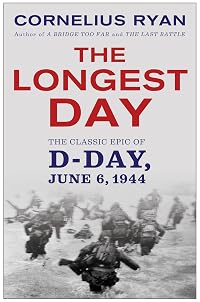
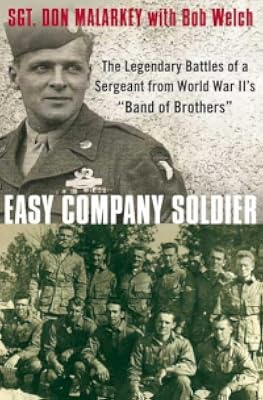
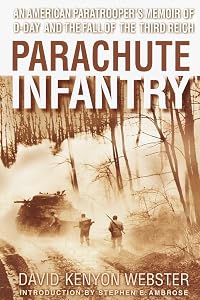
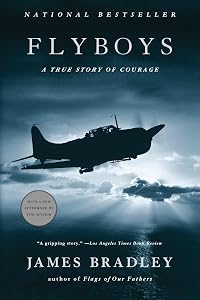


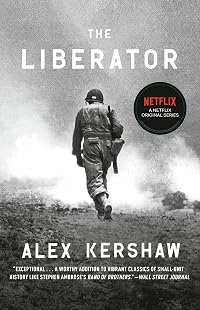
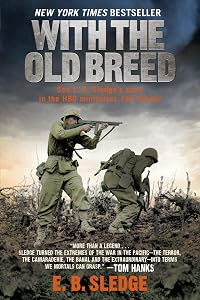
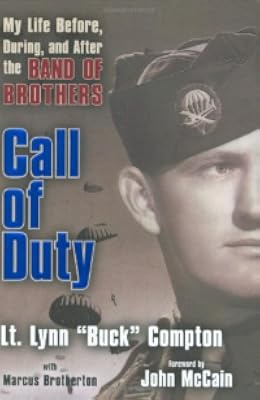
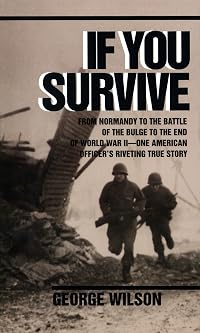
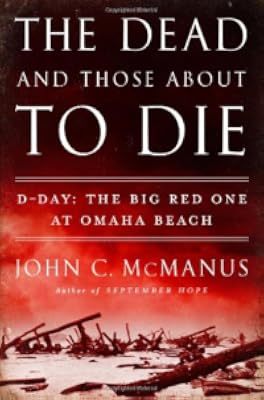
Member Recommendations
by anonymous user
Member Reviews
“The Longest Winter” was brought to my attention by a friend. It chronicles the exploits of World War II’s most decorated American platoon. As the German offensive known as the Battle of the Bulge launched in December 1944, a platoon of 18 Americans, commanded by Lt. Lyle Bouck, held their ground, killing hundreds of German soldiers while defending a strategically vital hill until ammunition ran out. With surrender they began their brutal captivity.
The Americans’ tale begins with assembly of their platoon at Camp Maxey, Texas. Shipped to Europe, as an intelligence platoon of the 394th Infantry Regiment, Bouck and his men took their place in a quiet sector of the Ardennes Forest. Quiet until the morning of December 16, 1944 when show more Bouck and his men stood in the way of the last-ditch German offensive attacked their position. When resistance was no longer feasible, Bouck and his men began their captivity.
The captivity of Bouck and his men was often brutal until their liberation in a bizarre attempt ordered by Gen. Patton to rescue his son-in-law who was held in the same camp. Upon liberation, Bouck and his men were returned home. This account continues with their return stateside and the legal proceedings against their captors.
The finale chronicles the inquiry into the unit’s actions, culminating in the approval of the Presidential Unit Citation by President Jimmy Carter on January 15, 1981.
Author Alex Kershaw has crafted an excellent chronicle of what I term as “history through the gunsights”. While skillfully shifting between American and German scenes, he tells history as seen by the participants and with the bigger picture referenced in support of the story line. It is an inspiring tale of tenacity, hardship and triumph. I recommend this as a history of an heroic platoon and an inspiring tale. show less
The Americans’ tale begins with assembly of their platoon at Camp Maxey, Texas. Shipped to Europe, as an intelligence platoon of the 394th Infantry Regiment, Bouck and his men took their place in a quiet sector of the Ardennes Forest. Quiet until the morning of December 16, 1944 when show more Bouck and his men stood in the way of the last-ditch German offensive attacked their position. When resistance was no longer feasible, Bouck and his men began their captivity.
The captivity of Bouck and his men was often brutal until their liberation in a bizarre attempt ordered by Gen. Patton to rescue his son-in-law who was held in the same camp. Upon liberation, Bouck and his men were returned home. This account continues with their return stateside and the legal proceedings against their captors.
The finale chronicles the inquiry into the unit’s actions, culminating in the approval of the Presidential Unit Citation by President Jimmy Carter on January 15, 1981.
Author Alex Kershaw has crafted an excellent chronicle of what I term as “history through the gunsights”. While skillfully shifting between American and German scenes, he tells history as seen by the participants and with the bigger picture referenced in support of the story line. It is an inspiring tale of tenacity, hardship and triumph. I recommend this as a history of an heroic platoon and an inspiring tale. show less
This account of the resistance of the recon platoon of the 394th Infantry Regiment of the 99th Infantry Division in teeth of the Ardennes Offensive has it virtues, but that's so long as you keep your expectations down a bit.
When telling the direct story of Lt. Lyle Bouck and his men, Kershaw has a good tale to tell, as it encompasses the last great German offensive in the West, the survival of the platoon once taken captive, and General Patton's ill-fated raid to rescue his son-in-law. This is not to mention how the men came to adapt to civilian life and the process that led to the recognition of their heroism in the 1970s.
The problem is that if you're knowlegeable at all about this period, you're going to be annoyed at how Kershaw show more handles the context that surrounded the trials of these men. The narrative sometimes seems shallow enough that one wonders if the movies "The Battle of the Bulge" and "Patton" were milked for atmosphere. Most of the high-level personages invoked (Hitler, Eisenhower, Patton, etc.) almost come off as being stereotypes.
I also don't know whether it was sloppy editing or what, but it seems like every thirty pages or so one hits some stupid gaffe; usually in regards to the Germans. The 1st SS Panzer Division did not have its origins among the concentration camp guards; that was the 3rd SS Panzer Division. The Schmeisser machine pistol was not a particularly new gun in '44, though the first assault rifles were being issued to the German military. All the guns on a period B-17 were of the .50 caliber variety, not just the guns in the tail mounting. The Knight's Cross with oak leaves and swords was not the most prestigious version of that order, and so on. It certainly gets me to thinking about what other mistakes I missed.
Another issue is that the secondary source material used in producing this work was also a bit shallow. I realize that in such a book the point is not to bowl over the readers with the background research of the writer. At the very least though I expect Carlo D'Este's biographies of Eisenhower & Patton, Trevor Dupuy's analysis of the campaign, Peter Mansour & Michael Doubler's respective reappraisals of the how the American soldier fought in Europe, Michael Reynold's account of Kampgruppe Peiper, and Stephen Rusiecki's account of the 99th Infantry Division in the Battle of the Bulge to show up among the works consulted.
I hate to seem like I'm using a sledgehammer to hit a walnut, but there are a lot of long-time students of World War II who I suspect are going to feel just the way I do. For those of you who have just discovered the subject via this book, don't feel bad. It's not that you've been had, as this book is good so far as it goes, it's just that you have a lot more reading in front of you. Trust me, it'll be an adventure. show less
When telling the direct story of Lt. Lyle Bouck and his men, Kershaw has a good tale to tell, as it encompasses the last great German offensive in the West, the survival of the platoon once taken captive, and General Patton's ill-fated raid to rescue his son-in-law. This is not to mention how the men came to adapt to civilian life and the process that led to the recognition of their heroism in the 1970s.
The problem is that if you're knowlegeable at all about this period, you're going to be annoyed at how Kershaw show more handles the context that surrounded the trials of these men. The narrative sometimes seems shallow enough that one wonders if the movies "The Battle of the Bulge" and "Patton" were milked for atmosphere. Most of the high-level personages invoked (Hitler, Eisenhower, Patton, etc.) almost come off as being stereotypes.
I also don't know whether it was sloppy editing or what, but it seems like every thirty pages or so one hits some stupid gaffe; usually in regards to the Germans. The 1st SS Panzer Division did not have its origins among the concentration camp guards; that was the 3rd SS Panzer Division. The Schmeisser machine pistol was not a particularly new gun in '44, though the first assault rifles were being issued to the German military. All the guns on a period B-17 were of the .50 caliber variety, not just the guns in the tail mounting. The Knight's Cross with oak leaves and swords was not the most prestigious version of that order, and so on. It certainly gets me to thinking about what other mistakes I missed.
Another issue is that the secondary source material used in producing this work was also a bit shallow. I realize that in such a book the point is not to bowl over the readers with the background research of the writer. At the very least though I expect Carlo D'Este's biographies of Eisenhower & Patton, Trevor Dupuy's analysis of the campaign, Peter Mansour & Michael Doubler's respective reappraisals of the how the American soldier fought in Europe, Michael Reynold's account of Kampgruppe Peiper, and Stephen Rusiecki's account of the 99th Infantry Division in the Battle of the Bulge to show up among the works consulted.
I hate to seem like I'm using a sledgehammer to hit a walnut, but there are a lot of long-time students of World War II who I suspect are going to feel just the way I do. For those of you who have just discovered the subject via this book, don't feel bad. It's not that you've been had, as this book is good so far as it goes, it's just that you have a lot more reading in front of you. Trust me, it'll be an adventure. show less
Read during Summer 2007
An extensively researched and very well written account of the actions of a small platoon in the Battle of the Bulge and after. I did get a little lost in a haze of names at one point and the maps could have been more helpful but the story was fascinating and one I didn't know. The author had obviously lengthy interviews with many of the members of the platoon and gives a very first hand account of the training, fighting, and most vividly, the life in the POW camps. Despite the somewhat light, conversational style, it is completely riveting.
An extensively researched and very well written account of the actions of a small platoon in the Battle of the Bulge and after. I did get a little lost in a haze of names at one point and the maps could have been more helpful but the story was fascinating and one I didn't know. The author had obviously lengthy interviews with many of the members of the platoon and gives a very first hand account of the training, fighting, and most vividly, the life in the POW camps. Despite the somewhat light, conversational style, it is completely riveting.
As someone who appreciates the history of those who served in WWII, I absolutely enjoyed this book. Alex Kershaw does a great job of telling a story, of a platoon that did it's best to defend a German attack, and although severely outnumbered, the men of the I&R Platoon fought until the last round of ammo was used, and lived through being captured and taken as a POW.
Through accounts from veterans who were there, Kershaw takes the reader along for a ride and provides great detail into the characters, and the bound that being brothers in arms creates.
I highly recommend this book for anyone who enjoys military history
Through accounts from veterans who were there, Kershaw takes the reader along for a ride and provides great detail into the characters, and the bound that being brothers in arms creates.
I highly recommend this book for anyone who enjoys military history
The Longest Winter
Alex Kershaw sets out to follow the experiences of the Intelligence and Reconnaissance Platoon of the 394th Infantry during and following the Battle of the Bulge which he described as: "Hitler's brilliant campaign of deception -- and plain old incompetency had combined to create the most fatal ignorance in the U.S. Army's history. On the eve of the battle, not a single Allied soldier or general knew what the Germans were really up to."
Kershaw does as he sets out to and includes a general coverage to the campaign that followed. Along the way he provides details and color. After a highly detailed description of the assassination attempt at The Wolf's Lair, he opines that Count Klaus von Stauffenberg's snobbery led to show more its failure.
General Patton is also included in Kershaw's research. He details Operation Baum in which Patton sacrifices a unit in a failed attempt to rescue his POW son-in-law. show less
Alex Kershaw sets out to follow the experiences of the Intelligence and Reconnaissance Platoon of the 394th Infantry during and following the Battle of the Bulge which he described as: "Hitler's brilliant campaign of deception -- and plain old incompetency had combined to create the most fatal ignorance in the U.S. Army's history. On the eve of the battle, not a single Allied soldier or general knew what the Germans were really up to."
Kershaw does as he sets out to and includes a general coverage to the campaign that followed. Along the way he provides details and color. After a highly detailed description of the assassination attempt at The Wolf's Lair, he opines that Count Klaus von Stauffenberg's snobbery led to show more its failure.
General Patton is also included in Kershaw's research. He details Operation Baum in which Patton sacrifices a unit in a failed attempt to rescue his POW son-in-law. show less
Very well done. I got choked up reading about the liberation of the POWs.
This is the story of brave men who put up a tough fight against great odds. They paid for it with incarceration as POWs in horrendous conditions. They returned home without recognition for almost 30 years.
The irony is that there were so many like them who paid the ultimate price and are unknown because there was no one to 'write them up'. This book is worth reading in spite of historical of its flaws.
The irony is that there were so many like them who paid the ultimate price and are unknown because there was no one to 'write them up'. This book is worth reading in spite of historical of its flaws.
Members
- Recently Added By
Lists

THE WAR ROOM
813 works; 24 members
Author Information

17+ Works 4,570 Members
Alex Kershaw is the New York Times bestselling author of several books on World War II, including The Longest Winter and The Bedford Boys. He lives in Williamstown, Massachusetts.
Work Relationships
Is contained in
Common Knowledge
- Canonical title
- The Longest Winter: The Battle of the Bulge and the Epic Story of World War II's Most Decorated Platoon
- Original title
- The Longest Winter
- Original publication date
- 2004
- Important places
- Ardennes, Belgium
- Important events
- World War II (1939 | 1945); Battle of the Bulge (1944 | 1945)
Classifications
Statistics
- Members
- 896
- Popularity
- 30,139
- Reviews
- 18
- Rating
- (3.97)
- Languages
- 5 — Dutch, English, Portuguese (Portugal), Spanish, Swedish
- Media
- Paper, Audiobook, Ebook
- ISBNs
- 21
- ASINs
- 7