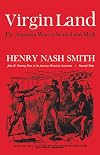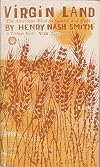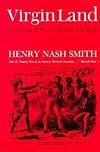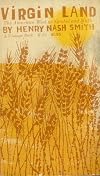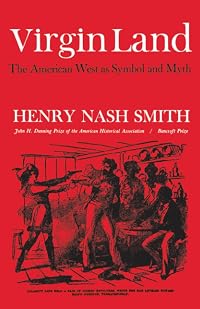
Virgin Land: The American West as Symbol and Myth
by Henry Nash Smith
On This Page
Description
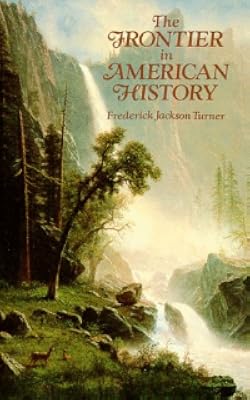
The spell that the West has always exercised on the American people had its most intense impact on American literature and thought during the nineteenth century. Henry Nash Smith shows, with vast comprehension, the influence of the nineteenth-century West in all its variety and strength, in special relation to social, economic, cultural, and political forces. He traces the myths and symbols of the Westward movement such as the general notion of a Westward-moving Course of Empire, the Wild show more Western hero, the virtuous yeoman-farmer--in such varied nineteenth-century writings as Leaves of Grass, the great corpus of Dime Novels, and most notably, Frederick Jackson Turner's The Frontier in American History. Moreover, he synthesizes the imaginative expression of Western myths and symbols in literature with their role in contemporary politics, economics, and society, embodied in such forms as the idea of Manifest Destiny, the conflict in the American mind between idealizations of primitivism on the one hand and of progress and civilization on the other, the Homestead Act of 1862, and public-land policy after the Civil War. The myths of the American West that found their expression in nineteenth-century words and deeds remain a part of every American's heritage, and Smith, with his insight into their power and significance, makes possible a critical appreciation of that heritage. show lessTags
Recommendations














Member Reviews
In his prelude to the twentieth anniversary publication of Virgin Land, Henry Nash Smith wrote “much good work has been done during the past twenty years on topics dealt with in Virgin Land, but none of it seems to me to cast doubt on my conclusions.” Perhaps his conclusions remain true; however, Smith’s failure to define the methodology used to draw the conclusions presented in Chapters Nine and Ten, The Western Hero in the Dime Novel and the Dime Novel Heroine, casts doubt on the integrity of the conclusions. Smith’s own essay, “Can ‘American Studies’ Develop a Method?” lends credence to this criticism.
4805. Virgin Land The American West as Symbol and Myth, by Henry Nash Smith (read 15 Mar 2011) (Bancroft Prize in 1951) I read this because it won a Bancroft prize in 1951. The author learnedly discusses concepts of the West in American fiction, especially in the fiction of James Fenimore Cooper, Edward Eggleston, Hamlin Garland, and lesser known 19th century authors of fiction. I could not get very excited about the book, though some of what he talked about was of some interest.
Ratings
Members
- Recently Added By
Author Information
13+ Works 546 Members
Awards and Honors
Common Knowledge
- Canonical title
- Virgin Land: The American West as Symbol and Myth
- Original publication date
- 1950
Classifications
- Genres
- Nonfiction, History, General Nonfiction, Literature Studies and Criticism, Home & Garden, Travel
- DDC/MDS
- 917.8032 — History & geography Geography & travel Geography of and travel in North America Western U.S.
- LCC
- F591 .S65 — Local History of the United States, Canada and Latin America United States local history The West. Trans-Mississippi Region. Great Plains
- BISAC
Statistics
- Members
- 426
- Popularity
- 72,348
- Reviews
- 2
- Rating
- (3.47)
- Languages
- Chinese, English
- Media
- Paper
- ISBNs
- 4
- ASINs
- 13