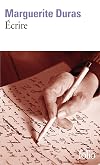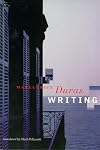
Writing
by Marguerite Duras
On This Page
Description
" Writing, one of Marguerite Duras's last works, is a meditation on the process of writing and on her need for solitude in order to do it. In the five short pieces collected in this volume, she explores experiences that had an emotional impact on her and that inspired her to write. These vary from the death of a pilot in World War II, to the death of a fly, to an art exhibition. Two of the pieces were made into documentary films, and one was originally a short film. Both autobiographical and show more fictional, like much of her work, Writing displays Duras's unique worldview and sensitive insight in her simple and poetic prose"-- show lessTags
Recommendations



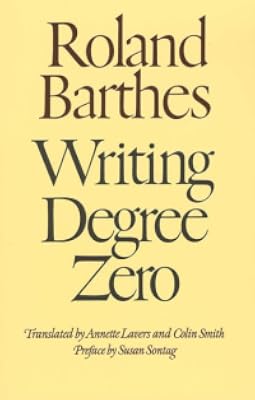
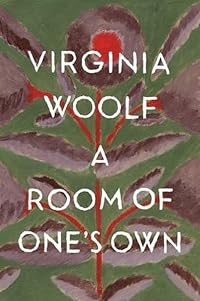
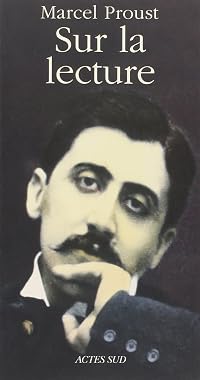
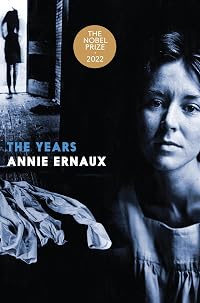
Member Recommendations

by anonymous user
Member Reviews
Écrire by Marguerite Duras consists of three film scripts and two short prose texts. Écrire is a short autobiographical film by Sylvie Blum and Claude Guisard. It is a documentary filmed in Duras' house in Neauphle-le-Château in which Marguerite Duras talks about writing.
In Écrire, Marguerite Duras speaks about the importance of her houses and the places where she has stayed for her writing. It is in a house that one is alone (p.1). She talks about the house, and the garden of her home in Neauphle-le-Château where she wrote some of her novels, as well as her house in Paris. She describes at length how she undertook an investigation about other people who had lived in her Paris home throughout the ages, and was surprised to find show more that among them there had never been anyone who wrote. The style of Écrire is contemplative, autobiographical memoires, and philosophical. It is probably not a good text for readers new to the author as it refers to several of her novels. The text does not give the reader many clues to Duras' writing, other than the prominence and importance of places, both as the setting for the work, the location where the work was written, and the way the house affects the author. It is obvious that at the time the film was made, Marguerite Duras was an author at the height of her career, aware that she could say or write anything and that all and anything would be recorded as if she were the oracle of Dephi. There is a long and sentimental passage about the death of a mouse: a passage which is clearly too long, and too sentimental. Seemingly, the author wants to point out how important her eye for detail, and small events, or petit drama is, but it verges on the ridiculous. On the other hand, some of Duras' novels are characterised by drawn out episodes. It is a pity that Écrire is not illustrated with photos of her homes.
The text is the script of a film with the title La mort du jeune aviateur anglais, a film by Benoît Jacquot. In the film Marguerite Duras tells the story of a young, 20-years old British pilot who died an agonizing death in a tree top after his plain was shot down over Vauville during the later days of World War II. It is remarkable and touching how the villagers bury and keep memorial services for the young soldier for many decades. The beauty of the piece is that in La mort du jeune aviateur anglais Marguerite Duras has touched on a small, personal story about World War II. Too often, the War is commemorated in large, official and impersonal narrative.
Third in this collection is a text called Roma, which is the script of a short film with the title La dialogue de Rome. This is a somewhat peculiar script, which reads more than anything like an off-stage recording of an irritated actress. While the text of Écrire consists of narrative monologue, and La mort du jeune aviateur anglais the telling of a story, Roma consists of dialogues. It can perhaps be read as a short, experimental play.
Added to the three scripts are two short prose compositions. Without a critical introduction it is hard to understand the significance or origin of these texts. The first, Le nombre pur seems to be about a project consisting of people recording all the names of people, places, etc which have occurred in their lives. These names together would then form a condense snap shot of their lives, or collectively of history. The last text, L'Exposition de la peinture is a descriptive piece of an exhibition of paintings.
Écrire consists of very varied types of text, autobiographical and experimental. Écrire is beautiful and interesting, but many other books, notable interviews such as Les lieux de Marguerite Duras (which is referred to in the text) exist which essentially cover the same material, with minor differences. show less
In Écrire, Marguerite Duras speaks about the importance of her houses and the places where she has stayed for her writing. It is in a house that one is alone (p.1). She talks about the house, and the garden of her home in Neauphle-le-Château where she wrote some of her novels, as well as her house in Paris. She describes at length how she undertook an investigation about other people who had lived in her Paris home throughout the ages, and was surprised to find show more that among them there had never been anyone who wrote. The style of Écrire is contemplative, autobiographical memoires, and philosophical. It is probably not a good text for readers new to the author as it refers to several of her novels. The text does not give the reader many clues to Duras' writing, other than the prominence and importance of places, both as the setting for the work, the location where the work was written, and the way the house affects the author. It is obvious that at the time the film was made, Marguerite Duras was an author at the height of her career, aware that she could say or write anything and that all and anything would be recorded as if she were the oracle of Dephi. There is a long and sentimental passage about the death of a mouse: a passage which is clearly too long, and too sentimental. Seemingly, the author wants to point out how important her eye for detail, and small events, or petit drama is, but it verges on the ridiculous. On the other hand, some of Duras' novels are characterised by drawn out episodes. It is a pity that Écrire is not illustrated with photos of her homes.
The text is the script of a film with the title La mort du jeune aviateur anglais, a film by Benoît Jacquot. In the film Marguerite Duras tells the story of a young, 20-years old British pilot who died an agonizing death in a tree top after his plain was shot down over Vauville during the later days of World War II. It is remarkable and touching how the villagers bury and keep memorial services for the young soldier for many decades. The beauty of the piece is that in La mort du jeune aviateur anglais Marguerite Duras has touched on a small, personal story about World War II. Too often, the War is commemorated in large, official and impersonal narrative.
Third in this collection is a text called Roma, which is the script of a short film with the title La dialogue de Rome. This is a somewhat peculiar script, which reads more than anything like an off-stage recording of an irritated actress. While the text of Écrire consists of narrative monologue, and La mort du jeune aviateur anglais the telling of a story, Roma consists of dialogues. It can perhaps be read as a short, experimental play.
Added to the three scripts are two short prose compositions. Without a critical introduction it is hard to understand the significance or origin of these texts. The first, Le nombre pur seems to be about a project consisting of people recording all the names of people, places, etc which have occurred in their lives. These names together would then form a condense snap shot of their lives, or collectively of history. The last text, L'Exposition de la peinture is a descriptive piece of an exhibition of paintings.
Écrire consists of very varied types of text, autobiographical and experimental. Écrire is beautiful and interesting, but many other books, notable interviews such as Les lieux de Marguerite Duras (which is referred to in the text) exist which essentially cover the same material, with minor differences. show less
These are film texts, not sure if they're direct transcriptions or not. There are five parts, and only the first is explicitly about the act of writing (this ranks with Annie Dillard's The Writing Life for some of the most poetic writing I've read on writing), though more broadly, all parts are about storytelling. Probably a must for Duras fans, and certainly worthwhile for anyone interested in the creative process.
Libro raro que me gustó. Buena improvisación
"Writing" was great; the others? Meh.
Une succession de textes sans grand intérêt, à l'exception de quelques passages ici et là. Il s'agit de textes tardifs écrits par une Marguerite Duras sur le déclin, rongée par l'alcool, qui se regarde un peu écrire.
Sep 16, 2020French
Ratings
Members
- Recently Added By
Author Information

234+ Works 18,921 Members
Marguerite Duras was born in Gia-Dinh, Indochina on April 4, 1914. After attending school in Saigon, she moved to Paris, France to study law and political science. After graduation, she worked as a secretary in the French Ministry of the Colonies until 1941. During World War II, she joined the Resistance and published her first books. After the show more liberation, she became a member of the French Communist Party, and though she later resigned, she always described herself as a Marxist. Her first book, Les Impudents, was published in 1943. During her lifetime, she wrote more than 70 novels, plays, screenplays and adaptations. Her novels include The Sea Wall, The Lover, The Lover from Northern China, The War, and That's All. In 1959, she wrote her first film scenario, Hiroshima, Mon Amour, and has since been involved in a number of other films, including India Song, Baxter, Vera Baxter, Le Camion (The Truck), and The Lover. She died on March 4, 1996 at the age of 81. (Bowker Author Biography) show less
Some Editions
Series
Belongs to Publisher Series
Common Knowledge
- Canonical title
- Writing
- Original title
- Écrire
- Original publication date
- 1993-09-15 (1e édition originale française, Blanche, Gallimard) (1e édition originale française, Blanche, Gallimard); 1995-10-13 (Réédition française, Folio, Gallimard) (Réédition française, Folio, Gallimard)
- Dedication*
- Je dédie ce livre à la mémoire de W. J. Cliffe, mort à vingt ans, à Vauville, en mai 1944, à une heure restée indéterminée.
- First words
- C'est dans une maison qu'on est seul.
- Quotations*
- Se trouver dans un trou, au fond d'un trou, dans une solitude quasi totale et découvrir que seule l'écriture vous sauvera. Etre sans sujet aucun de livre, sans aucune idée de livre c'est se trouver, se retrouver, devant un... (show all) livre. Une immensité vide. Un livre éventuel. Devant rien. Devant comme une écriture vivante et nue, comme terrible, terrible à surmonter. Je crois que la personne qui écrit est sans idée de livre, qu'elle a les mains vides, la tête vide, et qu'elle ne connaît de cette aventure du livre que l'écriture sèche et nue, sans avenir, sans écho, lointaine, avec ses règles d'or, élémentaires : l'orthographe, le sens.
- Last words*
- (Click to show. Warning: May contain spoilers.)Des ruissellements, des surgissements, des rapprochements possibles entre l'idée, la chose, la permanence de la chose, son inanité, la matière de l'idée, de la couleur, de la lumière, et Dieu sait quoi encore.
- Original language
- French
*Some information comes from Common Knowledge in other languages. Click "Edit" for more information.
Classifications
- Genres
- Fiction and Literature, Literature Studies and Criticism
- DDC/MDS
- 843.912 — Literature & rhetoric French Literature French fiction 1900- 20th Century 1900-1945
- LCC
- PQ2607 .U8245 .E2813 — Language and Literature French, Italian, Spanish and Portuguese literatures French literature Modern literature 1900-1960
- BISAC
Statistics
- Members
- 397
- Popularity
- 78,948
- Reviews
- 5
- Rating
- (3.60)
- Languages
- 12 — Danish, Dutch, English, Finnish, French, German, Italian, Norwegian (Bokmål), Portuguese, Spanish, Swedish, Turkish
- Media
- Paper, Ebook
- ISBNs
- 27
- ASINs
- 2