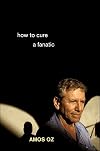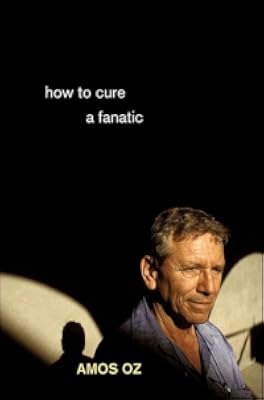
How to Cure a Fanatic
by Amos Oz 
On This Page
Description
Internationally acclaimed novelist Amos Oz grew up in war-torn Jerusalem, where as a boy he witnessed firsthand the poisonous consequences of fanaticism. In two concise, powerful essays, the award-winning author offers unique insight into the true nature of extremism and proposes a reasoned and respectful approach to resolving the Israeli-Palestinian conflict. He also comments on related issues--the Gaza pullout, Yasser Arafat's death, and the war in Iraq--in an extended interview at the end show more of the book. The brilliant clarity of these essays, coupled with Oz's ironic sense of humor in illuminating the serious, breathes new life into this old debate. Oz argues that the Israeli-Palestinian conflict is not a war of religion or cultures or traditions, but rather a real estate dispute--one that will be resolved not by greater understanding, but by painful compromise. Fresh, insightful, and inspiring, How to Cure a Fanatic brings a new voice of sanity to the cacophony on Israeli-Palestinian relations--a voice no one can afford to ignore. show lessTags
Recommendations









Member Reviews
Bár az aranyszájú Ámosz Oz nem a kedvenc íróm*, de azon kevés író közé tartozik, akinek irodalmi produktumait is élvezettel forgatom, és politikai megnyilatkozásai is mindig megfontolandónak bizonyulnak. Ebben a pöttynyi kötetben két esszét találunk a fanatizmusról, egy előadást az írásról, és egy grátisz 2005-ös interjút a szerzővel. Mindháromnak kincset ér minden szava, az első két tétel pedig… hát hadd ne mondjam, mennyire aktuális még mindig, már megint, csak épp Bin Ladent vagy a palesztin merénylőket kell behelyettesíteni valami másra. Elképesztően tömör, pontos, intelligens és provokatív szöveg jó adag vonnegut-i szarkazmussal tálalva – én a magam részéről csak azért show more nem idéztem ki az egészet, mert 1.) lusta vagyok 2.) már idéztek belőle előttem 3.) Oz a szövegben több helyütt is (különösen az utolsó riportban) azért vastagon ismétli önmagát, de ez alighanem egy ilyen műfaj – nem találhat ki magának folyton új igazságokat, csak hogy az olvasónak jó legyen. Ámosz Oz az a fajta gondolkodó, aki annyira szembemegy mindenfajta radikalizmussal, hogy az már önmagában radikalizmus-számba megy. Számára a tolerancia és az elfogadás nem pusztán erkölcsi kérdés, hanem az ideológiákon túlmutató kőkemény szükséglet – mert semmi sem biztosítja jobban úgy általában véve egy társadalom tagjainak túlélését, mint ha kompromisszumkész államban élnek, és országukat kompromisszumkész államok veszik körül. Ha valakinek akad egy-két szabad órája, ajánlom neki ezt a könyvet, igazi gyorstalpaló fundamentalizmus-témakörben. Ha van hibája, az az, hogy (attól tartok) fanatikust pont nem lehet gyógyítani vele. Bár próbálkozni azért lehet.
* Bár a Szeretetről, sötétségről sok kedvenc könyvem közül az egyik. Alighanem egyike a legjobb önéletírásoknak, és egyben a korai Izrael állam legpontosabb irodalmi ábrázolása is. show less
* Bár a Szeretetről, sötétségről sok kedvenc könyvem közül az egyik. Alighanem egyike a legjobb önéletírásoknak, és egyben a korai Izrael állam legpontosabb irodalmi ábrázolása is. show less
This tiny little book, which you can read in under an hour, is a reminder of how much Amos Oz is missed today. The book consists of two short speeches he gave in Germany in 2002, then a few pages about the "Geneva Accords" of 2003, and then a look back a decade later in an interview. Oz was a leading light of the Israeli peace camp, a man who believed strongly in a two-state solution and above all, in the fact that both sides in the dispute between the Israelis and Palestinians could be right, and have rights. Sadly, few today at least among the political elites of Israel and Palestine, seem to share this view. And as for how to cure a fanatic, he has some simple strategies, including reading literature and having a sense of humour. show more Amos Oz was arguably Israel's greatest writer, but he was also one of its most decent human beings. May his memory be blessed. show less
"No man is an island, said John Donne, but I humbly dare to add: No man or woman is an island, but every one of us is a peninsula, half attached to the mainland, half facing the ocean – one half connected to family and friends and culture and tradition and country and nation and sex and language and many other things, and the other half wanting to be left alone to face the ocean.
I think we ought to be allowed to remain peninsulas. Every social and political system that turns each of us into a Donnean island and the rest of humankind into an enemy or a rival is a monster. But at the same time every social and political and ideological system that wants to turn each of us into no more than a molecule of the mainland is also a show more monstrosity. The condition of peninsula is the proper human condition. That's what we are and that's what we deserve to remain."
Oz isn't revelatory, but he makes a few very good points on the value of compromise, humour and empathy. No less relevant ten years on, if slightly outdated in terms of the challenges faced. show less
I think we ought to be allowed to remain peninsulas. Every social and political system that turns each of us into a Donnean island and the rest of humankind into an enemy or a rival is a monster. But at the same time every social and political and ideological system that wants to turn each of us into no more than a molecule of the mainland is also a show more monstrosity. The condition of peninsula is the proper human condition. That's what we are and that's what we deserve to remain."
Oz isn't revelatory, but he makes a few very good points on the value of compromise, humour and empathy. No less relevant ten years on, if slightly outdated in terms of the challenges faced. show less
Ajudou-me a entender melhor a questão do fanatismo no oriente médio. Amos Oz tem uma visão clara e pragmática que junto com um respeito total pela diversidade de opinião propõe soluções e abordagens para essa questão. Além de uma análise contundente e muitas vezes poética, ele traz propostas práticas, como por exemplo, criar um curso sobre fanatismo nas universidades, pregar o humor e recomendar uma série de autores de romances da literatura universal (Thomas Mann, Shakespeare, Gogol, Kafka, entre outros). Um livro curto que deve ser lido por jovens enquanto ainda é tempo.
It's not really as ambitious as its title, but this collection of two lectures and an interview is still worth a look. Oz tackles the longstanding dispute between Israel and Palestine with a wisdom and clarity that is refreshing. Does he solve the problem? Alas, no. Does he really sketch out a method to cure a fanatic? Again, he does not.
I'm certainly no expert on Middle Eastern politics, so I'm in no position to judge the viability or practicality of his suggestions, but what Oz writes feels right. I'll confess, however, that I was unconvinced by his "teaspoon" argument: that if there's a fire, we should do whatever we can to put it out, even if our only water-bearing vessel is a teaspoon. A teaspoon is about all I have, and using it show more to fight the conflagration of modern fanaticism feel purely futile. show less
I'm certainly no expert on Middle Eastern politics, so I'm in no position to judge the viability or practicality of his suggestions, but what Oz writes feels right. I'll confess, however, that I was unconvinced by his "teaspoon" argument: that if there's a fire, we should do whatever we can to put it out, even if our only water-bearing vessel is a teaspoon. A teaspoon is about all I have, and using it show more to fight the conflagration of modern fanaticism feel purely futile. show less
Short but not sharp, in fact almost gentle, ordinary everyday language in a conversational tone, saying what many Israelis know (I hope) - that the conflict is all about The Land, with which both people have an umbilical link...
For me the most welcome part of the writing is where Oz says that the Palestinian leadership - whether Gaza or the West Bank - fail their people by not educating them about the realities of the situation - that the Jews too have a strong link to the country, that their history there goes back many centuries.
Oz appeals to a maturity which neither side appears to possess.
Those who most need to read this book are unlikely to do so. However, I shall send a copy to an Orthodox Jew of my acquaintance: if no one knocks show more at the door, it is likely to remain closed for ever. One must cling to hope. show less
For me the most welcome part of the writing is where Oz says that the Palestinian leadership - whether Gaza or the West Bank - fail their people by not educating them about the realities of the situation - that the Jews too have a strong link to the country, that their history there goes back many centuries.
Oz appeals to a maturity which neither side appears to possess.
Those who most need to read this book are unlikely to do so. However, I shall send a copy to an Orthodox Jew of my acquaintance: if no one knocks show more at the door, it is likely to remain closed for ever. One must cling to hope. show less
An interesting take on the Israeli-Palestinian conflict, in a slim volume (adapted from a couple of lectures). Oz argues that the conflict is between two peoples, both of whom are right about their claim to the land. It's not an opinion that many partisans of both sides will accept, but that might be an argument for it. Still, it could perhaps be expanded beyond these few pages - few even with a totally unenlightening interview with Oz tacked on at the end.
Members
- Recently Added By
Lists

Really Good Narrative Non-Fiction
65 works; 24 members
Author Information

119+ Works 12,294 Members
Amos Oz was born Amos Klausner in Jerusalem on May 4, 1939. As a young teenager, he moved to Kibbutz Hulda, where he completed his secondary education and worked on a farm. After he completed mandatory military service in 1961, the kibbutz assembly sent him to study at the Hebrew University of Jerusalem, where he received a B.A. in philosophy and show more literature. After graduation, he moved back to Hulda, where he wrote, did farm work, did guard and dining-room duty, and taught in the kibbutz high school. He fought in the 1967 and 1973 wars and spent a year as a visiting fellow at Oxford University. He wrote novels, collections of short fiction, works of nonfiction, and essays. His novels included My Michael, Black Box, and The Gospel According to Judas. His memoir, A Tale of Love and Darkness, was adapted into a movie in 2016. His last book, Dear Zealot, was made up of three essays on the theme of fanaticism. He was an advocate for peace and believed in a two-state solution, meaning the establishment of a Palestinian state alongside Israel. In the late 1970s, he helped found Peace Now. He received several awards including the Goethe Prize, the French Knight's Cross of the Légion D'Honneur, and the Israel Prize. He died after a short battle with cancer on December 28, 2018 at the age of 79. (Bowker Author Biography) show less
Amos Oz is a LibraryThing Author, an author who lists their personal library on LibraryThing.
Some Editions
Series
Belongs to Publisher Series
Common Knowledge
- Canonical title*
- Como Curar Um Fanático
- Original title
- Como Curar Um Fanático
- Alternate titles
- Help Us To Divorce
- Original publication date
- 2004
- First words*
- Wie zijn de goeden?
- Quotations*
- Toen mijn vader een klein jongetje in Polen was, stonden de muren van Europa vol graffiti: 'Joden terug naar Palestina!' en soms erger: 'Vuile smouzen, rot op naar Palestina!' Toen mijn vader Europa vijftig jaar later weer be... (show all)zocht, stonden er andere graffiti op de muren: 'Joden weg uit Palestina!'
- Last words*
- (Click to show. Warning: May contain spoilers.)Gevoel voor humor, je in de ander kunnen inleven, het vermogen om het schiereilandaspect van ieder van ons te erkennen; deze dingen bieden wellicht althans gedeeltelijk bescherming tegen het fanatisme-gen dat we allemaal bezitten.
- Blurbers
- Gordimer, Nadine; Hayford, Elizabeth R.
- Disambiguation notice*
- Vert. van: Help us to divorce ; Israel and Palestine: between right and right. - London : Vintage, 2004
*Some information comes from Common Knowledge in other languages. Click "Edit" for more information.
Classifications
Statistics
- Members
- 519
- Popularity
- 57,694
- Reviews
- 15
- Rating
- (3.78)
- Languages
- 12 — Catalan, Dutch, English, French, German, Hungarian, Italian, Norwegian (Bokmål), Portuguese (Brazil), Romanian, Spanish, Swedish
- Media
- Paper, Ebook
- ISBNs
- 33
- ASINs
- 6