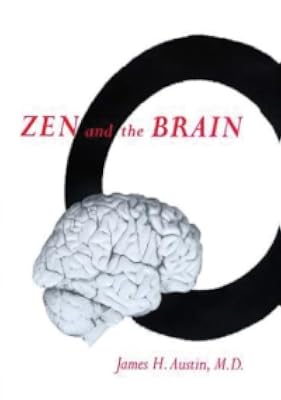
Zen and the Brain: Toward an Understanding of Meditation and Consciousness
by James H. Austin
On This Page
Description
In this book Zen Buddhism becomes the opening wedge for an extraordinarily wide-ranging exploration of consciousness. In order to understand which brain mechanisms produce Zen states, one needs some understanding of the anatomy, physiology, and chemistry of the brain. Austin, both a neurologist and a Zen practitioner, interweaves the most recent brain research with the personal narrative of his Zen experiences. The science is both inclusive and rigorous; the Zen sections are clear and show more evocative. Along the way, Austin examines such topics as similar states in other disciplines and religions, sleep and dreams, mental illness, consciousness-altering drugs, and the social consequences of the advanced stage of ongoing enlightenment. show lessTags
Recommendations




























Member Reviews
Aldous Huxley called humankind's basic trend toward spiritual growth the "perennial philosophy." In the view of James Austin, the trend implies a "perennial psychophysiology" -- because awakening, or enlightenment, occurs only when the human brain undergoes substantial changes. What are the peak experiences of enlightenment? How could these states profoundly enhance, and yet simplify, the workings of the brain? Zen and the Brain presents the latest evidence. In this book Zen Buddhism becomes the opening wedge for an extraordinarily wide-ranging exploration of consciousness. In order to understand which brain mechanisms produce Zen states, one needs some understanding of the anatomy, physiology, and chemistry of the brain. Austin, both a show more neurologist and a Zen practitioner, interweaves the most recent brain research with the personal narrative of his Zen experiences. The science is both inclusive and rigorous; the Zen sections are clear and evocative. Along the way, Austin examines such topics as similar states in other disciplines and religions, sleep and dreams, mental illness, consciousness-altering drugs, and the social consequences of the advanced stage of ongoing enlightenment. show less
I've not completed the book but I've finished as much as I care to read. I quite enjoyed the introductory chapters on the history and philosophy of Zen, and the art of meditation, which offered an interesting perspective from one who's been trained in Western medicine and studied in Japan. However, about a third of the way into the book the neurophysiology became a bit too deep to hold my interest.
A very difficult read, but well worth the effort, if you want to understand how scientists are gradually moving toward a full understanding of the neurological bases of meditative states.
A thick (872 pages) compilation of scholarly scientific articles certainly presenting reasons why one should, if one would, "just sit." I keep on doing it. Yoga means union, zen means meditation. Just sit. The benefits are there, have always been there, just sit. How complicated is that?
Ratings
Members
- Recently Added By
Lists

Nonordinary States of Consciousness
184 works; 7 members
Author Information

8+ Works 755 Members
James H. Austin, a clinical neurologist, researcher, and Zen practitioner for more than three decades, is Professor Emeritus of Neurology at the University of Colorado Health Sciences Center and Courtesy Professor of Neurology at the University of Florida College of Medicine. He is the author of Zen and the Brain, Chase, Chance, and Creativity, show more Zen-Brain Reflections, Selfless Insight, and Meditating Selflessly, all published by the MIT Press. show less
Common Knowledge
- Original title
- Zen and the Brain: Toward an Understanding of Meditation and Consciousness
- Original publication date
- 1998
- Original language
- English
Classifications
Statistics
- Members
- 454
- Popularity
- 67,136
- Reviews
- 4
- Rating
- (4.22)
- Languages
- Chinese, English
- Media
- Paper, Ebook
- ISBNs
- 5
- ASINs
- 1