

On This Page
Description
Tarl Cabot has always believed himself to be a citizen of Earth. He has no inkling that his destiny is far greater than the small planet he has inhabited for the first twenty-odd years of his life. One frosty winter night in the New England woods, he finds himself transported to the planet of Gor, also known as Counter Earth, where everything is dramatically different from anything he has ever experienced. It emerges that Tarl is to be trained as a Tarnsman, one of the most honored positions show more in the rigid, caste-bound Gorean society. He is disciplined by the best teachers and warriors that Gor has to offer . . . but to what end? Rediscover this brilliantly imagined world where men are masters and women live to serve their every desire. Tarnsman of Gor is the 1st book in the Gorean Saga, but you may enjoy reading the series in any order. show lessTags
Recommendations













Member Recommendations

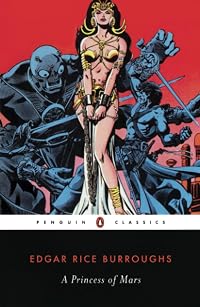
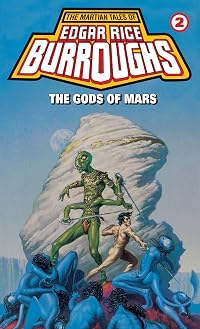
paradoxosalpha How-not-to manuals on negotiating with extraterrestrial princesses. (I.e. Barsoom 2.0)
Member Reviews
I had no idea up until a week or so ago that the author of these books was blacklisted by publishers because of them. I don't really see what the problem is to be honest. Oh I can see the rage building on the faces of various people and flame wars springing up all over the place, and that's really what I'd expect with a series of novels like this, but to blacklist the author? That baffles me.
The story itself isn't bad, and the characters are interesting to say the least, I mean, who wouldn't love a girl that begs you to brand her with a hot iron?, and that's par for the course on this planet it would seem,
Fair enough, no need to ask twice. She does though,
To be honest, I'm late to the party with the whole Gorean phenomenon and those internet flame wars that blew up around it, but I'm loving what I've read so far and once again, am just glad there are so many more in the series. I'll be reading them as long as he's writing them.
It's down to you as to whether or not you pay much attention to the nay-sayers and those that seem to delight in tearing the world of Gor apart at the seams at every opportunity(even nowadays), I just think you'd be missing out on a whole lot of fun and something just that little bit different. And it is a fun read. There's no way the writing or the plot can be compared with some of the more modern fantasy series, but then again, there's something to be said for just sitting back and enjoying the ride. I am, and I'm loving it. show less
The story itself isn't bad, and the characters are interesting to say the least, I mean, who wouldn't love a girl that begs you to brand her with a hot iron?, and that's par for the course on this planet it would seem,
"Call for the iron," she said. "Brand me, Master."
Fair enough, no need to ask twice. She does though,
"I want to be owned," sheshow more
whimpered. "I want to belong to you, fully, completely, in every way. I want your brand, Tarl of Bristol, don't you understand? I want to be your branded slave."
To be honest, I'm late to the party with the whole Gorean phenomenon and those internet flame wars that blew up around it, but I'm loving what I've read so far and once again, am just glad there are so many more in the series. I'll be reading them as long as he's writing them.
It's down to you as to whether or not you pay much attention to the nay-sayers and those that seem to delight in tearing the world of Gor apart at the seams at every opportunity(even nowadays), I just think you'd be missing out on a whole lot of fun and something just that little bit different. And it is a fun read. There's no way the writing or the plot can be compared with some of the more modern fantasy series, but then again, there's something to be said for just sitting back and enjoying the ride. I am, and I'm loving it. show less
The first of the infamous S&M fantasy series of the world of Gor is a rather unremarkable adventure book. Taking cue from Burroughs' John Carter of Mars, Norman gives us an Earthling sent to survive on savage, alien world. However, instead of John Carter, a cowboy and Civil War vet right out of Wister's 'The Virginian', Norman's hero is a mild-mannered British professor. His transformation from comical figure to unrivaled warrior is swift and inexplicable. Such a man might learn to become a soldier, to wield a sword, but that isn't good enough for Norman. His hero becomes literally the greatest soldier and swordsmen on his new, savage home.
However, Norman does not want us to question his plot or characters. He gives us a wild, show more melodramatic, unbelievable adventure without a hint of lightheartedness. Indeed, Norman seems to take every moment seriously, and with a swaggering machismo that dares us to laugh at it.
When Terb son of Terb (trained by Terb the viking to be a Terb-rider) defeats a dozen armed men with his arms literally tied behind his back, we are supposed to soberly marvel at his manliness. We are also meant to maintain this awe through a whole book-full of similarly unbelievable battles. This isn't to say that the fight scenes aren't fun, just that the author doesn't think they are.
There is also the training of the giant death-birds that the protagonist learns to ride. The birds are vicious and prone to attacking and even eating their riders. To combat this, the riders use handheld tasers to discipline the birds. There are two problems with this.
Firstly, we can imagine that training these birds would be akin to training a large predator, that is, a predator large enough to consider us prey. We can train cats and dogs pretty easily, since they don't consider us to be 'on the menu', but training these birds would be more like training a tiger. This can be done, but its an imprecise science, as even after years of familiarity and training, even a hand-raised tiger can turn on its handler.
Beyond that, we don't train them by taser, since this would tend to provoke a fear reaction in the animal. This means the animal is either going to run or fight you. This brings us to the second problem: these are birds.
If you threaten a bird, it will just fly away from you and that's the end. Training falcons requires them to see you as the primary source of food, and this training is difficult to maintain. Even well-trained falcons will sometimes just fly off when released to hunt. This requires chasing the thing down, isolating it, and netting it. Now imagine that you're trying to chase and net a tiger through the woods.
The training should have looked like a combination between how we train large predators like tigers and how we train animals which could easily escape us at any moment, like falcons. I don't require that an author do that kind of research to maintain realism, but I do require that if he hasn't done the research, he shouldn't then make some hand-waving claim about tasers. Now, back to sex slavery:
The first book also only very lightly enters into the recurring theme of female sex slavery which comes to define the rest of the series. That every woman in the book is a slave at one point or another, and is helplessly in need of a man despite her strong will comes only as a minor annoyance in this book rather than an overpowering obsession.
The insecurities of the author become all-too-blatant as one reads on. Firstly, Norman requires the fantastical escapism of a hero who is a simple, bookish man (with mommy issues) who becomes an unstoppable killing force (and lover) beholden to no man or god. Beyond this, he also requires a no-nonsense, manly rationalism worthy of Hemingway. Either one alone might be enjoyable, but the schizophrenic conflict between realism and hyperbole becomes a constant strain on the book's tone.
The plot is also so circular and serendipitous to sometimes be painful. The constant coincidences move the plot along at a clip, but there is little draughtsmanship in it. Like Jane Austen, every character will return in the climax, everyone will end up married and happy, and all the bad guys will be defeated. Everything will be neatly accounted for in an avalanche of details and events, so much so that the ever-piling climax had me laughing aloud with each new addition.
It is not only his plots but his romanticism which resembles Austen. His hero is an ideal in honesty, love, and purity, as well as swordsmanship and willpower. Not only will his somber superman enact a master-slave relationship with his chosen mate, but that relationship will be a pure and courtly love, undying and perfect. That Tarb (Tarb-riding son of Tarb) frees every enslaved woman he finds only makes conspicuous the fact that he the then enslaves them utterly with the purity of his heart's love.
It's not enough to enslave a woman, or even to do so against her histrionic strong will, but she must also be enslaved by her own desires and emotions, since the chain will never be strong enough. Of course, it shouldn't surprise us that Norman sees love as slavery, because only complete emotional control of a woman can overcome his personal insecurities.
Of course, in that, Norman follows the unbalanced ideals of many marriages and relationships: one need not live on far-off Gor to think that romance may be secured by the simple application of a jeweled band of gold.
Norman's writing isn't bad. Indeed, he is often evocative and exciting. He is competent enough to outshine most modern writers, especially in fantasy, but the way his insecurities bleed out from his pen is increasingly awkward.
It's like a guy who acts big and tough, except once you were hanging out and he tore his pants on a fence and you saw that he has a tattoo of a cartoon poodle on his thigh. If he showed it off and proudly admitted liking cartoon poodles, that would be one thing, but he's never mentioned it, and he always wears long pants, and you just remembered when he declined to go skinny dipping and just stood on the beach skipping rocks.
But now you've seen it, and you can't unsee it. Did he notice you looking? It doesn't matter, because you'll never buy the macho-man routine again, if you ever really did. The illusion is broken. show less
However, Norman does not want us to question his plot or characters. He gives us a wild, show more melodramatic, unbelievable adventure without a hint of lightheartedness. Indeed, Norman seems to take every moment seriously, and with a swaggering machismo that dares us to laugh at it.
When Terb son of Terb (trained by Terb the viking to be a Terb-rider) defeats a dozen armed men with his arms literally tied behind his back, we are supposed to soberly marvel at his manliness. We are also meant to maintain this awe through a whole book-full of similarly unbelievable battles. This isn't to say that the fight scenes aren't fun, just that the author doesn't think they are.
There is also the training of the giant death-birds that the protagonist learns to ride. The birds are vicious and prone to attacking and even eating their riders. To combat this, the riders use handheld tasers to discipline the birds. There are two problems with this.
Firstly, we can imagine that training these birds would be akin to training a large predator, that is, a predator large enough to consider us prey. We can train cats and dogs pretty easily, since they don't consider us to be 'on the menu', but training these birds would be more like training a tiger. This can be done, but its an imprecise science, as even after years of familiarity and training, even a hand-raised tiger can turn on its handler.
Beyond that, we don't train them by taser, since this would tend to provoke a fear reaction in the animal. This means the animal is either going to run or fight you. This brings us to the second problem: these are birds.
If you threaten a bird, it will just fly away from you and that's the end. Training falcons requires them to see you as the primary source of food, and this training is difficult to maintain. Even well-trained falcons will sometimes just fly off when released to hunt. This requires chasing the thing down, isolating it, and netting it. Now imagine that you're trying to chase and net a tiger through the woods.
The training should have looked like a combination between how we train large predators like tigers and how we train animals which could easily escape us at any moment, like falcons. I don't require that an author do that kind of research to maintain realism, but I do require that if he hasn't done the research, he shouldn't then make some hand-waving claim about tasers. Now, back to sex slavery:
The first book also only very lightly enters into the recurring theme of female sex slavery which comes to define the rest of the series. That every woman in the book is a slave at one point or another, and is helplessly in need of a man despite her strong will comes only as a minor annoyance in this book rather than an overpowering obsession.
The insecurities of the author become all-too-blatant as one reads on. Firstly, Norman requires the fantastical escapism of a hero who is a simple, bookish man (with mommy issues) who becomes an unstoppable killing force (and lover) beholden to no man or god. Beyond this, he also requires a no-nonsense, manly rationalism worthy of Hemingway. Either one alone might be enjoyable, but the schizophrenic conflict between realism and hyperbole becomes a constant strain on the book's tone.
The plot is also so circular and serendipitous to sometimes be painful. The constant coincidences move the plot along at a clip, but there is little draughtsmanship in it. Like Jane Austen, every character will return in the climax, everyone will end up married and happy, and all the bad guys will be defeated. Everything will be neatly accounted for in an avalanche of details and events, so much so that the ever-piling climax had me laughing aloud with each new addition.
It is not only his plots but his romanticism which resembles Austen. His hero is an ideal in honesty, love, and purity, as well as swordsmanship and willpower. Not only will his somber superman enact a master-slave relationship with his chosen mate, but that relationship will be a pure and courtly love, undying and perfect. That Tarb (Tarb-riding son of Tarb) frees every enslaved woman he finds only makes conspicuous the fact that he the then enslaves them utterly with the purity of his heart's love.
It's not enough to enslave a woman, or even to do so against her histrionic strong will, but she must also be enslaved by her own desires and emotions, since the chain will never be strong enough. Of course, it shouldn't surprise us that Norman sees love as slavery, because only complete emotional control of a woman can overcome his personal insecurities.
Of course, in that, Norman follows the unbalanced ideals of many marriages and relationships: one need not live on far-off Gor to think that romance may be secured by the simple application of a jeweled band of gold.
Norman's writing isn't bad. Indeed, he is often evocative and exciting. He is competent enough to outshine most modern writers, especially in fantasy, but the way his insecurities bleed out from his pen is increasingly awkward.
It's like a guy who acts big and tough, except once you were hanging out and he tore his pants on a fence and you saw that he has a tattoo of a cartoon poodle on his thigh. If he showed it off and proudly admitted liking cartoon poodles, that would be one thing, but he's never mentioned it, and he always wears long pants, and you just remembered when he declined to go skinny dipping and just stood on the beach skipping rocks.
But now you've seen it, and you can't unsee it. Did he notice you looking? It doesn't matter, because you'll never buy the macho-man routine again, if you ever really did. The illusion is broken. show less
Read this and more crime, thriller, horror and pulp reviews on CriminOlly.com
To say that John Norman’s ‘Gor’ books are problematic is an understatement. Set in a fantastic and brutal “Counter Earth”, they describe a society where slavery is a natural part of life (for both slaves and their owners) and women typically submit to men in S&M style relationships. The mix of pulp fantasy and misogynist philosophy made the books very popular in the 70s and 80s and has even spawned a Gorean sub-culture which lurks both online in places like ‘Second Life’. Despite being in his late 80s now, Norman is still writing the books, albeit at a much slower rate than he did in their heyday. The most recent, ‘Avengers of Gor’ is number show more 36 in the series.
I was fascinated by the books as a teenager, for reasons that will be obvious to anyone who has seen the covers of the Star books editions in the UK, but I don’t think I actually read any of them until I was well into adulthood. Like many pulp fiction works, they challenge the modern reader to answer the question – is it okay that I’m enjoying this horrible book?
Plot-wise this is typical sci fi/fantasy fare, with a definite nod to Edgar Rice Burroughs. Hero Tarl Cabot is a university professor in the USA (as was the author) who gets whisked off to Gor in a flying saucer type thing. Once there he meets his father (who had vanished when Tarl was a child) and becomes immersed in Gorean society. This involves him learning to fight and then going on a quest to steal a relic from a rival city state. Along the way there are plenty of slave girls, giant birds which people ride (called tarns), huge intelligent spiders and lots of fighting. We’re also introduced to the concept of the ‘Priest Kings’, mysterious creatures who rule the planet and restrict technology to keep it in a kind of medieval state.
Despite the promise of those covers, there’s no explicit sex at all, although there is a lot of S&M style paraphernalia, with the slave girls wearing handcuffs and hoods. There’s also a romantic sub plot involving Tarl and a princess, who is at first his sworn enemy but who he manages to dominate to the point she falls in love with him. You get the picture.
For all it’s appalling philosophising on gender politics, it’s an entertaining read. It moves at the right pace for this kind of thing, is packed with action and colour, and has the kind of energy that makes pulp adventures fun. Whilst it’s impossible to put the misogyny completely out of your mind, it didn’t ruin the book for me. Your mileage may vary. show less
To say that John Norman’s ‘Gor’ books are problematic is an understatement. Set in a fantastic and brutal “Counter Earth”, they describe a society where slavery is a natural part of life (for both slaves and their owners) and women typically submit to men in S&M style relationships. The mix of pulp fantasy and misogynist philosophy made the books very popular in the 70s and 80s and has even spawned a Gorean sub-culture which lurks both online in places like ‘Second Life’. Despite being in his late 80s now, Norman is still writing the books, albeit at a much slower rate than he did in their heyday. The most recent, ‘Avengers of Gor’ is number show more 36 in the series.
I was fascinated by the books as a teenager, for reasons that will be obvious to anyone who has seen the covers of the Star books editions in the UK, but I don’t think I actually read any of them until I was well into adulthood. Like many pulp fiction works, they challenge the modern reader to answer the question – is it okay that I’m enjoying this horrible book?
Plot-wise this is typical sci fi/fantasy fare, with a definite nod to Edgar Rice Burroughs. Hero Tarl Cabot is a university professor in the USA (as was the author) who gets whisked off to Gor in a flying saucer type thing. Once there he meets his father (who had vanished when Tarl was a child) and becomes immersed in Gorean society. This involves him learning to fight and then going on a quest to steal a relic from a rival city state. Along the way there are plenty of slave girls, giant birds which people ride (called tarns), huge intelligent spiders and lots of fighting. We’re also introduced to the concept of the ‘Priest Kings’, mysterious creatures who rule the planet and restrict technology to keep it in a kind of medieval state.
Despite the promise of those covers, there’s no explicit sex at all, although there is a lot of S&M style paraphernalia, with the slave girls wearing handcuffs and hoods. There’s also a romantic sub plot involving Tarl and a princess, who is at first his sworn enemy but who he manages to dominate to the point she falls in love with him. You get the picture.
For all it’s appalling philosophising on gender politics, it’s an entertaining read. It moves at the right pace for this kind of thing, is packed with action and colour, and has the kind of energy that makes pulp adventures fun. Whilst it’s impossible to put the misogyny completely out of your mind, it didn’t ruin the book for me. Your mileage may vary. show less
Ако погледнете читателските мнения относно тази книга, особено тия които са я оценили като слаба, ще разберете, че тя е епитома на женомразтвото, абсолютно сексистка пропаганда, скандална, неморална повръщня, която се опитва да върне човечеството в тъмните векове. Което ме и накара да я прочета, разбира се.
Всъщност, тя е непретенциозно меч-без-магия фентъзи от типа на книжките за Конан и най-доброто, което show more мога да кажа за нея е, че ако е единственото, което имаш в автобуса, примерно, няма да ти се наложи да умреш от скука.
"Скандалността" на книгата е в това, че в описания фентъзи свят съществува робство и жените роби са с нашийници. Няма нищо сексуално, жестоко или каквото и да е по-интересно, нито свързано с това, нито изобщо. Главния герой даже е абсолютен уайт найт некбиърд по характер, ако и да умее да се бие, за разлика от примерно абсолютния алфа мачо Конан, но интересно за последния няма никакви "скандали". show less
Всъщност, тя е непретенциозно меч-без-магия фентъзи от типа на книжките за Конан и най-доброто, което show more мога да кажа за нея е, че ако е единственото, което имаш в автобуса, примерно, няма да ти се наложи да умреш от скука.
"Скандалността" на книгата е в това, че в описания фентъзи свят съществува робство и жените роби са с нашийници. Няма нищо сексуално, жестоко или каквото и да е по-интересно, нито свързано с това, нито изобщо. Главния герой даже е абсолютен уайт найт некбиърд по характер, ако и да умее да се бие, за разлика от примерно абсолютния алфа мачо Конан, но интересно за последния няма никакви "скандали". show less
This was really a disappointment. Aside from the fact that it wasn't exactly the fantasy I thought it was going to be, it also didn't satisfy the "set in a primitive world" setting that I was craving for after reading the translations of 'Chronicles of Primordial Wars'.
My main problem was mostly the characters, and the author's writing style-- it was bland and lacklustre. Maybe it's because I just prefer longer books with more vivid and flowery descriptions rather than this journal-esque report of what happened to the main character, Tarl Cabot, while he was in the planet Gor, or Counter-Earth. Primarily because of this, it was honestly a chore to plough through this even though it's a short book. It took me two days to finish it when show more it would normally take me three or so hours with a book as thin as this.
And the characters, they're flatter than cardboard. Other than Tarl himself and the female ones, the other characters' (the one from his side) personalities were like imitations of themselves, only with the slightest of variations, their positions or their "parts" in the novel the only thing setting them apart from each other. Tarl's father, Kazrak, Marlenus seemed to me one and the same.
The female characters and the way they're treated-- as slaves and objects of pleasure, mostly-- is quite problematic. Obviously. They also seemed to portray only the qualities that men seemed to see them as, either gentle or hysterical. I also find it weird how the author seemed to be obsessed with putting women under their power and only with reading some of the reviews for this book have I realized why. I honestly thought that the story was basically a wish-fulfillment and really reminded me of 'Re: Monster' in that sense.
The main reason why I didn't like this book though, is the main character himself Tarl Cabot. He really seems to me like a disgustingly spineless guy who is quite indecisive with what he actually wants and it's annoying how he constantly dilly-dally and shilly-shally with his thoughts and decisions. Yes, it's admirable how he didn't let himself be swallowed by the Gorean mindset from the get-go, even rejecting some of the customs and habits that he didn't quite agree with, but it's also quite obvious that he's actually not as resistant to them as he seems ti think so himself.
The insta-relationships-- from instant acknowledgement of a father he hasn't seen from when he's practically a baby, to "falling in love" with a two-faced woman just because she's beautiful and has a great body, to instant best friends with a guy he's crossed swords with just BECAUSE-- was irritating as heck. He's even embracing with someone who's had him tortured, humiliated him, and just about killed him only a few pages before. It's ridiculous.
Other than that, I gotta say that he's a lucky bastard. Coincidences after coincidences save him over and over, getting him out of predicament after predicament with hardly any difficulty. It's basically like pie falling from the sky for him, or just the protagonist-halo working. His OP-ness (overpowered) was so eye-roll worthy-- I mean he's just learned weapon play, swordsmanship (*scoff*), but he can already *overpower* someone who's clearly experienced in fighting than him. I mean, if I want that kind of sillyness, I'd go read some wuxia and xianxia or any other Chinese novel with martial arts and fighting, or some semblance of it, instead.
This book probably has its own merits that I just couldn't see right now but I gotta admit that it's still interesting enough to continue with the next book. My curiosity was triggered by the reviews of the whole series that I've read. I'm quite intrigued with how it goes.
******************
I didn't realize that this is a pretty long series. I mean, 34 BOOKS?! show less
My main problem was mostly the characters, and the author's writing style-- it was bland and lacklustre. Maybe it's because I just prefer longer books with more vivid and flowery descriptions rather than this journal-esque report of what happened to the main character, Tarl Cabot, while he was in the planet Gor, or Counter-Earth. Primarily because of this, it was honestly a chore to plough through this even though it's a short book. It took me two days to finish it when show more it would normally take me three or so hours with a book as thin as this.
And the characters, they're flatter than cardboard. Other than Tarl himself and the female ones, the other characters' (the one from his side) personalities were like imitations of themselves, only with the slightest of variations, their positions or their "parts" in the novel the only thing setting them apart from each other. Tarl's father, Kazrak, Marlenus seemed to me one and the same.
The female characters and the way they're treated-- as slaves and objects of pleasure, mostly-- is quite problematic. Obviously. They also seemed to portray only the qualities that men seemed to see them as, either gentle or hysterical. I also find it weird how the author seemed to be obsessed with putting women under their power and only with reading some of the reviews for this book have I realized why. I honestly thought that the story was basically a wish-fulfillment and really reminded me of 'Re: Monster' in that sense.
The main reason why I didn't like this book though, is the main character himself Tarl Cabot. He really seems to me like a disgustingly spineless guy who is quite indecisive with what he actually wants and it's annoying how he constantly dilly-dally and shilly-shally with his thoughts and decisions. Yes, it's admirable how he didn't let himself be swallowed by the Gorean mindset from the get-go, even rejecting some of the customs and habits that he didn't quite agree with, but it's also quite obvious that he's actually not as resistant to them as he seems ti think so himself.
The insta-relationships-- from instant acknowledgement of a father he hasn't seen from when he's practically a baby, to "falling in love" with a two-faced woman just because she's beautiful and has a great body, to instant best friends with a guy he's crossed swords with just BECAUSE-- was irritating as heck. He's even embracing with someone who's had him tortured, humiliated him, and just about killed him only a few pages before. It's ridiculous.
Other than that, I gotta say that he's a lucky bastard. Coincidences after coincidences save him over and over, getting him out of predicament after predicament with hardly any difficulty. It's basically like pie falling from the sky for him, or just the protagonist-halo working. His OP-ness (overpowered) was so eye-roll worthy-- I mean he's just learned weapon play, swordsmanship (*scoff*), but he can already *overpower* someone who's clearly experienced in fighting than him. I mean, if I want that kind of sillyness, I'd go read some wuxia and xianxia or any other Chinese novel with martial arts and fighting, or some semblance of it, instead.
This book probably has its own merits that I just couldn't see right now but I gotta admit that it's still interesting enough to continue with the next book. My curiosity was triggered by the reviews of the whole series that I've read. I'm quite intrigued with how it goes.
******************
I didn't realize that this is a pretty long series. I mean, 34 BOOKS?! show less
I first read this book back in high school. My tastes had started to run towards sword & sorcery fantasy and my eye was caught by the Boris Vallejo illustration on the cover. I read the book and was enchanted by the world of Gor--a world filled with hawk-riding warriors, beautiful women and the mysterious Preist-Kings. I devoured the first seven Del Rey editions, following the adventures of the hero, Tarl Cabot, an earth man transported to the planet. With him I discovered the fascinating world of Gor, as he defeated evil foes, rescued beautiful damsels and unraveled the mystery of the Priest-Kings. The series continued with another publisher--Tor, perhaps? As it progressed the books became filled with less adventure and more show more philosophy: men are naturally more dominant, women are naturally submissive, blah, blah, blah. I suspect Mr. Norman had never encountered stubborn women of midwestern and/or German descent. (Now there's a book, HausFrau of Gor.)
Anyway, when I finally got around to paring down my library, the Gor books were easily sold off. Years passed and at the most recent Friends of the Library sale, I found a copy of Tarnsman of Gor on the book tables. I had forgotten a lot about the book, so I figured I'd reread it and see how much I'd enjoy it 30+ years later. The story itself was all right, once I got over the bad science and the similarities to A Princess of Mars. I could relate somewhat to Tarl Cabot, a young man learning a new culture, but still hanging on to some of his native values. The plot moves along pretty well and the characters are likable stereotypes. But in the end, I wasn't even slightly tempted to read the next book in the series.
--J. show less
Anyway, when I finally got around to paring down my library, the Gor books were easily sold off. Years passed and at the most recent Friends of the Library sale, I found a copy of Tarnsman of Gor on the book tables. I had forgotten a lot about the book, so I figured I'd reread it and see how much I'd enjoy it 30+ years later. The story itself was all right, once I got over the bad science and the similarities to A Princess of Mars. I could relate somewhat to Tarl Cabot, a young man learning a new culture, but still hanging on to some of his native values. The plot moves along pretty well and the characters are likable stereotypes. But in the end, I wasn't even slightly tempted to read the next book in the series.
--J. show less
I read a few books from this series late junior high right when I (did / did not) need them--a guilty pleasure for sure. I would guess I read about four or so of them.
If I were Rousseau, I could probably give a pretty good confessional regarding these books, which no one else would really want to read. To my credit, I knew they were bad--not just in a PC sense but in a 'literary' sense. This is not just a projection into the past. By that time I had already read books like "In Cold Blood" and "The Grapes of Wrath" so I knew how good good could be. At about that same time I was also discovering "Black Like Me" and the political manifestos of the day by the likes of Jerry Rubin, etc. Sexual and political awakens were all rolled into a show more messy bundle at that time--for pretty much a whole generation of kids.
I do recall that once I figured out what these books were, I did not feel very good about reading them--not so much because of the prurient thrum of the books--but because of how the women were viewed and treated. It felt all wrong though, at that time, I would probably not have been able to articulate why with much clarity or sophistication. Eventually, I think I just stalled in the middle of one of them.
I recall finding some Gor books stuffed in a box in the basement of our apartment when I was married and living in Evanston, IL. The one thing that can be said for the series is that while many books in such old boxes evoke very little memory or emotion these were both as familiar and as embarrassing as they had once been for me. Those old paperbacks entered another phase of their life in some Evanston used book shop around that time--gone but obviously not forgotten as they have now found a place on this virtual shelf.
Stars? I agree with the poster that suggests that books such as these bring out the complexity of how we assign stars. Do I assign stars based upon what the books provided for me then, or for the rating I would drop on it now? Is each star a pleasure index tied to the time of the reading or a judgment levied from a mature perspective?
My wife first read Joyce's 'A Portrait of an Artist as a Young Man' when she was about the age of the young Stephen Daedalus. She thought he was brilliant--everything that an aspiring artist must be. When she read it years later, she found Stephan to be a rather self-indulgent, self-important prig, truly a young artist needing to find a more mature self. Two readings. Two Stephens. The good thing that can be said about Joyce's work is that while one's view of Stephan may well change over time, the book itself is just flat-out great. I do not think an early vs. later reading of Gor--no matter the pleasures derived during any particular reading--would ever leave one thinking that the book itself is a fine wine that matures with age.
Stars: *** for my junior high self
Stars * for my I-only-have-so-many-books-left-in-me self show less
If I were Rousseau, I could probably give a pretty good confessional regarding these books, which no one else would really want to read. To my credit, I knew they were bad--not just in a PC sense but in a 'literary' sense. This is not just a projection into the past. By that time I had already read books like "In Cold Blood" and "The Grapes of Wrath" so I knew how good good could be. At about that same time I was also discovering "Black Like Me" and the political manifestos of the day by the likes of Jerry Rubin, etc. Sexual and political awakens were all rolled into a show more messy bundle at that time--for pretty much a whole generation of kids.
I do recall that once I figured out what these books were, I did not feel very good about reading them--not so much because of the prurient thrum of the books--but because of how the women were viewed and treated. It felt all wrong though, at that time, I would probably not have been able to articulate why with much clarity or sophistication. Eventually, I think I just stalled in the middle of one of them.
I recall finding some Gor books stuffed in a box in the basement of our apartment when I was married and living in Evanston, IL. The one thing that can be said for the series is that while many books in such old boxes evoke very little memory or emotion these were both as familiar and as embarrassing as they had once been for me. Those old paperbacks entered another phase of their life in some Evanston used book shop around that time--gone but obviously not forgotten as they have now found a place on this virtual shelf.
Stars? I agree with the poster that suggests that books such as these bring out the complexity of how we assign stars. Do I assign stars based upon what the books provided for me then, or for the rating I would drop on it now? Is each star a pleasure index tied to the time of the reading or a judgment levied from a mature perspective?
My wife first read Joyce's 'A Portrait of an Artist as a Young Man' when she was about the age of the young Stephen Daedalus. She thought he was brilliant--everything that an aspiring artist must be. When she read it years later, she found Stephan to be a rather self-indulgent, self-important prig, truly a young artist needing to find a more mature self. Two readings. Two Stephens. The good thing that can be said about Joyce's work is that while one's view of Stephan may well change over time, the book itself is just flat-out great. I do not think an early vs. later reading of Gor--no matter the pleasures derived during any particular reading--would ever leave one thinking that the book itself is a fine wine that matures with age.
Stars: *** for my junior high self
Stars * for my I-only-have-so-many-books-left-in-me self show less
Members
- Recently Added By
Lists

Kink Classics
15 works; 3 members

Guilty Pleasures
223 works; 86 members
Author Information

66+ Works 10,591 Members
Some Editions
Series

Belongs to Publisher Series
Scala SF (18)
Work Relationships
Has the adaptation
Common Knowledge
- Canonical title*
- Gor - Die Gegenerde
- Original title
- TARNSMAN OF GOR
- Original publication date
- 1966-12
- People/Characters
- Tarl Cabot; Talena; Marlenus; Torm; Older Tarl; Kazrak (show all 11); Mintar; Nar; Pa-Kur; Sana; Matthew Cabot
- Important places
- Ar, Gor; Ko-ro-ba, Gor
- Related movies
- Gor (1987 | IMDb)
- First words
- My name is Tarl Cabot.
- Last words
- (Click to show. Warning: May contain spoilers.)If I should once again walk the green fields of Gor, I know that I should attempt to solve the riddle of the Priest -Kings, that I should enter the Sardar Mountains and confront them, whoever or whatever they might be.
- Original language*
- Englisch
*Some information comes from Common Knowledge in other languages. Click "Edit" for more information.
Classifications
Statistics
- Members
- 1,020
- Popularity
- 25,352
- Reviews
- 22
- Rating
- (3.19)
- Languages
- 5 — Czech, Dutch, English, French, German
- Media
- Paper, Audiobook, Ebook
- ISBNs
- 43
- ASINs
- 30