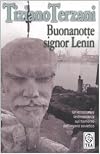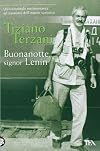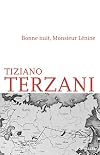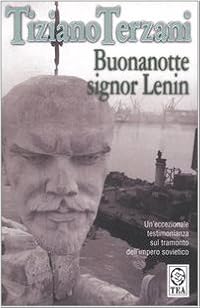
Goodnight, Mister Lenin
by Tiziano Terzani
On This Page
Description
In 'Bonne Nuit, Monsieur Lénine,' Tiziano Terzani embarks on an unexpected journey through the remnants of the Soviet Empire in 1991. The narrative unfolds as Terzani travels from the remote Kuril Islands to the heart of Siberia and beyond, witnessing the collapse of socialism. He explores the impact of political upheaval on the lives of ordinary people, highlighting the rise of nationalism and the resurgence of Islam in Central Asia. The book offers a vivid portrayal of a region in show more transition, capturing the historical significance of the events and the human stories behind them. Intended for readers interested in political history and cultural shifts, Terzani provides an insightful examination of the end of the Soviet era. show lessTags
Recommendations





















Member Reviews
Imagine having covered the fall of Saigon, and then the fall of Phnom Penh, being the Asia correspondent for several big European newspapers. Time goes by, it’s 1991, and there you are on a Russian vessel travelling down the 4,350 km of the Amur River with three Soviet journalists and three Chinese journalists under the auspices of Komsomolskaya Pravda.
Suddenly, one of the biggest news stories of the century breaks. Gorbachev has been deposed and a junta is taking power into its own hands. Like the newshound he was, Terzani desperately wanted to make his way back to Moscow. However, he didn’t want to go there directly. Rather, he wanted to travel through the various republics along the way, to see how this particular collapse would show more play out.
He left the ship at its final port in Nikolaievsk and headed west. His aim was “…not to be stopped, to go from city to city, to see, speak with people, make notes in my notebooks…” He managed to do this, travelling with various local guides and interpreters along the way, trying to evade the ever present representatives of governments who seemed to have changed only in organisational name. Their goal of obstructing him at every step certainly hadn’t stopped. Widespread corruption was a major factor in assisting him along the way.
Despite the huge variety of cultures in the republics Terzani visited traversing the Asian continent, there were remarkable similarities in the responses he discovered to the collapse of the Soviet Union. He was told over and over that “communism is dead”. He encountered nationalist organisations everywhere, causing him to worry about what that would mean for the future.
Statues and monuments were being toppled or resurrected, depending on who or what was being memorialised. In Baku, a statue of Sergei Kirov, first Bolshevik administrator of Azerbaijan, had been toppled in the past month. Asking his “taxi-driving paediatrician”/interpreter who the new saints were, the driver pointed to the Stock Exchange Building.
Perhaps strangest of all though, was a feeling that nothing had really happened, nothing at least to change anything.
Terzani made it to Moscow in early October, wanting to visit Lenin’s tomb as his trip’s final act and farewell, convinced Lenin too will be swept away, and fearing what would happen then.
The future is always unknown, but in the immediate aftermath of events of this scope, there is always doubt. For Terzani, the question was
There’s a restlessness in Terzani’s writing, a need to see more and more, while at the same time minutely observing his immediate world. Perhaps this is what makes the best reporters. Terzani himself was aware of it saying before he started out on the river that the expedition gave him a good reason to feel again that unique thrill understood only by those addicted to the drug of departures. He speaks of the “incomparable” need to know and understand at first hand.
No matter how things turned out eventually, Terzani’s account of the time has an immediacy to it that keeps the reader travelling along with him, and wanting to read more of his travels. show less
Suddenly, one of the biggest news stories of the century breaks. Gorbachev has been deposed and a junta is taking power into its own hands. Like the newshound he was, Terzani desperately wanted to make his way back to Moscow. However, he didn’t want to go there directly. Rather, he wanted to travel through the various republics along the way, to see how this particular collapse would show more play out.
He left the ship at its final port in Nikolaievsk and headed west. His aim was “…not to be stopped, to go from city to city, to see, speak with people, make notes in my notebooks…” He managed to do this, travelling with various local guides and interpreters along the way, trying to evade the ever present representatives of governments who seemed to have changed only in organisational name. Their goal of obstructing him at every step certainly hadn’t stopped. Widespread corruption was a major factor in assisting him along the way.
Despite the huge variety of cultures in the republics Terzani visited traversing the Asian continent, there were remarkable similarities in the responses he discovered to the collapse of the Soviet Union. He was told over and over that “communism is dead”. He encountered nationalist organisations everywhere, causing him to worry about what that would mean for the future.
Statues and monuments were being toppled or resurrected, depending on who or what was being memorialised. In Baku, a statue of Sergei Kirov, first Bolshevik administrator of Azerbaijan, had been toppled in the past month. Asking his “taxi-driving paediatrician”/interpreter who the new saints were, the driver pointed to the Stock Exchange Building.
Perhaps strangest of all though, was a feeling that nothing had really happened, nothing at least to change anything.
Terzani made it to Moscow in early October, wanting to visit Lenin’s tomb as his trip’s final act and farewell, convinced Lenin too will be swept away, and fearing what would happen then.
The future is always unknown, but in the immediate aftermath of events of this scope, there is always doubt. For Terzani, the question was
How can it be that all the dreams and sufferings that began in 1917 with the ‘Ten Days that Shook the World’ have come to an end in three August days that shook very little? That the ‘Great October Revolution’ had died like this, in bed, at seventy-four, of old age? Ended with no catharsis, no reckoning? Deflated like a balloon? It seems impossible that all that long history of illusions and assassinations, of hopes and horrors, has simply guttered out here like a flame. Perhaps the worst is still to come?
There’s a restlessness in Terzani’s writing, a need to see more and more, while at the same time minutely observing his immediate world. Perhaps this is what makes the best reporters. Terzani himself was aware of it saying before he started out on the river that the expedition gave him a good reason to feel again that unique thrill understood only by those addicted to the drug of departures. He speaks of the “incomparable” need to know and understand at first hand.
No matter how things turned out eventually, Terzani’s account of the time has an immediacy to it that keeps the reader travelling along with him, and wanting to read more of his travels. show less
Primo libro di Terzani a cui mi approccio e sicuramente uno dei più bei reportage giornalistici che abbia mai letto. Terzani ti prende per mano e ti accompagna sul sentiero della Storia, la Storia delle persone, dei paesaggi, degli odori, del vociare dei mercati e dei bisbigli spaventati di oppositori politici e spie di regime. La sua profonda empatia, la sua sensibilità, il suo interesse per la condizione umana, conditi da una sincera curiosità lo rendono un compagno di viaggio eccezionale. Grazie Tiziano
> Babelio : https://www.babelio.com/livres/Terzani-Bonne-nuit-Monsieur-Lenine/1403378
> RÉSUMÉ. — En août 1991, Tiziano Terzani navigue sur le fleuve Amour en Sibérie lorsqu'il apprend la nouvelle du coup d'État qui vient de renverser Gorbatchev à Moscou. Il se lance aussitôt dans un long périple qui le mène pendant plus de deux mois à travers la Sibérie, l'Asie centrale et le Caucase jusqu'à Moscou, la capitale de ce qui est en train de devenir la nouvelle Russie. Conçu à l'origine comme une exploration des confi ns orientaux de l'empire soviétique, ce voyage se transforme peu à peu en un voyage vers la fin du monde et de l'époque soviétiques.
Cet ouvrage constitue, 30 ans après la chute de l'URSS, un témoignage de show more première main sur l'une des transformations les plus radicales qu'ait connue cette partie du monde. Via une galerie de portraits hauts en couleur, la redécouverte de peuples oubliés et de minorités isolées ou un panorama de villes de légende où les vestiges du passé sont parfois balayés en quelques jours, Terzani compose l'oraison funèbre du communisme soviétique et un des grands récits de voyage à la Bruce Chatwin, Nicolas Bouvier ou Ryszard Kapuscinski.
Bonne nuit, Monsieur Lénine analyse non seulement les contradictions du communisme, mais aussi celles du capitalisme sauvage qui le remplace. De Samarcande à Boukhara, d'un souk poussiéreux à un kibboutz sibérien, Tiziano Terzani possède cette capacité unique de décrire la réalité pour ce qu'elle est, sans idéologie ni parti-pris. Avec lui on se passionne pour le sort des Ouzbeks, des Turkmènes, des Kirghizes, des Tadjiks ou des Arméniens. Avant beaucoup d'analystes, Terzani observe le réveil des nationalismes et de l'islamisme sur les cendres encore chaudes du colonialisme soviétique. Une immersion fascinante pour comprendre le passé et peut-être surtout entrevoir l'avenir géopolitique du territoire qu'on appelait autrefois l'URSS. show less
> RÉSUMÉ. — En août 1991, Tiziano Terzani navigue sur le fleuve Amour en Sibérie lorsqu'il apprend la nouvelle du coup d'État qui vient de renverser Gorbatchev à Moscou. Il se lance aussitôt dans un long périple qui le mène pendant plus de deux mois à travers la Sibérie, l'Asie centrale et le Caucase jusqu'à Moscou, la capitale de ce qui est en train de devenir la nouvelle Russie. Conçu à l'origine comme une exploration des confi ns orientaux de l'empire soviétique, ce voyage se transforme peu à peu en un voyage vers la fin du monde et de l'époque soviétiques.
Cet ouvrage constitue, 30 ans après la chute de l'URSS, un témoignage de show more première main sur l'une des transformations les plus radicales qu'ait connue cette partie du monde. Via une galerie de portraits hauts en couleur, la redécouverte de peuples oubliés et de minorités isolées ou un panorama de villes de légende où les vestiges du passé sont parfois balayés en quelques jours, Terzani compose l'oraison funèbre du communisme soviétique et un des grands récits de voyage à la Bruce Chatwin, Nicolas Bouvier ou Ryszard Kapuscinski.
Bonne nuit, Monsieur Lénine analyse non seulement les contradictions du communisme, mais aussi celles du capitalisme sauvage qui le remplace. De Samarcande à Boukhara, d'un souk poussiéreux à un kibboutz sibérien, Tiziano Terzani possède cette capacité unique de décrire la réalité pour ce qu'elle est, sans idéologie ni parti-pris. Avec lui on se passionne pour le sort des Ouzbeks, des Turkmènes, des Kirghizes, des Tadjiks ou des Arméniens. Avant beaucoup d'analystes, Terzani observe le réveil des nationalismes et de l'islamisme sur les cendres encore chaudes du colonialisme soviétique. Une immersion fascinante pour comprendre le passé et peut-être surtout entrevoir l'avenir géopolitique du territoire qu'on appelait autrefois l'URSS. show less
Jan 31, 2024 (Edited)French
Ratings
Members
- Recently Added By
Author Information

Tiziano Terzani has spent 25 years in Asia, reporting on its wars, revolutions, & upheavals for "Der Spiegel". He lives with his wife in New Delhi. (Bowker Author Biography)
Some Editions
Awards and Honors
Notable Lists
Common Knowledge
- Canonical title
- Goodnight, Mister Lenin
- Original title
- Buonanotte, signor Lenin
- Original publication date
- 1992 (1e édition originale italienne, collana Il Cammeo, Longanesi & C.) (1e édition originale italienne, collana Il Cammeo, Longanesi & C.); 2022-02-18 (1e traduction et édition française, Intervalles éditions) (1e traduction et édition française, Intervalles éditions)
- Important places*
- URSS; Tadjikistan
- Epigraph*
- /
- Dedication*
- À la mémoire de mon père, qui rêvait
- First words*
- 1
Un voyage inattendu
Comme il arrive souvent avec les plus belles aventures de la vie, ce voyage a commencé, lui aussi, par hasard. En février 1991, j'avais réussi à obtenir un visa pour me rendre... (show all) aux Kouriles, ces îles du bout du monde, la dernière frontière de l'empire soviétique, les « Territoires du Nord » comme on les appelle au Japon qui s'obstine à les revendiquer comme siennes. [...] - Original language*
- Italien
*Some information comes from Common Knowledge in other languages. Click "Edit" for more information.
Classifications
- Genres
- Nonfiction, Travel, General Nonfiction
- DDC/MDS
- 947.0854 — History & geography History of Europe Russia and neighboring east European countries Russian & Slavic History by Period 1855- 1953-1991 1982- (Andropov, Chernenko, Gorbachev)
- LCC
- DK293 .T45 — History of Europe, Asia, Africa and Oceania Russia. Soviet Union. Former Soviet Republics – Poland History of Russia. Soviet Union. Former Soviet Republics History 1991-
Statistics
- Members
- 165
- Popularity
- 197,478
- Reviews
- 3
- Rating
- (3.86)
- Languages
- 5 — English, French, German, Italian, Polish
- Media
- Paper, Ebook
- ISBNs
- 13
- ASINs
- 1