On This Page
Description
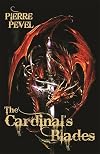
Welcome to seventeenth-century Paris, where intrigue, duels, and spies are rife and Cardinal Richelieu's men may be prevailed upon to risk life and limb in the name of France at a moment's notice. And with war on the horizon, the defense of the nation has never been more pressing. Danger is rising from the south--an insidious plot that could end with a huge dragon-shaped shadow falling over France, a shadow cast by dragons quite unlike the pet dragonets that roam the cities like stray cats, show more or the tame wyverns men ride like horses, high over the Parisian rooftops. These dragons and their descendants are ancient, terrible, and powerful ... and their plans contain little room for the lives or freedom of men. Cardinal Richelieu has nowhere else to turn; Captain La Fargue and his elite group of men, the Cardinal's Blades, must turn the tide. They must hold the deadly Black Claw cult at bay, root out traitors to the crown, rescue prisoners, and fulfill their mission for the Cardinal, for their country, but above all for themselves.It's death or victory. And the victory has never been less certain.
. show less
Tags
Recommendations



















Member Reviews
The back of this book promises "breathless swashbuckling, intrigue, spying, and sword fights" in the vein of The Three Musketeers plus dragons. On that account, the book delivers. On the other hand, if you want things like a plot that make sense and relatable (or even distinguishable) characters, this is not the book for you.
Yes, works in translation are always a little chancy, but I think the problems with The Cardinal's Blades are structural. The average chapter length is about four pages. Fast cuts substitute for pacing. Every character is dashing and deadly and mysterious and little bit cruel, but still a charmer with the ladies. Suspense is created by concealing from the reader what the characters already know, rather than by real show more intrigue and mystery. The end result is like reading a Dan Brown thriller crossed with one of Michael Moorcock's more disposable novellas with a French accent. Maybe the later books in the series improve, but I don't care to find out. A novel cannot stand on sword fights alone. show less
Yes, works in translation are always a little chancy, but I think the problems with The Cardinal's Blades are structural. The average chapter length is about four pages. Fast cuts substitute for pacing. Every character is dashing and deadly and mysterious and little bit cruel, but still a charmer with the ladies. Suspense is created by concealing from the reader what the characters already know, rather than by real show more intrigue and mystery. The end result is like reading a Dan Brown thriller crossed with one of Michael Moorcock's more disposable novellas with a French accent. Maybe the later books in the series improve, but I don't care to find out. A novel cannot stand on sword fights alone. show less
Set in an alternate 17th century France where the lesser cousins of dragons fly the skies and Musketeers prowl the streets. Plots within plots abound as can be expected when Cardinal Richelieu is involved. He has been asked by an emissary from Spain to reform his Blade's (think The Three Musketeer's but only better) to locate a missing Marquis and needing to stay in Spain's good graces, he agrees. La Fargue, the captain of the Blades, re-assembles the team that was disbanded in disgrace 5 years previously and we are introduced to each of its members in turn. Once reformed, they are given the sketchy details of their mission and they realise that there is undoubtedly more that has been left unsaid and they will have to fill in the blanks show more on their own.
As this is the first book of a series there is quite a bit of scene setting to be done but this does not detract from the amount of action that this book contains. There is also plenty of intrigue as the plot unfolds and you're never quite sure of the allegiances of some of the characters involved. The wyverns and dragonets are underused but I get the feeling they will be more utilised as the series develops past this opening book. My only gripe with this story is that due to the ensemble cast it is quite easy to forget just who everyone is, especially nearer the beginning. The short chapters, often just a couple of pages, don't really help in this respect.
Overall though this is a pretty decent tale and the translation reads quite well. show less
As this is the first book of a series there is quite a bit of scene setting to be done but this does not detract from the amount of action that this book contains. There is also plenty of intrigue as the plot unfolds and you're never quite sure of the allegiances of some of the characters involved. The wyverns and dragonets are underused but I get the feeling they will be more utilised as the series develops past this opening book. My only gripe with this story is that due to the ensemble cast it is quite easy to forget just who everyone is, especially nearer the beginning. The short chapters, often just a couple of pages, don't really help in this respect.
Overall though this is a pretty decent tale and the translation reads quite well. show less
I ventured into this series after reading Pevel's fabulous 'The Knight - A tale from the High Kingdom'.
This is the first in an unrelated series, which makes a lot of sense, given that this one is essentially an introduction to Pevel’s world. That isn’t to say that the plot is left to one side, but the novel takes a lot of care to introduce us to the cast of characters, and it can all be a little overwhelming at times. There’s a lot to take in, and part of me hopes that future books take a little more time to focus on individuals, rather than get lost in a morass of conspiracies, back-stabbings and politics. It isn’t entirely fair to suggest that nothing else happens in this book – the political side of things mostly chunters show more away in the background, and will obviously build to a head in future volumes – but there is the occasional danger of the author becoming so wrapped up in his creation that the reader gets lost.
Having said that, as long as one is prepared to let the book carry you along, there’s an awful lot to enjoy here. Our eponymous heroes are a fun lot, old soldiers bought back together under mysterious circumstances and surrounded by enemies, both open and hidden. If there’s an element of cliché – grizzled teacher, arrogant drunk, feisty woman – it’s generally forgivable, mostly because of the obvious fun Pevel is having. Richelieu is scheming, the European powers are squabbling amongst themselves, an important visitor to Paris has gone missing, and, of course, there are dragons…
To be fair, the dragon thing is hardly the focus of the book, and I worry that people may be put off just by their presence. Pevel has thought things through, and the descendants of dragons are living amongst us, which makes the whole scheming/hiding thing much easier. There is a lot of fun to be had in guessing who is secretly scaly, and there’s one reveal right at the end which promises future trouble for the Blade’s, and made me impatient to read on (I’ll have to wait though…). I’ve always enjoyed Dumas’ books, and the brief cameo from Athos here was a nice touch. There’s a feel of the pulpiness of the Musketeer books, and although the prose isn’t on that level, it works perfectly well – a good writer, and a good translator, which is a good combination.
I've got the whole series - so I'm now onto book 2. show less
This is the first in an unrelated series, which makes a lot of sense, given that this one is essentially an introduction to Pevel’s world. That isn’t to say that the plot is left to one side, but the novel takes a lot of care to introduce us to the cast of characters, and it can all be a little overwhelming at times. There’s a lot to take in, and part of me hopes that future books take a little more time to focus on individuals, rather than get lost in a morass of conspiracies, back-stabbings and politics. It isn’t entirely fair to suggest that nothing else happens in this book – the political side of things mostly chunters show more away in the background, and will obviously build to a head in future volumes – but there is the occasional danger of the author becoming so wrapped up in his creation that the reader gets lost.
Having said that, as long as one is prepared to let the book carry you along, there’s an awful lot to enjoy here. Our eponymous heroes are a fun lot, old soldiers bought back together under mysterious circumstances and surrounded by enemies, both open and hidden. If there’s an element of cliché – grizzled teacher, arrogant drunk, feisty woman – it’s generally forgivable, mostly because of the obvious fun Pevel is having. Richelieu is scheming, the European powers are squabbling amongst themselves, an important visitor to Paris has gone missing, and, of course, there are dragons…
To be fair, the dragon thing is hardly the focus of the book, and I worry that people may be put off just by their presence. Pevel has thought things through, and the descendants of dragons are living amongst us, which makes the whole scheming/hiding thing much easier. There is a lot of fun to be had in guessing who is secretly scaly, and there’s one reveal right at the end which promises future trouble for the Blade’s, and made me impatient to read on (I’ll have to wait though…). I’ve always enjoyed Dumas’ books, and the brief cameo from Athos here was a nice touch. There’s a feel of the pulpiness of the Musketeer books, and although the prose isn’t on that level, it works perfectly well – a good writer, and a good translator, which is a good combination.
I've got the whole series - so I'm now onto book 2. show less
I started reading this book because of my childish nostalgia for [a:Alexandre Dumas|4785|Alexandre Dumas|http://photo.goodreads.com/authors/1279049943p2/4785.jpg] and his famous [b:The Three Musketeers|7190|The Three Musketeers|Alexandre Dumas|http://photo.goodreads.com/books/1320436982s/7190.jpg|1263212]. But Pevel disappointed me. I didn’t like his book at all.
Caveat: as I can’t read the original in French, I can only talk about the English translation of the novel, and it’s lousy, as if the translator has only a passing acquaintance with English grammar. Dangling participles litter every page, and pronouns referring to the wrong nouns mar almost every paragraph. I’m a grammar freak. Each time my eyes stumbled upon such show more mistakes, frustration built up. I felt jarred out of the story, disoriented.
The story itself is jumbled, built like a series of short vignettes, each one with its own POV. I couldn’t discern one distinctive protagonist or even three. I stopped counting POVs at a dozen, but I think there are more.
The genre of the novel is a political thriller with a nod to fantasy: there’re dragons somewhere in Spain and they, allegedly, threaten France. Cardinal Richelieu opposes the dragons and takes actions to prevent their dominance: he resurrects the company of his spies – Blades – to take care of the dragons’ threat.
The Blades are in the center of the novel, which is a tale of their coming together for their first mission. But the author adopted a puppet master attitude towards his characters: they’re his cardboard marionettes, and he shuffles them like cards, any way he chooses. Lots of page space is dedicated to descriptive details – the color of clothes, the lengths of hat plumes, the streets and architectural history of Paris – but the characters’ emotions are practically hidden, and very little of their thought process is revealed.
As the action jumps abruptly from character to character, the readers lack time to bond with any of them. In any case, no participant in this non-stop adventure is lovable or even likable. They are all two-dimensional, with an emphasis on cruelty. Everyone is bloodthirsty. Everyone kills without hesitation. Betrayal flourishes on every level.
And the leaders on both sides of the conflict are equally ruthless, manipulating their own people for the sake of political expediency. In these conditions, the traitors’ actions actually make more sense than those of the loyal supporters. If your leader or your comrades are as ready to destroy you as your enemies, then maybe money is the only thing of value and loyalty is worthless? Which makes the readers wonder: why should one side win against another? They’re both equally bad.
The only well-defined entity in the entire novel is France of the 17th century. After finishing the book, I got a sense of a barbaric country where brutality was norm, treachery abounded, human life cost nothing, and everyone was drowning in filth. The heroes were supposed to serve France, but she didn’t seem to deserve it. Maybe that was what Pevel wanted to show? If so, he’s a great writer.
show less
Caveat: as I can’t read the original in French, I can only talk about the English translation of the novel, and it’s lousy, as if the translator has only a passing acquaintance with English grammar. Dangling participles litter every page, and pronouns referring to the wrong nouns mar almost every paragraph. I’m a grammar freak. Each time my eyes stumbled upon such show more mistakes, frustration built up. I felt jarred out of the story, disoriented.
The story itself is jumbled, built like a series of short vignettes, each one with its own POV. I couldn’t discern one distinctive protagonist or even three. I stopped counting POVs at a dozen, but I think there are more.
The genre of the novel is a political thriller with a nod to fantasy: there’re dragons somewhere in Spain and they, allegedly, threaten France. Cardinal Richelieu opposes the dragons and takes actions to prevent their dominance: he resurrects the company of his spies – Blades – to take care of the dragons’ threat.
The Blades are in the center of the novel, which is a tale of their coming together for their first mission. But the author adopted a puppet master attitude towards his characters: they’re his cardboard marionettes, and he shuffles them like cards, any way he chooses. Lots of page space is dedicated to descriptive details – the color of clothes, the lengths of hat plumes, the streets and architectural history of Paris – but the characters’ emotions are practically hidden, and very little of their thought process is revealed.
As the action jumps abruptly from character to character, the readers lack time to bond with any of them. In any case, no participant in this non-stop adventure is lovable or even likable. They are all two-dimensional, with an emphasis on cruelty. Everyone is bloodthirsty. Everyone kills without hesitation. Betrayal flourishes on every level.
And the leaders on both sides of the conflict are equally ruthless, manipulating their own people for the sake of political expediency. In these conditions, the traitors’ actions actually make more sense than those of the loyal supporters. If your leader or your comrades are as ready to destroy you as your enemies, then maybe money is the only thing of value and loyalty is worthless? Which makes the readers wonder: why should one side win against another? They’re both equally bad.
The only well-defined entity in the entire novel is France of the 17th century. After finishing the book, I got a sense of a barbaric country where brutality was norm, treachery abounded, human life cost nothing, and everyone was drowning in filth. The heroes were supposed to serve France, but she didn’t seem to deserve it. Maybe that was what Pevel wanted to show? If so, he’s a great writer.
show less
While not a perfectly composed book, I had a ridiculous amount of fun reading it. Alternate history, a dash of Three Musketeers, dragons... daring swordfights, and an elite squad of fighters loyal to Cardinal Richelieu and the crown, out to roust a secret organization set to take over the world.
If you love silly swashbuckling and 7th Sea, this is a perfect book for you. It starts a bit slow as we are introduced to our cast of characters, but picks up and dives headlong into the fun before too long.
My biggest complaint is the single major female protagonist. There are a few female side characters, but there could have been more ladies. What are swashbuckling adventures without witty, pretty ladies to spy and swordfight and flirt with?
If you love silly swashbuckling and 7th Sea, this is a perfect book for you. It starts a bit slow as we are introduced to our cast of characters, but picks up and dives headlong into the fun before too long.
My biggest complaint is the single major female protagonist. There are a few female side characters, but there could have been more ladies. What are swashbuckling adventures without witty, pretty ladies to spy and swordfight and flirt with?
Basically, this is The Three Muskeeters with dragons. The plot is done very well, the author has read his Dumas closely. There is political intrigue, as Richelieu tries to thwart a plot against France, swordfights, treason, courage, heroism, and everything else you need for a rousing swashbuckler. The writing style is less than perfect, with a curiously limited vocabulary for clothes and other physical things and a number of stock phrases (when people turn around, they always “tournent sur les talons”, no variations offered). There are disappointingly few dragons around, though.
Pevel started his career writing for role-playing games, and I think it shows in the way he assembles and describes his large cast of characters without show more letting you know how they relate to each other. He also needs a lot of time setting up the scene and putting events in motion. But things get gripping enough to continue with the next book. Oh, and there’s a surprise guest appearance from a “real” musketeer! show less
Pevel started his career writing for role-playing games, and I think it shows in the way he assembles and describes his large cast of characters without show more letting you know how they relate to each other. He also needs a lot of time setting up the scene and putting events in motion. But things get gripping enough to continue with the next book. Oh, and there’s a surprise guest appearance from a “real” musketeer! show less
Fast-paced swashbuckling adventures in the vein of The Three Musketeers, only with dragons. I should have loved this, and in some level I did, but it did so little in terms of character that, beyond superficial traits, I never got to really know what makes these people tick and cheer for them. It's a pity, that. Think of this as a Hollywood blockbuster, with a decent plot and lots of action, but easy to forget when it's over.
The beginning was kind of slow, jumping from character to character rapidly without us knowing who these people are. Later it gets better once we start getting a better feel of what the story is about. There are a lot of fights and action scenes, but also a lot of investigating and intrigues.
This is the first part show more of a trilogy, but it stands well on its own. The story told here is complete, but there is a couple of reveals at the end that set the hook for the following installments. show less
The beginning was kind of slow, jumping from character to character rapidly without us knowing who these people are. Later it gets better once we start getting a better feel of what the story is about. There are a lot of fights and action scenes, but also a lot of investigating and intrigues.
This is the first part show more of a trilogy, but it stands well on its own. The story told here is complete, but there is a couple of reveals at the end that set the hook for the following installments. show less
Members
- Recently Added By
Lists

Books Read in 2014
2,343 works; 89 members

SF & Fantasy in Translation
95 works; 18 members

Speculative Fiction from around the World
610 works; 18 members
Author Information

42+ Works 1,065 Members
Some Editions
Awards and Honors
Awards
Series


Belongs to Publisher Series
Varraku F-sari (109)
Gallimard, Folio SF (444)
Work Relationships
Is contained in
Was inspired by
Common Knowledge
- Canonical title
- The Cardinal's Blades
- Original title
- Les Lames du Cardinal
- Original publication date
- 2007-10 [French]; 2009 [English]
- Dedication*
- Ce livre est dédié à Jean-Philippe, mon frère trop tôt enfui.
- First words
- Long and high-ceilinged, the room was lined with elegantly gilded and bound books which shone with a russet gleam in the half-light of the candle flames.
- Last words
- (Click to show. Warning: May contain spoilers.)'Good evening, master,' said La Fargue.
*Some information comes from Common Knowledge in other languages. Click "Edit" for more information.
Classifications
Statistics
- Members
- 294
- Popularity
- 109,376
- Reviews
- 14
- Rating
- (3.49)
- Languages
- 8 — Dutch, English, Estonian, Finnish, French, German, Italian, Spanish
- Media
- Paper, Ebook
- ISBNs
- 18
- ASINs
- 8