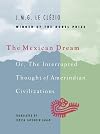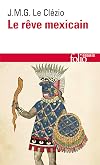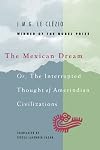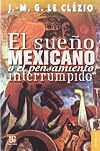
The Mexican Dream: Or, The Interrupted Thought of Amerindian Civilizations
by J.M.G. Le Clézio
On This Page
Description
"Not one dream but many unfold in J.M.G. Le Clezio's conjuring of the consciousness of Mexico, a powerful evocation of the imaginings that made and unmade an ancient culture. "What motivated me," Le Clezio has said, "was a sort of dream about what has disappeared and what could have been." A widely respected French novelist who for many years has studied pre-Columbian Mexico, Le Clezio imagined how the thought of early Indian civilizations might have evolved if not for the interruption of show more European conquest." "In an unprecedented way, his book takes us into the dream that was the religion of the Aztecs, which in its own apocalyptic visions anticipated the coming of the Spanish conquerors. Here the dream of the conquistadores rises before us, too, the glimmering idea of gold drawing Europe into the Mexican dream. Against the religion and thought of the Aztecs and the Tarascans and the Europeans in Mexico, Le Clezio also shows us those of the "barbarians" of the north, the nomadic Indians beyond the pale of the Aztec frontier." "Finally, Le Clezio's book is a dream of the present, a meditation on what in Amerindian civilizations - in their language, in their way of telling tales, of wanting to survive their own destruction - moved the poet, playwright, and actor Antonin Artaud and motivates Le Clezio in this book. The author's deep identification with pre-Columbian cultures, whose faith told them the wheel of time would bring their gods and their beliefs back to them, finds fitting expression in this extraordinary book, which brings the dream around."--Jacket. show lessTags
Recommendations

























Member Reviews
An evocative take on the history of ancient Mexico, the conquistadors, and the elimination of a culture. Le Clezio weaves all Amerindians into his vision of mesoamerican folklore, culture and beliefs, how this makes a people and of worlds colliding, tragically-- yet it was foreseen by the Apocalyptic prophecies of the Maya.
This is a rambling history told in seven novella- length essays by a man of literature- Le Clezio won the Nobel prize "as an author of new departures, poetic adventure and sensual ecstasy, explorer of a humanity beyond and below the reigning civilization." Le Clezio, a Frenchman, had a passion for the mesoamerican lands, and has himself a second home in New Mexico.
His writing here is immensely detailed, highly show more repetitive and long-winded. Beautiful-but just....too much...excess...
We are spared nothing, particularly in the brutality of it all. It's hard to look away from the horrific description and it's deeply saddening on both sides.
The Aztecs were wiped out by the Spanish invasion, and knowing it was coming did not make any of it easier.
Le Clezio forces us to consider the impact- for all Amerindians on the North American continent were ultimately decimated-
Could these two cultures, European and Amerindians, have co-existed otherwise? he wonders.
It's quite a question. show less
This is a rambling history told in seven novella- length essays by a man of literature- Le Clezio won the Nobel prize "as an author of new departures, poetic adventure and sensual ecstasy, explorer of a humanity beyond and below the reigning civilization." Le Clezio, a Frenchman, had a passion for the mesoamerican lands, and has himself a second home in New Mexico.
His writing here is immensely detailed, highly show more repetitive and long-winded. Beautiful-but just....too much...excess...
We are spared nothing, particularly in the brutality of it all. It's hard to look away from the horrific description and it's deeply saddening on both sides.
The Aztecs were wiped out by the Spanish invasion, and knowing it was coming did not make any of it easier.
Le Clezio forces us to consider the impact- for all Amerindians on the North American continent were ultimately decimated-
Could these two cultures, European and Amerindians, have co-existed otherwise? he wonders.
It's quite a question. show less
La Tragedia de esa confrontación esta contenida en ese desequilibrio, Es el furor de un sueño moderno que extermina a un sueño antiguo, un deseo de poder que destruye a los mitos, El Oro, las armas modernas y el pensamiento racional contra la magia y los dioses; el resultado no hubiera podido ser otro
Turbados por el mito del retorno de sus antepasados y de la divina serpiente Emplumada Quetzalcóatl, Kukuxklán. Los indios están cegados, no pueden advertir los verdaderos designios de aquellos de aquellos a los que han nombrado ya Los Teules.
Llama la atenncion que incluso las Batallas fueran diferentes, fueran Guerras Floridas, el Hecho es que los aztecas jamas, buscaron matar al enemigo, sino capturarlo para sacrificarlo a sus show more Dioses.
Luego de la catástrofe que aniquilo México Tenochtitlan, el silencio embargo la ultima civilización mágica, a sus cantos, sus ritos y palabras. Este silencio es el de la muerte o el de la barbarie, comparable a la suerte e Roma, ya que esa civilización es destruida en pleno auge, al cabo de una conquista
A las sociedades amerindias les perturban los sueños y los augurios, y esto es lo que causa su pérdida. Por otra parte en esta creencia encuentran la razón de su vivir.
Tal vez las mayores innovaciones de las civilizaciones amerindias se encuentran en el arte y en la religión. Los Mexicanos estaban a punto de desarrollar un sistema filosófico que hubiera podido resolver las contradicciones del mundo antiguo
Así pues, no por azar nuestra civilización occidental vuelve a encontrar hoy los temas filosóficos y religiosos de los indios americanos, al colocarse en una situación de desequilibrio, al dejarse arrastrar por su propia violencia, el hombre occidental debe reinventar todo lo que constituía la belleza y la armonía de todo lo que destruyo show less
Turbados por el mito del retorno de sus antepasados y de la divina serpiente Emplumada Quetzalcóatl, Kukuxklán. Los indios están cegados, no pueden advertir los verdaderos designios de aquellos de aquellos a los que han nombrado ya Los Teules.
Llama la atenncion que incluso las Batallas fueran diferentes, fueran Guerras Floridas, el Hecho es que los aztecas jamas, buscaron matar al enemigo, sino capturarlo para sacrificarlo a sus show more Dioses.
Luego de la catástrofe que aniquilo México Tenochtitlan, el silencio embargo la ultima civilización mágica, a sus cantos, sus ritos y palabras. Este silencio es el de la muerte o el de la barbarie, comparable a la suerte e Roma, ya que esa civilización es destruida en pleno auge, al cabo de una conquista
A las sociedades amerindias les perturban los sueños y los augurios, y esto es lo que causa su pérdida. Por otra parte en esta creencia encuentran la razón de su vivir.
Tal vez las mayores innovaciones de las civilizaciones amerindias se encuentran en el arte y en la religión. Los Mexicanos estaban a punto de desarrollar un sistema filosófico que hubiera podido resolver las contradicciones del mundo antiguo
Así pues, no por azar nuestra civilización occidental vuelve a encontrar hoy los temas filosóficos y religiosos de los indios americanos, al colocarse en una situación de desequilibrio, al dejarse arrastrar por su propia violencia, el hombre occidental debe reinventar todo lo que constituía la belleza y la armonía de todo lo que destruyo show less
Aug 15, 2024Spanish
Ratings
Members
- Recently Added By
Author Information

120+ Works 6,306 Members
Jean-Marie Gustave Le Clézio, who was born in Nice, France on April 13, 1940, is usually identified as J. M. G. Le Clézio. After studying at the University of Bristol in England from 1958 to 1959, he finished his undergraduate degree at Institut d'etudes Litteraires in Nice. In 1964, he received a master's degree from the University of show more Aix-en-Provence with a thesis on Henri Michaux and wrote a doctoral thesis in 1983 on Mexico's early history for the University of Perpignan. He has taught at numerous universities throughout the world and has written around 30 books including novels, essays, and short stories. He received the Prix Renaudot Prize for his novel Le Procès-Verbal in 1963 and the Nobel Prize for Literature in 2008. (Bowker Author Biography) show less
Series
Belongs to Publisher Series
Gallimard, Folio essais (178)
Classifications
- Genres
- Nonfiction, History, General Nonfiction
- DDC/MDS
- 972.018 — History & geography History of North America Mexico, Central America, West Indies, Bermuda Mexico, Central America, West Indies, Bermuda Ancient civilization (-1516)
- LCC
- F1230 .L3413 — Local History of the United States, Canada and Latin America Latin America. Spanish America Mexico
- BISAC
Statistics
- Members
- 152
- Popularity
- 215,372
- Reviews
- 2
- Rating
- (3.55)
- Languages
- 5 — English, French, German, Polish, Spanish
- Media
- Paper, Ebook
- ISBNs
- 9
- ASINs
- 1