On This Page
Description
The classic samurai novel about the real exploits of the most famous swordsmanMiyamoto Musashi was the child of an era when Japan was emerging from decades of civil strife. Lured to the great Battle of Sekigahara in 1600 by the hope of becoming a samurai-without really knowing what it meant-he regains consciousness after the battle to find himself lying defeated, dazed, and wounded among thousands of the dead and dying. On his way home, he commits a rash act, becomes a fugitive, and brings show more life in his own village to a standstill-until he is captured by a weaponless Zen monk.The lovely Otsu, seeing in Musashi her ideal of manliness, frees him from his tortuous punishment, but he is recaptured and imprisoned. During three years of solitary confinement, he delves into the classics of Japan and China. When he is set free again, he rejects the position of samurai and for the next several years pursues his goal relentlessly, looking neither to left nor to right.Ever so slowly it dawns on him that following the Way of the Sword is not simply a matter of finding a target for his brute strength. Continually striving to perfect his technique, which leads him to a unique style of fighting with two swords simultaneously, he travels far and wide, challenging fighters of many disciplines, taking nature to be his ultimate and severest teacher and undergoing the rigorous training of those who follow the Way. He is supremely successful in his encounters, but in the Art of War he perceives the way of peaceful and prosperous governance and disciplines himself to be a real human being.He becomes a reluctant hero to a host of people whose lives he has touched and been touched by. And, inevitably, he has to pit his skill against the naked blade of his greatest rival.Musashi is a novel in the best tradition of Japanese storytelling. It is a living story, subtle and imaginative, teeming with memorable characters, many of them historical. Interweaving themes of unrequited love, misguided revenge, filial piety, and absolute dedication to the Way of the Samurai, it depicts vividly a world Westerners know only vaguely. Full of gusto and humor, it has an epic quality and universal appeal.|ForewordBook One: EarthThe Little BellThe CombThe Flower FestivalThe Dowager's WrathThe Art of WarThe Old Cryptomeria TreeThe Rock and the TreeThe Birth of MusashiBook Two: WaterThe Yoshioka SchoolThe Wheel of FortuneEncounter and Retreat. show lessTags
Recommendations






Member Recommendations
Member Reviews
Loved it even though I hated so many of the characters….mind you, that was kind of inevitable. The book opens at the battle of Segikahara, just when Shogun ends - so I was able to easily catch my bearings in the world and float along for the rest of it. Slog yes, but an enjoyable one.
It didn't need to be as long as it was, and it's pretty clear looking back that it was written to be serialized. I think the Kodansha version I have is abridged, even? Still 900+ pages. Plot threads sometimes disappear for hundreds of pages at a time, sometimes but not always to return. Musashi is absolutely horrible to the young kid who begs to become his apprentice. Musashi is a liar, a cheat, plays very dirty with his opponents, and in general doesn't at all act like most people would expect a Samurai to act.
I also finished this massive doorstopper in less than a week because I could not put it down - whenever I was forced to, I was thinking about when I would be able to pick it back up and keep going. Just endlessly fascinating and show more engrossing, start to finish, flaws and all. show less
I also finished this massive doorstopper in less than a week because I could not put it down - whenever I was forced to, I was thinking about when I would be able to pick it back up and keep going. Just endlessly fascinating and show more engrossing, start to finish, flaws and all. show less
I first learned about Eiji Yoshikawa’s epic historical novel Musashi while looking for a translation of Miyamoto Musashi’s Book of Five Rings. The group of people I was asking for recommendations insisted that I give Yoshikawa’s fictionalization of Musashi’s life a try as well. Yoshikawa’s envisioning of Musashi has been the inspiration for a large number of samurai films and is the basis for Takahiko Inoue’s manga series Vagabond. Musashi was originally serialized in Japan between 1935 and 1939. The English translation by Charles S. Terry was published by Kodansha International in 1981. The book doesn’t indicate it anywhere, but apparently the English edition is actually an abridgement. The original is nearly four show more thousand pages long. However, the English translation’s nine hundred seventy pages of relatively small print is not really anything to scoff at, either.
Much of Yoshikawa’s Musashi is based on historical reality and while they are fictionalized (and it is important to remember that), many of the events and people portrayed actually existed. Musashi is one of Japan’s most notable and recognizable swordsmen. Musashi begins with the aftermath of the Battle of Sekigahara in which a young Musashi, then known as Takezō, fought and managed to survive. It ends with one of Musashi’s most famous duels as he faces the highly skilled Sasaki Kojirō. In between, the novel traces his efforts to develop his own style of swordsmanship, resulting in the foundation of his innovative two sword technique. At the same time, Japanese society is undergoing great change as the Tokugawa shogunate more firmly establishes its control over the country.
Although the novel’s title is simply Musashi, the cast of characters is quite large. In addition to Musashi, the tale also follows those who seek to be close to him, his peers and rivals, friends, adversaries, and mentors. Many of the encounters between these people seem to happen by chance or fate, and sometimes the coincidences are a bit much, but it does make for a good story. For the most part, the characters grow and change as the novel progresses. Some of the changes happen suddenly while others develop more naturally over time. Musashi, too, is a significantly different person by the end of the book than he is when it first begins. He may be a legendary swordsman, but in Musashi he is shown to be completely human as well. He, like all the other characters, makes mistakes and stupid decisions, but he is shown to be willing to learn from them.
The pacing of Musashi is much more leisurely than one might expect for a novel about a man striving to better himself by following the Way of the Sword. Although Musashi is constantly training and is involved in many cinematic duels and battles, most of the book is of a quieter, more philosophical bent. Musashi brings what he learns from everyday life to his swordsmanship and in return applies the Way of the Sword to his way of life, believing the two are one and the same. Some might feel the novel drags on, and its length is certainly felt even in abridged form, but I was actually quite happy with it. I would like to read the novel in its entirety, but Terry’s translation and abridgement is excellent. While it occasionally feels slightly disjointed, overall the narrative flows very nicely. However, the ending comes abruptly. In some ways this lends to the creation of the myth and legend of Musashi, but it still seemed very sudden to me. Regardless, I am very glad I took the time needed to read and experience Yoshikawa’s Musashi.
Experiments in Manga show less
Much of Yoshikawa’s Musashi is based on historical reality and while they are fictionalized (and it is important to remember that), many of the events and people portrayed actually existed. Musashi is one of Japan’s most notable and recognizable swordsmen. Musashi begins with the aftermath of the Battle of Sekigahara in which a young Musashi, then known as Takezō, fought and managed to survive. It ends with one of Musashi’s most famous duels as he faces the highly skilled Sasaki Kojirō. In between, the novel traces his efforts to develop his own style of swordsmanship, resulting in the foundation of his innovative two sword technique. At the same time, Japanese society is undergoing great change as the Tokugawa shogunate more firmly establishes its control over the country.
Although the novel’s title is simply Musashi, the cast of characters is quite large. In addition to Musashi, the tale also follows those who seek to be close to him, his peers and rivals, friends, adversaries, and mentors. Many of the encounters between these people seem to happen by chance or fate, and sometimes the coincidences are a bit much, but it does make for a good story. For the most part, the characters grow and change as the novel progresses. Some of the changes happen suddenly while others develop more naturally over time. Musashi, too, is a significantly different person by the end of the book than he is when it first begins. He may be a legendary swordsman, but in Musashi he is shown to be completely human as well. He, like all the other characters, makes mistakes and stupid decisions, but he is shown to be willing to learn from them.
The pacing of Musashi is much more leisurely than one might expect for a novel about a man striving to better himself by following the Way of the Sword. Although Musashi is constantly training and is involved in many cinematic duels and battles, most of the book is of a quieter, more philosophical bent. Musashi brings what he learns from everyday life to his swordsmanship and in return applies the Way of the Sword to his way of life, believing the two are one and the same. Some might feel the novel drags on, and its length is certainly felt even in abridged form, but I was actually quite happy with it. I would like to read the novel in its entirety, but Terry’s translation and abridgement is excellent. While it occasionally feels slightly disjointed, overall the narrative flows very nicely. However, the ending comes abruptly. In some ways this lends to the creation of the myth and legend of Musashi, but it still seemed very sudden to me. Regardless, I am very glad I took the time needed to read and experience Yoshikawa’s Musashi.
Experiments in Manga show less
I had wanted to read this book for a long time, since I love japanese culture and its history. I finally got around to it after reading the ongoing and awesome "Vagabond" manga from Takehijo Inoue, that's based in this novel (although changing a lot of elements, most of them for the better).
It's hard for me to review this without comparing it to the movies or the manga, but I gave it 5 stars anyway because I think it's a great achievement as a novel. Even though it was published in the 1910s, it reads very well (the english translation must help with the style) and it maintains a good pace throughout the novel, even though Musashi disappears for several chapters and the story follows other secondary characters for a while.
You have to show more read it not only as the story of one man, but of a period of time and its people. It's a choral novel in that sense, since it features several viewpoints and deals with complex and mature subject matter. But the book wouldn't work without the shadow of Musashi being cast over all the other characters. And what the author does masterfully is show the progression of Musashi, from a violent young man to a master of the way, of zen as much as of the sword. And the rest of the characters meet their karmic ends, as should be in a story.
It is eminently readable and approachable, even for those that are not experts in japanese history, though liking it helps a lot. show less
It's hard for me to review this without comparing it to the movies or the manga, but I gave it 5 stars anyway because I think it's a great achievement as a novel. Even though it was published in the 1910s, it reads very well (the english translation must help with the style) and it maintains a good pace throughout the novel, even though Musashi disappears for several chapters and the story follows other secondary characters for a while.
You have to show more read it not only as the story of one man, but of a period of time and its people. It's a choral novel in that sense, since it features several viewpoints and deals with complex and mature subject matter. But the book wouldn't work without the shadow of Musashi being cast over all the other characters. And what the author does masterfully is show the progression of Musashi, from a violent young man to a master of the way, of zen as much as of the sword. And the rest of the characters meet their karmic ends, as should be in a story.
It is eminently readable and approachable, even for those that are not experts in japanese history, though liking it helps a lot. show less
As gory as this was, and as much as it doesn't really pass the Bechdel test, I loved this legend tale for how much it reminded me of the books I devoured as a kid: those of the knight errant / wandering warrior / searching scholar / itinerant monk in times past, with lessons about self-enlightenment against various scenic backdrops, peppered with extraordinary characters and meandering sidequests as befitting of an epic.
It's the super unlikely coincidences that only happen in these types of stories, where the characters can travel as far as they like, but somehow everyone they meet is essential to the main story and connected to a known character. It's how each individual events of the overall nomadic journey is like a small puzzle in show more itself for the protagonist (and sometimes the reader) to solve st the same time. And how overall it's just a rollicking good story with villains and heroes alike all reach some satisfying pinnacle point of learning.
The serialised nature of this tale lends itself easily to manga-isation, and I'd love to read one with all the rough and raw drawing style that the story demands. Another version I'd love to read is with a itinerant scholarly woman but considering these types of stories seem most popular a few centuries ago, I might never be able to find one.
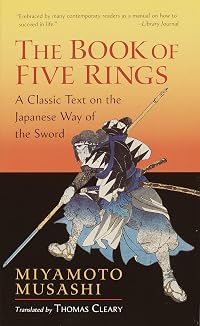
In a fun coincidence, at my weekly visit to a friend's house recently, we were sitting in their study that we've sat in a few times before, and my eyes were browsing their books as we chatted and I suddenly spot "Musashi" on the torn spine of this small paperback. It was The Book of Five Rings. Truly, once you learn/know something, you really do start seeing it everywhere. show less
It's the super unlikely coincidences that only happen in these types of stories, where the characters can travel as far as they like, but somehow everyone they meet is essential to the main story and connected to a known character. It's how each individual events of the overall nomadic journey is like a small puzzle in show more itself for the protagonist (and sometimes the reader) to solve st the same time. And how overall it's just a rollicking good story with villains and heroes alike all reach some satisfying pinnacle point of learning.
The serialised nature of this tale lends itself easily to manga-isation, and I'd love to read one with all the rough and raw drawing style that the story demands. Another version I'd love to read is with a itinerant scholarly woman but considering these types of stories seem most popular a few centuries ago, I might never be able to find one.
In a fun coincidence, at my weekly visit to a friend's house recently, we were sitting in their study that we've sat in a few times before, and my eyes were browsing their books as we chatted and I suddenly spot "Musashi" on the torn spine of this small paperback. It was The Book of Five Rings. Truly, once you learn/know something, you really do start seeing it everywhere. show less
Once I started reading it, I had a hard time putting it down and would stay awake reading long into the night because I wanted to know what happened next.
I first became familiar with Musashi from the movies in the Samurai trilogy, starring Toshiro Mifune. I don't practice martial arts, but I found Musashi such an interesting figure that I wanted to learn more about his life, hence the Yoshikawa novel, and it didn't disappoint me. I learned not only about Musashi's life and accomplishments, but also about the inner workings of the man and what made him tick, and even after reading this book, I still Musashi intriguing.
I'd like to re-read this book at some point, and since I'll probably never get mine back, it looks like I'll be buying show more another one, but I enjoyed reading it so much that I don't mind buying it twice. Ordinarily, I don't read a book more than once, but I'm sure I'd enjoy this one again and get even more out of it the second around. show less
I first became familiar with Musashi from the movies in the Samurai trilogy, starring Toshiro Mifune. I don't practice martial arts, but I found Musashi such an interesting figure that I wanted to learn more about his life, hence the Yoshikawa novel, and it didn't disappoint me. I learned not only about Musashi's life and accomplishments, but also about the inner workings of the man and what made him tick, and even after reading this book, I still Musashi intriguing.
I'd like to re-read this book at some point, and since I'll probably never get mine back, it looks like I'll be buying show more another one, but I enjoyed reading it so much that I don't mind buying it twice. Ordinarily, I don't read a book more than once, but I'm sure I'd enjoy this one again and get even more out of it the second around. show less
Instant classic.
After I finished reading the book, I was wondering if 970 pages were enough to tell Musashi's tale. In spite of the well-fitting ending, I must say that I wouldn't complain if there was more of the story. Musashi's saga is told with lots of details, but still kept very quick to read. And it tells not only of his own story, but also the story of the people who had their lives affected by him, for good or for worse.
Unlike several other books I read before, the chapters do not end "in the best part" so that the reader gets curious and the story lasts longer. In each chapter (and in each of the books within this book) a story begins and ends, so you won't get caught in anxiety to see what's about to happen with any of the show more characters.
One thing that I absolutely loved in this book: the description of several aspects of the Japanese culture. I only missed a tea cerimony description, but other than this, all the main characteristics of Japan post-Sekigahara war were vividly described.
Highly recommended! show less
After I finished reading the book, I was wondering if 970 pages were enough to tell Musashi's tale. In spite of the well-fitting ending, I must say that I wouldn't complain if there was more of the story. Musashi's saga is told with lots of details, but still kept very quick to read. And it tells not only of his own story, but also the story of the people who had their lives affected by him, for good or for worse.
Unlike several other books I read before, the chapters do not end "in the best part" so that the reader gets curious and the story lasts longer. In each chapter (and in each of the books within this book) a story begins and ends, so you won't get caught in anxiety to see what's about to happen with any of the show more characters.
One thing that I absolutely loved in this book: the description of several aspects of the Japanese culture. I only missed a tea cerimony description, but other than this, all the main characteristics of Japan post-Sekigahara war were vividly described.
Highly recommended! show less
Members
- Recently Added By
Lists

Japanese Literature
230 works; 40 members

A Novel Cure
742 works; 23 members

Clã Ishida - 2024
3 works; 1 member
Author Information

170+ Works 4,169 Members
Some Editions
Awards and Honors
Awards
Notable Lists
Series

Work Relationships
Contains
Has the adaptation
Common Knowledge
- Canonical title
- Musashi
- Original title
- 宮本武蔵; Miyamoto Musashi
- Alternate titles
- Musashi: An Epic Novel of the Samurai Era; Miyamoto Musashi
- Original publication date
- 1935
- People/Characters
- Sasaki Kojirō; Miyamoto Musashi; Shishido Baiken; Yoshioka Seijūrō; Yoshioka Denshichirō; Musō Gonnosuke
- Important places
- Osaka, Japan; Japan; Kyoto, Japan; Nara, Japan; Edo, Japan
- Important events
- Battle of Sekigahara (1600)
- Related movies
- Miyamoto Musashi (1954/I | IMDb); Zoku Miyamoto Musashi: Ichijôji no kettô (1955 | IMDb); Miyamoto Musashi kanketsuhen: kettô Ganryûjima (1956 | IMDb)
- First words
- ""E depois de tudo, céu e terra aí estão, como se nada tivesse acontecido. A esta altura, a vida e as ações de um homem têm o peso de uma folha seca no meio da ventania... Ora, que vá tudo para o inferno!", pensou Take... (show all)zo."
Takezō lay among the corpses. There were thousands of them. - Quotations
- That's what's extraordinary about him. He's not content with relying on whatever natural gifts he may have. Knowing he's ordinary, he's always trying to improve himself. No one appreciates the agonizing effort he's had to mak... (show all)e. Now that his years of training have yielded such spectacular results, everybody's talking about his 'god-given talent.' That's how men who don't try very hard comfort themselves.
- Last words
- (Click to show. Warning: May contain spoilers.)"E foi então que o sol surgiu como todos os dias, seus raios varrendo a superfície da terra e iluminando até as raízes das plantas."
(Click to show. Warning: May contain spoilers.)The little fishes, abandoning themselves to the waves, dance and sing and play, but who knows the heart of the sea, a hundred feet down? Who knows its depth? - Original language
- Japanese
- Disambiguation notice
- Dies ist eine gekürzte Taschenbuchausgabe. Bitte nicht mit der Gesamtausgabe verknüpfen. Abridged edition. Please do not combine with the complete version.
Classifications
- Genres
- Fiction and Literature, General Fiction, Historical Fiction
- DDC/MDS
- 895.634 — Literature & rhetoric Literatures of other languages Literatures of East and Southeast Asia Japanese Japanese fiction Meiji/Taishō periods 1868–1945
- LCC
- PL842 .O75 .M513 — Language and Literature Languages and literatures of Eastern Asia, Africa, Oceania Languages of Eastern Asia, Africa, Oceania Japanese language and literature Japanese literature Individual authors and works
- BISAC
Statistics
- Members
- 1,894
- Popularity
- 11,333
- Reviews
- 26
- Rating
- (4.35)
- Languages
- 15 — Czech, Dutch, English, Finnish, French, German, Hungarian, Indonesian, Italian, Japanese, Portuguese, Romanian, Russian, Serbian, Swedish
- Media
- Paper, Audiobook, Ebook
- ISBNs
- 43
- ASINs
- 13