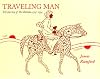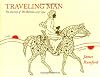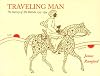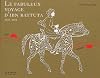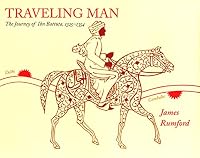
Traveling Man: The Journey of Ibn Battuta, 1325-1354
by James Rumford
On This Page
Description
An introduction to the journeys of the little-known 14th century Muslim figure, Ibn Battuta. He traveled for 29 years from Morocco to China, from the steppes of Russia to the shores of Tanzania, 75,000 miles in all.Tags
Recommendations









Member Recommendations
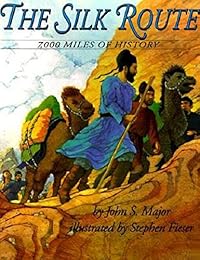
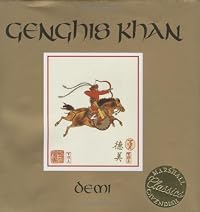
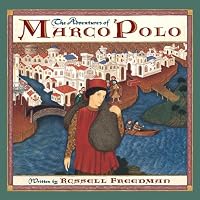
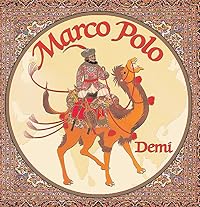
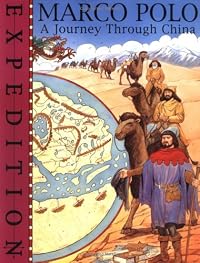
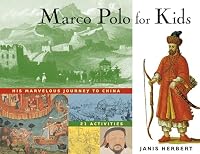
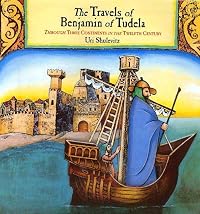
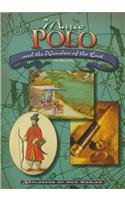
raizel Another man who traveled to some of the same places (I think) about two hundred years earlier.

PuddinTame A translation of the original work
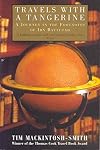
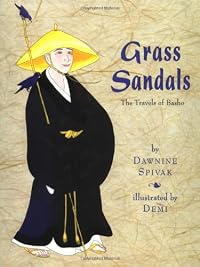
PuddinTame A modern Arabic scholar and travel writer traces the path of Ibn Battuta from Morocco to Turkey. Mackintosh-Smith wrote three books in all about Ibn Battuta's travels.
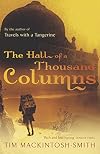
PuddinTame An Arabic scholar and travel writers traces part of the route of Ibn Battuta. The author has three books on Battuta's travels.
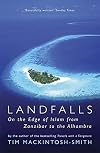
PuddinTame An Arabic scholar and travel writer follows the journeys of Ibn Battuta. Mackintosh-Smith wrote three books on Battuta's travels.
Member Reviews
Author/illustrator James Rumford, whose many wonderful picture-book biographies include From the Good Mountain: How Gutenberg Changed the World and Sequoyah: The Cherokee Man Who Gave His People Writing, turns here to the story of the fabulous journey of Ibn Battuta, the famed Moroccan traveler who covered over 75,000 miles during the course of his 14th-century wanderings. Setting out from his home he travelled across northern Africa, through Egypt and into the Levant. From Jerusalem he went south to Mecca, and from there to Baghdad and then Isfahan (in Persia). He traveled through Central Asia, along the silk road, spent time in India, and then sailed to the Maldives, Sri Lanka and modern-day Bangladesh. His voyages took him to show more Sumatra, and eventually to China, where he reached Cambaluc (Beijing). Eventually, after thirty years of wandering, he headed for home, where his incredible adventures were set down in writing...
Although long familiar with Italian explorer Marco Polo, whose twelfth-century travels from Europe to China did much to open up Europe to trade with Asia, I was unfamiliar with the figure of Ibn Battuta before picking up Rumford's book. I am so glad to have that rectified, as I found Traveling Man: The Journey of Ibn Battuta, 1325-1354 both informative and beautiful. The text is fairly simple, giving an outline of its main figure's adventures, along with quotations in Arabic and Chinese, from various sources, including Ibn Battuta's own narrative. The artwork is lovely, featuring deeply colored pages with panels of text and gorgeous paintings. Rumford also makes use of Arabic maps of the period, and Arabic calligraphy, resulting in a beautiful book! I did have one moment of doubt, when Rumford depicted Ibn Battuta's father wearing eyeglasses, but after digging around and learning that eyeglasses are attested to as early as 1290, in northern Italy, it is possible they made their way to Morocco by the early 1300s, when Ibn Battuta was a boy. There is an afterword here giving more information about Ibn Battuta, the people and places he encountered, and a map of his travels. I do wish a list of further reading had been included, but I guess I can track down more information myself. To start with, I'll be adding the full adult narrative of Ibn Battuta's travels to my to-read shelf, as they are fascinating! Recommended to young biography and history lovers, and to picture-book readers looking for stories about explorers. show less
Although long familiar with Italian explorer Marco Polo, whose twelfth-century travels from Europe to China did much to open up Europe to trade with Asia, I was unfamiliar with the figure of Ibn Battuta before picking up Rumford's book. I am so glad to have that rectified, as I found Traveling Man: The Journey of Ibn Battuta, 1325-1354 both informative and beautiful. The text is fairly simple, giving an outline of its main figure's adventures, along with quotations in Arabic and Chinese, from various sources, including Ibn Battuta's own narrative. The artwork is lovely, featuring deeply colored pages with panels of text and gorgeous paintings. Rumford also makes use of Arabic maps of the period, and Arabic calligraphy, resulting in a beautiful book! I did have one moment of doubt, when Rumford depicted Ibn Battuta's father wearing eyeglasses, but after digging around and learning that eyeglasses are attested to as early as 1290, in northern Italy, it is possible they made their way to Morocco by the early 1300s, when Ibn Battuta was a boy. There is an afterword here giving more information about Ibn Battuta, the people and places he encountered, and a map of his travels. I do wish a list of further reading had been included, but I guess I can track down more information myself. To start with, I'll be adding the full adult narrative of Ibn Battuta's travels to my to-read shelf, as they are fascinating! Recommended to young biography and history lovers, and to picture-book readers looking for stories about explorers. show less
Young classrooms are awash with books documenting renowned explorers and for good reason. Kids absolutely eat them up. There's something innate, and universal, about looking to a distant horizon and thinking "what if?" Ibn Battuta's life, or at least 35 years of it, were spent answering that question. In Traveling Man, James Rumford gives life to his journey with brilliant watercolors and captivating first person narrative. The reader is transported into the mind of this daring traveler and the first person is an excellent stylistic choice. Who among us hasn't dreamed of seeing ourselves in Columbus's shoes? But those shoes would still be too gaudy, too greedy, for Battuta, and that's what i like the most about his story. It's founded show more in dreams of discovery, of wistful and youthful idealism. He didn't want to be rich, and he wasn't chasing spices. He was chasing a horizon. What valuable lessons young readers might gain from his story. show less
I LOVED this book! I made my son (9) start reading it. I couldn't get it back from him! As a history, this suffers only from Ibn Battuta's own propensity to exaggerate, which honestly is the marque of any GOOD storyteller. One example is his description of the Chinese Junks that were "as big as palaces." These have never been corroborated and my own knowledge of hull harmonics and ship construction lead me to believe these vessels could not have existed in the proportions he describes.
But, the STORIES, even if exaggerated serve as the spark to fan the flames of curiosity in a young reader to go and find out more about these wondrous things Ibn Battuta describes in his narrative. Therefore, I can easily forgive a little embellishment show more here and there in such an important story. Plus, the gorgeous pictures and historically accurate Arab maps are not to be missed. The book serves its purpose which is to inform the reader about Ibn Battuta's extraordinary adventure and illustrate the importance of strong will and determination show less
But, the STORIES, even if exaggerated serve as the spark to fan the flames of curiosity in a young reader to go and find out more about these wondrous things Ibn Battuta describes in his narrative. Therefore, I can easily forgive a little embellishment show more here and there in such an important story. Plus, the gorgeous pictures and historically accurate Arab maps are not to be missed. The book serves its purpose which is to inform the reader about Ibn Battuta's extraordinary adventure and illustrate the importance of strong will and determination show less
Ibn Battuta lived in a time where it was believed that the Earth was flat. He always wished to travel the world, and he decided at age 21 to take the pilgrimage to Mecca. He faced many dangers throughout his journey, such as loneliness and sickness. He had a dream during his travel that a giant bird snatched him and carried him past Mecca. It was interpreted that Ibn would travel not only to Mecca, but also to the ends of the earth, and his life would be saved. He came to Jerusalem, and decided to board a boat. He was then placed with Sultans in a position that could cost him his life. If he displeased the Sultans, which he did, they would send assassins after him, which they did. His life was saved by a friend's brother as his journey show more continued. As he neared the end of his travels, Ibn heard news that both of his parents had passed away. Ibn returned home twenty years later to find himself a stranger in his own town. This story of Ibn Battuta is a bit confusing. It definitely suits older children better than younger ones. show less
A good addition for a little known corner of history. It's not a book children will come to over and over again, but it is useful and a worthy pick for a library visit or classroom standard. Read with a globe.
First-person account of Ibn Battuta's life and travels over almost 30 years, from his birthplace in Morocco to China. First goal, Mecca, then down the coast of Africa, then on to India with dreams of riches. Finally on to China for the dream of exploring the ends of the world. So many experiences and challenges -- illness, bandits, rebels, riots, assassins, fear, loneliness, fortune-tellers, etc. -- before returning home and writing his best-seller. Beautiful illustrations (inspired by Islamic mapmaking) and memorable language. Perfect complement to Marco Polo (Battuta started traveling a year after Polo died.) This book deserves all the awards it won.
Quotes strewn throughout:
* Traveling -- it makes you lonely, then gives you a friend.
* show more Traveling -- it offers you a hundred roads to adventure, and gives your heart wings!
* Traveling -- it leaves you speechless, then turns you into a storyteller.
* Traveling -- it gives you a home in a thousand strange places, then leaves you a stranger in your own land.
* Traveling -- all you do is take the first step. show less
Quotes strewn throughout:
* Traveling -- it makes you lonely, then gives you a friend.
* show more Traveling -- it offers you a hundred roads to adventure, and gives your heart wings!
* Traveling -- it leaves you speechless, then turns you into a storyteller.
* Traveling -- it gives you a home in a thousand strange places, then leaves you a stranger in your own land.
* Traveling -- all you do is take the first step. show less
Ibn Battuta was the first traveling man of his century, at a time where people believed the world was flat. This book takes us on Ibn Battuta’s journey and all the places he went and the people he met. I think this was a really good read because it teaches us how many different circumstances a traveling man gets into compared to what todays “Traveling” person would do. The story hints us details of some of the cultures Ibn Battuta experienced and came across in his journey. The reader also learns that Ibn Battuta did not come back from his journey with wealthy things like jewels or gold coins, but he comes back with stories to share and all his memories from his travels. I also really enjoyed the illustrations, each page was show more filled with colors and the words flowed on the pages and they were written. I think this is a very sweet book that will lead the reader into Ibn Battuta’s journey as they read. show less
Members
- Recently Added By
Lists

Lost ::: Mapping Tales for Kids
33 works; 2 members

al.vick-wishlist-Children's
462 works; 3 members

Medieval Historical Fiction for Upper Elementary/Middle Schoolers
12 works; 2 members

The Story of the World: History for the Classical Child: Activity Book Two
415 works; 2 members
Author Information

22 Works 3,306 Members
Awards and Honors
Common Knowledge
- Canonical title
- Traveling Man: The Journey of Ibn Battuta, 1325-1354
- Original publication date
- 2001
- People/Characters
- Ibn Battutah
- Important places
- Africa; Asia
- Important events
- Travels of Ibn Battuta
- Dedication
- For my mother
- First words
- In the days when when the earth was flat and Jerusalem was the center of the world, there was a boy named Ibn Battuta.
- Last words
- (Click to show. Warning: May contain spoilers.)"Traveling -- all you do is take the first step."
Classifications
- Genre
- Nonfiction
- DDC/MDS
- 910.92 — History & geography Geography & travel modified standard subdivisions of Geography and travel Explorers & Travelers Geographers, travellers, explorers regardless of country of origin
- LCC
- G370 .I2 .R86 — Geography, Anthropology and Recreation Geography (General) Special voyages and travels
- BISAC
Statistics
- Members
- 369
- Popularity
- 84,692
- Reviews
- 14
- Rating
- (4.25)
- Languages
- English, French
- Media
- Paper, Ebook
- ISBNs
- 7
- UPCs
- 2
- ASINs
- 3