Ghosts
by César Aira
On This Page
Description
"Ghosts revolves around an immigrant worker's family squatting on the haunted construction site of a luxury condominium building. All of the workmen and their wives and children see the ghosts, who literally hang around the place, but one teenage girl becomes the most curious. Her questions about the ghosts get so intense that her mother - in a chilling split-second - realizes her daughter's life hangs in the balance."Tags
Recommendations








Member Reviews
A história se passa em Buenos Aires no período da ditadura quando não se podia falar sobre a realidade política do país. A narrativa é praticamente toda sobre o que não se pode falar, o que não se pode contar. Um família de chilenos mora num prédio em final de construção, enquanto o pai trabalha na obra os filhos brincam pelo espaço inacabado do edifício que é também habitado por fantasmas. O narrador alterna a narrativa banal dessa família no último dia do ano, entrelaçada pelas visões de fantasmas que somente algumas pessoas vêem, com discussões filosóficas sobre vários temas. Poderia ser entendido como uma metáfora banal dos fantasmas dos desaparecido politícos, mas trata-se, a meu ver, de uma discussão show more muito mais ampla sobre a banalidade da vida e as grandes questões, ou a grande questão do sentido da vida. É escrito num estilo muito diferente do que eu estava acostumado a ler de literatura Argentina. Já estou com outro livro do César Aira na fila de leitura. show less
It's a hot New Year's Eve day, and the workers at the construction site of a new condominium in a large, unnamed Argentinian city are ready to call it a day in preparation for the festivities of the evening. For Raúl Viñas, the site's watchman, and his family, this means buying food and drinks for the feast, gathering up the children who love to wander around the empty floors of the building, and paying no heed to the ghosts. All the workers and the children have seen them, all males who lounge about naked in the huge satellite dish on the roof or glide between floors, but no one paid much attention to them.
Until young Patri, Raúl's teenage daughter from a previous marriage, notices the ghosts becoming more active than usual as the show more New Year approaches. She curiously follows them from floor to floor while her family sleeps, surprised that they actually speak to her, watch her as she asks why they are in such a hurry. They tell her of a grand feast planned for midnight and invite her to join them...on one condition.
Author César Aira uses that pivotal moment to examine Patri's place as a young woman of an age ready to flirt with boys and to find a husband but still young enough to be treated like a child. From my own interpretation of events in the book, Patri sees the ghosts as an ideal sort of man -- muscular, handsome -- and contrasts them to the men she knows in real life, who spend their off time being lazy or getting drunk. Does she see herself in the role of wife and mother? Does she want to see herself that way? That's the driving force behind the ghostly invitation to join their feast -- making Patri examine her life and her future. Also, the ghosts never come across as physically menacing, but that menace is there, subtly flowing through the atmosphere and adding tension until Patri ultimately makes her decision.
While the author does a fine job of painting the picture of the Viñas family and their life on the construction site, I struggled a bit with the section describing and analyzing architecture. Though it presents interesting information and ideas about architecture and its purpose, the section read too much like sitting through a college lecture and disrupted the flow of the story.
As a fan of tales involving ghosts and the supernatural, Aira's "Ghosts" provides a more mystical, more thought-provoking approach to them, and is an enjoyable read. show less
Until young Patri, Raúl's teenage daughter from a previous marriage, notices the ghosts becoming more active than usual as the show more New Year approaches. She curiously follows them from floor to floor while her family sleeps, surprised that they actually speak to her, watch her as she asks why they are in such a hurry. They tell her of a grand feast planned for midnight and invite her to join them...on one condition.
Author César Aira uses that pivotal moment to examine Patri's place as a young woman of an age ready to flirt with boys and to find a husband but still young enough to be treated like a child. From my own interpretation of events in the book, Patri sees the ghosts as an ideal sort of man -- muscular, handsome -- and contrasts them to the men she knows in real life, who spend their off time being lazy or getting drunk. Does she see herself in the role of wife and mother? Does she want to see herself that way? That's the driving force behind the ghostly invitation to join their feast -- making Patri examine her life and her future. Also, the ghosts never come across as physically menacing, but that menace is there, subtly flowing through the atmosphere and adding tension until Patri ultimately makes her decision.
While the author does a fine job of painting the picture of the Viñas family and their life on the construction site, I struggled a bit with the section describing and analyzing architecture. Though it presents interesting information and ideas about architecture and its purpose, the section read too much like sitting through a college lecture and disrupted the flow of the story.
As a fan of tales involving ghosts and the supernatural, Aira's "Ghosts" provides a more mystical, more thought-provoking approach to them, and is an enjoyable read. show less
Stupendous, like everything of his I've read. As far as I can tell there are only five things in English: four novels, and a chapter chosen by Roberto Bolaño in an anthology. Aira has no competitors in contemporary Latin American fiction.
When have you ever read -- when will you ever read again -- a ghost story in which the ghosts don't really want anything, in which some people care and others don't, in which most ghosts are naked overweight men covered with white construction dust, in which the author keeps getting distracted by laundry, children playing, the construction of concrete apartment houses, the problems of shopping, the intrinsic interest of fruit, the philosophic correspondence of memory and time? No one thinks like Aira, show more and no one writes like him. I'm thinking I'll have to read everything that is translated, no matter how many books appear, no matter how popular he gets... show less
When have you ever read -- when will you ever read again -- a ghost story in which the ghosts don't really want anything, in which some people care and others don't, in which most ghosts are naked overweight men covered with white construction dust, in which the author keeps getting distracted by laundry, children playing, the construction of concrete apartment houses, the problems of shopping, the intrinsic interest of fruit, the philosophic correspondence of memory and time? No one thinks like Aira, show more and no one writes like him. I'm thinking I'll have to read everything that is translated, no matter how many books appear, no matter how popular he gets... show less
Everything belonged to the children. The expansion produced by the measurements and the feeling of contraction that goes with fear were overlaid by the world of childhood. The real universe is measured in millimeters, and it is gigantic. p. 4
Plot: A Chilean family lives temporarily on the roof of a half-built (and otherwise uninhabited) condominium building. The story takes place during the course of a day: New Years Eve. The family gathers for a siesta to celebrate. Meanwhile there are ghosts, fat and naked and covered in a fine uniform white dust, that float about in the formation of the hands of a clock, or just hanging out by the dumpster; sometimes they laugh vigorously. They tempt one of the older daughters to join them in their show more party, the one the ghosts are holding at midnight. But she would, of course, have to be dead first.
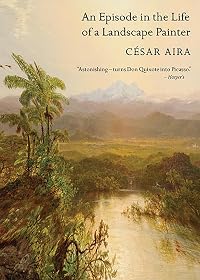
Review: The high-points in the book are considerably great, although over-all, I'd say this is second-rate Aira. You should read [book:An Episode in the Life of a Landscape Painter|152809] first, as that one is filled with greatness, and How I Became a Nun next as that one is also very good. Here, I felt like the blending is not working as well for him. The philosophy sticks out too much as Philosophy (with a capital P) rather than just part of the fabric of the whole book. (I love his philosophizing in his other books, because they were just one or two lines tossed out, almost as an aside, very illuminating yet kind of light and joyful). The surreal/ridiculous parts (i.e. ghosts and such) also seem to stick out instead of working together with the mundane. Overall, I felt a little bored through some sections, whereas in other Aira books I felt constantly (and pleasantly) surprised.
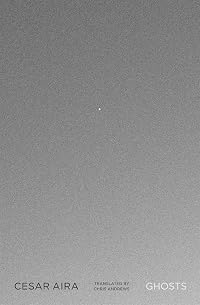
Also, NDP needs to do better copy editing. I found at least 10 minor spelling or grammatical errors in this short book. Although, to be fair, they did a GREAT job with the book and cover design.
Each of them seized a car; although the cars were identical, there was an obvious advantage in being able to choose while the other two children were asleep. What a surprise they would get, poor suckers, when they found they could only choose between the two remaining toy cars, which were indistinguishable from the others! p.79 show less
Plot: A Chilean family lives temporarily on the roof of a half-built (and otherwise uninhabited) condominium building. The story takes place during the course of a day: New Years Eve. The family gathers for a siesta to celebrate. Meanwhile there are ghosts, fat and naked and covered in a fine uniform white dust, that float about in the formation of the hands of a clock, or just hanging out by the dumpster; sometimes they laugh vigorously. They tempt one of the older daughters to join them in their show more party, the one the ghosts are holding at midnight. But she would, of course, have to be dead first.
Review: The high-points in the book are considerably great, although over-all, I'd say this is second-rate Aira. You should read [book:An Episode in the Life of a Landscape Painter|152809] first, as that one is filled with greatness, and How I Became a Nun next as that one is also very good. Here, I felt like the blending is not working as well for him. The philosophy sticks out too much as Philosophy (with a capital P) rather than just part of the fabric of the whole book. (I love his philosophizing in his other books, because they were just one or two lines tossed out, almost as an aside, very illuminating yet kind of light and joyful). The surreal/ridiculous parts (i.e. ghosts and such) also seem to stick out instead of working together with the mundane. Overall, I felt a little bored through some sections, whereas in other Aira books I felt constantly (and pleasantly) surprised.
Also, NDP needs to do better copy editing. I found at least 10 minor spelling or grammatical errors in this short book. Although, to be fair, they did a GREAT job with the book and cover design.
Each of them seized a car; although the cars were identical, there was an obvious advantage in being able to choose while the other two children were asleep. What a surprise they would get, poor suckers, when they found they could only choose between the two remaining toy cars, which were indistinguishable from the others! p.79 show less
César Aira writes:
The unbuilt is characteristic of those arts whose realization requires the remunerated work of many people, the purchase of materials, the use of expensive equipment, etc. Cinema is the paradigmatic case: anyone can have an idea for a film, but then you need expertise, finance, personnel, and these obstacles mean that ninety-nine times out of a hundred the film doesn’t get made. Which might make you wonder if the prodigious bother of it all – which technological advances have exacerbated if anything – isn’t actually an essential part of cinema’s charm, since, paradoxically, it gives everyone access to movie-making, in the form of pure daydreaming. It’s the same in the other arts, to a greater or lesser show more extent. And yet it is possible to imagine an art in which the limitations of reality would be minimized, in which the made and the unmade would be indistinct, an art that would be instantaneously real, without ghosts. And perhaps that art exists, under the name of literature. show less
The unbuilt is characteristic of those arts whose realization requires the remunerated work of many people, the purchase of materials, the use of expensive equipment, etc. Cinema is the paradigmatic case: anyone can have an idea for a film, but then you need expertise, finance, personnel, and these obstacles mean that ninety-nine times out of a hundred the film doesn’t get made. Which might make you wonder if the prodigious bother of it all – which technological advances have exacerbated if anything – isn’t actually an essential part of cinema’s charm, since, paradoxically, it gives everyone access to movie-making, in the form of pure daydreaming. It’s the same in the other arts, to a greater or lesser show more extent. And yet it is possible to imagine an art in which the limitations of reality would be minimized, in which the made and the unmade would be indistinct, an art that would be instantaneously real, without ghosts. And perhaps that art exists, under the name of literature. show less
Ghosts takes place over the course of a single day at the site of a half-finished apartment building in Buenos Aires. It is, in fact, the last day of the year, and the future owners of the incomplete condominiums have come by to meet with the developer, take stock of their future new homes and take measurements for their future new carpets and drapes. While the owners are meeting, the construction workers are winding up their half-day of work and looking forward to lunch and an extended siesta. On the top floor of the complex, the family of the night watchman stays out of the way of the hubbub in a temporary make-shift apartment they have occupied while construction continues. The children of the family play in the empty, wall-less show more rooms on the upper floors, racing their plastic toy cars and inventing elaborate games of hide and seek. Floating along between floors and ceilings, hovering like half-filled helium balloons, are the ghosts that haunt the building site. Although “haunt” doesn’t really describe it—“haunt” implies something menacing, scary. These ghosts (all men, all naked, all covered in the same cement dust that coats everything else at the building site) don’t seem to do much of anything except float and grumble to themselves. They are unseen by the developer and condo owners, and seen but ignored by the construction workers and the children—who seem to accept their presence in the same way that New Yorkers accept the existence of pigeons.
And that is the sum total of the book. A single ordinary day among very ordinary people. Even the ghosts are ordinary—so ordinary that we never wonder why they are there, or who they are, or why they are naked. Ghosts is the kind of story, one might say, where nothing really happens—if it weren’t for the fact that after a mere thirty pages you feel like everything is happening, all the time...full review here show less
And that is the sum total of the book. A single ordinary day among very ordinary people. Even the ghosts are ordinary—so ordinary that we never wonder why they are there, or who they are, or why they are naked. Ghosts is the kind of story, one might say, where nothing really happens—if it weren’t for the fact that after a mere thirty pages you feel like everything is happening, all the time...full review here show less
At the last day of the year, in a unfinished apartment complex, the construction workers and the families that will live in the homes when they are finished are ready to wave goodbye to the old year. While the complex is being built, a Chilean family had moved in - the man serves as the night watchman and the family just tags along with him (and considering how many times it was mentioned that they were Chilean, I am pretty sure that I am missing something about Argentina and workers from Chile - a subtext that should be pretty clear to anyone from the area I suspect). And the new building is already overpopulated - with ghost - which only the Chilean family can see. That's the premise of the novel and Aira spent the first 100 pages show more staging the story - with the owners coming and going early in the day, the construction workers celebrating and going home and then the family and their relatives gathering to meet the new year. And somewhere in this buildup, the author links philosophy, language and architecture (and his very fast walk through the world architecture and its meaning is the most enjoyable part of the book - as short as it is).
The ghosts which usually are pretty silent decide that it is time to start being more active and to influence the humans and set about to do it by choosing the most vulnerable of them - the daughter of the mother of the family that had been born before the family was built, before she met her current husband. Aira style is poetic and flowery but even it does not save a pretty pointless story - at the end I was ready to say "So what?".
If the ghosts were not added, it would have been a pretty enjoyable story for a Chilean family in Argentina - still without a lot to say but "slice of life" is a valid genre and I sometimes enjoy it. With the ghosts? I am not sure what was all that about.
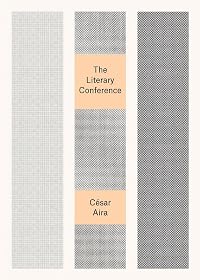
I suspect I simply did not understand the story. I enjoyed Aira's "The Literary Conference" (as weird as it was) so I might decide to give him another chance... but it won't be soon. show less
The ghosts which usually are pretty silent decide that it is time to start being more active and to influence the humans and set about to do it by choosing the most vulnerable of them - the daughter of the mother of the family that had been born before the family was built, before she met her current husband. Aira style is poetic and flowery but even it does not save a pretty pointless story - at the end I was ready to say "So what?".
If the ghosts were not added, it would have been a pretty enjoyable story for a Chilean family in Argentina - still without a lot to say but "slice of life" is a valid genre and I sometimes enjoy it. With the ghosts? I am not sure what was all that about.
I suspect I simply did not understand the story. I enjoyed Aira's "The Literary Conference" (as weird as it was) so I might decide to give him another chance... but it won't be soon. show less
Members
- Recently Added By
Lists

Lithub: The 50 Best Contemporary Novels Under 200 Pages
50 works; 4 members

Novels set over the course of a single day (or less)
72 works; 8 members

contemporary literary fiction list to check out
47 works; 1 member
Author Information

169+ Works 5,011 Members
Some Editions
Awards and Honors
Awards
Notable Lists
Work Relationships
Common Knowledge
- Canonical title
- Ghosts
- Original title
- Los fantasmas
- Original publication date
- 1990 (original Spanish) (original Spanish); 2008 (English: Andrews) (English: Andrews)
- First words
- On the morning of the 31st of December, the Pagaldays visited the apartment they already owned in the building under construction at 2161 Calle Jose Bonifacio, along with Bartolo Sacristan Olmedo, the landscape gardener they ... (show all)had hired to arrange plants on the two broad balconies, front and rear.
- Original language
- Spanish
Classifications
- Genres
- Fiction and Literature, General Fiction, Horror
- DDC/MDS
- 863.64 — Literature & rhetoric Spanish Literature Spanish fiction 20th Century 1945-2000
- LCC
- PQ7798.1 .I7 .F8313 — Language and Literature French, Italian, Spanish and Portuguese literatures Spanish literature Provincial, local, colonial, etc. Spanish America
- BISAC
Statistics
- Members
- 408
- Popularity
- 76,141
- Reviews
- 20
- Rating
- (3.56)
- Languages
- 10 — Danish, Dutch, English, French, German, Italian, Portuguese, Spanish, Swedish, Turkish
- Media
- Paper, Ebook
- ISBNs
- 16
- ASINs
- 3