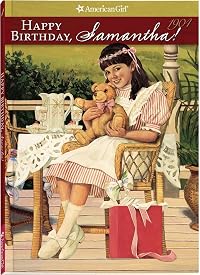
Happy Birthday, Samantha!: a Springtime Story
by Valerie Tripp
On This Page
Description
A ten-year-old girl discovers the modern delights of turn-of-the-century New York City when she travels there with her grandmother to visit relatives.Tags
Recommendations

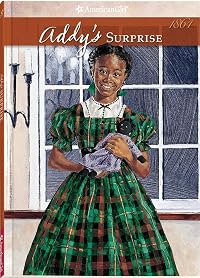
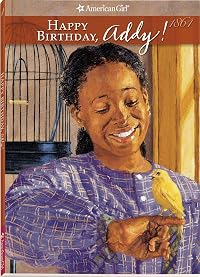


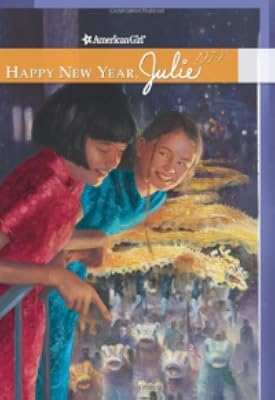
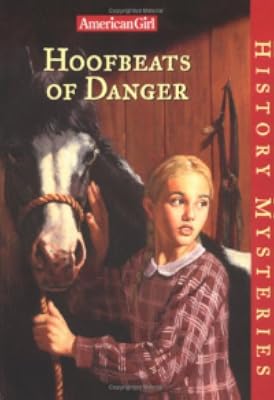
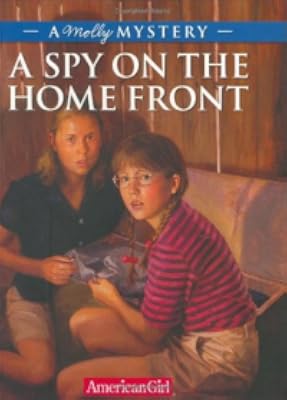
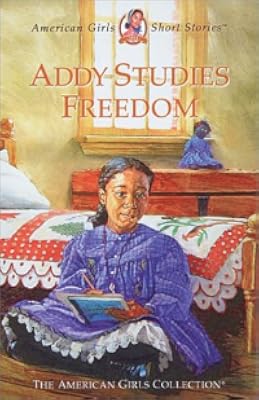
Member Recommendations
Member Reviews
Rating is for Book Four, review is for the original six-book Samantha series published in the 1980s
Historical fiction is my all-time favorite genre, and it isn't hard for me to pinpoint when/where my love for the genre started.
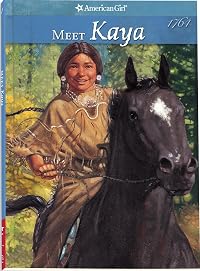
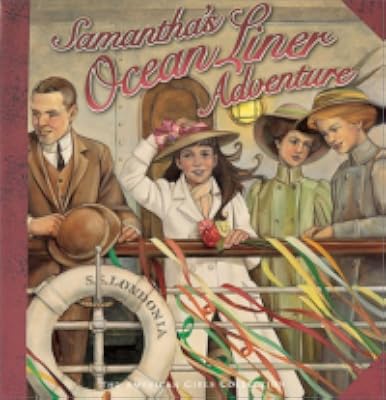
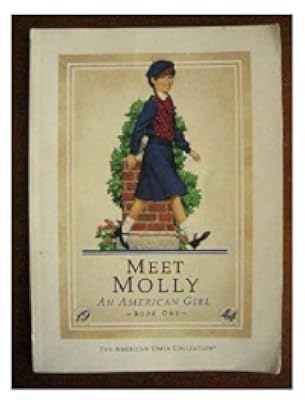
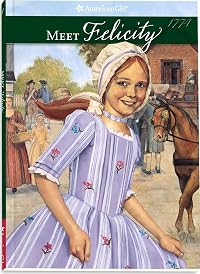
At my elementary school library, I discovered chapter books in The American Girls Collection, published by what was once the Pleasant Company. My favorite series in the collection were (in the order of their eras) the ones about:
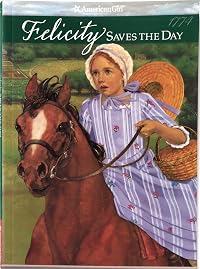
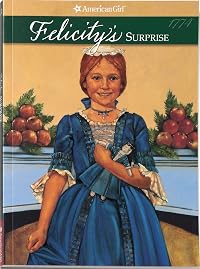
• Felicity (1774)
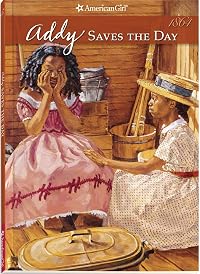
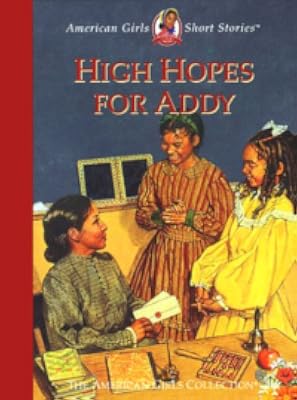
• Addy (1864)
• Samantha (1904)
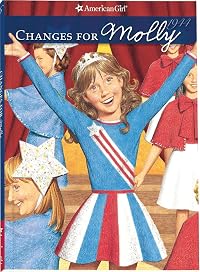
• Molly (1944)
Well, I recently found out there's an upcoming novel about one of these heroines as an adult. Samantha: The Next Chapter by Fiona Davis. So, I decided to revisit the adventures of nine- then ten-year-old Samantha.
For me show more as a child, it was the turn-of-the-century settings of the stories, combined with the pages of rich and colorful illustrations, that most drew me into the books about Samantha's great times as well as her lessons to learn. History wise, the issue that stood out to me the most in the series was women's suffrage.
Now for me as an adult, I better recognize how much important history the series touches on, and while these relatively short tales don't go deep into character development, I can appreciate Samantha's character a little more.
She's very compassionate, and she's at her most courageous when she's helping others in need. In addition to women's rights, Samantha's stories take a young reader-appropriate but still serious look at issues like race and class. There are also instances of alcohol abuse and thievery, and Samantha begins to learn about the hardships that different families and children face, including cramped and run-down living conditions, child labor, harsh and bleak orphanages, and childhood homelessness.
And even as well-off as Samantha is, she as an orphan herself does have her somber moments when she thinks about the two parents she lost before she would be able to remember them better.
On a different note, features I didn't remember but am glad I've rediscovered about the series are the history sections following the stories, with facts and photographs adding more historical context to the world Samantha lives in—and will live in when she grows up.
Here's hoping my grown-up self will enjoy reading about grown-up Samantha as much as I enjoyed this series, whether the first time I read the books or during my revisit. show less
Historical fiction is my all-time favorite genre, and it isn't hard for me to pinpoint when/where my love for the genre started.
At my elementary school library, I discovered chapter books in The American Girls Collection, published by what was once the Pleasant Company. My favorite series in the collection were (in the order of their eras) the ones about:
• Felicity (1774)
• Addy (1864)
• Samantha (1904)
• Molly (1944)
Well, I recently found out there's an upcoming novel about one of these heroines as an adult. Samantha: The Next Chapter by Fiona Davis. So, I decided to revisit the adventures of nine- then ten-year-old Samantha.
For me show more as a child, it was the turn-of-the-century settings of the stories, combined with the pages of rich and colorful illustrations, that most drew me into the books about Samantha's great times as well as her lessons to learn. History wise, the issue that stood out to me the most in the series was women's suffrage.
Now for me as an adult, I better recognize how much important history the series touches on, and while these relatively short tales don't go deep into character development, I can appreciate Samantha's character a little more.
She's very compassionate, and she's at her most courageous when she's helping others in need. In addition to women's rights, Samantha's stories take a young reader-appropriate but still serious look at issues like race and class. There are also instances of alcohol abuse and thievery, and Samantha begins to learn about the hardships that different families and children face, including cramped and run-down living conditions, child labor, harsh and bleak orphanages, and childhood homelessness.
And even as well-off as Samantha is, she as an orphan herself does have her somber moments when she thinks about the two parents she lost before she would be able to remember them better.
On a different note, features I didn't remember but am glad I've rediscovered about the series are the history sections following the stories, with facts and photographs adding more historical context to the world Samantha lives in—and will live in when she grows up.
Here's hoping my grown-up self will enjoy reading about grown-up Samantha as much as I enjoyed this series, whether the first time I read the books or during my revisit. show less
This was a light and fun read in the Samantha series, but it really illustrated to me that I was glad to not lived back in this time.
This book is from a series of books about a girl from America that tells about her life in the year 1904. We hear about her birthday plans and her actual birthday as well as her visit to New York with her Grandmother to visit family. We hear how her Grandmother at first does not like it that women are public speaking in the parks in New York city about having the right to vote and then we find out what had changed her mind.
Samantha's birthday party is nearly ruined when Eddie Ryland plays a mean trick. Then Agnes and Agatha, Cornelia's ten-year-old twin sisters, save the day with an invitation to visit New York City. Samantha loves the twins' carefree attitude and can't wait to go--especially since the trip will include a stop at a fancy ice cream parlor. But when the girls carelessly break some rules, they suddenly find themselves racing dangerously through the big city--and the path they take leads to surprising discoveries.
This is a double of a book in my classroom library. Samantha’s bithday is filled with a series of minor mishaps. She and Grandmary visit Uncle Gard and Aunt Cornelia in New York City where Grandmary’s views on progress and Aunt Cornelia’s clash. Grandmary hears Aunt Cornelia talk about suffrage for women at a rally and changes her mind about progress.
Samantha’s bithday is filled with a series of minor mishaps. She and Grandmary visit Uncle Gard and Aunt Cornelia in New York City where Grandmary’s views on progress and Aunt Cornelia’s clash. Grandmary hears Aunt Cornelia talk about suffrage for women at a rally and changes her mind about progress.
Samantha Parkington is a wealthy orphan living with her Grandmary at the turn of the century. Agnes and Agatha, the younger sisters of Cornelia, are visiting Samantha for her tenth birthday celebration. Energetic and full of ideas, the twins are not always circumspect. Eddie Ryland, the pesky next door neighbor, ruins the homemade ice cream which casts a shadow over Samantha's party.
The twins invite Samantha for a New York visit; in the big city the girls have an adventure with Jip, a lively puppy, and learn about the Suffragists and women's rights. The "Looking Back" section explores growing up in 1904. Families with wealth may have had a nanny and a nursery for their children. Alice in Wonderland and Wizard of Oz were widely read. show more Checkers and dominoes were popular games. In 1904 the personal development and the need of playtime for children were being recognized.
This book is the fourth in the Samantha series. show less
The twins invite Samantha for a New York visit; in the big city the girls have an adventure with Jip, a lively puppy, and learn about the Suffragists and women's rights. The "Looking Back" section explores growing up in 1904. Families with wealth may have had a nanny and a nursery for their children. Alice in Wonderland and Wizard of Oz were widely read. show more Checkers and dominoes were popular games. In 1904 the personal development and the need of playtime for children were being recognized.
This book is the fourth in the Samantha series. show less
Members
- Recently Added By
Lists

Books for An American Girl Readers
58 works; 1 member
Author Information

287+ Works 68,401 Members
Valerie Tripp graduated with honors from the first coeducational class at Yale University in 1973. She received a Masters of Education from Harvard University in 1981. From 1974 to 1980, she was a writer for the Addison-Wesley Reading Program. She then became a freelance writer for The Hampton-Brown Company and ELHI Publishers Services creating show more educational materials for major publishers. In 1983, Tripp and Pleasant Rowland decided to write a series of books about girls growing up all over the country during some of the most historical events of the past. Rowland envisioned the books as one of the cornerstones of a new company she had just founded called the Pleasant Co. Tripp's first assignment for Pleasant Co. was writing four of the six books about Samantha, a girl in turn-of-the-century America. Tripp then wrote about Felicity, Molly, and Josephina for the American Girls series. Her other works include the Hopscotch Hill School series. (Bowker Author Biography) show less
All Editions
Some Editions
Series
Belongs to Publisher Series
American Girl (Samantha 4)
Work Relationships
Is contained in
Common Knowledge
- Canonical title
- Happy Birthday, Samantha!: a Springtime Story
- Original publication date
- 1987
- People/Characters
- Samantha Parkington
- Important places
- New York, USA; Mount Bedford, New York, USA
- First words
- "Surprise!" shouted two excited voices.
- Quotations
- Some girls became debutantes. Some became suffragettes.
- Last words
- (Click to show. Warning: May contain spoilers.)From that time on, whatever young ladies chose to do, they left childhood behind forever.
Classifications
- Genres
- Children's Books, Fiction and Literature
- DDC/MDS
- 813.54 — Literature & rhetoric American literature in English American fiction in English 1900-1999 1945-1999
- LCC
- PZ7 .T7363 .H — Language and Literature Fiction and juvenile belles lettres Fiction and juvenile belles lettres Juvenile belles lettres
- BISAC
Statistics
- Members
- 2,266
- Popularity
- 8,839
- Reviews
- 11
- Rating
- (3.94)
- Languages
- English
- Media
- Paper
- ISBNs
- 13
- ASINs
- 6