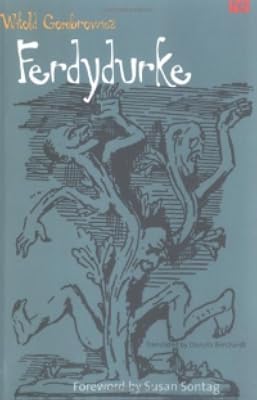
Ferdydurke
by Witold Gombrowicz
On This Page
Description
"A writer finds himself tossed into a chaotic world of schoolboys by a diabolical professor who wishes to reduce him to childishness."--Jacket.Tags
Recommendations




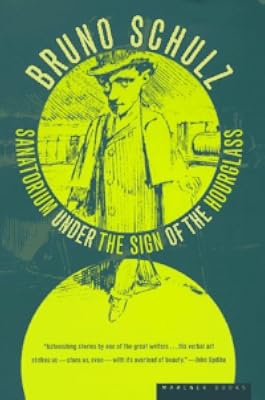
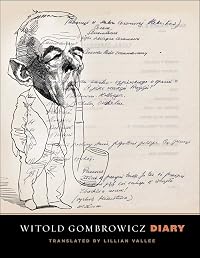
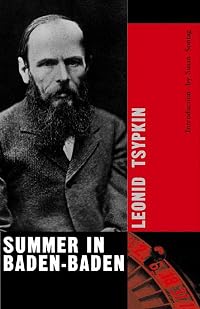


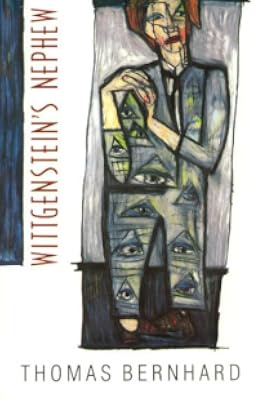






Member Recommendations
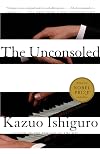
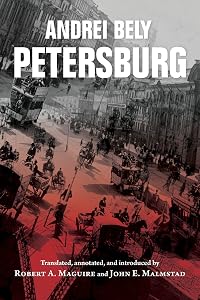
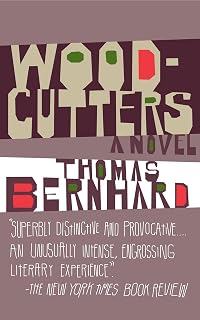
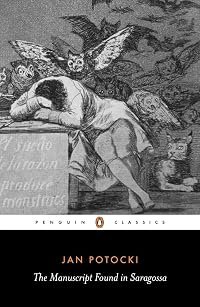
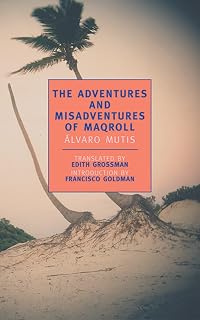
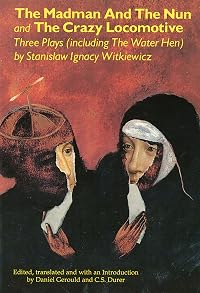
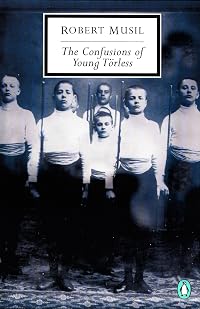
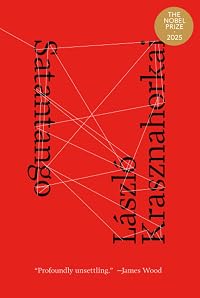
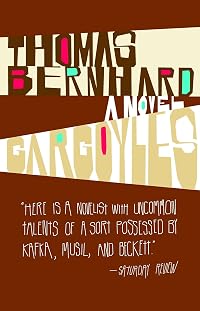
slickdpdx Ishiguro's The Unconsoled may be the pinnacle of this peculiar genre.
Member Reviews
Where has this book been all my life? Gombrowicz might be a 20th century version of Swift. It's all fart jokes and nose-picking until you realize it's actually one of the smartest books you've ever read. But be warned: if you come looking only for the fart jokes and nose-picking, you could easily be disappointed. Many reviewers, perhaps misled by Susan Sontag's introduction, and Gombrowicz's own much later statements, suggest that this is a book in praise of immaturity and damnation of adults. Certainly adults are damned, but not because they're mature. Also, like Swift, what could look like anal expulsiveness is nothing of the sort.
Taking the expulsiveness issue first, Ferdydurke is almost overly structured. The narrator wanders show more around, yes, but his wanderings have very distinct waypoints: first, a fight between schoolboys, over whether schoolboys should be noble or, well, expulsive; second, a fight between parents, their daughter, and two men who lust after said daughter; third, a fight between the narrator's 'aristocratic' family members, one of their peasants, and the narrator's friend. Our man leaves all of these fights still in progress, and we're given to believe they remain in progress till the end of time. There are also two short stories inserted into the novel, involving fights between professors, on the one hand, and the high bourgeoisie, on the other. You get the point.
As for the immaturity point: you could certainly read the novel as an attack on maturity, if you were so inclined, but the self-consciously immature come off just as badly, as do those who are infantilized, and those who do the infantilizing. No doubt Gombrowicz would have been horrified to hear me put it in these terms, but what we have here is basically a dialectical book. The stupidities of the mature/noble/aristocratic cause stupidity of an immature/base/slumming kind. The more someone insists, falsely, that so and so *is* mature/noble/aristocratic, the more people react and insist that they are immature or base or try to sleep with farmhands.
And the cycle continues, as the stupidities of the immature cause others to set themselves up as mature or noble, and then everyone fights, and the fight does not end.
And the genius of this book is how much of humanity it describes, just in those terms. It concludes with our narrator 'giving in' to a dream and kissing a woman he's just 'abducted'--dream or ideal vs reality being another of these dialectical situations.
The genius of this book, also, is that it does all that in the form of fart jokes. Only really funny books should be taken seriously. show less
Taking the expulsiveness issue first, Ferdydurke is almost overly structured. The narrator wanders show more around, yes, but his wanderings have very distinct waypoints: first, a fight between schoolboys, over whether schoolboys should be noble or, well, expulsive; second, a fight between parents, their daughter, and two men who lust after said daughter; third, a fight between the narrator's 'aristocratic' family members, one of their peasants, and the narrator's friend. Our man leaves all of these fights still in progress, and we're given to believe they remain in progress till the end of time. There are also two short stories inserted into the novel, involving fights between professors, on the one hand, and the high bourgeoisie, on the other. You get the point.
As for the immaturity point: you could certainly read the novel as an attack on maturity, if you were so inclined, but the self-consciously immature come off just as badly, as do those who are infantilized, and those who do the infantilizing. No doubt Gombrowicz would have been horrified to hear me put it in these terms, but what we have here is basically a dialectical book. The stupidities of the mature/noble/aristocratic cause stupidity of an immature/base/slumming kind. The more someone insists, falsely, that so and so *is* mature/noble/aristocratic, the more people react and insist that they are immature or base or try to sleep with farmhands.
And the cycle continues, as the stupidities of the immature cause others to set themselves up as mature or noble, and then everyone fights, and the fight does not end.
And the genius of this book is how much of humanity it describes, just in those terms. It concludes with our narrator 'giving in' to a dream and kissing a woman he's just 'abducted'--dream or ideal vs reality being another of these dialectical situations.
The genius of this book, also, is that it does all that in the form of fart jokes. Only really funny books should be taken seriously. show less
The first book I read by Gombrowicz was Pornografia and, though I enjoyed it, Ferdydurke surpasses it by far! If I could give this book a higher rating than five stars I would. The seamless manipulation of perspectives and non sequitur of plot had me floored every time I came across them. His complete disregard for narrative conventions and his novel ways of tripping the reader all while not coming off as fluffed up by cliche modernist flourish found in far too many experimental/unconventional writers was really a pleasure. Highly recomended!
*Now I know readers have come to rely on me for non-fiction and fact-filled analyses, and Ferdydurke is clearly fiction. But it came to me via Milan Kundera’s latest release in translation, which I reviewed at https://medium.com/the-straight-dope/milan-kunderas-word-choices-were-intimidati... and promised to follow through on reviewing the novel. This is the result. Come along; it’s worth your time.*
In a recent translation of Milan Kundera, he highly recommended the book Ferdydurke, by Witold Gombrowicz. He said it is laugh out loud hilarious. So I had to read it. He was right, but there’s a whole lot more going on than just hilarious.
The story takes place in Poland, in the inter-war period of the 1930s. Poland is still mostly show more stuck in the previous century (Those who aren’t are called “Moderns”). A lot of formalities. A lot of class restrictions. A lot of male supremacy – the patriarchy. Where homeowners have the right to slap. punch and beat servants. And here, a 30 year old man named Joey finds himself back in school, dealing with a bunch of teenagers, again. Gombrowicz never tells us why or how this happened, you just have to accept it. He’s suddenly 17 again, that’s all. Plus, it’s not as if Joey goes back in time for this. It is very much the present, and when he encounters an aunt of his, she confirms he is precisely 30 now.
His adventures are all about stereotypes. His classmates, the professors, the principal, the bourgeois family he comes from, and lowly peasants that they employ, are all quite distinct. The way they dress, the way they speak and act are all restricted by their stereotypes.
There’s not much action until the end, when there is a double climax (and why not). Until then, it all seems to be set pieces, scenes from a play on a set. A classroom, a schoolyard, the salon of the house he’s to stay in, and so on. And there’s no buildup to the climaxes. They just suddenly happen, mid paragraph. It’s a bit of a shock to suddenly find yourself in the maelstrom that Gombrowicz has prepared.
What keeps it all going is the combination of Marx Brothers foolishness, Gilbert Gottfried rants, Gulliver’s Travels to different cultures, and the pure selfish self-centeredness of the ”hero”. He is most decidedly an early version of the anti-hero. He’s hard to warm up to.
The book is written in the first person. Joey narrates this odd experience, if that is what it is. It is hard to rationalize much of Joey’s thoughts and actions. He decides badly, rationalizes even worse and broods interminably about everything. But he’s always thinking, and usually, overthinking. He over-analyzes everything, makes potential rationales and decisions, and then acts without planning. Just another contradiction readers must accept.
Another twist is how the characters in the first half of the book speak. The teenagers in school speak maturely, with large vocabularies and well-thought, complete sentences. The professors and the principal treat them like children, attempting to prevent them from growing up, talking baby-talk to them, trying to keep them “innocent”. They praise them as children, and use words like “ballie” with them, or being cute with a boy doing some creative writing: “Trying our wings, are we? Chirp, chirp, chirp.” And after reading it: “Well, well, well. Chirp, chirp little chickie.” The adults refuse to let this generation grow up. It’s a kind of role reversal, as teenagers are usually the ignorant ones, wild and irrational, with no method to their madness.
But boys will be boys as they take sides, and ready themselves for battle with each other. They go through the motions of preparing to die. Two will fight it out. (Over what is never clear.) They pick two seconds each, and choose Joey as the umpire, as no one knows who he is and therefore expect him to be fair and impartial. Then it turns out this duel to the death will be making faces at each other. Apparently fearsome and ugly, frightening and revolting faces at each other. Okay…
Joey is instantly accepted into school, which doesn’t really work that way, and a professor immediately places him in a private home, with room and board paid by the school (!). Joey has a love/hate relationship with the owners’ teenage daughter. I won’t tell you how it turns out, but it is accurately described as hilarious, in a slapstick and goofy way, suitable for a sitcom (but not a rom-com).
Gombrowicz peppers the book with in-jokes. The first half of the book shows Joey with a calves fetish. Leg calves are mentioned dozens of times, far more than in all the books I have read, together. Calves, calves, calves is an actual line repeated numerous times. Then there’s the pupa, which doesn’t get translated. It means butt, and gets used throughout the book in reference to fighting, attractiveness, punishment and for the Sun, that giant pupa in the sky.
Gombrowicz loves lists. They can go on for nearly a page, as he describes every conceivable aspect of a person, place, thing or concept. His characters love repeating things. They say the same word three or four times, or a phrase, or a sentence. I didn’t find these things funny, but they do add to the absurdist tenor of the whole thing, like outlier words in some lists, which obviously shouldn’t be there. Cheap laughs for some, I guess.
Another difference is in the construction. There are two points where Gombrowicz abandons his narrative for a chapter on a story with a message. This includes a Prelude chapter each time, to sort of set it up. This is a most unusual construct for a novel, sort of like intermission between acts in the theatre. If you were to lay out the structure of the book on paper, it would make no sense at all. If, perhaps that is the point, then a lot more authors would be employing it. Happily, that is not the case.
The construction also differs in laughs. Usually, such books start really funny, but run out of gas well before the end. Ferdydurke starts off as a fairly ordinary narrative, and gets funnier as it goes, right to the end. I can see why Milan Kundera recommended it.
Gombrowicz has some nice turns of phrase that can be memorable. The professor: “sitting squarely on his wisdom, he went on reading.” Or “Fight, fight, fight. That’s what the wisdom of nations has always proclaimed.” But also, “He blinked as if brushing a caterpillar off his waistcoat.” I guess you had to be there.
It is a wild ride, seemingly without a point, but entertaining in its own, surprising, 1937 way. Suspension of disbelief and cognitive dissonance warnings to all and sundry: this is an adventure in novel-writing.
David Wineberg show less
In a recent translation of Milan Kundera, he highly recommended the book Ferdydurke, by Witold Gombrowicz. He said it is laugh out loud hilarious. So I had to read it. He was right, but there’s a whole lot more going on than just hilarious.
The story takes place in Poland, in the inter-war period of the 1930s. Poland is still mostly show more stuck in the previous century (Those who aren’t are called “Moderns”). A lot of formalities. A lot of class restrictions. A lot of male supremacy – the patriarchy. Where homeowners have the right to slap. punch and beat servants. And here, a 30 year old man named Joey finds himself back in school, dealing with a bunch of teenagers, again. Gombrowicz never tells us why or how this happened, you just have to accept it. He’s suddenly 17 again, that’s all. Plus, it’s not as if Joey goes back in time for this. It is very much the present, and when he encounters an aunt of his, she confirms he is precisely 30 now.
His adventures are all about stereotypes. His classmates, the professors, the principal, the bourgeois family he comes from, and lowly peasants that they employ, are all quite distinct. The way they dress, the way they speak and act are all restricted by their stereotypes.
There’s not much action until the end, when there is a double climax (and why not). Until then, it all seems to be set pieces, scenes from a play on a set. A classroom, a schoolyard, the salon of the house he’s to stay in, and so on. And there’s no buildup to the climaxes. They just suddenly happen, mid paragraph. It’s a bit of a shock to suddenly find yourself in the maelstrom that Gombrowicz has prepared.
What keeps it all going is the combination of Marx Brothers foolishness, Gilbert Gottfried rants, Gulliver’s Travels to different cultures, and the pure selfish self-centeredness of the ”hero”. He is most decidedly an early version of the anti-hero. He’s hard to warm up to.
The book is written in the first person. Joey narrates this odd experience, if that is what it is. It is hard to rationalize much of Joey’s thoughts and actions. He decides badly, rationalizes even worse and broods interminably about everything. But he’s always thinking, and usually, overthinking. He over-analyzes everything, makes potential rationales and decisions, and then acts without planning. Just another contradiction readers must accept.
Another twist is how the characters in the first half of the book speak. The teenagers in school speak maturely, with large vocabularies and well-thought, complete sentences. The professors and the principal treat them like children, attempting to prevent them from growing up, talking baby-talk to them, trying to keep them “innocent”. They praise them as children, and use words like “ballie” with them, or being cute with a boy doing some creative writing: “Trying our wings, are we? Chirp, chirp, chirp.” And after reading it: “Well, well, well. Chirp, chirp little chickie.” The adults refuse to let this generation grow up. It’s a kind of role reversal, as teenagers are usually the ignorant ones, wild and irrational, with no method to their madness.
But boys will be boys as they take sides, and ready themselves for battle with each other. They go through the motions of preparing to die. Two will fight it out. (Over what is never clear.) They pick two seconds each, and choose Joey as the umpire, as no one knows who he is and therefore expect him to be fair and impartial. Then it turns out this duel to the death will be making faces at each other. Apparently fearsome and ugly, frightening and revolting faces at each other. Okay…
Joey is instantly accepted into school, which doesn’t really work that way, and a professor immediately places him in a private home, with room and board paid by the school (!). Joey has a love/hate relationship with the owners’ teenage daughter. I won’t tell you how it turns out, but it is accurately described as hilarious, in a slapstick and goofy way, suitable for a sitcom (but not a rom-com).
Gombrowicz peppers the book with in-jokes. The first half of the book shows Joey with a calves fetish. Leg calves are mentioned dozens of times, far more than in all the books I have read, together. Calves, calves, calves is an actual line repeated numerous times. Then there’s the pupa, which doesn’t get translated. It means butt, and gets used throughout the book in reference to fighting, attractiveness, punishment and for the Sun, that giant pupa in the sky.
Gombrowicz loves lists. They can go on for nearly a page, as he describes every conceivable aspect of a person, place, thing or concept. His characters love repeating things. They say the same word three or four times, or a phrase, or a sentence. I didn’t find these things funny, but they do add to the absurdist tenor of the whole thing, like outlier words in some lists, which obviously shouldn’t be there. Cheap laughs for some, I guess.
Another difference is in the construction. There are two points where Gombrowicz abandons his narrative for a chapter on a story with a message. This includes a Prelude chapter each time, to sort of set it up. This is a most unusual construct for a novel, sort of like intermission between acts in the theatre. If you were to lay out the structure of the book on paper, it would make no sense at all. If, perhaps that is the point, then a lot more authors would be employing it. Happily, that is not the case.
The construction also differs in laughs. Usually, such books start really funny, but run out of gas well before the end. Ferdydurke starts off as a fairly ordinary narrative, and gets funnier as it goes, right to the end. I can see why Milan Kundera recommended it.
Gombrowicz has some nice turns of phrase that can be memorable. The professor: “sitting squarely on his wisdom, he went on reading.” Or “Fight, fight, fight. That’s what the wisdom of nations has always proclaimed.” But also, “He blinked as if brushing a caterpillar off his waistcoat.” I guess you had to be there.
It is a wild ride, seemingly without a point, but entertaining in its own, surprising, 1937 way. Suspension of disbelief and cognitive dissonance warnings to all and sundry: this is an adventure in novel-writing.
David Wineberg show less
This book is, as Susan Sontag in the Introduction says, "an epic in defense of immaturity", and it is like no other. Gombrowicz insists on the word immaturity, and not youth, because it represents something unattractive, something inferior. Thus being, how can such a book grab us? But grab me it did, as I was in turns amused, repelled, entertained, annoyed, mostly provoked by the idea of immaturity as embodied by Joey (can a name be more annoying than this?) and his friends. I read on, more out of curiousity at how much more bizarre and eccentric things can turn, how twistedness and contrariness can continue to be served up without the author exhausting the themes with repetition. But Gombrowicz is not the master for nothing, and the show more excellent translation captured the nuances and moods, that the reading (including a couple of chapters which were more like essays by the writer on writing), was a pleasure and an experience in itself.
Joey is a 17-year old schoolboy, recently 30-year old writer who was torn between his obsession of projecting an image of serious maturity to the outside world through his writing and his inability to let go of his infantile self.
But I was, alas, a juvenile, and juvenility was my only cultural institution. Caught and held back twice - first by my childish past, which I could not forget, and the second time by the childishness of other people's notions of me, a caricature that had sunk into their souls - I was the melancholy prisoner of all that is green, why, an insect in a deep, dense thicket.
Joey's transformation into his juvenile self occurred as a result of his abduction by a professor Pimko into an absurd world where everything was grotesque, upside down and inside out -- the big was small, the small monstrously big, the shapes unnatural, gestures outrageous, actions manic, and reasoning absurd. Here, he could let himself go; the more infantile one was, the better. Pimko takes him to a schoolyard full of sniveling brats where his idiotic pupa paralyzes him amidst their infantile tricks, violence and teenage braggadocio. (In the translator's notes, "pupa" is described as Gombrowicz's metaphor for the gentle, insidious, but infantilizing and humiliation that human beings inflict on one another, or belittlement.) Here, it is the vilest, most disgusting, and most distorted expressions and behaviour that are rewarded. After a while he realizes he has to run away, lest he fall prey to all this freakishness.
Yet instead of running away I wiggled my toe inside my shoe, and the wiggling paralyzed me and foiled my intentions to run, because how was I to run while I was still wiggling my toe...?...All I needed was - the will to run. But I lacked the will. Because to run one needs the will, but where is the will to come from when one is wiggling one's toe....
Joey's education in this world continues beyond the school confines, to his boarding house where he becomes infatuated with the daughter of his landlady, who represented everything he was not. Between school and home, we see his encounters with contrasts: maturity/immaturity in all its forms, modernity/old fashioned ways; youth/old age; innocence/knowledge; ability/ineptness; awkwardness/sophistication; politeness/impoliteness; faces/counter-faces; composition/decomposition; symmetry/assymetry; artificiality/naturalness; thesis/antithesis; theory/practice.
He journeys with Kneadus, a classmate, into the countryside to look for a farmhand whom they wished to emulate (again the contrast -- cityboy/farmboy), and came to the estate of Joey's aunt and uncle. Here, he finds another world where the lords of the manor and the peasantry entrap and hold onto each other in childishness. He sees more contrasts: city ways/rugged farmhand ways; the city streets/the countryside; lords/servants.
Blind actions. Automatic reflexes. Atavistic instincts. Lordly-childish fancy. I walked as if into the anachronims of a gigantic slap in the face, which was simultaneously a tradition of many centuries and an infantile smack, and it liberated, in one fell swoop, the lord and the child.
After a while, Joey decides to escape from this world where he felt totally infantilized. And again, an abduction takes place which he thought would bring him back to the city...and, we hope, the maturity that has so far eluded him. But really, what hope does he have? At the book's closing, Joey assumes the author's voice taunting, challenging, provoking us, "graceful bundles of body parts, now let it all begin -- come, step up to me, begin your kneading, make me a new mug so I will again have to run from you....Because there is no escape from the mug, other than into another mug...." And ends with, "It's the end, what a gas, And who's read it is an ass!" I can see Joey sticking out his tongue at me, and doing an anti-face grimace. How can it not be.
This was a fun read, and I found some of the situations truly hilarious. There is nothing subtle about them. An example is the face/anti-face contest which was so inane and truly gross, but also so stupidly funny. It struck me that this was not so unreal, as kids actually do it. What I didn't enjoy though was the brutality with servants (hitting the face -- mug/pupa?) though it was regarded common practice by masters, and was accepted without question by, and even was a point of honor among servants. I was also turned off by references to rape of the female servant by Kneadus.
The playfulness of the subject extends to the fantastic wordplay that Gombrowicz employs, which I enjoyed very much. And we do not mind the inanity and grossness that assail us readers, the pokes at our sensibilities -- it is all fun. And why should a mirror into ourselves show only what is decent, mature, and sophisticated? Why can't we look at the mirror of Ferdydurke, see our own pupas and laugh at the same time? We might yet take advice from Joey, in his former 30-year old self, when he reflected:
What is the connection, where is the bond between the king of beekeepers and the inner man, between the man and the youth, between the youth and the boy, the boy and the child that, after all, he once was, what comfort is the king to the little brat in you? A life unmindful of these bonds, a life that does not evolve in unbroken continuity from one phase to another is like a house that is being built from the top down, and must inevitably end in a schizophrenic split of the inner self. show less
Joey is a 17-year old schoolboy, recently 30-year old writer who was torn between his obsession of projecting an image of serious maturity to the outside world through his writing and his inability to let go of his infantile self.
But I was, alas, a juvenile, and juvenility was my only cultural institution. Caught and held back twice - first by my childish past, which I could not forget, and the second time by the childishness of other people's notions of me, a caricature that had sunk into their souls - I was the melancholy prisoner of all that is green, why, an insect in a deep, dense thicket.
Joey's transformation into his juvenile self occurred as a result of his abduction by a professor Pimko into an absurd world where everything was grotesque, upside down and inside out -- the big was small, the small monstrously big, the shapes unnatural, gestures outrageous, actions manic, and reasoning absurd. Here, he could let himself go; the more infantile one was, the better. Pimko takes him to a schoolyard full of sniveling brats where his idiotic pupa paralyzes him amidst their infantile tricks, violence and teenage braggadocio. (In the translator's notes, "pupa" is described as Gombrowicz's metaphor for the gentle, insidious, but infantilizing and humiliation that human beings inflict on one another, or belittlement.) Here, it is the vilest, most disgusting, and most distorted expressions and behaviour that are rewarded. After a while he realizes he has to run away, lest he fall prey to all this freakishness.
Yet instead of running away I wiggled my toe inside my shoe, and the wiggling paralyzed me and foiled my intentions to run, because how was I to run while I was still wiggling my toe...?...All I needed was - the will to run. But I lacked the will. Because to run one needs the will, but where is the will to come from when one is wiggling one's toe....
Joey's education in this world continues beyond the school confines, to his boarding house where he becomes infatuated with the daughter of his landlady, who represented everything he was not. Between school and home, we see his encounters with contrasts: maturity/immaturity in all its forms, modernity/old fashioned ways; youth/old age; innocence/knowledge; ability/ineptness; awkwardness/sophistication; politeness/impoliteness; faces/counter-faces; composition/decomposition; symmetry/assymetry; artificiality/naturalness; thesis/antithesis; theory/practice.
He journeys with Kneadus, a classmate, into the countryside to look for a farmhand whom they wished to emulate (again the contrast -- cityboy/farmboy), and came to the estate of Joey's aunt and uncle. Here, he finds another world where the lords of the manor and the peasantry entrap and hold onto each other in childishness. He sees more contrasts: city ways/rugged farmhand ways; the city streets/the countryside; lords/servants.
Blind actions. Automatic reflexes. Atavistic instincts. Lordly-childish fancy. I walked as if into the anachronims of a gigantic slap in the face, which was simultaneously a tradition of many centuries and an infantile smack, and it liberated, in one fell swoop, the lord and the child.
After a while, Joey decides to escape from this world where he felt totally infantilized. And again, an abduction takes place which he thought would bring him back to the city...and, we hope, the maturity that has so far eluded him. But really, what hope does he have? At the book's closing, Joey assumes the author's voice taunting, challenging, provoking us, "graceful bundles of body parts, now let it all begin -- come, step up to me, begin your kneading, make me a new mug so I will again have to run from you....Because there is no escape from the mug, other than into another mug...." And ends with, "It's the end, what a gas, And who's read it is an ass!" I can see Joey sticking out his tongue at me, and doing an anti-face grimace. How can it not be.
This was a fun read, and I found some of the situations truly hilarious. There is nothing subtle about them. An example is the face/anti-face contest which was so inane and truly gross, but also so stupidly funny. It struck me that this was not so unreal, as kids actually do it. What I didn't enjoy though was the brutality with servants (hitting the face -- mug/pupa?) though it was regarded common practice by masters, and was accepted without question by, and even was a point of honor among servants. I was also turned off by references to rape of the female servant by Kneadus.
The playfulness of the subject extends to the fantastic wordplay that Gombrowicz employs, which I enjoyed very much. And we do not mind the inanity and grossness that assail us readers, the pokes at our sensibilities -- it is all fun. And why should a mirror into ourselves show only what is decent, mature, and sophisticated? Why can't we look at the mirror of Ferdydurke, see our own pupas and laugh at the same time? We might yet take advice from Joey, in his former 30-year old self, when he reflected:
What is the connection, where is the bond between the king of beekeepers and the inner man, between the man and the youth, between the youth and the boy, the boy and the child that, after all, he once was, what comfort is the king to the little brat in you? A life unmindful of these bonds, a life that does not evolve in unbroken continuity from one phase to another is like a house that is being built from the top down, and must inevitably end in a schizophrenic split of the inner self. show less
First things first: this book needs to be read quickly. Not superficially, nor lightly, but in less than 3 days. Unfortunately that's not the case here, for various reasons (one of them being leaving it 3500 miles away...) What's necessary is to be caught in its special web, to live in its linguistic reality.
At first I thought I was in for a Pirandello redux (1st chapter)[1], and then (2nd chapter) I started almost actively hating it, saying, but this isn't even a novel! (it's a philosophical-psychological-political treatise, I thought). But of course I should have known better, because as always the first pages tell you how to read the rest of the pages (waking from a dream that puts into question his very being, the narrator show more contemplates the state of his writing, and thus his soul). And WG was way ahead of me, predicting my reaction, as we see in the brilliant 11th chapter [2]. (I'd already been hooked by the 4th...)
So what do we have here then? Well, if not a story (as I was clamoring for in the 2nd chapter), scenes then, and certainly a world, our world, through a comic and surreal (yet all too real) lens of immaturity. And body parts. Yes, body parts, parts not connected to the whole... Can our ideologies (trans)form our faces? What exactly is the connection between our bodies and our souls? In our infancy (immaturity), they (everyone really) entrap us inside someone else's body, someone else's soul, but that soul fits us like a shoe that's too tight...
Yawn. Boring, you say. Been there, read that (Pirandello, for one). But the beauty is in the unpredictability of it all (as in Bolaño, who called this book one of the "key novels of the 20th century" [3]). You don't know what's coming next because you've never seen what's happening now. Dancing inside the bedroom of a teenage girl's bourgeois parents in order to "cast" some sort of bad-taste spell? A colonel who shoots a tennis ball out of the air right in the middle of a game, and the players continue to play for a bit? Two dueling philosophy professors who shoot off the body parts of their respective wives/lovers? There's that, and more, my friends...
[1] I'm thinking of Pirandello's _One, no one and 100000_. Right down to the narrator's name: here Gingio, there Gengè (translator's license, or original? Most likely the former...)
[2] "It would also be appropriate to establish...whether what we have here is a novel, a diary, a parody, a pamphlet, a variation on an imaginative theme, a work of non-fiction..." (p 172, my translation from the Italian...) (the answer is "all of the above", of course...)
[3]"Tra Parentesi", page 123 of the Italian Adelphi edition. Apparently, Milan Kundera said something similar: "I consider _Ferdydurke_ one of the 3 or 4 greatest novels written after the death of Proust" (my translation of the Italian translation of the French in the article _Gombrowicz malgré tous_ in "Nouvel Observadeur", March 1990). show less
At first I thought I was in for a Pirandello redux (1st chapter)[1], and then (2nd chapter) I started almost actively hating it, saying, but this isn't even a novel! (it's a philosophical-psychological-political treatise, I thought). But of course I should have known better, because as always the first pages tell you how to read the rest of the pages (waking from a dream that puts into question his very being, the narrator show more contemplates the state of his writing, and thus his soul). And WG was way ahead of me, predicting my reaction, as we see in the brilliant 11th chapter [2]. (I'd already been hooked by the 4th...)
So what do we have here then? Well, if not a story (as I was clamoring for in the 2nd chapter), scenes then, and certainly a world, our world, through a comic and surreal (yet all too real) lens of immaturity. And body parts. Yes, body parts, parts not connected to the whole... Can our ideologies (trans)form our faces? What exactly is the connection between our bodies and our souls? In our infancy (immaturity), they (everyone really) entrap us inside someone else's body, someone else's soul, but that soul fits us like a shoe that's too tight...
Yawn. Boring, you say. Been there, read that (Pirandello, for one). But the beauty is in the unpredictability of it all (as in Bolaño, who called this book one of the "key novels of the 20th century" [3]). You don't know what's coming next because you've never seen what's happening now. Dancing inside the bedroom of a teenage girl's bourgeois parents in order to "cast" some sort of bad-taste spell? A colonel who shoots a tennis ball out of the air right in the middle of a game, and the players continue to play for a bit? Two dueling philosophy professors who shoot off the body parts of their respective wives/lovers? There's that, and more, my friends...
[1] I'm thinking of Pirandello's _One, no one and 100000_. Right down to the narrator's name: here Gingio, there Gengè (translator's license, or original? Most likely the former...)
[2] "It would also be appropriate to establish...whether what we have here is a novel, a diary, a parody, a pamphlet, a variation on an imaginative theme, a work of non-fiction..." (p 172, my translation from the Italian...) (the answer is "all of the above", of course...)
[3]"Tra Parentesi", page 123 of the Italian Adelphi edition. Apparently, Milan Kundera said something similar: "I consider _Ferdydurke_ one of the 3 or 4 greatest novels written after the death of Proust" (my translation of the Italian translation of the French in the article _Gombrowicz malgré tous_ in "Nouvel Observadeur", March 1990). show less
My third or fourth of Gombrowicz's books.
He is fabulous, and if it weren't for modernism's (and even postmodernism's) ongoing earnest self-regard, this book would be read alongside Finnegans Wake and other early postmodern classics. But Gombrowicz's theme in this book prevents him from displaying the sort of formal mastery and control that continues to be expected even in authors who work with comedy, from Barthelme to Pynchon. And Gombrowicz knows this perfectly well, which means that this book is exceptionally brave: he would have known that he was closing doors on himself as he wrote it. His protagonist in this book is a serious young novelist who cares about form, and there is a long interpolated chapter in Gombrowicz's own voice show more (the first "Preface"), theorizing the importance of form. And yet the book is utterly dedicated himself to a theme that makes form, seriousness, and ambitio inaccessible or illegible. That theme is the paper-thin facade that keeps us on the side of maturity, and how it can be so easily ripped, exposing us to the frantic, ridiculous, misshapen, fragmented world of immaturity, with its bottomless embarrassments, awkwardnesses, itches, giggles, blushes, and babyish noises.
Personally, I don't think I've spent much time worrying that I might be infantilized, although it's certainly a common enough notion. I recognize it throughout the novel, but I mainly recognize it as someone else's fear. So on that level the novel doesn't quite work for me as I imagine Gombrowicz hoped it would work for his ideal reader: but that's not an uncommon problem. Misidentification is a condition of all fiction, because I never immediately or fully identify with the desires and sense of self of the characters. Novels like this one bring out that common condition by insisting that some uncommon desire is transparently universal. What matters, in the end, is not whether or not I share the protagonist's continuous and always justified fear that he will be "dealt the pupa" (Gombrowicz's wonderful personal code for the fear that someone will infantilize him), but that he bizarre and infantile things that happen in this novel make other recent fiction -- from Barthelme to Pynchon, but emphatically including all the most ambitious and apparently experimental fiction out of McSweeny's -- seem hopelessly, misguidedly, stolid and adult. Real comedy is corrosive: dazzling, hysterical, hyper-eloquent comedy -- as in McSweeny's -- is safe and, in the end, perfectly mature and annoyingly immune to being dealt the pupa.
Four stars instead of five only because there are some set pieces in this book ("The Child Runs Deep in Filidor" and the hysterical encounter with "the schoolgirl" in chapter 6-10) that are stronger than the intervening material, which comes to seem more like a necessary overflow of excess, excess's proof of its own excessiveness. (The same is true of the relation between this book and Gombrowicz's shorter novels.) show less
He is fabulous, and if it weren't for modernism's (and even postmodernism's) ongoing earnest self-regard, this book would be read alongside Finnegans Wake and other early postmodern classics. But Gombrowicz's theme in this book prevents him from displaying the sort of formal mastery and control that continues to be expected even in authors who work with comedy, from Barthelme to Pynchon. And Gombrowicz knows this perfectly well, which means that this book is exceptionally brave: he would have known that he was closing doors on himself as he wrote it. His protagonist in this book is a serious young novelist who cares about form, and there is a long interpolated chapter in Gombrowicz's own voice show more (the first "Preface"), theorizing the importance of form. And yet the book is utterly dedicated himself to a theme that makes form, seriousness, and ambitio inaccessible or illegible. That theme is the paper-thin facade that keeps us on the side of maturity, and how it can be so easily ripped, exposing us to the frantic, ridiculous, misshapen, fragmented world of immaturity, with its bottomless embarrassments, awkwardnesses, itches, giggles, blushes, and babyish noises.
Personally, I don't think I've spent much time worrying that I might be infantilized, although it's certainly a common enough notion. I recognize it throughout the novel, but I mainly recognize it as someone else's fear. So on that level the novel doesn't quite work for me as I imagine Gombrowicz hoped it would work for his ideal reader: but that's not an uncommon problem. Misidentification is a condition of all fiction, because I never immediately or fully identify with the desires and sense of self of the characters. Novels like this one bring out that common condition by insisting that some uncommon desire is transparently universal. What matters, in the end, is not whether or not I share the protagonist's continuous and always justified fear that he will be "dealt the pupa" (Gombrowicz's wonderful personal code for the fear that someone will infantilize him), but that he bizarre and infantile things that happen in this novel make other recent fiction -- from Barthelme to Pynchon, but emphatically including all the most ambitious and apparently experimental fiction out of McSweeny's -- seem hopelessly, misguidedly, stolid and adult. Real comedy is corrosive: dazzling, hysterical, hyper-eloquent comedy -- as in McSweeny's -- is safe and, in the end, perfectly mature and annoyingly immune to being dealt the pupa.
Four stars instead of five only because there are some set pieces in this book ("The Child Runs Deep in Filidor" and the hysterical encounter with "the schoolgirl" in chapter 6-10) that are stronger than the intervening material, which comes to seem more like a necessary overflow of excess, excess's proof of its own excessiveness. (The same is true of the relation between this book and Gombrowicz's shorter novels.) show less
I wondered a bit about where to start with comments about this one, but it's the sort of thing you just have to dive right into. The plot defies description - the narrator, a man of 30, is dragged back to middle school and treated as if he is a child. Everyone refuses to listen to his protests that he's actually an adult, and pat him on the head and infantilize him at every turn.
Immaturity, new vs. old, conformity and indoctrination into what is considered "good art" are a few of the topics and themes that Gombrowicz tackles throughout the novel. I liked the book in the beginning, and then the style started to wear thin for me in the middle. It picked back up toward the end, though, and I was definitely glad I read it. It's good to get show more a mental workout from a book where the style is at least as importance as the substance, and I also found it quite quotable.
Recommended for: fans of Tristram Shandy.
Quote: "Is this why an author tries to show his skill in the way he constructs his work, so that an expert may show off his expertise on the subject?" show less
Immaturity, new vs. old, conformity and indoctrination into what is considered "good art" are a few of the topics and themes that Gombrowicz tackles throughout the novel. I liked the book in the beginning, and then the style started to wear thin for me in the middle. It picked back up toward the end, though, and I was definitely glad I read it. It's good to get show more a mental workout from a book where the style is at least as importance as the substance, and I also found it quite quotable.
Recommended for: fans of Tristram Shandy.
Quote: "Is this why an author tries to show his skill in the way he constructs his work, so that an expert may show off his expertise on the subject?" show less
Members
- Recently Added By
Lists

501 Must-Read Books
529 works; 72 members

In or About the 1930s
198 works; 27 members

Experimental Literature
141 works; 18 members

Blue Pyramid 1,276 Best Books of All Time
1,248 works; 32 members

1930s
262 works; 5 members

Biggest Disappointments
606 works; 163 members

My TBR
371 works; 3 members

Books Read in 2024
4,623 works; 126 members

.
396 works; 1 member
Author Information

141+ Works 5,997 Members
Gombrowicz, son of a wealthy lawyer, studied law at Warsaw University and philosophy and economics in Paris. His first novel, Ferdydurke, with its existential themes and a daring use of surrealistic techniques, became a literary sensation in Warsaw. Yvonne: Princess of Burgundia (1935), which anticipated many themes of the Theater of the Absurd, show more was also enormously successful; together with another of his plays, The Marriage (1953), it has been staged throughout the world. During the war, Gombrowicz lived in Argentina. In the postwar period, Ferdydurke was at first banned by the Polish authorities (continuing a ban imposed by the Nazis). During the "thaw" it was published in Warsaw in 1957 and its author was hailed as the "greatest living Polish writer" by the critic Sandauer. The ban on Gombrowicz's work was reimposed in 1958. By this time, however, Gombrowicz had achieved a wide reputation in western Europe and the United States. (Bowker Author Biography) show less
Some Editions
Awards and Honors
Awards
Distinctions
Notable Lists
Series
Belongs to Publisher Series
Work Relationships
Is contained in
Has the adaptation
Common Knowledge
- Canonical title
- Ferdydurke
- Original title
- Ferdydurke
- Original publication date
- 1937; 1961 (English translation : Eric Mosbacher) (English translation : Eric Mosbacher); 1999 (English translation : Danuta Borchardt) (English translation : Danuta Borchardt); 1961, 1. edizione italiana, Einaudi
- Related movies
- 30 Door Key (1991 | IMDb)
- First words
- Tuesday morning I awoke at that pale and lifeless hour when night is almost gone but dawn has not yet come into its own.
- Last words*
- (Click to show. Warning: May contain spoilers.)Ik vlucht met mijn smoel in mijn handen.
- Original language
- Polish
*Some information comes from Common Knowledge in other languages. Click "Edit" for more information.
Classifications
- Genres
- General Fiction, Fiction and Literature
- DDC/MDS
- 891.85273 — Literature & rhetoric Literatures of other languages East Indo-European and Celtic literatures West and South Slavic languages (Bulgarian, Slovene, Polish, Czech, Slovak, Serbo-Croatian, and Macedonian) Polish Polish drama 1919–1989
- LCC
- PG7158 .G669 .F4713 — Language and Literature Slavic languages and literatures. Baltic languages. Albanian language Slavic. Baltic. Albanian Slavic Polish
- BISAC
Statistics
- Members
- 1,578
- Popularity
- 14,454
- Reviews
- 18
- Rating
- (3.88)
- Languages
- 19 — Catalan, Czech, Dutch, English, Estonian, French, German, Hungarian, Italian, Japanese, Lithuanian, Norwegian (Bokmål), Polish, Portuguese, Romanian, Russian, Spanish, Swedish, Turkish
- Media
- Paper, Ebook
- ISBNs
- 71
- ASINs
- 8