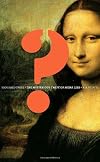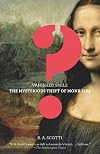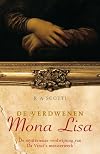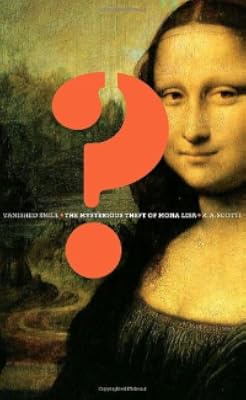
Vanished Smile: The Mysterious Theft of Mona Lisa
by R. A. Scotti
On This Page
Description
Part love story, part mystery, "Vanished Smile" reopens the case of the most audacious and perplexing art theft ever committed--the theft of Leonardo da Vinci's "Mona Lisa" from the Paris Louvre on August 21, 1911.Tags
Recommendations





























Member Recommendations
Member Reviews
Imagine walking up to the Mona Lisa, removing it from the wall, and carrying it down the corridor for a private viewing. Keep it as long as you like! It seems absurd, doesn’t it? And yet that was possible a century ago. Museum policy permitted photographers to remove art from the Louvre's galleries with no prior request.
Security at the Louvre has improved substantially since then. For that — credit its infamous failure in 1911. A museum visitor, anxious to see Leonardo da Vinci’s Mona Lisa, grew impatient one summer morning. The painting was gone and the security guard assumed it was down in the studio. Later, feeling his entire morning was being wasted, the man inquired again. Museum personnel casually asked around and checked show more the studio. “Anyone have La Gioconda?” Only when met with silence did museum officials begin worrying. And rightly so. The Mona Lisa had been stolen.
Before reading R. A. Scotti’s Vanishing Smile: The Mysterious Theft of Mona Lisa, I knew Leonardo’s masterpiece had been stolen long ago, but had long forgotten any details. That made the story all new to me.
The author describes the last day at the Louvre before the theft, the slow realization that it was missing two days later, the flurry of police activity, and the fury of popular opinion. The theft catapulted the well-known painting into a popular culture icon. Mona Lisa became the most recognizable portrait in the world that summer. It was said that there had never been a line to enter the Louvre before the theft, and yet when the museum reopened a week later, thousands of visitors queued to see the four hooks on the wall where the Mona Lisa had been. I found that both amusing and astounding: Parisians lined up to NOT see the painting.
Scotti follows with chapters on the investigation and the rampant speculations. Theories included wealthy American art collectors, botched conservations, and workers making a labor statement. Young Pablo Picasso was even involved in the case; he was held and questioned for a time. The painting was eventually recovered (you knew that) and given a much more secure home.
This was an enjoyable read. I’ve read about Leonardo and his art many times before, but this book centered much more on crime and detection than art. It reminded me of Matthew Hart’s The Irish Game, a book I read (and reviewed) two years ago about another famous art heist: A Vermeer taken from an Irish country estate in the 1980s.
Find more of my reviews at Mostly NF. show less
Security at the Louvre has improved substantially since then. For that — credit its infamous failure in 1911. A museum visitor, anxious to see Leonardo da Vinci’s Mona Lisa, grew impatient one summer morning. The painting was gone and the security guard assumed it was down in the studio. Later, feeling his entire morning was being wasted, the man inquired again. Museum personnel casually asked around and checked show more the studio. “Anyone have La Gioconda?” Only when met with silence did museum officials begin worrying. And rightly so. The Mona Lisa had been stolen.
Before reading R. A. Scotti’s Vanishing Smile: The Mysterious Theft of Mona Lisa, I knew Leonardo’s masterpiece had been stolen long ago, but had long forgotten any details. That made the story all new to me.
The author describes the last day at the Louvre before the theft, the slow realization that it was missing two days later, the flurry of police activity, and the fury of popular opinion. The theft catapulted the well-known painting into a popular culture icon. Mona Lisa became the most recognizable portrait in the world that summer. It was said that there had never been a line to enter the Louvre before the theft, and yet when the museum reopened a week later, thousands of visitors queued to see the four hooks on the wall where the Mona Lisa had been. I found that both amusing and astounding: Parisians lined up to NOT see the painting.
Scotti follows with chapters on the investigation and the rampant speculations. Theories included wealthy American art collectors, botched conservations, and workers making a labor statement. Young Pablo Picasso was even involved in the case; he was held and questioned for a time. The painting was eventually recovered (you knew that) and given a much more secure home.
This was an enjoyable read. I’ve read about Leonardo and his art many times before, but this book centered much more on crime and detection than art. It reminded me of Matthew Hart’s The Irish Game, a book I read (and reviewed) two years ago about another famous art heist: A Vermeer taken from an Irish country estate in the 1980s.
Find more of my reviews at Mostly NF. show less
On August 21, 1911, a 400-year-old matron absconded from Paris’s art trove, the Louvre. Born within relative obscurity, she had been transported across various state lines. Often belittled within Florence’s Medici confines, certainly a visitor in the bathroom of France’s François I and later celebrated in Louis XIV’s bedroom, she became a near-forgotten hostage, chained on the museum’s wall for nearly one hundred years before being liberated.
R.A. Scotti breathes life into a century-old mystery surrounding the theft of Leonardo da Vinci’s celebrated painting of Lisa Gherardini del Giocondo, La Gioconda, or as commonly called, Mona Lisa. Scotti’s breezy style paints a lively discussion of a theft that aroused worldwide show more furor, exposed the ineffectiveness of museum security and international policing, and prompted bewildering—and as yet unresolved—theories as to the nature of the crime.
Initially, lack of museum security was blamed, which called for the head of its director. Flummoxed due to lack of any obvious clues to the heist, French authorities initially lassoed la band de Picasso, a group of cultural anarchists led by Pablo Picasso and Guillaume Apollinaire. But that resulted in the two being found guilty of harboring the theft of several Louvre antique statues lifted by a kleptomaniac group-member.
In 1913, the Louvre’s Italian glazier, Vincenzo Peruggia, approached a Florentine art dealer to sell the painting that he had kept hidden for two years. Peruggia underwent a sensational trial, but he was released under celebratory relief that the original painting had been retrieved. The Mona Lisa eventually returned to the Louvre.
In 1914 in Casablanca, a scam artist using the moniker Marqués Eduardo de Valiferno disclosed his version of the theft to Hearst reporter Karl Decker. According to Valiferno, he had duped—and paid handsomely—Peruggia and two other Italians to manufacture the actual burglary. The marqués had employed a master forger to replicate six copies to be sold to collectors on the black market, not caring what happened to the original. A question still remains: What ever happened to these half-dozen forgeries if his version were true?
Eighteen years later, Karl Decker reframed and embellished another heist description through an article published in the June 25, 1932 issue of the Saturday Evening Post. Decker’s story was based primarily on information from Valiferno but was exaggerated to the degree that cast considerable doubt upon any account’s accuracy. His article merely stirred the controversy without confirming who or why the theft had been perpetrated.
Today, the Mona Lisa has become the world’s most secured lady; yet questions about her previous larceny remain unanswered. The La Gioconda story remains as mysterious as her smile continues to baffle art aficionados.
A well documented, global discussion with several illustrations, Scotti’s work includes five pages of notes and a five-page bibliography for eager detectives relishing further investigation. Her slim volume is a must-read for any Leonardo fan. show less
R.A. Scotti breathes life into a century-old mystery surrounding the theft of Leonardo da Vinci’s celebrated painting of Lisa Gherardini del Giocondo, La Gioconda, or as commonly called, Mona Lisa. Scotti’s breezy style paints a lively discussion of a theft that aroused worldwide show more furor, exposed the ineffectiveness of museum security and international policing, and prompted bewildering—and as yet unresolved—theories as to the nature of the crime.
Initially, lack of museum security was blamed, which called for the head of its director. Flummoxed due to lack of any obvious clues to the heist, French authorities initially lassoed la band de Picasso, a group of cultural anarchists led by Pablo Picasso and Guillaume Apollinaire. But that resulted in the two being found guilty of harboring the theft of several Louvre antique statues lifted by a kleptomaniac group-member.
In 1913, the Louvre’s Italian glazier, Vincenzo Peruggia, approached a Florentine art dealer to sell the painting that he had kept hidden for two years. Peruggia underwent a sensational trial, but he was released under celebratory relief that the original painting had been retrieved. The Mona Lisa eventually returned to the Louvre.
In 1914 in Casablanca, a scam artist using the moniker Marqués Eduardo de Valiferno disclosed his version of the theft to Hearst reporter Karl Decker. According to Valiferno, he had duped—and paid handsomely—Peruggia and two other Italians to manufacture the actual burglary. The marqués had employed a master forger to replicate six copies to be sold to collectors on the black market, not caring what happened to the original. A question still remains: What ever happened to these half-dozen forgeries if his version were true?
Eighteen years later, Karl Decker reframed and embellished another heist description through an article published in the June 25, 1932 issue of the Saturday Evening Post. Decker’s story was based primarily on information from Valiferno but was exaggerated to the degree that cast considerable doubt upon any account’s accuracy. His article merely stirred the controversy without confirming who or why the theft had been perpetrated.
Today, the Mona Lisa has become the world’s most secured lady; yet questions about her previous larceny remain unanswered. The La Gioconda story remains as mysterious as her smile continues to baffle art aficionados.
A well documented, global discussion with several illustrations, Scotti’s work includes five pages of notes and a five-page bibliography for eager detectives relishing further investigation. Her slim volume is a must-read for any Leonardo fan. show less
Well. I don't know. I'm interested in forgeries and plagiarism and how cultural things attain perceived value - art, music, and so on. One of my co-workers lent me Vanished Smile in exchanged for me loaning her Forged: How Fakes Are the Great Art of Our Age, after I mentioned my interest (and we work in an art museum). I was intrigued to read about the theft of the Mona Lisa in 1911, as I only vaguely knew about it and was interested in learning about museum security 100 years ago and so on.
Vanished Smile delivers on that, but also discusses the state of journalism in 1911, and how detectiving was done. But Scotti writes a digressive book that flutters back and forth between topics and doesn't really talk about the theft itself until show more the last third. Instead, he builds up to it, I think trying to create the effect of a police investigation or something.
But it didn't really work for me. While I did learn about Picasso and Apollinaire, and even some new things about Leonardo de Vinci, in addition to journalism, museum security, &c., I really wanted to know about the theft itself, and it was frustrating at points that Scotti kept talking about other things instead.
Furthermore, Scotti uses a fairly, well, romantic mode of writing. He includes quite a bit of speculative matter, too, without being entirely clear what was fact and what he was filling in. And I just wanted to know the details of the case. I didn't want rhapsodies about the painting or about how people fall in love with it, or speculation about de Vinci's motives - though, again, I can kind of see how it makes sense if Scotti was trying to present the story similarly to an investigation, with facts and history and conjecture intermingling until the truth comes out.
It's not a bad book, but I think my personal preference is for something more matter-of-fact and organized differently. I may have even liked this one more if it weren't for the constant claims of the Mona Lisa's power of enchantment - maybe it's because I'm a child of the 1980s and she has been a constant of pop culture for me my entire life, but I've never understood the appeal. And the thing about the smile - it's the same as so many other Renaissance portraits, so why is it special here? (I believe her direct gaze is more interesting, and the background, thanks to my art history courses.) That Scotti continually referenced the smile as being so mysterious and enchanting and causing men to fall in love with her grated and made me disinclined to feel generous towards the rest of the book, I'm sure. show less
Vanished Smile delivers on that, but also discusses the state of journalism in 1911, and how detectiving was done. But Scotti writes a digressive book that flutters back and forth between topics and doesn't really talk about the theft itself until show more the last third. Instead, he builds up to it, I think trying to create the effect of a police investigation or something.
But it didn't really work for me. While I did learn about Picasso and Apollinaire, and even some new things about Leonardo de Vinci, in addition to journalism, museum security, &c., I really wanted to know about the theft itself, and it was frustrating at points that Scotti kept talking about other things instead.
Furthermore, Scotti uses a fairly, well, romantic mode of writing. He includes quite a bit of speculative matter, too, without being entirely clear what was fact and what he was filling in. And I just wanted to know the details of the case. I didn't want rhapsodies about the painting or about how people fall in love with it, or speculation about de Vinci's motives - though, again, I can kind of see how it makes sense if Scotti was trying to present the story similarly to an investigation, with facts and history and conjecture intermingling until the truth comes out.
It's not a bad book, but I think my personal preference is for something more matter-of-fact and organized differently. I may have even liked this one more if it weren't for the constant claims of the Mona Lisa's power of enchantment - maybe it's because I'm a child of the 1980s and she has been a constant of pop culture for me my entire life, but I've never understood the appeal. And the thing about the smile - it's the same as so many other Renaissance portraits, so why is it special here? (I believe her direct gaze is more interesting, and the background, thanks to my art history courses.) That Scotti continually referenced the smile as being so mysterious and enchanting and causing men to fall in love with her grated and made me disinclined to feel generous towards the rest of the book, I'm sure. show less
In the summer of 1911, the Mona Lisa was stolen from the Louvre and the mystery went unsolved for two years before (one of) the culprit(s) confessed. To some, it was considered the greatest art heist of all time, and others are convinced that we still don't know all the facts of the crime nor all the players. This book chronicles the history of the event, along with background information on the painting itself, its painter, and the possible people in on the crime.
I love micro histories, and this one didn't disappoint. I'm not much up on art history, so I didn't even know the heist had happened, let alone that Picasso was hip deep in the controversy. A very cool incident very nicely explained.
I love micro histories, and this one didn't disappoint. I'm not much up on art history, so I didn't even know the heist had happened, let alone that Picasso was hip deep in the controversy. A very cool incident very nicely explained.
The theft of the Mona Lisa is something that I am surprised I knew so little about. What a wonderful piece of art, and to think it was pilfered from such a world-renowned museum with so much ease, and still today shrouded in so much mystery. It's truly a remarkable story, without foolish incompetent news reporters like Karl Decker trumping it up with falsified sensationalism.
Scotti's writing is peppered with patches of purple, although such passion is certainly not rare among art enthusiasts and I find it difficult to reproach someone's adoration of such popular work. Still, her frequent and regular musings on the beauty and allure of the painting, while appropriate in lesser proportions, became tiresome. I get it, people love the show more painting, but I really don't think everyone wept when she was stolen.
Vanished Smile is informative regardless, the theft is a compelling story and the fact that the likes of Pablo Picasso were suspects in the crime makes it all the more intriguing, and I'm glad she discredited the rather silly Valfierno myth, of which I am about to read a (re)fictionalized account of. Maybe there are better books written on the topic, I don't know, but I found it satisfactory. Plus, I bought my hardcover edition for $1. Huray. show less
Scotti's writing is peppered with patches of purple, although such passion is certainly not rare among art enthusiasts and I find it difficult to reproach someone's adoration of such popular work. Still, her frequent and regular musings on the beauty and allure of the painting, while appropriate in lesser proportions, became tiresome. I get it, people love the show more painting, but I really don't think everyone wept when she was stolen.
Vanished Smile is informative regardless, the theft is a compelling story and the fact that the likes of Pablo Picasso were suspects in the crime makes it all the more intriguing, and I'm glad she discredited the rather silly Valfierno myth, of which I am about to read a (re)fictionalized account of. Maybe there are better books written on the topic, I don't know, but I found it satisfactory. Plus, I bought my hardcover edition for $1. Huray. show less
A decent overview of the 1911 theft of the Mona Lisa from the Louvre, intermingled with a look back at the painting's biography and the lives of those associated with it. Scotti discusses how Picasso and Guillaume Apollinaire got caught up in the case, and evaluates a 1937 Saturday Evening Post story which supposedly revealed the long-hidden mastermind behind the theft (but did it?).
While Scotti's prose tends toward the flowery at times, perhaps prompting an eye-roll or two, overall this was an enjoyable read.
While Scotti's prose tends toward the flowery at times, perhaps prompting an eye-roll or two, overall this was an enjoyable read.
The August, 1911 theft of the Mona Lisa from Paris's Louvre is one of history's most famous art thefts. Despite the involvement of top criminologists such as Alphonse Bertillon, French authorities were unable to locate the missing painting. The few available clues were either contradictory or led to dead ends. Early suspicion centered on artist Pablo Picasso and his close friend, writer Guillaume Apollinaire. At one point, Apollinaire was arrested for the crime, but after a short stay in jail, he was released for lack of evidence. Several years after the trail went completely cold, the painting resurfaced in Italy. Scotti details how the theft was carried out and the thief's motivation for the crime. (I was surprised by the similarities show more to the museum theft in the movie How to Steal a Million.) However, some experts question whether the thief acted alone or had accomplices who were never identified.
I listened to the audio version of the book (coincidentally, almost exactly 100 years after the theft). The book's biggest flaw is its structure. Scotti breaks up the discovery and investigation of the Mona Lisa's disappearance and its eventual reappearance and explanation of the theft with a long digression on Leonardo da Vinci's life, the identity and life of the painting's subject, and the early history of the painting. It seemed like padding to stretch the material to book length, and it disrupted the flow of the narrative. If you're reading the book rather than listening to the audio, I think you could skip that section without feeling like you're missing something. show less
I listened to the audio version of the book (coincidentally, almost exactly 100 years after the theft). The book's biggest flaw is its structure. Scotti breaks up the discovery and investigation of the Mona Lisa's disappearance and its eventual reappearance and explanation of the theft with a long digression on Leonardo da Vinci's life, the identity and life of the painting's subject, and the early history of the painting. It seemed like padding to stretch the material to book length, and it disrupted the flow of the narrative. If you're reading the book rather than listening to the audio, I think you could skip that section without feeling like you're missing something. show less
Members
- Recently Added By
Lists

Books Read in 2012
816 works; 34 members
Author Information

7 Works 1,830 Members
R. A. Scotti, a former journalist for the Providence Journal-Bulletin and Newark Star-Ledger, is the author of five novels. A native Rhode Islander, Scotti grew up hearing stories of 1938, including one of an aunt who returned from work at the phone company in a rowboat and another about her grandmother's best friend, who stepped out onto the show more porch of her house and was never seen again. She summers at Narragansett Pier, Weekapaug, and Jamestown and lives the rest of the year in New York City show less
Some Editions
Awards and Honors
Awards
Series
Belongs to Publisher Series
Common Knowledge
- Original title
- Vanished Smile: The Mysterious Theft of the Mona Lisa (US) (US)
- Alternate titles
- The lost Mona Lisa : the extraordinary true story of the greatest art theft in history (UK) (UK)
- Original publication date
- 2009
- People/Characters
- Vincenzo Peruggia; Guillaume Apollinaire; Pablo Picasso
- Important places
- Louvre Museum, Paris, France
- Important events
- Theft of the Mona Lisa
- Epigraph
- The only thing that's important is the legend created by the picture, and not whether it continues to exist itself. - Pablo Picasso
- Dedication
- For my mother and first reader who slipped away from her own museum August 16, 2007
- First words
- According to the song, it's not supposed to rain when it's April in Paris, but the day was wet and raw.
- Last words
- (Click to show. Warning: May contain spoilers.)It is bemusing and comforting to know that when the last camera has flashed and the last ogler has turned away, when the Louvre alarms are blinking and night falls over the mansard roofs of Paris, Francois is still keeping a possessive eye on his Mona Lisa.
- Publisher's editor
- Frank, Dan; Bigman, Fran; Chapin, Maria Scotti
- Original language
- English
Classifications
Statistics
- Members
- 452
- Popularity
- 67,962
- Reviews
- 29
- Rating
- (3.43)
- Languages
- Dutch, English, Portuguese, Spanish
- Media
- Paper, Audiobook, Ebook
- ISBNs
- 19
- ASINs
- 5