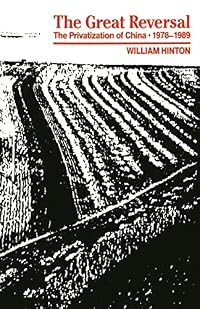
The Great Reversal: The Privatization of China, 1978-1989
by William Hinton
On This Page
Description
The Great Reversal is the first critical study of the widely heralded reforms currently transforming China's economy. From his long experience in Chinese agriculture, Hinton first examines the course of agricultural reform over the past decade, then looks at its consequences in different areas of the countryside and considers its implications for the country as a whole. He raises troubling questions about China's capitalist future-the growing landlessness, increasing inequality, and above show more all, the destruction of the nation's natural resources and the collectively built infrastructure that was the great achievement of the revolution. In so doing he sheds new light on the sources of discontent behind the demonstrations that culminated in the Tiananmen massacre of June 1989. Recognized inside and outside China as an expert on the country's agriculture, Hinton spent five or six months there every year but one since 1978, when the wave of reform was first introduced. He witnessed the events of June 1989 first hand. This experience gives authority to an analysis that digs deeper and more widely than anything else available. His essays open up a new perspective on Mao and his successors, one that has been totally obscured by the Western media. show lessTags
Recommendations













Member Reviews
Interesting set of essays on the period that go into a lot of detail about the ways the "reforms" have hurt most of the population, hurt future prospects through overuse of land and lack of maintenance of Cultural Revolution infrastructure projects, and hurt the independence of China through emphasis on foreign investment and the enrichment of a few top level bureaucrats. There are essays throughout the whole period and his views change a bit as he sees more of what the reforms do and end with an essay on his first-hand experience of Tienanmen Square and his appraisal of the student movement murdered by Deng as primarily left.
Obviously there's a lot that's changed since then and the ending, where he optimistically predicts the show more possibility of a resurgent socialism, is a bit depressing looking back. The multiple essays mean the book doesn't offer a comprehensive account and there's some duplication but in general the different essays cover a lot of different ground in decent detail. He talks about a lot of specifics for what could have been done to improve the co-operative system and the problems the reforms create on the ground rather than talking too generally and avoiding discussing actual problems experienced in agriculture, which is very nice and unusual.
If you're interested in the period, analysing the problems, and thinking of ways that socialism could have continued, then this makes great reading. show less
Obviously there's a lot that's changed since then and the ending, where he optimistically predicts the show more possibility of a resurgent socialism, is a bit depressing looking back. The multiple essays mean the book doesn't offer a comprehensive account and there's some duplication but in general the different essays cover a lot of different ground in decent detail. He talks about a lot of specifics for what could have been done to improve the co-operative system and the problems the reforms create on the ground rather than talking too generally and avoiding discussing actual problems experienced in agriculture, which is very nice and unusual.
If you're interested in the period, analysing the problems, and thinking of ways that socialism could have continued, then this makes great reading. show less
Members
- Recently Added By
Author Information
14+ Works 608 Members
Classifications
Statistics
- Members
- 33
- Popularity
- 855,952
- Reviews
- 1
- Rating
- (4.00)
- Languages
- English, Swedish
- Media
- Paper
- ISBNs
- 4