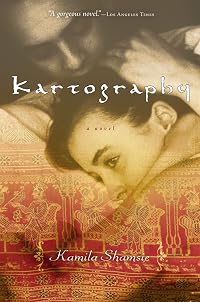
Kartography
by Kamila Shamsie
On This Page
Description
A "gorgeous novel" of two upper-class Pakistani families and the complicated love that develops between their children, by the author of Home Fire ( Los Angeles Times ). Raheen and her best friend, Karim, share an idyllic childhood in upper-class Karachi. Their parents were even once engaged to one another's partners, until they rematched in what they call "the fiance e swap." But as adolescence distances the friends, Karim takes refuge in maps while Raheen searches for the secret behind her show more parents' exchange. What she uncovers reveals not just a family's turbulent history, but also a country's-and now a grown-up Raheen and Karim are caught between strained friendship and fated love. A love story with a family mystery at its heart, from an author named as one of the Orange Prize's "21 Writers for the 21st Century, " Kartography transports readers to a world not often seen in fiction: vibrant, dangerous, sensuous Pakistan. "[Shamsie] has been described as a young Anita Desai, and her third book, about childhood, love, life and high society in Karachi during the turbulent 1990s, is worth all the prepublication fuss." - Harper's Bazaar "[Shamsie] packs her story with the playful evidence of her high-flying intelligence." - San Francisco Chronicle "E. M. Forster's famous plea-'only connect'-reverberates passionately throughout this forceful tale of childhood, love and the power of story-telling." - The Independent (UK) "Deftly woven, provocative... Shamsie's blistering humor and ear for dialogue scorches through [a] whirl of whiskey and witticisms." - The Observer (UK) "A shimmering, quick-witted lament and love story... Rich in emotional coloratura and wordplay." - Publishers Weekly, starred review "Its artful uncovering of how people hide from themselves and one another... echoes Arundhati Roy's The God of Small Things." - Kirkus Reviews show lessTags
Recommendations







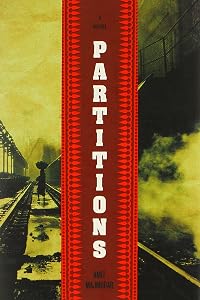
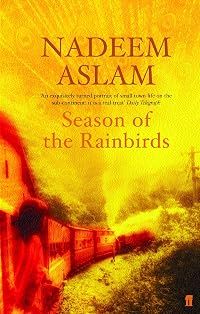
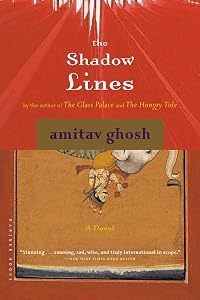
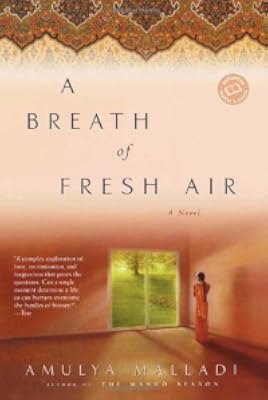



Member Reviews
Set in Karachi, Pakistan, Raheen and Karim have known each other from infancy. Their parents are best friends. The narrative follows their evolving relationship in the 1980s and 1990s, mixed with flashbacks to their parents’ lives before and immediately after marrying in 1971, the year East Pakistan parted from West Pakistan and became Bangladesh. As they get older, Karim becomes interested in understanding the ethnic conflicts, violence, and corruption in Karachi, while Raheen retreats from it. These two have been largely shielded from the adverse impacts by their parents’ affluent status. It is a story of love, betrayal, and forgiveness.
Shamsie’s writing is elegant. Karachi is integral to the narrative, becoming a character in show more itself. A family secret propels the narrative – each main character’s mother was previously engaged to the other’s father. It is what I will call a “literary mystery,” but is character driven. The primary themes relate to conflicting emotions about home and how lives are changed by historic events. It is a good example of how fiction can inform what a historical period was like in the lives of people who lived through it, bringing it to a personal level that is easy to relate to, no matter where we live. show less
Shamsie’s writing is elegant. Karachi is integral to the narrative, becoming a character in show more itself. A family secret propels the narrative – each main character’s mother was previously engaged to the other’s father. It is what I will call a “literary mystery,” but is character driven. The primary themes relate to conflicting emotions about home and how lives are changed by historic events. It is a good example of how fiction can inform what a historical period was like in the lives of people who lived through it, bringing it to a personal level that is easy to relate to, no matter where we live. show less
Kartography early set up a fine plot promise, but did not deliver.
First, it is at least a third too long and second, the premise hangs on main characters
simply not talking to each other. This quickly becomes tedious...
as does Ra's "idiot" name calling and juvenile put-downs.
The draw of Karim's mapmaking is the most intriguing development
while the history and interweavings of Pakistan, East Pakistan, India, Bangladesh,
and Bengalis was enlightening.
What is the point, aside from suicide wishes, for staying in Karachi when Raheem, Zia,
Sonia, Karim, and their families have other choices...aren't the heat, the murders
and shootings, the filth and constant danger enough of a deterrent?
This scenario reminds me of Malala's Father and his refusal show more to leave. show less
First, it is at least a third too long and second, the premise hangs on main characters
simply not talking to each other. This quickly becomes tedious...
as does Ra's "idiot" name calling and juvenile put-downs.
The draw of Karim's mapmaking is the most intriguing development
while the history and interweavings of Pakistan, East Pakistan, India, Bangladesh,
and Bengalis was enlightening.
What is the point, aside from suicide wishes, for staying in Karachi when Raheem, Zia,
Sonia, Karim, and their families have other choices...aren't the heat, the murders
and shootings, the filth and constant danger enough of a deterrent?
This scenario reminds me of Malala's Father and his refusal show more to leave. show less
Kartography is set in Karachi, Pakistan during a period of political unrest, ethnic tensions and escalating violence. We are introduced to Karim and Raheen in 1970, when they are 13 years old. They are children of affluent families and have had the freedom to enjoy their childhood, but the unsettled politics in Karachi are bringing matters to a head.
We follow the lives of Karim and Raheen up until their 20’s, and through them we are given glimpses of life in Karachi; the sheltered and social lives of the rich and the dangers of the wrong side of the tracks, and the growing gap between the haves and the have nots. But Shamsie also includes aspects of recent Pakistani history, especially the conflict which led to the formation of show more Bangladesh. While we only get the bare bones of this conflict, it is interesting and adds depth to Shamsie’s story.
But Kartography is primarily a family drama. The secrets of the parents come back to haunt the children - changing not only Karim and Raheen’s lives forever, but also their ideas of who the people they love really are. Family ties become strained and break before eventually being reformed as something other, while friendships are repeatedly tested through the years.
On occasion during the first part of the book, it was difficult to remember that Raheen and Karim were only just into their teenaged years. Their curiosity and keen observations lead to insights that seem to be too mature for people their age, but are profound and poignant nonetheless.
It is easy to become invested in the characters of Raheen and Karim, and in their relationship, and I spent most of last 100 pages on the verge of shedding a tear, hoping that miscommunications and wrong assumptions could be explained and that the issues that had created a wedge in such a special relationship could be worked out.
Kartography is beautifully written and crafted, it is often lyrical while the evocative images Shamsie employs give a real sense of the Karachi she obviously knows and loves.
This is a powerful story of friendship and growing up, love and learning to accept the weaknesses and mistakes of the people closest to us. show less
We follow the lives of Karim and Raheen up until their 20’s, and through them we are given glimpses of life in Karachi; the sheltered and social lives of the rich and the dangers of the wrong side of the tracks, and the growing gap between the haves and the have nots. But Shamsie also includes aspects of recent Pakistani history, especially the conflict which led to the formation of show more Bangladesh. While we only get the bare bones of this conflict, it is interesting and adds depth to Shamsie’s story.
But Kartography is primarily a family drama. The secrets of the parents come back to haunt the children - changing not only Karim and Raheen’s lives forever, but also their ideas of who the people they love really are. Family ties become strained and break before eventually being reformed as something other, while friendships are repeatedly tested through the years.
On occasion during the first part of the book, it was difficult to remember that Raheen and Karim were only just into their teenaged years. Their curiosity and keen observations lead to insights that seem to be too mature for people their age, but are profound and poignant nonetheless.
It is easy to become invested in the characters of Raheen and Karim, and in their relationship, and I spent most of last 100 pages on the verge of shedding a tear, hoping that miscommunications and wrong assumptions could be explained and that the issues that had created a wedge in such a special relationship could be worked out.
Kartography is beautifully written and crafted, it is often lyrical while the evocative images Shamsie employs give a real sense of the Karachi she obviously knows and loves.
This is a powerful story of friendship and growing up, love and learning to accept the weaknesses and mistakes of the people closest to us. show less
Kartography is, without a doubt, my favorite contemporary book. The author, Kamila Shamsie, grew up in Karachi, Pakistan, in the 1970s and 1980s, and this is where and when her story is set. The first time I read the book I was so blown away by the beautiful language and compelling story that it barely registered when I came upon reference to Pakistani history that I didn’t understand. All I wanted to do was devour the story in the book, and Ms. Shamsie gave me all the information I needed to fall in love with Kartography without knowing the history of Pakistan.
The second time I read the book, I couldn’t let myself off so easily. I was curious about the war the characters kept referring to, and why there was tension between the show more Punjabi and Bengali characters. I picked up on some new subtleties, and was not so quick to skim over the unfamiliar references. I looked up the words I didn’t know, such as muhajir (immigrant) and Ami (Mother). But still I must admit that I didn’t probe too deeply into the history of the story or the region.
This time, however, in my third reading of this excellent novel, I can’t seem to get enough of the history of these characters that I have come to know as well as I know my own children. My atlas is permanently open on my living room floor as I look up cities and roads that figure in the story. I have Wikipedia’s explanation of the Bangladesh Liberation War bookmarked in my internet browser, as well as the history of the British colonization of India. And I must admit, I now appreciate the book on a whole new level. My understanding of the main characters has much more depth, and even peripheral characters have taken on an importance I would never have seen in my first or second readings. My historical research increases not only my appreciation of the book itself, but also my appreciation of the author’s storytelling abilities. As much as I loved the book before, I understood only a fraction of the thought and subtlety that must have gone into the creation of Kartography.
This book is a must-read, and a must-have in your library. show less
The second time I read the book, I couldn’t let myself off so easily. I was curious about the war the characters kept referring to, and why there was tension between the show more Punjabi and Bengali characters. I picked up on some new subtleties, and was not so quick to skim over the unfamiliar references. I looked up the words I didn’t know, such as muhajir (immigrant) and Ami (Mother). But still I must admit that I didn’t probe too deeply into the history of the story or the region.
This time, however, in my third reading of this excellent novel, I can’t seem to get enough of the history of these characters that I have come to know as well as I know my own children. My atlas is permanently open on my living room floor as I look up cities and roads that figure in the story. I have Wikipedia’s explanation of the Bangladesh Liberation War bookmarked in my internet browser, as well as the history of the British colonization of India. And I must admit, I now appreciate the book on a whole new level. My understanding of the main characters has much more depth, and even peripheral characters have taken on an importance I would never have seen in my first or second readings. My historical research increases not only my appreciation of the book itself, but also my appreciation of the author’s storytelling abilities. As much as I loved the book before, I understood only a fraction of the thought and subtlety that must have gone into the creation of Kartography.
This book is a must-read, and a must-have in your library. show less
Sublime writing transformed what could have been a love and war formula piece into something more intellectually and emotionally filling.
Hmmm. A good read, a provocative premise, and an interesting story. It was poetic at many points. But somehow there was an emotional flatness. Something was not there. The backdrop of one story thread, Pakistan in the early 70's, was compelling and educational.
I was eager to read about a city/country/era I knew very little about, however I don't feel like I learned very much. Instead this book confused me with so many similar names, unrealistic friendships, and an ending I just didn't understand.
Members
- Recently Added By
Author Information

16+ Works 4,818 Members
Kamila Shamsie is the author of five novels: In the City by the Sea; Kartography (both shortlisted for the John Llewellyn Rhys Prize); Salt and Saffron; Broken Verses and Burnt Shadows which was shortlisted for the Orange Prize for Fiction and has been translated into more than twenty languages. Three of her novels have received awards from show more Pakistan's Academy of Letters. She is a Fellow of the Royal Society of Literature and in 2013 was named a Granta's Best of Young British Novelist. She made the Baileys Women's Prize for Fiction 2015 shortlist with her title A God in Every Stone. She is the author of Home Fires, published in 2017, for which she won the 2018 Women¿s Prize for Fiction. (Bowker Author Biography) show less
Awards and Honors
Common Knowledge
- Canonical title*
- Kartanpiirtäjä
- Original title
- Kartography
- Original publication date
- 2002
*Some information comes from Common Knowledge in other languages. Click "Edit" for more information.
Classifications
Statistics
- Members
- 365
- Popularity
- 85,386
- Reviews
- 8
- Rating
- (3.77)
- Languages
- 7 — Danish, Dutch, English, Finnish, German, Italian, Polish
- Media
- Paper, Ebook
- ISBNs
- 18
- ASINs
- 6