On This Page
Description
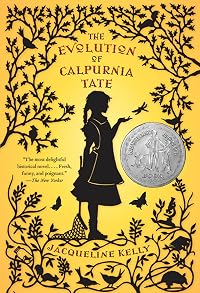
In central Texas in 1899, eleven-year-old Callie Vee Tate is instructed to be a lady by her mother, learns about love from the older three of her six brothers, and studies the natural world with her grandfather, the latter of which leads to an important discovery.Tags
Recommendations






Member Recommendations
Member Reviews
Callie Vee is the only girl in a family of 7 children, living in Texas at the turn of the century. In 1899 Callie is Eleven and interested in studying the natural world. Her mother wants to make a proper woman out of her, but Callie only wants to explore nature and study science. Maybe even as a job, something women of her time and status don't do.
I loved living in Calpurnia's world and felt the ache to be more than you are expected to as a women. Wonderful read.
I loved living in Calpurnia's world and felt the ache to be more than you are expected to as a women. Wonderful read.
Another one of those I-liked-it-but-maybe-not-because-of-the-book-itself books. I just happen to like the trials of keeping house in 19th century America, and how to bake pies, and how to identify insects, and using distilleries, and courtship and calling cards and bats and the War and having to give piano recitals and the awfulness of short hoes. So I admit my prejudice upfront.
That said - it is a good book. Kelly's writing is easy & charming & not obtrusive - evoking the sense that, although Calpurnia was narrating as a wise(r) adult, she still identified with herself at eleven-and-three-quarters - a difficult achievement. Really the entire book was sweet and clever and charming - I keep coming back to that word but it really is - and show more genuinely moving in parts - but the episodic style was intensely boring a few times and generally overwhelmed the characters' growth at every turn, excepting Harry - but especially Calpurnia - which is a shame. Her 'evolution' seemed cut off in the middle. Which may be the point - I'm not sure. As it stands, though, the story seems cut off at the knees. An epilogue (much as I hate them) or a few extra lines would have tied up the huge, dangling loose end and given this another star.
The author will do better next time, I think. (A sequel? Please?) show less
That said - it is a good book. Kelly's writing is easy & charming & not obtrusive - evoking the sense that, although Calpurnia was narrating as a wise(r) adult, she still identified with herself at eleven-and-three-quarters - a difficult achievement. Really the entire book was sweet and clever and charming - I keep coming back to that word but it really is - and show more genuinely moving in parts - but the episodic style was intensely boring a few times and generally overwhelmed the characters' growth at every turn, excepting Harry - but especially Calpurnia - which is a shame. Her 'evolution' seemed cut off in the middle. Which may be the point - I'm not sure. As it stands, though, the story seems cut off at the knees. An epilogue (much as I hate them) or a few extra lines would have tied up the huge, dangling loose end and given this another star.
The author will do better next time, I think. (A sequel? Please?) show less
The Evolution of Calpurnia Tate by Jacqueline Kelly follows the above mentioned young lady through her eleventh year in 1899. Calpurnia lives with her parents, grandfather and her six brothers. She has an interest in the natural world and her curiosity and questions eventually lead her to her notoriously cantankerous grandfather. He spends his days in his laboratory or out hunting specimens.
She and her grandfather bond over their shared interests and Calpurnia yearns to be able to have more freedom from the expectations that are placed upon her. She has no interest in cooking, cleaning or sewing but she is expected to perfect these skills for a future as a wife and homemaker. She dreams of being allowed to go to university and becoming show more a scientist. Although there is no resolution to Calpurnia’s dreams, it is clear that she is a determined, ambitious girl and I can imagine that she will definitely have a say in what her future will look like.
I found The Evolution of Calpurnia Tate to be an excellent coming-of-age story. The author succeeds in making Calpurnia unique and believable, and the writing is engaging with humor and style. Written for middle-grade children, this senior citizen fell under the spell of this delightful book show less
She and her grandfather bond over their shared interests and Calpurnia yearns to be able to have more freedom from the expectations that are placed upon her. She has no interest in cooking, cleaning or sewing but she is expected to perfect these skills for a future as a wife and homemaker. She dreams of being allowed to go to university and becoming show more a scientist. Although there is no resolution to Calpurnia’s dreams, it is clear that she is a determined, ambitious girl and I can imagine that she will definitely have a say in what her future will look like.
I found The Evolution of Calpurnia Tate to be an excellent coming-of-age story. The author succeeds in making Calpurnia unique and believable, and the writing is engaging with humor and style. Written for middle-grade children, this senior citizen fell under the spell of this delightful book show less
Jacqueline Kelly's first book is something special. It reads like she took Anne of Green Gables, To Kill a Mockingbird, The Origin of Species and Little House on the Prairie and distilled from them an entirely original tale of a twelve year old girl, growing up in the small town of Fentress, Texas in 1899. She's the only daughter of a well-to-do cotton farmer with six sons, and she's possessed of a relentless curiosity about the natural world.
Things change for Callie when she scandalizes the local librarian by asking to check out Charles Darwin's controversial book. Callie is equally scandalized by the librarian's reaction and the event comes to the ears of her grandfather, a stand-offish old man who both loans her his copy of the book show more and takes her under his wing to teach her about natural history.
It's hard to explain why this book is so very good. Callie's exploding interest in the natural world and warm relationship with her grandfather (who tells her a wonderful story about a Civil War battle and a bat) is balanced by her mother's determination to teach Callie what she will need to know to be a housewife when the time comes and by the antics and adventures of her six brothers, who are allowed a great deal more freedom than Callie enjoys.
I read this book with my ten-year-old daughter, who strongly related to Calpurnia and her love of science and nature, and with my seven-year-old son, who pretended not to care, but who, alone of all of us, was able to keep track of the differences between Callie's many brothers. I hope that the next book we read together is half as good as this one. show less
Things change for Callie when she scandalizes the local librarian by asking to check out Charles Darwin's controversial book. Callie is equally scandalized by the librarian's reaction and the event comes to the ears of her grandfather, a stand-offish old man who both loans her his copy of the book show more and takes her under his wing to teach her about natural history.
It's hard to explain why this book is so very good. Callie's exploding interest in the natural world and warm relationship with her grandfather (who tells her a wonderful story about a Civil War battle and a bat) is balanced by her mother's determination to teach Callie what she will need to know to be a housewife when the time comes and by the antics and adventures of her six brothers, who are allowed a great deal more freedom than Callie enjoys.
I read this book with my ten-year-old daughter, who strongly related to Calpurnia and her love of science and nature, and with my seven-year-old son, who pretended not to care, but who, alone of all of us, was able to keep track of the differences between Callie's many brothers. I hope that the next book we read together is half as good as this one. show less
Calpurnia Virginia Tate - generally called "Callie Vee" by her six brothers - discovers an interest in science, much to the consternation of her mother, who would like her only daughter to be a proper young lady. But at practically twelve in 1899, Calpurnia is finding, with encouragement from her naturalist grandfather, a whole wonderful world opening up to her.
I didn't expect to like this book as much as I did, fearing that Kelly wouldn't be able to help bashing Christians in a book talking about a girl learning about science and Darwin in Texas. She does a good job of treading lightly and treating issues more complexly than that, however. A quote from The Origin of Species opens each chapter, and Callie has an adventure trying to show more borrow the book from the library. But her grandfather, an admirer of Darwin, is also good friends with the local minister, and there are no lectures on believing one way or the other. Callie is a great character. I loved the realistic interactions between Callie and her brothers, or her mother, especially. Callie jumps into things with both feet, like a true eleven-year-old, wondering about the world around her, whether it be the natural world or her oldest brother's love life. Narrator Natalie Ross did an excellent job of capturing her voice, as well as making each of her brothers and other characters sound distinctive. show less
I didn't expect to like this book as much as I did, fearing that Kelly wouldn't be able to help bashing Christians in a book talking about a girl learning about science and Darwin in Texas. She does a good job of treading lightly and treating issues more complexly than that, however. A quote from The Origin of Species opens each chapter, and Callie has an adventure trying to show more borrow the book from the library. But her grandfather, an admirer of Darwin, is also good friends with the local minister, and there are no lectures on believing one way or the other. Callie is a great character. I loved the realistic interactions between Callie and her brothers, or her mother, especially. Callie jumps into things with both feet, like a true eleven-year-old, wondering about the world around her, whether it be the natural world or her oldest brother's love life. Narrator Natalie Ross did an excellent job of capturing her voice, as well as making each of her brothers and other characters sound distinctive. show less
Another book left languishing on the shelf for too long, but worth the wait. Inspired by a review, I originally bought this to read alongside To Kill A Mockingbird, but Callie's story actually reminds me more of Meet Me In St Louis. Set in Texas in the last year of the nineteenth century, twelve year old Calpurnia Virginia Tate - Callie Vee - lives with her parents, six brothers and an eccentric grandfather on the family's pecan plantation. Interested in the natural world around her, Callie forms an unexpected bond with her grandfather when he presents her with his copy of Charles Darwin's shocking book The Origin of the Species, and would love nothing more than to be a scientist when she is older. Time, tradition and Callie's mother show more have other plans for her future, however.
Another reason why I remember wanting to read this book was because of all the very serious, scathing reviews from creationists, criticizing the promotion of evolution in a book for young readers, which surprised me in this day and age. But even though each chapter opens with an epigraph from The Origin of the Species, Callie's story is more about her struggle for independence and, I suppose, intelligence, against the rigid expectations of society. 'I had never thought my future would be like theirs,' Callie opines; 'I was expected to hand over my life to a house, a husband, children.' Even though I would probably have objected more to anachronism in a historical novel, no matter the demographic, Callie's dashed hopes still struck a chord with me. I sincerely hope she finds a way to balance domesticity with discovery!
Stylistically, there are similarities with Mockingbird, but the dialogue felt a little bit lazy for Callie's era and background. And bizarrely, where I would have preferred to read an endless collection of anecdotes about Scout and Jem, without the trial underpinning the narrative, I think Callie's story could have done with more structure. I did eventually get caught up in Callie's madcap household and could imagine the long hot summer and exotic wildlife brought vividly to life through the eyes of a budding naturalist. show less
Another reason why I remember wanting to read this book was because of all the very serious, scathing reviews from creationists, criticizing the promotion of evolution in a book for young readers, which surprised me in this day and age. But even though each chapter opens with an epigraph from The Origin of the Species, Callie's story is more about her struggle for independence and, I suppose, intelligence, against the rigid expectations of society. 'I had never thought my future would be like theirs,' Callie opines; 'I was expected to hand over my life to a house, a husband, children.' Even though I would probably have objected more to anachronism in a historical novel, no matter the demographic, Callie's dashed hopes still struck a chord with me. I sincerely hope she finds a way to balance domesticity with discovery!
Stylistically, there are similarities with Mockingbird, but the dialogue felt a little bit lazy for Callie's era and background. And bizarrely, where I would have preferred to read an endless collection of anecdotes about Scout and Jem, without the trial underpinning the narrative, I think Callie's story could have done with more structure. I did eventually get caught up in Callie's madcap household and could imagine the long hot summer and exotic wildlife brought vividly to life through the eyes of a budding naturalist. show less
The Evolution of Calpurnia Tate by Jacqueline Kelly takes place in the last year of the nineteenth century in Fentress, Texas. Calpurnia Tate is the only daughter in a large family where the boys have been named for Confederate heroes. Her mother wants desperately to get her ready for her debut but Calpurnia wants nothing more than to spend time with her grandfather, exploring the natural world.
Calpurnia is the first grandchild to take any interest in the grandfather's experiments. He is a naturalist and a devotee of Charles Darwin, stuck in a place where that sort of thinking is alien and dangerous. But he's an old man and a respected war hero, so he is given space to do his own thing. When he takes Calpurnia under his wing, people show more start to notice.
In the middle of all of this, Calpurnia and he make a discovery, a new type of hairy vetch that they can't find in any of their botany books. Much of the drama of the back half of the book is drawn up in the waiting for an answer. Is this hairy vetch something new or not?
Though the strong feminist message is the main point of the book, I got caught up in the vetch plot. Like Calpurnia, I love nothing more than exploring the nature around me. She had her creek and I have mine: Sulphur, San Lorenzo, Dry and Alameda. And along, grows a beautiful pink and purple flower, which, thanks now to Calpurnia, I know is a type of vetch. I haven't though found any new species — but that's not my thing. Mine is photography. show less
Calpurnia is the first grandchild to take any interest in the grandfather's experiments. He is a naturalist and a devotee of Charles Darwin, stuck in a place where that sort of thinking is alien and dangerous. But he's an old man and a respected war hero, so he is given space to do his own thing. When he takes Calpurnia under his wing, people show more start to notice.
In the middle of all of this, Calpurnia and he make a discovery, a new type of hairy vetch that they can't find in any of their botany books. Much of the drama of the back half of the book is drawn up in the waiting for an answer. Is this hairy vetch something new or not?
Though the strong feminist message is the main point of the book, I got caught up in the vetch plot. Like Calpurnia, I love nothing more than exploring the nature around me. She had her creek and I have mine: Sulphur, San Lorenzo, Dry and Alameda. And along, grows a beautiful pink and purple flower, which, thanks now to Calpurnia, I know is a type of vetch. I haven't though found any new species — but that's not my thing. Mine is photography. show less
Members
- Recently Added By
Published Reviews
ThingScore 88
In her debut novel, Jacqueline Kelly brings to vivid life a boisterous small-town family at the dawn of a new century. Readers will want to crank up the A.C. before cracking the cover, though. That first chapter packs a lot of summer heat.
added by SqueakyChu
Phyllis Kennemer, Ph.D. (Children's Literature)
Calpurnia is an active, inquisitive eleven-year-old girl, living in a small Texas town in 1899. She takes no interest in cooking or sewing and is, in fact, inept in all household duties. Calpurnia is the only girl in a family of seven children, so her mother keeps trying to domesticate her, but Calpurnia consistently resists. She has developed a show more special relationship with her eccentric grandfather, a scientist and naturalist. They explore the nearby river and woods and are excited about the possibility of having discovered a new plant. Granddaddy loans her his copy of Darwin’s The Origin of Species, and a quotation from the book appears at the beginning of each chapter. Calpurnia reads this book and others, records her findings and questions in a journal, and aspires to become a scientist. Other than her grandfather, her family does not support her in this quest. Her future is left uncertain, but readers will be rooting for her to achieve her goal. This book presents an engaging piece of historical-fiction depicting the roles and expectations for women at the turn of the twentieth century. 2009, Henry Holt and Company/Macmillan, $16.99. Ages 9 to 12. show less
Calpurnia is an active, inquisitive eleven-year-old girl, living in a small Texas town in 1899. She takes no interest in cooking or sewing and is, in fact, inept in all household duties. Calpurnia is the only girl in a family of seven children, so her mother keeps trying to domesticate her, but Calpurnia consistently resists. She has developed a show more special relationship with her eccentric grandfather, a scientist and naturalist. They explore the nearby river and woods and are excited about the possibility of having discovered a new plant. Granddaddy loans her his copy of Darwin’s The Origin of Species, and a quotation from the book appears at the beginning of each chapter. Calpurnia reads this book and others, records her findings and questions in a journal, and aspires to become a scientist. Other than her grandfather, her family does not support her in this quest. Her future is left uncertain, but readers will be rooting for her to achieve her goal. This book presents an engaging piece of historical-fiction depicting the roles and expectations for women at the turn of the twentieth century. 2009, Henry Holt and Company/Macmillan, $16.99. Ages 9 to 12. show less
added by kthomp25
Lists

Best Newbery Honor Books
257 works; 31 members

School Library Journal - 2012 Top 100 Children's Novels
68 works; 8 members

Mensa for Kids Excellence in Reading Award Program (Grades 4-6)
64 works; 9 members

Books About Girls
219 works; 17 members
Fiction with Women's Names in the Title
378 works; 15 members

Female Protagonist
1,056 works; 57 members

Newbery Honor Books By year - II - 1981-2035
143 works; 4 members

BingoDOG - Scientists in Fiction
111 works; 17 members

Satori Smiles Children's Book List
262 works; 7 members

Fiction for Readers Who Love Science and Math
57 works; 15 members
KayStJ's to-read list
1,616 works; 11 members

Historical Fiction
889 works; 91 members
Literature About Women and Girls
394 works; 39 members
Female Author
1,234 works; 64 members

Books Read in 2024
4,712 works; 127 members
Author Information

9 Works 5,033 Members
Jacqueline Kelly was born in New Zealand and raised in Canada. She is a practicing physician. The Evolution of Calpurnia Tate is her first novel. (Bowker Author Biography)
Some Editions
Awards and Honors
Awards
Distinctions
Notable Lists
Series

Common Knowledge
- Canonical title
- The Evolution of Calpurnia Tate
- Original title
- The Evolution of Calpurnia Tate
- Original publication date
- 2009-05-12; 2009
- People/Characters
- Calpurnia Virginia Tate; Walter Tate; Margaret Tate; Alfred Tate; Harry Tate; Sam Houston Tate (show all 15); Lamar Tate; Travis Tate; Sul Ross Tate; Jim Bowie "J.B." Tate; Viola; SanJuanna; Miss Brown; Minerva Goodacre; Lula Gates
- Important places
- Fentress, Texas, USA
- Epigraph
- When a young naturalist commences the study of a group of organisms quite unknown to him, he is at first much perplexed to determine what differences to consider... for her knows nothing of the amount and kind of variation to... (show all) which the group is subject...
[Charles Darwin, The Origin of Species]
The laws governing inheritance are quite unknown; no one can say why...the child often revert in certain characters to its grandfather...
[Charles Darwin, The Origin of Species]
Seedlings from the same fruit, and the young of the same litter, sometimes differ considerably from each other, though both the young and the parents...have apparently been exposed to exactly the same conditions of life...
We may conclude...that any change in the numerical proportions of some of the inhabitants, independently of the change of climate itself, would most seriously affect many of the others.
[Charles Darwin, The Origin of Speci... (show all)es] - Dedication
- For my mother, Noeline Kelly
For my father, Brian Kelly
For my husband, Robert Duncan - First words
- By 1899, we had learned to tame the darkness but not the Texas heat. We arose in the dar, hours before sunrise, when there was barely a smudge of indigo along the eastern sky and the rest of the horizon was still pure pitch.
- Quotations
- One day I would have all the books in the world, shelves and shelves of them. I would live my life in a tower of books. I would read all day long and eat peaches. And if any young knights in armor dared to come calling on the... (show all)ir white chargers and plead with me to let down my hair, I would pelt them with peach pits until they went home.
It was too bad, but sometimes a little knowledge could ruin your whole day, or at least take some of the shine off.
'The lesson for today is this: It is better to travel with hope in one's heart than to arrive in safety. Do you understand?'
'There are so many things to learn, you see, and so little time is given us.'
"The lesson for today is this: It is better to travel with hope in one's heart than to arrive in safety....we should celebrate today's failure because it is a clear sign that our voyage of discovery is not yet over. The day t... (show all)he experiment succeeds is the day the experiment ends. And I inevitably find that the sadness of ending outweighs the celebration of success."
"Time is man-made and comes from England." - Last words
- (Click to show. Warning: May contain spoilers.)Then I ran for the warmth of our home.
- Publisher's editor
- Wheeler, Noa; Deboo, Ana
- Original language
- English US
- Disambiguation notice
- ISBN: 9780805088410 0805088415 9780312659301 031265930X.
Skunked is the first of a set of chapter books featuring the characters from The Evolution of Calpurnia Tate. It is a different book. Please do not combine.
Classifications
Statistics
- Members
- 3,781
- Popularity
- 4,212
- Reviews
- 221
- Rating
- (4.09)
- Languages
- 13 — Catalan, Chinese, Dutch, English, Finnish, French, German, Galician, Italian, Japanese, Polish, Portuguese, Spanish
- Media
- Paper, Audiobook, Ebook
- ISBNs
- 57
- ASINs
- 20