On This Page
Description
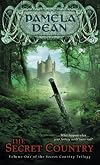
What happens when your fantasy world turns real...?Each vacation for the past nine years, cousins Patrick, Ruth, Ellen, Ted, and Laura have played a game they call the “Secret”—and invented, scripted world full of witches, unicorns, a magic ring, court intrigue, and the Dragon King. In the Secret, they can imagine anything into reality, and shape destiny. Then the unbelievable happens: by trick or by chance, they actually find themselves in the Secret Country, their made-up show more identities now real. The five have arrived at the start of their games, with the Country on the edge of war. What was once exciting and wonderful now looms threateningly before them, and no one is sure how to stop it… or if they will ever get back home.
"An intricate sparkling web of intrigue and magic. One of me very favorites.”—Patricia C. Wrede, author of Dealing with Dragons. show less
Tags
Recommendations







Member Recommendations


Member Reviews
For the past summers, cousins Ruth, Patrick, Ted, Ellen, and Laura have played in an imaginary fantasy kingdom called the Secret Country. However, this year things are different. This year they stumble upon swords that take them to the real Secret Country where they are thrown right into the plots of their imagination. But is it real or is it fake? And how can they avoid the inevitable events that they themselves have created?
I liked this book a lot. All five cousins are interesting characters, intelligent and literate and the kind of kids I wish I had known growing up. It would have been easy for Dean to create stock characters such as “the loud one”, “the shy one”, “the pretty one”, etc, but she avoids such cliches and show more fleshes out each cousin in his or her own right. For example, Patrick is insufferable but I like him anyway. I also enjoyed the concept of an imaginary world turning real. How often have I wished for my own Secret Country? I thought Dean handled adeptly the problems and questions of such a transformation. Rather than use it just as a gimmick, she explored its implications.
The Secret Country, as a place, is fairly typical fantasy fare. There’s dragons and unicorns and kings. If you’re looking for extensive, original world-building I don’t think this is the right book for you. But what Dean is good at is creating a sense of mystery. The Secret Country seems banal but there is a touch of the unknown that goes along with it, questions posed but unanswered. It gives you the incentive to read on.
Overall, The Secret Country is an intelligent, compulsively readable fantasy. show less
I liked this book a lot. All five cousins are interesting characters, intelligent and literate and the kind of kids I wish I had known growing up. It would have been easy for Dean to create stock characters such as “the loud one”, “the shy one”, “the pretty one”, etc, but she avoids such cliches and show more fleshes out each cousin in his or her own right. For example, Patrick is insufferable but I like him anyway. I also enjoyed the concept of an imaginary world turning real. How often have I wished for my own Secret Country? I thought Dean handled adeptly the problems and questions of such a transformation. Rather than use it just as a gimmick, she explored its implications.
The Secret Country, as a place, is fairly typical fantasy fare. There’s dragons and unicorns and kings. If you’re looking for extensive, original world-building I don’t think this is the right book for you. But what Dean is good at is creating a sense of mystery. The Secret Country seems banal but there is a touch of the unknown that goes along with it, questions posed but unanswered. It gives you the incentive to read on.
Overall, The Secret Country is an intelligent, compulsively readable fantasy. show less
When I was younger I read this book, unaware it was a trilogy. I was disappointed and bewildered by the ending, which left the plot completely unresolved, and since this was before the handy help of the Internet was available, I unwillingly left it a mystery. Years later, I found the whole trilogy in a book store where I worked, and now I am rereading this book so I can read the next two and finally learn the end of the story.
The Secret Country begins with five cousins playing a game. They call it the Secret. In the Secret, they created a fantasy world of wizards, unicorns, and court intrigue. They each have a character that is a prince or princess in the land, although they play other parts as need demands. The main point of the game show more is in acting out important scenes from the story they created, either in the role of their own characters, or assuming the persona of other important persons in the kingdom and the story. Each summer they act out the same major scenes over and over again, seeking to get it just right. They also create alphabets and spells, discuss the history of their secret country, elaborate on the characters and backgrounds of the inhabitants, describe the buildings and different settings for events, and write everything down.
At the beginning of the book, the cousins are enjoying their game for what could be the last time. Ruth, Ellen, and Patrick are moving with their parents to Australia, meaning Ted and Laura will have no way to meet them the next summer to resume their adventure. After their parting, the story jumps forward a year, to the next summer. Ted and Laura are with their cousins again, but the wrong ones; their parents have gone to Australia to visit with Ruth's family, but they left Ted and Laura with other family members in the states. The kids are not happy about it. One day, after escaping to the local library, they spot an unusual house that reminds them of the Secret Country. They crawl under the hedge around the house, and Laura cuts her knee open on an ornate sword hidden in the branches. When they try to leave the creepy house, crawling back under the hedge but holding on to the sword, they don't emerge into Philadelphia. They are in open country, strange and yet oddly familiar. When they find Ruth, Patrick, and Ellen across the river, with their own secret sword found in Australia, the five cousins discover that they have stumbled into the land of their imagined game, somehow real and tangible.
A new game commences, both terrifying and exhilirating. The children discover that they have arrived in their imaginary land at the moment when their regularly enacted scenes began. Yet while they recognize people and places, they are disconcerted by the changes. Some details line up exactly, and others are different from what any of them imagined. And while they enjoy the adventure of actually living their story, the bad parts are coming up: Randolph is going to kill the king, Ted's father, and Ted will have to challenge Randolph to a duel and kill him. If they disappear or act out of character, however, the people of the Secret Country will be suspicious. Also, they are still kids, meaning they have to answer to the demands of the adults around them.
They partake in events around them, relying on their memory of how scenes transpired in the game to guide their behavior and even their dialogue. When no one notices, they sneak around the castle, trying to figure out what exactly is going on. Patrick maintains that they are experiencing a mass dream or hallucination, but Ted and Ruth believe it is all real. They use their background knowledge to find Shan's ring and cast a spell to prevent time from passing back in the real world. After the exhilirating unicorn hunt, they decide to try another spell to alter this familiar yet strange world, thinking that maybe they can still control the game if they make formal decisions together. Using this method, they attempt to alter the bad parts of their adventure so that Randolph never even kills the king. With renewed hope, they head back to the castle, ready to resume their roles in this alluring world.
The story feels familiar - characters suddenly finding themselves drawn into a fantasy world they always thought was just a story. Yet it is done well, with a concrete portrayal of setting and character that imbues the story with a genuine quality that sets it apart. All five children are individual personalities, with solid characterization and differentiation, even though Ted and Laurie are the two protagonists whose thoughts we typically see. Juggling so many characters well is an accomplishment. In addition, the surrounding characters, from Randolph to Fence, are themselves intriguing. The world is dense. It has the feeling of a place with history and back story, letting the reader knowing she is only seeing a small window of all there is to see. The plot within the world is basic but classic, but set against the broader story of five children transported from another world, it becomes much more complicated and intense. Then there is the mystery of why everything is slightly off, and what is actually happening - did they create the world with their game and then fall into it, or did the world already exist and somehow guide their play? With these elements organically bound together in an entertaining and fast-paced read, this book is quite compelling. The ending is abrupt, and it is clear that the reader must complete the whole trilogy to find closure, but considering the quality of this initial book, I have every intention of finishing the series. show less
The Secret Country begins with five cousins playing a game. They call it the Secret. In the Secret, they created a fantasy world of wizards, unicorns, and court intrigue. They each have a character that is a prince or princess in the land, although they play other parts as need demands. The main point of the game show more is in acting out important scenes from the story they created, either in the role of their own characters, or assuming the persona of other important persons in the kingdom and the story. Each summer they act out the same major scenes over and over again, seeking to get it just right. They also create alphabets and spells, discuss the history of their secret country, elaborate on the characters and backgrounds of the inhabitants, describe the buildings and different settings for events, and write everything down.
At the beginning of the book, the cousins are enjoying their game for what could be the last time. Ruth, Ellen, and Patrick are moving with their parents to Australia, meaning Ted and Laura will have no way to meet them the next summer to resume their adventure. After their parting, the story jumps forward a year, to the next summer. Ted and Laura are with their cousins again, but the wrong ones; their parents have gone to Australia to visit with Ruth's family, but they left Ted and Laura with other family members in the states. The kids are not happy about it. One day, after escaping to the local library, they spot an unusual house that reminds them of the Secret Country. They crawl under the hedge around the house, and Laura cuts her knee open on an ornate sword hidden in the branches. When they try to leave the creepy house, crawling back under the hedge but holding on to the sword, they don't emerge into Philadelphia. They are in open country, strange and yet oddly familiar. When they find Ruth, Patrick, and Ellen across the river, with their own secret sword found in Australia, the five cousins discover that they have stumbled into the land of their imagined game, somehow real and tangible.
A new game commences, both terrifying and exhilirating. The children discover that they have arrived in their imaginary land at the moment when their regularly enacted scenes began. Yet while they recognize people and places, they are disconcerted by the changes. Some details line up exactly, and others are different from what any of them imagined. And while they enjoy the adventure of actually living their story, the bad parts are coming up: Randolph is going to kill the king, Ted's father, and Ted will have to challenge Randolph to a duel and kill him. If they disappear or act out of character, however, the people of the Secret Country will be suspicious. Also, they are still kids, meaning they have to answer to the demands of the adults around them.
They partake in events around them, relying on their memory of how scenes transpired in the game to guide their behavior and even their dialogue. When no one notices, they sneak around the castle, trying to figure out what exactly is going on. Patrick maintains that they are experiencing a mass dream or hallucination, but Ted and Ruth believe it is all real. They use their background knowledge to find Shan's ring and cast a spell to prevent time from passing back in the real world. After the exhilirating unicorn hunt, they decide to try another spell to alter this familiar yet strange world, thinking that maybe they can still control the game if they make formal decisions together. Using this method, they attempt to alter the bad parts of their adventure so that Randolph never even kills the king. With renewed hope, they head back to the castle, ready to resume their roles in this alluring world.
The story feels familiar - characters suddenly finding themselves drawn into a fantasy world they always thought was just a story. Yet it is done well, with a concrete portrayal of setting and character that imbues the story with a genuine quality that sets it apart. All five children are individual personalities, with solid characterization and differentiation, even though Ted and Laurie are the two protagonists whose thoughts we typically see. Juggling so many characters well is an accomplishment. In addition, the surrounding characters, from Randolph to Fence, are themselves intriguing. The world is dense. It has the feeling of a place with history and back story, letting the reader knowing she is only seeing a small window of all there is to see. The plot within the world is basic but classic, but set against the broader story of five children transported from another world, it becomes much more complicated and intense. Then there is the mystery of why everything is slightly off, and what is actually happening - did they create the world with their game and then fall into it, or did the world already exist and somehow guide their play? With these elements organically bound together in an entertaining and fast-paced read, this book is quite compelling. The ending is abrupt, and it is clear that the reader must complete the whole trilogy to find closure, but considering the quality of this initial book, I have every intention of finishing the series. show less
This is the first book in a fantasy series from the 1980s, which features a group of children who have invented an elaborate game of magic and intrigue set in a realm called The Secret Country. Although they're quite certain they made the whole thing up, one day they find themselves transported to that world, which sure looks surprisingly real.
I have such mixed feelings about this book. For much of it, I honestly couldn't decide whether I liked it or disliked it. It does have a good premise, and Dean does some interesting things with the idea, including a lot of really thoughtful and clever touches. And there is the core of a decent plot, although it takes about half the book to get going, and doesn't really get very far before this show more volume is over. (It should, by the way, be noted that this is definitely not a self-contained story. Which is OK; I had a strong suspicion that it wouldn't be. Still, when I am in charge of the world, there is going to be an unbreakable rule stating that any novel that effectively ends in a "to be continued" must say so in clearly visible letters on the front cover.) Also, I don't know whether this was originally marketed for kids or adults, but it does read very much like a book for adults, with none of the clunky, simplistic writing you sometimes get in kids' stories.
But, while it does get better as it goes along, I had a lot of trouble getting into it. The biggest problem, I think, is that it jumps into the fantasy realm entirely too soon. We don't get to really know these characters or get a good sense of what their game or their invented world is like before we're abruptly plunged into it. And, while the characters themselves are a little off-balance at all the things they find surprising and unexpected, at least they knew and understood (and cared about!) things a lot more than I did going in. It honestly felt like the book was missing some important introductory chapters. On top of which, Dean often seems to avoid describing things too closely, or to write in a somewhat subtle and oblique kind of way. There's nothing inherently wrong with that, but put these two things together and for far too much of the book, I felt very much like an estranged outsider, looking in at the story through a slightly smudgy glass.
Also, for reasons I can't really put my finger on, I found the Shakespeare-style dialog the fantasy characters use strangely irritating. Also strange and irritating is the fact that, while the kids occasionally complain that those characters are hard to understand, when they're doing their playacting for their game, they somehow manage to declaim the same kind of dialog flawlessly. It's possible, I suppose, that there will turn out to be a plot reason for that, although I kind of doubt it. The fact that these children all seem to be intimately and inexplicably familiar with Shakespeare -- they even quote him a lot -- makes me think that this is a case of the author projecting her own interests a little too enthusiastically onto her characters.
Still. For all my complaints, I am just interested enough in this that I'm planning to continue with the series at some point. (If for no other reason than that I already have a copy of the fourth book. Although I think that's actually a separate, but related story.) I'm not exactly chomping at the bit to get to it, though. show less
I have such mixed feelings about this book. For much of it, I honestly couldn't decide whether I liked it or disliked it. It does have a good premise, and Dean does some interesting things with the idea, including a lot of really thoughtful and clever touches. And there is the core of a decent plot, although it takes about half the book to get going, and doesn't really get very far before this show more volume is over. (It should, by the way, be noted that this is definitely not a self-contained story. Which is OK; I had a strong suspicion that it wouldn't be. Still, when I am in charge of the world, there is going to be an unbreakable rule stating that any novel that effectively ends in a "to be continued" must say so in clearly visible letters on the front cover.) Also, I don't know whether this was originally marketed for kids or adults, but it does read very much like a book for adults, with none of the clunky, simplistic writing you sometimes get in kids' stories.
But, while it does get better as it goes along, I had a lot of trouble getting into it. The biggest problem, I think, is that it jumps into the fantasy realm entirely too soon. We don't get to really know these characters or get a good sense of what their game or their invented world is like before we're abruptly plunged into it. And, while the characters themselves are a little off-balance at all the things they find surprising and unexpected, at least they knew and understood (and cared about!) things a lot more than I did going in. It honestly felt like the book was missing some important introductory chapters. On top of which, Dean often seems to avoid describing things too closely, or to write in a somewhat subtle and oblique kind of way. There's nothing inherently wrong with that, but put these two things together and for far too much of the book, I felt very much like an estranged outsider, looking in at the story through a slightly smudgy glass.
Also, for reasons I can't really put my finger on, I found the Shakespeare-style dialog the fantasy characters use strangely irritating. Also strange and irritating is the fact that, while the kids occasionally complain that those characters are hard to understand, when they're doing their playacting for their game, they somehow manage to declaim the same kind of dialog flawlessly. It's possible, I suppose, that there will turn out to be a plot reason for that, although I kind of doubt it. The fact that these children all seem to be intimately and inexplicably familiar with Shakespeare -- they even quote him a lot -- makes me think that this is a case of the author projecting her own interests a little too enthusiastically onto her characters.
Still. For all my complaints, I am just interested enough in this that I'm planning to continue with the series at some point. (If for no other reason than that I already have a copy of the fourth book. Although I think that's actually a separate, but related story.) I'm not exactly chomping at the bit to get to it, though. show less
Another entry in a long and august lineage of stories about young persons transported to magical realms (The Chronicles of Narnia, A Wrinkle in Time, The Darwath Trilogy, the Fionavar Tapestry, Dragon Magic, you name it), this is a book written concisely and convincingly from the point of view of children. Its wit is sly, and its characters act like kids. They exhibit kid logic, which is wonderful in an of itself; most young characters do not think like children--magically, distractibly, their logic untrained to conform to approved societal channels.
A sentence like They investigated the medicine cabinet, and derived some comfort from the fascinating behavior of hydrogen peroxide. is note-perfect. That's a kid's-eye view of the world.
A sentence like They investigated the medicine cabinet, and derived some comfort from the fascinating behavior of hydrogen peroxide. is note-perfect. That's a kid's-eye view of the world.
(#55 in the 2008 Book Challenge)
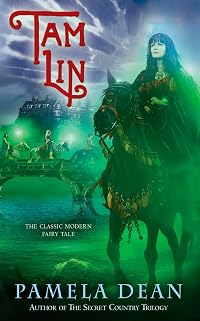
Every October I reread Pamela Dean's Tam Lin because it's such a good Halloween book. But this year, I couldn't find my copy of Tam Lin, I'm sure I have it somewhere, but it hasn't resurfaced since we moved last spring. I'm sure it will eventually. Fortuitously, I was able to read The Secret Country instead. It's the first book in a trilogy about five cousins who play an on-going pretend game about a fantasy kingdom, and it becomes real and the kids are shocked and surprised and there they are. Because it's based on their own game, they have a general sense of how the "plot" is supposed to go, but things don't always work out the way they expect. The kids are fantastic characters, I love how they show more alternate between being thrilled to be in a magic adventure, and then indignant when they realize there isn't any normal breakfast food.
It did remind me of a funny thing about Pamela Dean books -- that they are filled with things that go completely over my head, but seem like the kind of things that will make sense if you read the book again knowing how things turn out ... except they don't. Like Tam Lin is full of Nick and Robin doing things like exchanging meaningful glances, and I know how the book ends and I still have no idea what they were supposed to be so glanciful about. And Juniper, Gentian, and Rosemary ... forget it. I have no idea what's going on most of the time. Usually I would be annoyed by this, but in the case of Pamela Dean, it makes me feel confident that she's brighter than I am. So it's good that she's in charge of the story.
Grade: Solid A, although I will have to read the entire trilogy to be sure.
Recommended: Very thoughtful, thorough YA fantasy, and it's serious but not so serious that you wish you were reading a book about grim totalitarian societies. show less
Every October I reread Pamela Dean's Tam Lin because it's such a good Halloween book. But this year, I couldn't find my copy of Tam Lin, I'm sure I have it somewhere, but it hasn't resurfaced since we moved last spring. I'm sure it will eventually. Fortuitously, I was able to read The Secret Country instead. It's the first book in a trilogy about five cousins who play an on-going pretend game about a fantasy kingdom, and it becomes real and the kids are shocked and surprised and there they are. Because it's based on their own game, they have a general sense of how the "plot" is supposed to go, but things don't always work out the way they expect. The kids are fantastic characters, I love how they show more alternate between being thrilled to be in a magic adventure, and then indignant when they realize there isn't any normal breakfast food.
It did remind me of a funny thing about Pamela Dean books -- that they are filled with things that go completely over my head, but seem like the kind of things that will make sense if you read the book again knowing how things turn out ... except they don't. Like Tam Lin is full of Nick and Robin doing things like exchanging meaningful glances, and I know how the book ends and I still have no idea what they were supposed to be so glanciful about. And Juniper, Gentian, and Rosemary ... forget it. I have no idea what's going on most of the time. Usually I would be annoyed by this, but in the case of Pamela Dean, it makes me feel confident that she's brighter than I am. So it's good that she's in charge of the story.
Grade: Solid A, although I will have to read the entire trilogy to be sure.
Recommended: Very thoughtful, thorough YA fantasy, and it's serious but not so serious that you wish you were reading a book about grim totalitarian societies. show less
Smart and fun. Five cousins stumble into a fantasy world almost exactly like the one they've been pretending to inhabit for years--but this world veers dangerously away from their stories even as it seems to push them to the tragic conclusion they created. Chock full of allusions and general fourth-wall shenanigans.
OMG so awesome. Two siblings and their three cousins fall through a hedge into a magical realm—one they used to pretend was real. Like a non-preachy version of Narnia, but with better characterization and a more intriguing framing device. In fact, each and every character is well-rounded and interesting—I go the feeling that any one of them could carry a story of their own.
Members
- Recently Added By
Lists

Best Fantasy Novels
821 works; 361 members

Children's Fantasy
73 works; 10 members

Books I've Read More Than Once
602 works; 49 members
Favourite High Fantasy Books
113 works; 23 members

Stories About Other Worlds
145 works; 13 members
Comfort Reads
221 works; 41 members

Female Author
1,234 works; 65 members

Fantasy of manners
54 works; 4 members

1980s
356 works; 23 members
One Book, Many Authors
441 works; 40 members

Novels featuring siblings
133 works; 8 members

Travel from real to fantasy world -- children's/young adult fiction
125 works; 11 members

Main Character is aged 10-19
363 works; 6 members

al.vick-wishlist-scifi-fant
181 works; 2 members

Ten Books That Have Stayed With Me
160 works; 30 members

Summer Books
82 works; 9 members

Books Read in 2021
5,361 works; 114 members

Books Read in 2010
631 works; 11 members
Five star books
1,767 works; 109 members

Favorite Books from the 1980s
27 works; 3 members
Best Books of the 20th Century
193 works; 5 members

What are your favourite books?
121 works; 11 members

Unicorns -- children's/young adult fiction
77 works; 5 members
Witches and Wizards Oh My
135 works; 12 members

Books Read in 2026
2,133 works; 70 members
Author Information

11+ Works 4,874 Members
Some Editions
Awards and Honors
Awards
Series

Common Knowledge
- Canonical title
- The Secret Country
- Original publication date
- 1985
- People/Characters
- Laura Carroll; Edward Carroll; Ellen Carroll; Ruth Carroll; Patrick Carroll; Lord Randolph (show all 14); Fence; Lord Matthew; Lord Andrew; Lady Claudia; Chryse (unicorn); Benjamin; Agatha; King William
- Important places
- Secret Country
- Dedication
- For my mother, Mary Ann Dean, who let me read when I should have been outside playing softball
- First words
- Edward Fairchild, Prince of the Enchanted Forest, Lord of the Desert's Edge, Friend to the Unicorns, and King of the Secret Country, wished he were somewhere else.
- Last words
- (Click to show. Warning: May contain spoilers.)They looked at the Crystal of Earth for a long time, but its colors made no shapes or pictures, and no answers.
Classifications
Statistics
- Members
- 954
- Popularity
- 27,912
- Reviews
- 24
- Rating
- (3.84)
- Languages
- English
- Media
- Paper, Ebook
- ISBNs
- 7
- ASINs
- 5