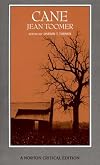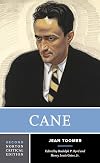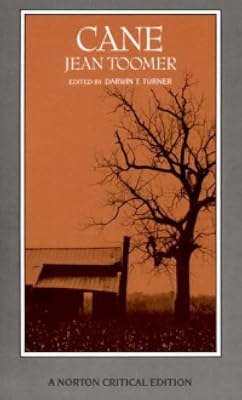
Cane [Norton Critical Edition]
by Jean Toomer, Rudolph P. Byrd (Editor), Henry Louis Gates, Jr. (Editor), Darwin T. Turner (Editor)
On This Page
Description
Cane is a 1923 novel by noted Harlem Renaissance author Jean Toomer. The novel is structured as a series of vignettes revolving around the origins and experiences of African Americans in the United States. The vignettes alternate in structure between narrative prose, poetry, and play-like passages of dialogue. As a result, the novel has been classified as a composite novel or as a short story cycle. Though some characters and situations recur between vignettes, the vignettes are mostly show more freestanding, tied to the other vignettes thematically and contextually more than through specific plot details. The ambitious, nontraditional structure of the novel - and its later influence on future generations of writers - have helped Cane gain status as a classic of modernism. show lessTags
Recommendations







Member Reviews
Four stars, maybe 4 1/2 stars for Cane. Three stars, at most, for the Norton Critical Edition. While the essays, which I skimmed, are helpful in better understanding the author's intent, and it is good to know that others don't necessarily understand some of Cane either, the footnotes to the actual text must have been put together by a blindfolded man who randomly selected the words and phrases to footnote. Some of the simplest things get footnotes, while some of the more obscure references get none at all. This was a terrible job!
Cane, on the other hand, should be read without even referring to the footnotes, which just interrupt the flow. The first part of the book reminds me a bit of Look Homeward Angel in its poetic prose and show more inclusion of poetry, although certainly the overall narrative style and subject matter couldn't be more different. The second part, set in DC and Chicago, is less poetic and more grounded in real life--except that the characters share some of the same issues as the characters in Georgia from the first part. The last part is a single story, with the dialogue in play format, but with long descriptions that make it basically just a novelette or novella. It is the strangest story of all, with some effective passages, and an ending that sort of defies explanation. I would say the book sort of goes downhill from beginning to end, with some of the great promise of the opening pages dissipating--but it is still an essential read and unlike anything you'll encounter anywhere else. So don't get bogged down in footnotes and critical opinions. Just read the book itself, which is only about 120 pages. show less
Cane, on the other hand, should be read without even referring to the footnotes, which just interrupt the flow. The first part of the book reminds me a bit of Look Homeward Angel in its poetic prose and show more inclusion of poetry, although certainly the overall narrative style and subject matter couldn't be more different. The second part, set in DC and Chicago, is less poetic and more grounded in real life--except that the characters share some of the same issues as the characters in Georgia from the first part. The last part is a single story, with the dialogue in play format, but with long descriptions that make it basically just a novelette or novella. It is the strangest story of all, with some effective passages, and an ending that sort of defies explanation. I would say the book sort of goes downhill from beginning to end, with some of the great promise of the opening pages dissipating--but it is still an essential read and unlike anything you'll encounter anywhere else. So don't get bogged down in footnotes and critical opinions. Just read the book itself, which is only about 120 pages. show less
Jean Toomer's Cane is a work of in-betweens, of liminal spaces that resist categorization. And based on its author's biography, it's easy to see why. Toomer, the light-skinned grandson of the first person of African descent to become Governor of a US State, grew up in an upper-crust Washington DC society; he went on to attend first all-black, then all-white, then all-black area schools. In a city halfway between historical North and South, Toomer had the experience of being of mixed racial descent in a segregated country. In later life, he refused to identify with any race other than the new "American" one he saw forming out of the intermingled ethnicities across the United States:
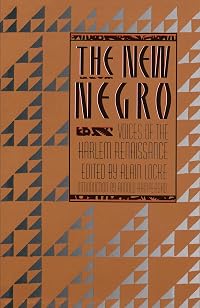
This attitude, in turn, meant that although Cane is regarded as one of the masterpieces of the Harlem Renaissance, Toomer was a bit of an outsider even within that bohemian group; his attempt at a post-racial philosophy didn't jive with the goals of writers and artists who were celebrating Pan-Africanism and making more visible the "New Negro" way of life.
All of these influences are visible in Cane, which is neither a novel, nor a poem, nor a book of short stories, but something more unique altogether. It's divided into three sections: the first two, set in rural Georgia and DC/Chicago respectively, are collections of lyrical character sketches interspersed with poems in a wide variety of forms (sonnet, traditional and modified "In Memoriam" stanzas, rhyming couplets, etc.). The third section is, as Toomer said, a "long, semi-dramatic closing-piece." If this description makes Cane sound like a motley assortment of ingredients thrown together to make up something long enough for a book, that is basically what happened; Toomer wrote the entire middle (Northern) section in order to pad his Southern material. And yet, the whole of the book has an undeniable unity and great beauty. Anyone who has watched and appreciated such Jim Jarmusch films as Mystery Train and Coffee and Cigarettes will understand what Toomer is up to: as we weave in and out of characters' lives, in and out of verse and prose, we recognize repeating motifs that tie it all together: smouldering sawdust piles wreathing Georgia valleys in blue smoke; carriages jolting down the Dixie Pike; sexuality smothered under religion or society; tableaux glimpsed from the windows of speeding trains. In the first section, especially, I felt as though every bit of prose and verse is necessary to, and couldn't belong anywhere other than, Cane as a whole. Toomer creates a blistering love-song to a fading way of life.
Toomer's style strikes me as more "High Modernist" than that of other Harlem Renaissance luminaries like Zora Neale Hurston or Langston Hughes: edgy, experimental, sometimes obscure, with more emphasis on atmosphere and character than action. (I wouldn't recommend Cane to those Woolf in Winter readers who felt Mrs. Dalloway and To the Lighthouse lacked plot.) Although he is obviously deeply moved by visiting and observing rural Georgia life, Toomer remains an outsider; he never takes on, as Hurston does, the country or city dialect as his own. Instead he writes in a skittish in-between voice: lightly inflected with the cadences of Georgia spirituals and back-fence gossip sessions, but never escaping an erudite, Northern (even British-sounding) tone. When he does depict characters speaking in Southern dialect, he inserts a Northern outsider character, a stand-in for himself. One gets the sense he wishes to approach closer, but he can never quite manage it: his awkwardness, what he would probably term his Northern over-civilization, gets in the way. I think, though, that it's this yearning of an outsider to find belonging, that gives Cane its energy and beauty, as well as its melancholy tone. It's audible even from the opening lines:
I love Toomer's skill at shading poetry into prose and prose back out into poetry; it might be my favorite manifestation of the way Cane balances on border-lines and leaps across spectrums. So too, he blurs racial lines: the people of Cane are every color imaginable, from Karintha's eastern-horizon blue-black, to Fern's "cream-colored" and Dorris's "lemon-colored" complexions, to Muriel's "flushed ginger," Esther's "chalk-white," and young Louisa, "the color of oak leaves on young trees in fall." Are all these women "black"? Such an idea, we can hear Toomer argue, is ridiculous: and yet, as the lynching, estrangement, and heartbreak of this book attest, it still has a terrible power. show less
show more
In my body were many bloods, some dark blood, all
blended in the fire of six or more generations. I was, then, either a new type of man or the very oldest. In any case I was inescapably myself...If I achieved greatness of human stature, then just to the degree that I did I would justify all the blood in me. If I proved worthless, then I would betray all. In my own mind I could not see the dark blood as something quite different and apart. But if people wanted to say this dark blood was Negro blood and if they then wanted to call me a Negro - this was up to them. Fourteen years of my life I had lived in the white group, four years I had lived in the colored group. In my experience there had been no main difference between the two.
This attitude, in turn, meant that although Cane is regarded as one of the masterpieces of the Harlem Renaissance, Toomer was a bit of an outsider even within that bohemian group; his attempt at a post-racial philosophy didn't jive with the goals of writers and artists who were celebrating Pan-Africanism and making more visible the "New Negro" way of life.
All of these influences are visible in Cane, which is neither a novel, nor a poem, nor a book of short stories, but something more unique altogether. It's divided into three sections: the first two, set in rural Georgia and DC/Chicago respectively, are collections of lyrical character sketches interspersed with poems in a wide variety of forms (sonnet, traditional and modified "In Memoriam" stanzas, rhyming couplets, etc.). The third section is, as Toomer said, a "long, semi-dramatic closing-piece." If this description makes Cane sound like a motley assortment of ingredients thrown together to make up something long enough for a book, that is basically what happened; Toomer wrote the entire middle (Northern) section in order to pad his Southern material. And yet, the whole of the book has an undeniable unity and great beauty. Anyone who has watched and appreciated such Jim Jarmusch films as Mystery Train and Coffee and Cigarettes will understand what Toomer is up to: as we weave in and out of characters' lives, in and out of verse and prose, we recognize repeating motifs that tie it all together: smouldering sawdust piles wreathing Georgia valleys in blue smoke; carriages jolting down the Dixie Pike; sexuality smothered under religion or society; tableaux glimpsed from the windows of speeding trains. In the first section, especially, I felt as though every bit of prose and verse is necessary to, and couldn't belong anywhere other than, Cane as a whole. Toomer creates a blistering love-song to a fading way of life.
November Cotton Flower
Boll-weevil's coming, and the winter's cold,
Made cotton-stalks look rusty, seasons old,
And cotton, scarce as any southern snow,
Was vanishing; the branch, so pinched and slow,
Failed in its function as the autumn rake;
Drouth fighting soil had caused the soil to take
All water from the streams; dead birds were found
In wells a hundred feet below the ground--
Such was the season when the flower bloomed.
Old folks were startled, and it soon assumed
Significance. Superstition saw
Something it had never seen before:
Brown eyes that loved without a trace of fear,
Beauty so sudden for that time of year.
Toomer's style strikes me as more "High Modernist" than that of other Harlem Renaissance luminaries like Zora Neale Hurston or Langston Hughes: edgy, experimental, sometimes obscure, with more emphasis on atmosphere and character than action. (I wouldn't recommend Cane to those Woolf in Winter readers who felt Mrs. Dalloway and To the Lighthouse lacked plot.) Although he is obviously deeply moved by visiting and observing rural Georgia life, Toomer remains an outsider; he never takes on, as Hurston does, the country or city dialect as his own. Instead he writes in a skittish in-between voice: lightly inflected with the cadences of Georgia spirituals and back-fence gossip sessions, but never escaping an erudite, Northern (even British-sounding) tone. When he does depict characters speaking in Southern dialect, he inserts a Northern outsider character, a stand-in for himself. One gets the sense he wishes to approach closer, but he can never quite manage it: his awkwardness, what he would probably term his Northern over-civilization, gets in the way. I think, though, that it's this yearning of an outsider to find belonging, that gives Cane its energy and beauty, as well as its melancholy tone. It's audible even from the opening lines:
Her skin is like dusk on the eastern horizon,
O cant you see it, O cant you see it,
Her skin is like dusk on the eastern horizon,
. . .When the sun goes down.
Men had always wanted her, this Karintha, even as a child, Karintha carrying beauty, perfect as dusk when the sun goes down. Old men rode her hobby-horse upon their knees. Young men danced with her at frolics when they should have been dancing with their grown-up girls. God grant us youth, secretly prayed the old men. The young fellows counted the time to pass before she would be old enough to mate with them. This interest of the male, who wishes to ripen a growing thing too soon, could mean no good to her.
I love Toomer's skill at shading poetry into prose and prose back out into poetry; it might be my favorite manifestation of the way Cane balances on border-lines and leaps across spectrums. So too, he blurs racial lines: the people of Cane are every color imaginable, from Karintha's eastern-horizon blue-black, to Fern's "cream-colored" and Dorris's "lemon-colored" complexions, to Muriel's "flushed ginger," Esther's "chalk-white," and young Louisa, "the color of oak leaves on young trees in fall." Are all these women "black"? Such an idea, we can hear Toomer argue, is ridiculous: and yet, as the lynching, estrangement, and heartbreak of this book attest, it still has a terrible power. show less
This book doesn't deserve more than 2** – not in derogation of Jean Toomer's novel but because of the poor editorial quality of this Norton Critical Edition.
This is the first time I have ever seen an NCE that suffers from such egregiously bad proof-reading. On more than one occasion among articles in the supplementary materials, an exclamation point is erroneously shown as a capital I, a lower-case l, or some other such misreading of a punctuation mark that's very important in Toomer's writing. And one article, "The Unity of Jean Toomer's Cane" by Catherine Innes, is rendered completely unreadable by proof-reading errors that include apparent repetition of some strings of text and omission of others. (NOTE that this is meant as a show more criticism of the NCE editors, not of the article's author.)
It's as if this book was prepared by scanning material from printed sources, then running it through OCR software but not carefully proof-reading the result.
The numerous typographical errors within the supplementary materials make me concerned that there may also be typographical errors within the text of the novel itself – errors that I have failed to notice because Toomer's combination of poetry and stream-of-consciousness prose is not always conventional English grammar and spelling, so that only an expert on Cane (which I am very definitely not) would catch typographical errors.
Get this NCE if you're in desperate need of supplementary critical articles, but as a text I'd rely more comfortably on the Cane in the Library of America's two-volume Harlem Renaissance Novels set.
It's really quite a shame that a collection of supplementary materials that includes excellent critical articles is marred by such sloppiness, especially when Henry Louis Gates is one of the editors. show less
This is the first time I have ever seen an NCE that suffers from such egregiously bad proof-reading. On more than one occasion among articles in the supplementary materials, an exclamation point is erroneously shown as a capital I, a lower-case l, or some other such misreading of a punctuation mark that's very important in Toomer's writing. And one article, "The Unity of Jean Toomer's Cane" by Catherine Innes, is rendered completely unreadable by proof-reading errors that include apparent repetition of some strings of text and omission of others. (NOTE that this is meant as a show more criticism of the NCE editors, not of the article's author.)
It's as if this book was prepared by scanning material from printed sources, then running it through OCR software but not carefully proof-reading the result.
The numerous typographical errors within the supplementary materials make me concerned that there may also be typographical errors within the text of the novel itself – errors that I have failed to notice because Toomer's combination of poetry and stream-of-consciousness prose is not always conventional English grammar and spelling, so that only an expert on Cane (which I am very definitely not) would catch typographical errors.
Get this NCE if you're in desperate need of supplementary critical articles, but as a text I'd rely more comfortably on the Cane in the Library of America's two-volume Harlem Renaissance Novels set.
It's really quite a shame that a collection of supplementary materials that includes excellent critical articles is marred by such sloppiness, especially when Henry Louis Gates is one of the editors. show less
I'm still not entirely convinced of Cane's literary value as a single unified text, but there is interesting and worthwhile material here, at least in parts. As a whole, each reader will have to decide separately. Modernism aside, I'm not particularly convinced that all of this is edited, purposeful, or together.
Poetic, beautiful, ugly, great.
Ratings
Members
- Recently Added By
Lists

Best African American Literature
53 works; 9 members
Author Information

20+ Works 2,321 Members
Jean Toomer is known today for the one successful book of his career, the novel Cane, published in 1923. Based in part upon his brief experience in the South as a school teacher, Cane was perhaps the first genuinely experimental novel by an African American writer responding to the liberating form of modernist narrative techniques as well as to show more the deepest and most primal roots of black folk culture in both the South and the North. As such, it reflects in its form the identity conflict that the novel's interwoven stories and poems address. Cane is unique for its blend of poetic language and psychological and moral realism; it established Toomer as one of the leading figures of the Harlem Renaissance. However, Toomer soon was absorbed in his own spiritual education. He eventually became a Quaker and spent most of the last part of his life in seclusion. (Bowker Author Biography) show less
Rudolph P. Byrd is Associate Professor in The Graduate Institute of the Liberal Arts at Emory University

All Editions
Some Editions
Series
Belongs to Publisher Series
Work Relationships
Contains
Cane by Jean Toomer
Reference guide/companion to
Cane by Jean Toomer
Common Knowledge
- Canonical title
- Cane [Norton Critical Edition]
- Original publication date
- 1988; 2011-01
- People/Characters
- Karintha; Becky
- Dedication
- To my grandmother . . .
- Disambiguation notice
- Do Not Combine: This is a "Norton Critical Edition", it is a unique work with significant added material, including essays and background materials. Do not combine with other editions of the work. Please maintain the p... (show all)hrase "Norton Critical Edition" in the Canonical Title and Series fields.
Do Not Combine: This is a "Norton Critical Edition", it is a unique work with significant added material, including essays and background materials. Do not combine with other editions of the work. Please maintain the p... (show all)hrase "Norton Critical Edition" in the Canonical Title and Series fields. In addition, the second edition of the NCE has significantly different contents from the first edition. Please do not combine.
Classifications
Statistics
- Members
- 548
- Popularity
- 54,209
- Reviews
- 5
- Rating
- (3.75)
- Languages
- English
- Media
- Paper, Ebook
- ISBNs
- 4
- UPCs
- 1
- ASINs
- 3