
Nellie Y. McKay (1930–2006)
Author of The Norton Anthology of African American Literature {2nd edition}
About the Author
Works by Nellie Y. McKay
The Norton Anthology of African American Literature {2nd edition} (2003) — Editor — 282 copies, 2 reviews
Pretty Little Head 3 copies
Get away from me 2 copies
Obligatory Villagers[Explicit] 2 copies
Associated Works
Race-ing Justice, En-Gendering Power: Essays on Anita Hill, Clarence Thomas, and the Construction of Social Reality (1992) — Contributor — 355 copies, 1 review
Here Lies Love: A Song Cycle about Imelda Marcos and Estrella Cumpas (2010) — Contributor — 14 copies
Tagged
Common Knowledge
- Legal name
- McKay, Nellie Yvonne [nee Reynolds]
- Birthdate
- 1930-05-12
- Date of death
- 2006-01-22
- Gender
- female
- Education
- City University of New York (Queen's College)
Members
Reviews
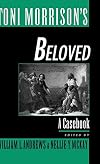
10. Toni Morrison's Beloved : A Casebook] by edited by William L. Andrews, Nellie Y. McKay (1999, 223 pages, read Feb 7–25 )
Well…my comments here read more like book report than a review for here. Please don’t feel obligated to read my comments below as they are more for me than for a reader. What I can say in summary is that this was valuable but difficult and not recommended unless you are doing a research paper. Some essays were excellent, some were jargony and unreadable, some were show more boring but usually with something of interesting to me. I read it stops and starts, fighting through tough essays, and enjoying others. They did overall add to my appreciation of the book and also contributed a lot to my review of Beloved.
Nellie Y. McKay : Introduction
After reading several painful jargony intros to books about Toni Morrison, this stood out as interesting, informative, and comprehensible. So, that is why I read this particular book.
Frances Ellen Watkins Harper : The Slave Mother: The Tale of Ohio
A poem about Margaret Garner
Samuel J. May : Margaret Garner and seven others
An 1856 account of Margaret Garner, based on accounts from Cincinnati news papers. It’s not clear how much is fact, certainly not all of it.
Ashraf H.A. Rushdy : Daughters signifyin(g) history: the example of Toni Morrison's Beloved
The first essay I started taking notes on. It brings up many basic aspects of [Beloved], and some interesting details. She (?) highlights the healing aspects of Beloved, that Morrison is not trying to capture history, but freely creating it. Morrison’s purpose is to give the reader a format to confront very dark aspects of the abuses of slavery in order to begin to come to terms with it. She also discusses the “illusion of oral narration” in Beloved and goes into the coded languages in the book, which is maybe the most interest part of this essay. There are several instances of different code languages.
Karla F.C. Holloway : Beloved: a spiritual
My notes say “an insecure essay that relies on jargon". Not sure that is fair, but this was almost unreadable, and not pleasant. She discusses the myth making in Beloved and how the “orature” contradicts appearance.
Mae G. Henderson : Toni Morrison's Beloved re-membering the body as historical text
The first essay that I actually enjoyed and it kept me reading this book. She adds in a couple interesting maybe trivia bits that kept me thinking. The comments in my review on the book’s epigraph come from here. My notes say: Romans 9 is a re-working of history, and a change in the religion from binding laws to faith without laws. Extrapolate to the end of slavery.
Linda Krumholz : The ghosts of slavery: historical recovery in Toni Morrison's Beloved
This is a fantastic essay that cuts deep into the text. It could stand on its own as one review all readers of the book could gain from. There are several themes. One of the more interesting is how Morrison attacks the Western reliance on scientific values. Krumholz argues the Morrison shows knowledge is multiple, context dependent, collectively asserted and spiritually derived.. This is shown in the book in many ways, as black culture tries to find a place of dignity for itself in the midst of a world that has broken the race down, scientifically, into literally the value of their human and animal parts. The American culture has had a moral collapse perfectly defended in scientific terms that can’t see the immorality. Or, in another sense, how Morrison allows the reader, through the story, to experience history in way that a perfectly accurate history could never capture.
Krumholz then goes into how the “post modern” fragmentation of the story forces the reader to actively reconstruct what has happened, and leads the reader to vicariously parallel the psychological flow the main characters…and thereby to obtain the same healing by confronting the horrors directly. Krumholz breaks down how the book is structured to accomplish this.
She also goes into the biblical imagery – such as the four slave catchers acting as the four horsemen of the apocalypse from the Book of Revelation. Or how Morrison works in an ambivalence with regards to Christianity. The comments in my review on opening words from the Gospel of John come from here.
There is much more here.
Trudier Harris : Beloved: woman, thy name is demon
Another excellent essay, that begins with a feminist theme. Early in the essay Harris writes: ”We could document a host of additional persistent and often destructive images of women; underlying these notions is a basic clash between the masculine (those who have the power and voice) and the feminine (those who are acquiescent and silent but potentially destructive), which is also worked out in Morrison’s novel.”
But what I really like about this essay is how Harris discusses Sweet Home, the name of the farm where Sethe was a slave, the only woman slave along with five men slaves. It was first run by a radical slave owner who educated his slaves, gave them freedom on the farm, allowed them to use guns, and listened to their advice. He claimed he made them “men”. He later dies (or is killed) and is replaced by his brother-in-law, known only as schoolteacher, who is purely calculating and must break the overly enlightened slaves. There is a great deal of complexity here that gets lost, or overshadowed by other aspects of the book. Harris really brings this all alive, and especially the rebellious slave Sixo, who refuses to learn English or be educated in any white way, who fails in his escape and is lynched—laughing. Sixo didn’t make my review, but he’s a gem within the book.
Lori Askeland : Remodeling the model home in Uncle Tom's cabin and Beloved
I don’t’ know much about UTC, and had no clue how sophisticated a work it was (according to Askeland), so I didn’t get a great deal from this essay. But it does include this wonderful line, summarizing another essay by Elizabeth Ammons:
As Elizabeth Ammons puts it, Stowe’s radical version of the domestic ideal converts “essentially repressive concepts of feminity into a positive (and activist) alternative system of values in which woman figures not merely as the moral superior of man, his inspirer, but as a model for him,” while she remains in a separate domestic sphere. The vulnerability of this domain, however, must not be overlooked; the house remains a sheltered “feminine” space, that is, a hus for true spiritual growth, which by virtue of its enclosure in the “masculine” domain of materialism and commercialism, always remains in danger of being invaded and corrupted by it.Askeland’s point here is that Morrison uses the story in UTC (there are several parallels, including location and a murder of a child) and remodels it in such a way as to avoid the “patriarchal power”.
Rafael Perez-Torres : Between presence and absence: Beloved, postmodernism, and blackness
A somewhat interesting somewhat difficult essay that I didn’t actually gain much from.
Barbara Christian, Deborah McDowell & Nellie Y. McKay : A conversation on Toni Morrison's Beloved
An interesting if awkward format. The main thing I got out of this was how much each contributor was awed by all the layers in Beloved, which they expressed in various ways.
2013
http://www.librarything.com/topic/147378#4007081 show less
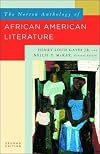
As a literature student in college, Norton anthologies were my bread and butter. This book in particular is both a useful learning resource and an enjoyable addition to my personal library. The reading selections are well-chosen, and the included essays are the usual Norton quality.
The Norton Anthology of African American Literature by W. W. Norton,2003] (Paperback) 2nd Edition by Henry Louis Gates Jr.
When I was studying English for undergrad, I had to purchase an excessive number of copies of literature textbooks and anthologies. This was one of them, and I can actually say that I flipped through the vast majority of this text for my African American Lit class. This was a good one and, I think, still relevant.
Lists
You May Also Like


Associated Authors
Statistics
- Works
- 16
- Also by
- 9
- Members
- 391
- Popularity
- #61,940
- Rating
- 4.0
- Reviews
- 3
- ISBNs
- 17