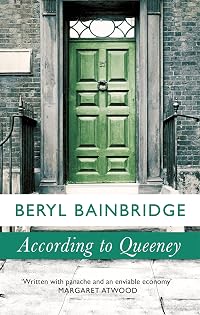
According to Queeney
by Beryl Bainbridge
On This Page
Description
Bainbridges brilliantly imagined, universally acclaimed, Booker Prize-longlisted novel portrays the inordinate appetites and unrequited love touched off when the most celebrated man of eighteenth-century English letters, Samuel Johnson, enters the domain of a wealthy Southwark brewer and his wife, Hester Thrale. The melancholic, middle-aged lexicographer plunges into an increasingly ambiguous relationship with the vivacious Mrs. Thrale for the next twenty years. In that time Hesters eldest show more daughter, the neglected but prodigiously clever Queeney, will grow into young womanhood. Along the way, little of the emotional tangle and sexual tension stirring beneath the decorous surfaces of the Thrale household will escape Queeneys cold, observant eye. A dark, often hilarious and deeply human vision ... a major literary accomplishment.Margaret Atwood, Toronto Globe and Mail ...at the end of this luminous little novel ... we feel two losses ... the personal one and the loss to civilization.Richard Bernstein, New York Times Dialogue and descriptions subtly and skillfully convey a sense not only of the period but also the personalities.Merle Rubin, Los Angeles Times Bainbridges] most accomplished novel so far.Washington Post Book World Majestically deft.... Absolutely wonderful.Kirkus Reviews (starred) show lessTags
Recommendations






















Member Reviews
Reading another three of Beryl Bainbridge's novels was one of the highlights of the recent Mookse Madness, and left me with a taste for more, particularly of her historical novels. I enjoyed this one a lot, an irreverent but well researched portrait of the later years of Dr Johnson, largely seen via the experiences of Queeney, his favourite and eldest daughter of his patrons Henry and Hester Thrale, at whose Streatham house Johnson spent much of the last 20 years of his life. So a portrait of the private man rather than the public figure Boswell made so well known.
The story is largely told by an omniscient narrator, with each chapter given a one word title, allowing Johnson's dictionary definitions to introduce each of them, and each is show more also followed by a letter written by Queeney in later life.
Bainbridge's wit ensures that nobody emerges entirely unscathed - Johnson is unpredictable and irascible, Hester Thrale is fickle and vain, and her husband Henry wastes his money and eventually kills himself by overeating, but the relationships between them are fairly convincing an three dimensional. So the whole thing is fun to read. I can't really comment on the historical accuracy, as I am not an expert on the period or the characters. show less
The story is largely told by an omniscient narrator, with each chapter given a one word title, allowing Johnson's dictionary definitions to introduce each of them, and each is show more also followed by a letter written by Queeney in later life.
Bainbridge's wit ensures that nobody emerges entirely unscathed - Johnson is unpredictable and irascible, Hester Thrale is fickle and vain, and her husband Henry wastes his money and eventually kills himself by overeating, but the relationships between them are fairly convincing an three dimensional. So the whole thing is fun to read. I can't really comment on the historical accuracy, as I am not an expert on the period or the characters. show less
This is the second Beryl Bainbridge novel I've read, and I know I'll be reading many more. Because she writes in historical settings and, at least from what I've seen, about very English characters, one has to be willing not to have every detail and reference at hand while reading. One has to be willing to read up at least a little on the central characters (in this case, Samuel Johnson and Hester Thrale) or the central even (in Master Georgie, it was the Crimean War) to best appreciate the nuances of the story, though not to understand the story itself. Other writers might take two or three times as many words to tell the same story, but Bainbridge is careful and spare in her choice of words, making her unusual in the world of show more historical fiction. To my mind, it also makes her superior.
While the historical backdrop is important, but it merely provides the framework for what Bainbridge does most brilliantly, and that is to grant the reader multiple viewpoints on the same events through the eyes of several key characters. The result is that one comes away with a fuller understanding of the story than do any of the characters, while at the same time gaining insight into the pervasive effect of subjectivity in interpreting one's life. None of Bainbridge's characters, no matter how brilliant or how practical, escapes influence of their subjective interpretations of events. To some degree, even the reader is implicated, because the revelations of these varying interpretations come about by degrees, so we are spared a tedious omniscient narrator's view of the characters and events. Bainbridge's doubled and sometimes tripled views of events emerge slowly over the course of the novel, and the insights are all the more rewarding for the delay and the reliance on the reader's memory to fill in the gaps.
The plot of the book is much less important than the manner in which events unfold. In short, the novel covers primarily the twenty-year period in which Samuel Johnson was an intimate friend of Henry and Hester Thrale's. But as Bainbridge is a psychological novelist masquerading as a historical novelist, the real story takes place in the characters' relating to one another and revealing the passions, desires, and fears that drive them. show less
While the historical backdrop is important, but it merely provides the framework for what Bainbridge does most brilliantly, and that is to grant the reader multiple viewpoints on the same events through the eyes of several key characters. The result is that one comes away with a fuller understanding of the story than do any of the characters, while at the same time gaining insight into the pervasive effect of subjectivity in interpreting one's life. None of Bainbridge's characters, no matter how brilliant or how practical, escapes influence of their subjective interpretations of events. To some degree, even the reader is implicated, because the revelations of these varying interpretations come about by degrees, so we are spared a tedious omniscient narrator's view of the characters and events. Bainbridge's doubled and sometimes tripled views of events emerge slowly over the course of the novel, and the insights are all the more rewarding for the delay and the reliance on the reader's memory to fill in the gaps.
The plot of the book is much less important than the manner in which events unfold. In short, the novel covers primarily the twenty-year period in which Samuel Johnson was an intimate friend of Henry and Hester Thrale's. But as Bainbridge is a psychological novelist masquerading as a historical novelist, the real story takes place in the characters' relating to one another and revealing the passions, desires, and fears that drive them. show less
'According to Queeney' is a triumph of style, inventiveness, and most importantly, honesty. It follows the life of Samuel Johnson, the writer of the first English dictionary, and his friends in late 18th century England. The story, I am told, is factually very accurate, although I'm sure a lot of the tales must have been at least doctored by Bainbridge. There simply isn't enough about the man and the society around him to cover every assertion made about him and the events in the book.
The book is full of very interesting and well-drawn characters, from the irascible genius of Johnson himself, to the childhood prodigy Queeney, and her parents, who seem to love only other people. The dialogue sparkles as much as it honestly should. This show more is a compelling piece of historical literature, and I would recommend it to anyone with even the slightest interest in Georgian England. show less
The book is full of very interesting and well-drawn characters, from the irascible genius of Johnson himself, to the childhood prodigy Queeney, and her parents, who seem to love only other people. The dialogue sparkles as much as it honestly should. This show more is a compelling piece of historical literature, and I would recommend it to anyone with even the slightest interest in Georgian England. show less
'Clever' rather than enjoyable or illuminating, Bainbridge concocts a believable picture of Johnson's life with the Thrales, told from a variety of perspectives. Sadly the book focuses on the pettiness and cruelty of its protagonists – their rivalries and domestic bickering – and dwells unnecessarily on the crude and salacious. A missed opportunity.
I was much entertained by Bainbridge's writing style. Enjoyed that immensely and I would be very willing to read another of her novels.
The story, though, was a hot mess of adult bad behaviors. Not terribly enjoyable.
The story, though, was a hot mess of adult bad behaviors. Not terribly enjoyable.
This novel may possibly have had a greater impact on me if I knew anything about the life and times of Samuel Johnson apart from the fact that he wrote a dictionary, and of course that the Life of Samuel Johnson was written by Boswell. But I’ve never read it, and so am unfamiliar with Johnson, apart from the broadest of strokes. But while I may be lacking some of that knowledge I still really enjoyed this book.
We see a much different Johnson here than the one I’ve heard of, not a lot of genius showing, more depression and self-absorption.
The Queeney of the title is a child for much of the book, her mother and father have, in many ways, taken Johnson into their family and it is through this family, the Thrale’s that we see show more Johnson.
There are also letters interspersed with the story, Queeney’s written in adulthood to a cousin looking for information about Johnson. But the main part of the book is not specifically from Queeney’s POV, and this allows us to learn how wrong a lot of what Queeney thought about her mother Hester, was wrong.
This is an amusing little book, full of lines that’ll make you smile. Easy to read, and full of insights and interesting sentences. However, I never really got a sense of time from the book. The characters could have been from any era, not just that of Georgian England. Still, well worth a read. show less
We see a much different Johnson here than the one I’ve heard of, not a lot of genius showing, more depression and self-absorption.
The Queeney of the title is a child for much of the book, her mother and father have, in many ways, taken Johnson into their family and it is through this family, the Thrale’s that we see show more Johnson.
There are also letters interspersed with the story, Queeney’s written in adulthood to a cousin looking for information about Johnson. But the main part of the book is not specifically from Queeney’s POV, and this allows us to learn how wrong a lot of what Queeney thought about her mother Hester, was wrong.
This is an amusing little book, full of lines that’ll make you smile. Easy to read, and full of insights and interesting sentences. However, I never really got a sense of time from the book. The characters could have been from any era, not just that of Georgian England. Still, well worth a read. show less
Dr. Samuel Johnson, the lexicographer and English man of letters, became friends with the wealthy brewer Henry Thrale and his wife Hester, and lived with them at their country and London homes for seventeen years. What's known is that Johnson and Mrs Thrale had some kind of flirtation; it doesn't seem to be known how far that went. Queeney is the eldest daughter of the Thrales, who observes her mother, Johnson, and other goings on in the strange household.
This book describes a various episodes during those years. People are always visiting, or going on journeys, or returning from them. The squalor, filth, and illness of the 18th century are described in detail.
There's a lot of tension between Mrs. Thrale and Queeney, for no obvious show more reason except that Mrs. Thrale is a classic narcissist and Queeney defies her. Mrs. Thrale is constantly pregnant but nearly all her children die and she seems to care only for her son and for a daughter who died before the story begins. At one point a family friend reprimands Mrs. Thrale for giving Queeney so many tin pills for worms and for purging her so vigorously, and I'm all, wow, is this going to be Munchausen's Syndrome by Proxy in the 18th century? Wild! but no.
I'm not sure what to say about this books. It doesn't have a real story arc; there are various incidents described by an omniscient narrator, interspersed with letters from Queeney written years later that show her to be an unreliable source. If the stories the narrator tells us are true.
If it has a theme it's that of unrequited love: Johnson's for Mrs Thrale, his houskeeper Mrs. Desmoulins for Johnson, Mrs. Thrale for her music teacher. Queeney for her mother.
I liked it, and it stayed with me. That counts for something. show less
This book describes a various episodes during those years. People are always visiting, or going on journeys, or returning from them. The squalor, filth, and illness of the 18th century are described in detail.
There's a lot of tension between Mrs. Thrale and Queeney, for no obvious show more reason except that Mrs. Thrale is a classic narcissist and Queeney defies her. Mrs. Thrale is constantly pregnant but nearly all her children die and she seems to care only for her son and for a daughter who died before the story begins. At one point a family friend reprimands Mrs. Thrale for giving Queeney so many tin pills for worms and for purging her so vigorously, and I'm all, wow, is this going to be Munchausen's Syndrome by Proxy in the 18th century? Wild! but no.
I'm not sure what to say about this books. It doesn't have a real story arc; there are various incidents described by an omniscient narrator, interspersed with letters from Queeney written years later that show her to be an unreliable source. If the stories the narrator tells us are true.
If it has a theme it's that of unrequited love: Johnson's for Mrs Thrale, his houskeeper Mrs. Desmoulins for Johnson, Mrs. Thrale for her music teacher. Queeney for her mother.
I liked it, and it stayed with me. That counts for something. show less
Members
- Recently Added By
Lists

The Guardian's 1000 Novels Everyone Must Read
1,005 works; 548 members

Booker Prize
491 works; 62 members

real people in fiction circumstances
74 works; 10 members

Man Booker Prize Longlist 2001
24 works; 2 members

Books Read in 2016
4,666 works; 199 members
Author Information

41+ Works 6,786 Members
Beryl Bainbridge was born on November 21, 1934, in Liverpool, England. She became an actress at a young age and worked in English repertory theatres and on the radio. Her work contains dark, somber subject matter, deftly mixed with humor. Her writing acts as an outlet for her childhood frustrations, and frequently deals with family relations. In show more her novels, she recalls memories of disappointment and of a bad-tempered, brooding father. During her lifetime, she wrote 18 novels including A Weekend with Claude, Another Part of the Wood, The Bottle Factory Outing, The Birthday Boys, According to Queeney, and Young Adolf. She adapted many of her novels, such as An Awfully Big Adventure, Sweet William, and The Dressmaker, for film. She has received numerous awards and honors including the Whitbread Award in 1977 for Injury Time and in 1996 for Every Man for Himself; the James Tait Black Memorial Prize for fiction in 1998 for Master Georgie; a Guardian Fiction Award, and the David Cohen Prize for Literature in 2003. She was made a dame by Queen Elizabeth II in 2000. She died from cancer on July 2, 2010 at the age of 77. (Bowker Author Biography) show less
Awards and Honors
Awards
Notable Lists
Common Knowledge
- Original publication date
- 2001
- People/Characters
- Samuel Johnson; Hester Thrale; Queeney Thrale; Henry Thrale
- Dedication
- To Andrew and Margaret Hewson, with affection and gratitude
- First words
- On the morning of the 15th December, 1784, a day of bleak skies heralding snow, a box-cart rattled into Bolt Court and drew up outside No. 8.
- Last words
- (Click to show. Warning: May contain spoilers.)Mrs. Desmoulins sat alone in Bolt Court, roasting chestnuts in the fire.
Classifications
Statistics
- Members
- 690
- Popularity
- 41,533
- Reviews
- 21
- Rating
- (3.34)
- Languages
- English, French, Spanish
- Media
- Paper, Audiobook, Ebook
- ISBNs
- 22
- ASINs
- 14