
Eaters of the Dead
by Michael Crichton
On This Page
Description
From the bestselling author of Jurassic Park, Timeline, and Sphere comes an epic tale of unspeakable horror.It is 922 A.D. The refined Arab courtier Ibn Fadlan is accompanying a party of Viking warriors back to their home. He is appalled by their customs—the gratuitous sexuality of their women, their disregard for cleanliness, and their cold-blooded sacrifices. As they enter the frozen, forbidden landscape of the North—where the day’s length does not equal the night’s, where show more after sunset the sky burns in streaks of color—Fadlan soon discovers that he has been unwillingly enlisted to combat the terrors in the night that come to slaughter the Vikings, the monsters of the mist that devour human flesh. But just how he will do it, Fadlan has no idea.
. show less
Tags
Recommendations
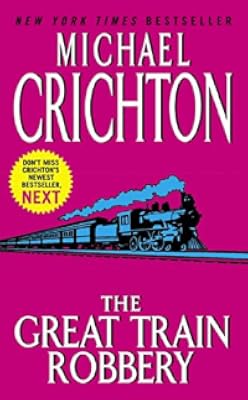
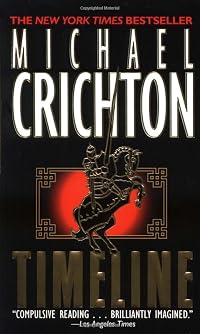


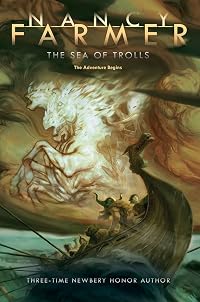
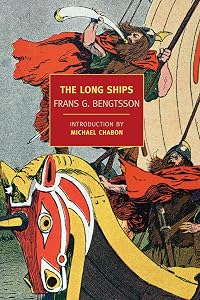
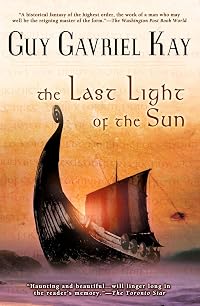
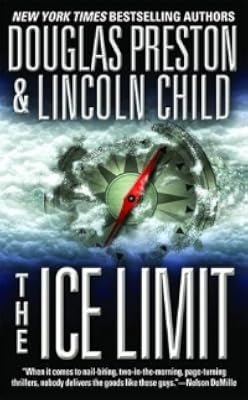
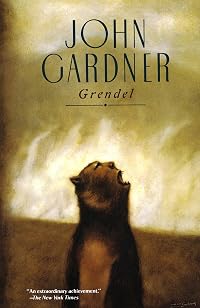
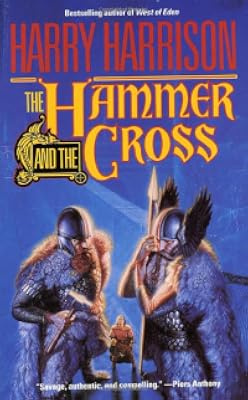
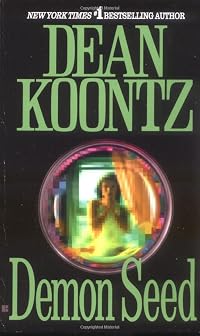
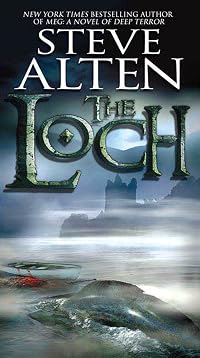
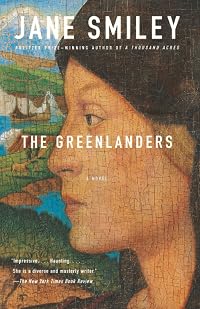
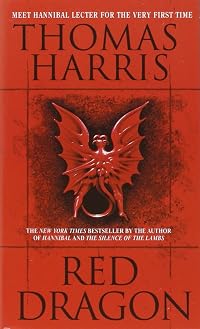



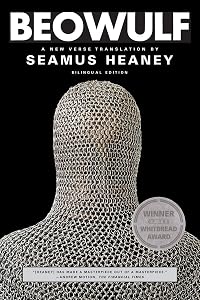
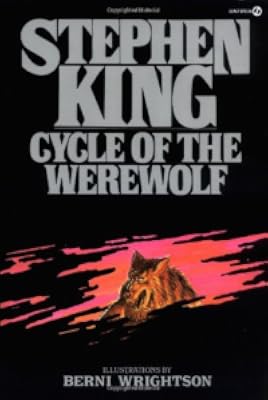
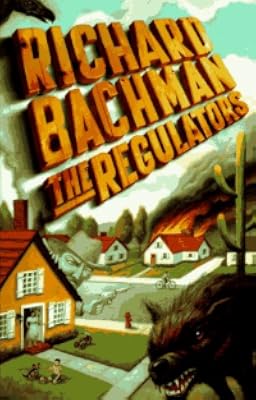
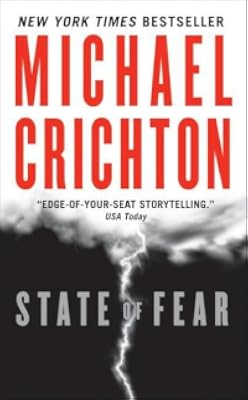
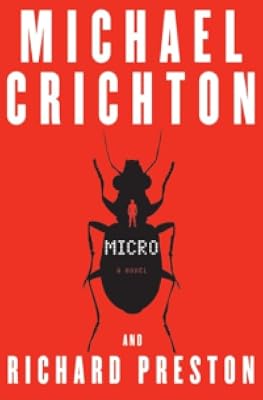
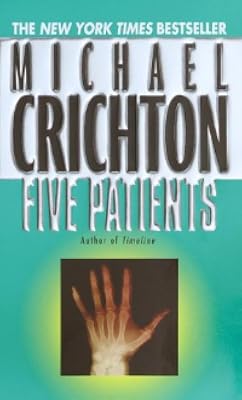

Member Recommendations
Member Reviews
While it is not mercurial enough to stand with author Michael Crichton's more well-known works, Eaters of the Dead is a spirited little curio. Inspired by a friend who remarked that they thought Beowulf was boring, Crichton decided to write this short, novel-length retelling of the legend. He tells it straight, as it might have happened historically, removing the fantastical and monstrous elements; Beowulf and his band are now Buliwyf and his band of Viking warriors, while Grendel and his mother are now the 'wendol', a remote, bloodthirsty tribe of surviving Neanderthals.
It works, and Eaters of the Dead is a quick, breezy read that will satisfy a reader's adventure itch for a weekend. Crichton appropriates the real-life account of an show more Arab traveller to the Viking regions at that time, Ibn Fadlan, repurposing the man's tone and writing so that Fadlan assists Buliwyf on his legendary quest. This prophesied 'thirteenth warrior' – which was used as the title of the worthwhile film adaptation – doesn't really do much to justify his involvement on the quest, but Crichton's appropriation of Fadlan adds a great deal of verisimilitude to the story. Crichton has a knack of imitating the real Fadlan's writing so that you could almost believe this is a real, found document.
However, Crichton imitates it almost too well; the account is very matter-of-fact, drawing little of the flavour from its adventure. Characters and locations and feats of action, as well as a sense of dread, remain constrained by Crichton's chosen approach, which is very different from his usual page-turning thrillers. I am one of those who love Beowulf, and while Eaters of the Dead may have streamlined and simplified the dish to make it more palatable to modern readers, it lost much of the flavour and life that a suitably-committed reader can relish in the original. However, Crichton's love for the Beowulf legend comes through, and if the book inspires some readers to pick up the original, it will have performed a supremely worthy task. Even if it does not, it remains a quick and fun Viking adventure. show less
It works, and Eaters of the Dead is a quick, breezy read that will satisfy a reader's adventure itch for a weekend. Crichton appropriates the real-life account of an show more Arab traveller to the Viking regions at that time, Ibn Fadlan, repurposing the man's tone and writing so that Fadlan assists Buliwyf on his legendary quest. This prophesied 'thirteenth warrior' – which was used as the title of the worthwhile film adaptation – doesn't really do much to justify his involvement on the quest, but Crichton's appropriation of Fadlan adds a great deal of verisimilitude to the story. Crichton has a knack of imitating the real Fadlan's writing so that you could almost believe this is a real, found document.
However, Crichton imitates it almost too well; the account is very matter-of-fact, drawing little of the flavour from its adventure. Characters and locations and feats of action, as well as a sense of dread, remain constrained by Crichton's chosen approach, which is very different from his usual page-turning thrillers. I am one of those who love Beowulf, and while Eaters of the Dead may have streamlined and simplified the dish to make it more palatable to modern readers, it lost much of the flavour and life that a suitably-committed reader can relish in the original. However, Crichton's love for the Beowulf legend comes through, and if the book inspires some readers to pick up the original, it will have performed a supremely worthy task. Even if it does not, it remains a quick and fun Viking adventure. show less
I'm naturally familiar with Crichton's science fiction, but I wasn't aware of this book until I stumbled upon it in a second-hand shop. Crichton takes the manuscripts of Ahmad Ibn Fadlan, a muslim diplomat who visited the Volga Bulgars in 920 AD and described their culture in writing that has survived today, and combines it with the Beowulf legend. Instead of simply traveling and observing, he gets swept up in a heroes quest to rid a kingdom plagued by the Wendol, a terrifying group of mist monsters that attack in the night when the fog creeps down from the mountains.
The use of Fadlan's manuscripts to bring it to life works fantastically, and it also offers all the insight into Scandinavian culture that you get from the original Beowulf show more poem. From a scholarly perspective It would probably be a heinous crime to say that Eaters of the Dead is an improvement over Beowulf, but from an average every-day reader's perspective it's a surprisingly worthwhile book. It's an interesting new take on an old myth, and I think it deserves a bit more attention than it has received since it was published nearly 40 years ago. I'm sure classical purists hate it for not being "true" to the original poem, but if you believe that stories should change and evolve along with the culture that's producing it, then this modern version is definitely for you. show less
The use of Fadlan's manuscripts to bring it to life works fantastically, and it also offers all the insight into Scandinavian culture that you get from the original Beowulf show more poem. From a scholarly perspective It would probably be a heinous crime to say that Eaters of the Dead is an improvement over Beowulf, but from an average every-day reader's perspective it's a surprisingly worthwhile book. It's an interesting new take on an old myth, and I think it deserves a bit more attention than it has received since it was published nearly 40 years ago. I'm sure classical purists hate it for not being "true" to the original poem, but if you believe that stories should change and evolve along with the culture that's producing it, then this modern version is definitely for you. show less
Michael Crichton’s Eaters of the Dead: The Manuscript of Ibn Fadlan Relating His Experiences with the Northmen in AD 922 purports to translate an historic account from a Muslim emissary who’s driven off-track on his ambassadorial mission and joins a Viking quest. The story loosely follows Beowulf, though Crichton changes just enough details to craft a plot that would serve as the “historical” inspiration for the 10th- to 11th-century Old English epic poem. Though Ibn Fadlan never addresses them as such, the “monsters” the Vikings encounter are a band of Neanderthals that have survived past the last Ice Age, raiding the local Norse on occasion and becoming the inspiration for Grendel with their method of carrying torches show more resembling a dragon in the mist. The work handily demonstrates Crichton’s ability to adopt whatever style he needs to immerse the reader in his narrative while creating a sense of verisimilitude. He succeeds to the point that those unfamiliar with the premise could mistake it for an academic translation, though Crichton ensures that the narrative will entertain. It particularly works well for those familiar with Beowulf. show less
Brilliant. Just a fantastic read. I love how Crichton captures the exact tone of Ibn Fadlan's voice so that the war with the Wendol sounds just as though you are still reading Fadlan's travel journels. Such humour too, conveyed in such a dry tone. A gem.
This is probably the most fun I've ever had reading a Crichton book! The inspiration for the (similarly enjoyable) 1990s movie The Thirteenth Warrior, starring Tony Flags, this short, speedy novel purports to be a translation of a 10th Century Arabic text, and is full of "translator's notes" and "footnotes," in much the same way a real translated text is usually presented. It becomes obvious in the first half of the book that this is a gentle tweaking of the Beowulf story: similar in general structure, but different enough to keep you guessing.
The element that made the book most enjoyable was the narrative voice of Ibn Fadlan, the protagonist of the story and titular 13th of the film version. In a very un-Crichtony way, Ibn Fadlan is show more dry and restrained, and it makes for a lot of humor, as well as the added intrigue of trying to see past Ibn Fadlan's biases and occasionally unreliable narration to get at what was really happening. In that way, I was actually reminded of [b:The Remains of the Day|28921|The Remains of the Day|Kazuo Ishiguro|http://photo.goodreads.com/books/1327128714s/28921.jpg|3333111], where the aged butler often YES I JUST COMPARED MICHAEL FREAKING CRICHTON TO KAZUO ISHIGURO. LEAVE ME ALONE. show less
The element that made the book most enjoyable was the narrative voice of Ibn Fadlan, the protagonist of the story and titular 13th of the film version. In a very un-Crichtony way, Ibn Fadlan is show more dry and restrained, and it makes for a lot of humor, as well as the added intrigue of trying to see past Ibn Fadlan's biases and occasionally unreliable narration to get at what was really happening. In that way, I was actually reminded of [b:The Remains of the Day|28921|The Remains of the Day|Kazuo Ishiguro|http://photo.goodreads.com/books/1327128714s/28921.jpg|3333111], where the aged butler often YES I JUST COMPARED MICHAEL FREAKING CRICHTON TO KAZUO ISHIGURO. LEAVE ME ALONE. show less
This was such a fun book to read. It covers so many classical adventure archetypes and the best thing is, its partially based on an historical document, which lends the book a bit of plausiblity that makes the story even more intriguing. Another great element of the narrative is that its told from an outsider point of view so you get the language barrier and its like your discovering this Viking culture and this mysterious threat from a fresh perspective. I have beef with some of Michael Chrichton's personal believes (global warming, ect..) but I have to admit, he's a great story teller.
At last! [a:Michael Crichton|5194|Michael Crichton|https://d.gr-assets.com/authors/1359042651p2/5194.jpg] has redeemed himself. After hating [b:Andromeda Strain|7670|The Andromeda Strain|Michael Crichton|https://d.gr-assets.com/books/1388889327s/7670.jpg|997271], [b:Prey|83763|Prey|Michael Crichton|https://d.gr-assets.com/books/1298436337s/83763.jpg|1258566], [b:Jurassic Park|7677|Jurassic Park (Jurassic Park, #1)|Michael Crichton|https://d.gr-assets.com/books/1348796998s/7677.jpg|3376836], [b:The Lost World|8650|The Lost World (Jurassic Park, #2)|Michael Crichton|https://d.gr-assets.com/books/1386864575s/8650.jpg|1212784], and [Congo], I have finally read a book of his I like, and I loved it, could not put it down. A genuine-feeling show more modernization of Beowulf, so genuine I could not pick out where the Fadlan document ended and the Beowulf reconstruction began. Amazingly consistent, seamless and creative, he nailed an absolutely difficult thing to do. That is, write a real historical fiction of what could have actually taken place a thousand years ago that slowly decayed into myth. My only gripe is with the typical Crichtonesque two paragraph anticlimax, a message to the reader that -- just as with the rest of his books -- he can own a plot all the way up to the summit, then turn around only a few feet away. show less
Members
- Recently Added By
Lists

Best Historical Fiction
620 works; 261 members

Best Fantasy Novels
821 works; 361 members

Novels that you shouldn't waste your time on
94 works; 52 members

Parallel Novels
37 works; 6 members

Books Read in 2023
5,638 works; 147 members

Books Read in 2015
3,299 works; 129 members

Carole's List
445 works; 13 members

Recommended Viking historical fiction
135 works; 8 members

Jones & Newman: Best Horror Books Further Recommended Reading
577 works; 4 members

Works Cited in Kevin Wetmore's Eaters of the Dead
61 works; 1 member

Top Five Books of 2023
767 works; 317 members

Ranking
66 works; 1 member

Books Read in 2024
4,727 works; 128 members
Author Information

145+ Works 172,747 Members
John Michael Crichton, known as Michael Crichton, was born on October 28, 1942 in Chicago, Illinois. He wrote novels while attending Harvard University and Harvard Medical School to help pay the tuition. One of these, The Andromeda Strain, which was published in 1969, became a bestseller. After graduating summa cum laude, he was a postdoctoral show more fellow at the Salk Institute in California before becoming a full-time writer and film director. His carefully researched novels included Eaters of the Dead, The Terminal Man, The Great Train Robbery, Congo, Sphere, Jurassic Park, Rising Sun, Disclosure, The Lost World, Airframe, and Micro. He also wrote non-fiction works including Five Patients: The Hospital Explained, Jasper Johns, and Travels. In the late 1960s, he also wrote under the pen names Jeffrey Hudson and John Lange. He has received several awards including Writer of the Year in 1970 from the Association of American Medical Writers and two Edgar Awards in 1968 and in 1979. Many of his novels have been made into highly successful films, six of which he directed. He was also the creator and executive producer of the Emmy Award-winning television series ER. In addition to his writing and directorial success, his expertise in information science enabled him to run a software company and develop a computer game. He died of cancer on November 4, 2008 at the age of 66. (Bowker Author Biography) show less
Some Editions
Series
Belongs to Publisher Series
Work Relationships
Is contained in
Is a retelling of
Has the adaptation
Was inspired by
Has as a student's study guide
Common Knowledge
- Canonical title*
- Les mangeurs de morts; Le 13e guerrier
- Original title
- Eaters of the Dead
- Alternate titles
- The 13th Warrior
- Original publication date
- 1976
- People/Characters
- Ahmad ibn-Fadlan; Beowulf (Buliwyf)
- Important places
- Scandinavia
- Related movies
- The 13th Warrior (1999 | IMDb)
- Epigraph
- "Praise not the day until evening has come; a woman until she is burnt; a sword until it is tried; a maiden until she is married; ice until it has been crossed; beer until it has been drunk."
- Viking Proverb
"Evil is of old date."
- Arab Proverb - Dedication
- To William Howells
- First words
- The Ibn Fadlan manuscript represents the earliest known eyewitness account of Viking life and society.
- Last words
- (Click to show. Warning: May contain spoilers.)Until that skeletal evidence is found, speculation will continue, and one may adopt whatever stance satisfies an inner sense of the fitness of things.
- Original language
- English
- Disambiguation notice
- Later reissued as The 13th Warrior
*Some information comes from Common Knowledge in other languages. Click "Edit" for more information.
Classifications
- Genres
- Fiction and Literature, General Fiction, Fantasy, Historical Fiction, Horror
- DDC/MDS
- 813.54 — Literature & rhetoric American literature in English American fiction in English 1900-1999 1945-1999
- LCC
- PS3553 .R48 .E25 — Language and Literature American literature American literature Individual authors 1961-
- BISAC
Statistics
- Members
- 5,627
- Popularity
- 2,363
- Reviews
- 86
- Rating
- (3.54)
- Languages
- 20 — Czech, Danish, Dutch, English, Estonian, French, German, Greek, Hungarian, Italian, Japanese, Lithuanian, Polish, Portuguese, Serbian, Slovenian, Spanish, Swedish, Turkish, Ukrainian
- Media
- Paper, Audiobook, Ebook
- ISBNs
- 80
- UPCs
- 1
- ASINs
- 33