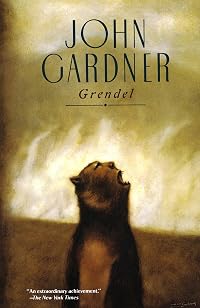
Grendel
by John Gardner
On This Page
Description
Classic Literature. Fiction. Literature. Mythology. HTML:The first and most terrifying monster in English literature, from the great early epic Beowulf, tells his own side of the story in this frequently banned book. This classic and much lauded retelling of Beowulf follows the monster Grendel as he learns about humans and fights the war at the center of the Anglo Saxon classic epic. This is the book William Gass called "one of the finest of our contemporary fictions.".Tags
Recommendations


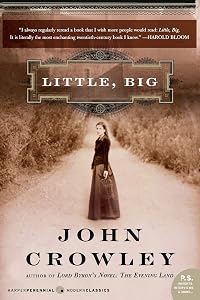
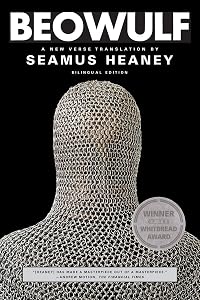
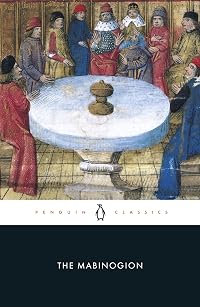


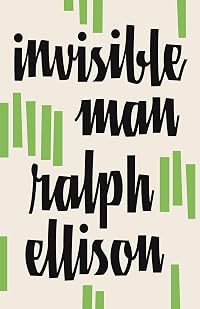










Member Recommendations

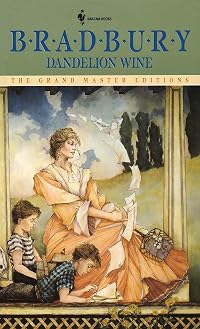
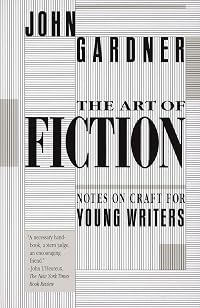
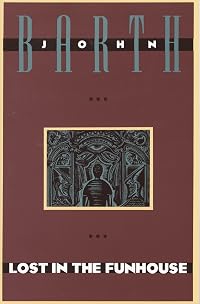
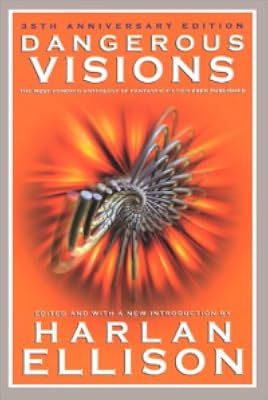
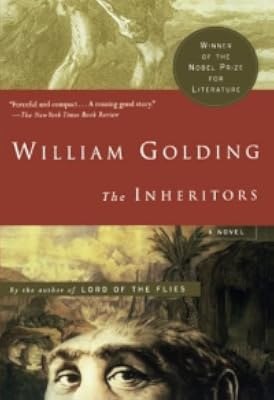
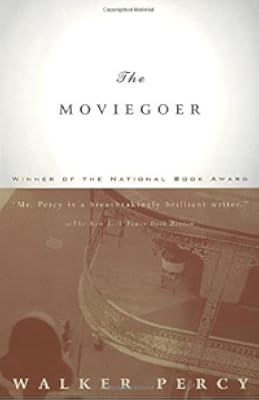
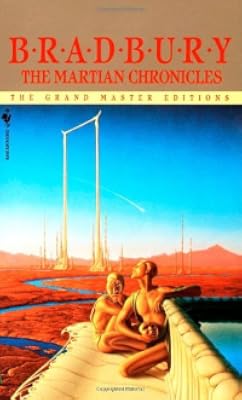
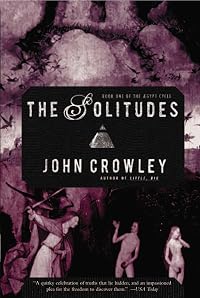
ehines Another fine "from the monster's point of view" kind of story.
20

fugitive Another brilliantly retold classic by a modern author.
21

CGlanovsky Classics retold to give voice to silent characters important to their plots.

Member Reviews
I’m pretty sure the answer to life, the universe, and everything is somewhere in this book. A more philosophical monster than the nihilistic Grendel you would have trouble finding, even including Frankenstein’s creature. Good vs. evil, politics, religion, art, the power of language to construct reality, you name it, this book’s got it. I’m also motivated to finally get around to Beowulf, since it will be all the more interesting with Grendel’s view to contrast it with.
“The dragon tipped up his great tusked head, stretched his neck, sighed fire. ‘Ah, Grendel!’ he said. He seemed that instant almost to rise to pity. ‘You improve them, my boy! Can’t you see that yourself? You stimulate them! You make them think andshow more
scheme. You drive them to poetry, science, religion, all that makes them what they are for as long as they last. You are, so to speak, the brute existent by which they learn to define themselves.’”show less
I adored Beowulf from the first time I read it as a little girl. My mother (I was homeschooled for a good chunk of my school years) assigned me this book as required reading (fairly rare, but then, I rarely needed to be told to read, even ‘classics’ or what my mother called 'nutritional' books) when I was about fifteen.
Possibly the worst part about this book was the utter betrayal it represented. I was actually really excited about this! And then. Oh and then. Then I . . . started actually reading.
I was so enchanted by the pitch – Beowulf told from the point of view of the ‘monster’? Grendel’s story? A familiar tale told from a new angle? That’s one of my favourite things! And one of my favourite stories!
This book is show more actually very short. 174 pages in a quite small volume. I wish I could say that was a blessing, but it took me roughly six weeks to read. (In that time I read about three dozen fantasy novels and about four other classics, including rereading some Wilde.) I dragged myself through every page, feeling like I was slogging on my knees through sand dunes. I even begged my mother to let me off reading this and replace it with literally any other classic she could name. I had never done that before – and never did after – so let it stand as a marker of how much I felt tortured by this book.
(I read classic Russian literature recreationally as a teenager. Depressing, dragging, dark literature was clearly not a deal-breaker for me even then. That was and is not my problem with this book.)
Grendel is depressing, and dark, and . . . well, it is ludicrously self-indulgent over those things.
The kind of ‘I am miserable’ where it feels as though the person complaining to one – which the book, in first person, reads as a kind of stream of consciousness internal monologue of revelling in despair and gore – is delighting in how miserable and awful they are. I’m a monster, you couldn’t possibly understand, everyone hates me and there’s nothing I can do but respond by becoming ever more monstrous feel my pathos while I howl dramatically and go kill and devour more people because what is the point.
I didn’t feel like I was reading the despair of a creature the humans refuse to – or can’t – understand, one who is forced into a corner and fights, kills, because it is all he can do against these creatures to whom he cannot make himself understood, nor understand in turn – which is how it was pitched. Instead I felt like I was hearing the joyously delighted, self-centred manifesto of a psychopath whose psyche’s only ‘torture’ is in the rare occasions he faces a consequence for his actions.
I was told that this book is about confronting the monsters within ourselves, and I see it listed that way in many lesson modules. I want to personally track down the person(s) who thought this book could teach this lesson well and shake them. Hard.
Grendel has no interest in confronting the monster within himself – he is that monster, and there is nothing else but the delight in blood and death, and the self-righteous anger and disbelief when he is forced to face a consequence – like a human that fights back rather than be shredded and eaten in large chunks. How dare they.
(Oh, and it’s also more grotesque and grisly than the original Beowulf, which is . . . delightful.)
I’ve read that Gardner wrote the book intending to ‘examine the main ideas of Western Civilisation in the voice of a monster’ from an already-written story rather than creating a new one, and ‘use the various philosophical attitudes, though Sartre in particular’. (Don’t ask me what ‘use the various philosophical attitudes’ means, I have no idea what he intended with that.) He also has said Grendel represented Sartre’s philosophical position, and that he borrowed much of the book from ‘Being and Nothingness’.
I won’t lie to you, when I read those claims from Gardner my first reaction was ‘oh, so the book was terrible because you were trying to be pretentious?’ and it really, really is – pretentious, that is, not reminiscent of Sartre.
After reading that it was supposed to be, I can see (sort of) the way that Gardner wound the theories of Being and Nothingness into Grendel. But it’s hardly recognisable and in Grendel’s mind comes off as yet another self-centred backdrop of ‘here is why I am such a miserable being, and why it is not my fault’.
I’m glad I was familiar with Sartre before finding out this work was supposed to represent his philosophies, and that it was not presented to me thus in high school, or I might very well have been soured on an entire school of philosophical thought by this ridiculously drab, entitled, self-aggrandising drivel.
For another perspective on Beowulf, I recommend staying to the fascinating essays many very interesting people have written, and away from John Gardner. show less
Possibly the worst part about this book was the utter betrayal it represented. I was actually really excited about this! And then. Oh and then. Then I . . . started actually reading.
I was so enchanted by the pitch – Beowulf told from the point of view of the ‘monster’? Grendel’s story? A familiar tale told from a new angle? That’s one of my favourite things! And one of my favourite stories!
This book is show more actually very short. 174 pages in a quite small volume. I wish I could say that was a blessing, but it took me roughly six weeks to read. (In that time I read about three dozen fantasy novels and about four other classics, including rereading some Wilde.) I dragged myself through every page, feeling like I was slogging on my knees through sand dunes. I even begged my mother to let me off reading this and replace it with literally any other classic she could name. I had never done that before – and never did after – so let it stand as a marker of how much I felt tortured by this book.
(I read classic Russian literature recreationally as a teenager. Depressing, dragging, dark literature was clearly not a deal-breaker for me even then. That was and is not my problem with this book.)
Grendel is depressing, and dark, and . . . well, it is ludicrously self-indulgent over those things.
The kind of ‘I am miserable’ where it feels as though the person complaining to one – which the book, in first person, reads as a kind of stream of consciousness internal monologue of revelling in despair and gore – is delighting in how miserable and awful they are. I’m a monster, you couldn’t possibly understand, everyone hates me and there’s nothing I can do but respond by becoming ever more monstrous feel my pathos while I howl dramatically and go kill and devour more people because what is the point.
I didn’t feel like I was reading the despair of a creature the humans refuse to – or can’t – understand, one who is forced into a corner and fights, kills, because it is all he can do against these creatures to whom he cannot make himself understood, nor understand in turn – which is how it was pitched. Instead I felt like I was hearing the joyously delighted, self-centred manifesto of a psychopath whose psyche’s only ‘torture’ is in the rare occasions he faces a consequence for his actions.
I was told that this book is about confronting the monsters within ourselves, and I see it listed that way in many lesson modules. I want to personally track down the person(s) who thought this book could teach this lesson well and shake them. Hard.
Grendel has no interest in confronting the monster within himself – he is that monster, and there is nothing else but the delight in blood and death, and the self-righteous anger and disbelief when he is forced to face a consequence – like a human that fights back rather than be shredded and eaten in large chunks. How dare they.
(Oh, and it’s also more grotesque and grisly than the original Beowulf, which is . . . delightful.)
I’ve read that Gardner wrote the book intending to ‘examine the main ideas of Western Civilisation in the voice of a monster’ from an already-written story rather than creating a new one, and ‘use the various philosophical attitudes, though Sartre in particular’. (Don’t ask me what ‘use the various philosophical attitudes’ means, I have no idea what he intended with that.) He also has said Grendel represented Sartre’s philosophical position, and that he borrowed much of the book from ‘Being and Nothingness’.
I won’t lie to you, when I read those claims from Gardner my first reaction was ‘oh, so the book was terrible because you were trying to be pretentious?’ and it really, really is – pretentious, that is, not reminiscent of Sartre.
After reading that it was supposed to be, I can see (sort of) the way that Gardner wound the theories of Being and Nothingness into Grendel. But it’s hardly recognisable and in Grendel’s mind comes off as yet another self-centred backdrop of ‘here is why I am such a miserable being, and why it is not my fault’.
I’m glad I was familiar with Sartre before finding out this work was supposed to represent his philosophies, and that it was not presented to me thus in high school, or I might very well have been soured on an entire school of philosophical thought by this ridiculously drab, entitled, self-aggrandising drivel.
For another perspective on Beowulf, I recommend staying to the fascinating essays many very interesting people have written, and away from John Gardner. show less
Grendel by John Gardner takes the Beowulf story that some of us read in high school and turns it on its head.
If you think you know who is the hero here, keep reading.
Grendel is an articulate monster, curious about life and art and his role as "Brute Extant" and mead hall wrecker. He wants to fit in, He wants to understand. He's lonely.
The Shaper - the King's blind harper - sings of a world of noble warriors and a benevolent God. Grendel knows better. He sees the world as a place of random violence and greed and lust and savagery. He's not the only "Monster" here.
The Thane's government, seen as wise and merciful, is just the way that the rich and powerful STAY rich and powerful. Sound familiar?
There is a curmudgeonly and know-it-all show more dragon, who pokes holes in all of Grendel's illusions, and Beowulf himself, who shows up late in the book to carry out his assigned role in the history. (Free will? Or pre-destination? You decide).
It's a advanced seminar in Existential Philosophy wrapped up in breathtakingly beautiful poetry, asking questions that are still valid and still important. Who shapes society? The Poets -- who lie? Or the monsters -- who by being "evil" teach men how to be "Good".
You want Answers? Talk to the dragon. show less
If you think you know who is the hero here, keep reading.
Grendel is an articulate monster, curious about life and art and his role as "Brute Extant" and mead hall wrecker. He wants to fit in, He wants to understand. He's lonely.
The Shaper - the King's blind harper - sings of a world of noble warriors and a benevolent God. Grendel knows better. He sees the world as a place of random violence and greed and lust and savagery. He's not the only "Monster" here.
The Thane's government, seen as wise and merciful, is just the way that the rich and powerful STAY rich and powerful. Sound familiar?
There is a curmudgeonly and know-it-all show more dragon, who pokes holes in all of Grendel's illusions, and Beowulf himself, who shows up late in the book to carry out his assigned role in the history. (Free will? Or pre-destination? You decide).
It's a advanced seminar in Existential Philosophy wrapped up in breathtakingly beautiful poetry, asking questions that are still valid and still important. Who shapes society? The Poets -- who lie? Or the monsters -- who by being "evil" teach men how to be "Good".
You want Answers? Talk to the dragon. show less
Incredible. Grabs, stuns and gives you a good mental kicking - up there for me with Wind Up Bird Chronicle, American Psycho, Lord of the Flies and Never Let Me Go (although not at all like any of them).
So dense in its lyricism, poetry and philosophy that it took me a while to settle into the voice of the book.
So compelling that although you frequently feel a deep need to rest and reflect after each section, you also can't wait to find out what happens next. And yet, a good part of its power lies in the foreknowledge of the story (having just read Beowulf), in its dread inevitability.
So dense in its lyricism, poetry and philosophy that it took me a while to settle into the voice of the book.
So compelling that although you frequently feel a deep need to rest and reflect after each section, you also can't wait to find out what happens next. And yet, a good part of its power lies in the foreknowledge of the story (having just read Beowulf), in its dread inevitability.
A retelling of Beowulf from the viewpoint of the monster.
Retellings are a tricky business, I think. You have to stay true to the spirit of the original while also making the story your own and using it for your own purposes. I know this one has received high acclaim, and while I started out with high hopes, in the end it just didn't work for me. Gardner is clearly using the tale to engage with Big Philosophical Ideas (I mean the whole thing is lousy with Sartre), and that's fine, of course, but it just feels like the story gets lost somewhere along the way and there's more interpretation and metaphor than retelling, or for that matter, telling at all. Plus, it's so very grim. It's dark without the depth of actual feeling of the show more original, which mean we're left with just dreariness. show less
Retellings are a tricky business, I think. You have to stay true to the spirit of the original while also making the story your own and using it for your own purposes. I know this one has received high acclaim, and while I started out with high hopes, in the end it just didn't work for me. Gardner is clearly using the tale to engage with Big Philosophical Ideas (I mean the whole thing is lousy with Sartre), and that's fine, of course, but it just feels like the story gets lost somewhere along the way and there's more interpretation and metaphor than retelling, or for that matter, telling at all. Plus, it's so very grim. It's dark without the depth of actual feeling of the show more original, which mean we're left with just dreariness. show less
This is one of my favorites. The way Gardner presents Grendel is remarkable. The complexity of the character is a stark contrast to the original. Having read it for the first time right after Beowulf changed my views of the characters. It felt a little strange. I felt compassion for a character that I had just felt fear and disdain for. It does what true art should do: change you.
4.5/5 Having taught BEOWULF for a number of years to my sophomore honors, why didn't I have them read this, too? This book is not simply a retelling of BEOWULF from the monster's point of view; it is highly intellectual and philosophical as Grendel seeks to find some sort of meaning to his life. Drawn to and repulsed by humans, he reminds me of Frankenstein's creature, who also seeks the purpose to his existence. Several philosophies are explored here, most of which I can't wait to look into. The trope of reading a story from the supposed villain's point of view is not new, but it is absolutely heart-wrenching here. I dare anyone who reads this not to be touched by Grendel's utter isolation and loneliness. What a read.
Members
- Recently Added By
Lists

Classics you know you should have read but probably haven't
421 works; 407 members

Best Fantasy Novels
821 works; 361 members

Best Horror Books
281 works; 85 members

Best Contemporary Literary Fiction (Around the Last 30 Years)
388 works; 123 members

Slipstream or Interstitial Fiction
160 works; 19 members

Favourite Books
1,819 works; 316 members

Mythical Monsters of the World
199 works; 79 members

20th Century Literature
1,161 works; 55 members

Nonhuman Protagonists
235 works; 34 members

Books I've Read More Than Once
602 works; 49 members

Survey of Fantasy Classics
111 works; 23 members
1970s
657 works; 23 members
Banned Books Week 2014
268 works; 62 members
Survey of Science Fiction and Fantasy
101 works; 13 members

Works with inappropriate subject headings on LibraryThing
35 works; 5 members

METAfiction
21 works; 4 members

Blue Pyramid 1,276 Best Books of All Time
1,248 works; 32 members

Top Five Books of 2018
802 works; 264 members
LibraryThingers' 1001 Books You Must Read Before You Die
442 works; 29 members
Readable Classics
110 works; 15 members

David Pringle's Modern Fantasy: The 100 Best Novels
100 works; 5 members

Jones and Newman's Horror: The 100 Best Books
100 works; 4 members

Fantasy Masterworks
66 works; 5 members

Myth (Reuse and Retelling)
188 works; 24 members
Here There Be Dragons
143 works; 23 members

Best Antiheroes and Antiheroines
119 works; 7 members

Speculative Fiction: Slipstream Literature
166 works; 16 members

Parallel Novels
37 works; 6 members

Best Mythic Fiction
35 works; 6 members
Ten Books That Have Stayed With Me
160 works; 30 members
hideous creatures
18 works; 3 members

Books with a Character's Name as the Title
129 works; 9 members

Best Horror Mega-List
342 works; 6 members
Overdue Podcast
806 works; 9 members

Books Read in 2009
464 works; 11 members

BingoDOG - Books With Mythical Creatures
57 works; 15 members

Existentialism
90 works; 9 members
Best Books of the 20th Century
193 works; 5 members

Stories Inspired by Other Fiction
127 works; 24 members

Books Read in 2022
5,166 works; 114 members

Retrospective of Horror and Thrillers
21 works; 2 members

American Lit for Eng 11 Research Project
368 works; 6 members
School Made Us Read It
380 works; 196 members

Reading Glasses Podcast
410 works; 3 members
Books We Love to Reread
688 works; 296 members

AP Lit
363 works; 6 members

Recommended Literary Books
111 works; 1 member
Classics
7 works; 2 members
Mind-Benders: Fiction that Hurts Your Head
34 works; 8 members

Books Read in 2021
5,361 works; 113 members

Stories Inspired by Myth
8 works; 1 member

Set in the Middle Ages
42 works; 9 members
Creatures of Various Kinds
15 works; 3 members

Unshelved Book Clubs
579 works; 5 members

Which Books Made You Cry?
11 works; 1 member

Alphabetical Books
211 works; 3 members

Books in the Bibliography of Humans: A Monstrous History by Surekha Davies
346 works; 1 member

Best Historical Fiction
620 works; 261 members

Unread books
1,063 works; 86 members
Author Information

Some Editions
Awards and Honors
Awards
Distinctions
Series
Belongs to Publisher Series
Work Relationships
Is contained in
Is a retelling of
Has as a study
Has as a student's study guide
Common Knowledge
- Canonical title*
- Grendel
- Original title
- Grendel
- Original publication date
- 1971
- People/Characters
- Grendel; Hrothgar; Beowulf; The Dragon; The Blind Shaper; Grendel's mother (show all 8); Unferth; Wealtheow
- Important places
- Scandinavia
- Related movies
- Grendel Grendel Grendel (1981 | IMDb); Grendel (IMDb)
- Epigraph
- And if the Babe is born a Boy
He's given to a Woman Old,
Who nails him down upon a rock,
Catches his shrieks in cups of gold.
— William Blake - Dedication
- For Joel and Lucy
- First words
- The old ram stands looking over rockslides, stupidly triumphant.
- Quotations
- I touch the door with my fingertips and it bursts, for all its fire-forged bands—it jumps away like a terrified deer—and I plunge into the silent, hearth-lit hall with a laugh that I wouldn't much care to wake up to mysel... (show all)f.
The sun walks mindlessly overhead, the shadows lengthen and shorten as if by plan.
And so begins the twelfth year of my idiotic war. The pain of it! The stupidity!
I understood that the world was nothing: a mechanical chaos of casual, brute enmity on which we stupidly impose our hopes and fears. I understood that, finally and absolutely, I alone exist. All the rest, I saw, is merely wha... (show all)t pushes me, or what I push against, blindly—as blindly as all that is not myself pushes back.
What was he? The man had changed the world, had torn up the past by its thick, gnarled roots and had transmuted it, and they, who knew the truth, remembered it his way—and so did I.
He closed his eyes, still smiling. "Pick an apocalypse, any apocalypse. A sea of black oil and dead things. No wind. No light. Nothing stirring, not even an ant, a spider. A silent universe. Such is the end of the flicker of ... (show all)time, the brief hot fuse of events and ideas set off, accidentally, and snuffed out, accidentally, by man. Not a real ending of course, nor even a beginning. Mere ripple in Time's stream."
“You improve them, my boy! Can't you see that yourself? You stimulate them! You make them think and scheme. You drive them to poetry, science, religion, all that makes them what they are for as long as they last. You are, s... (show all)o to speak, the brute existent by which they learn to define themselves. The exile, captivity, death they shirk from—the blunt facts of their mortality, their abandonment—that's what you make them recognize, embrace! You are mankind, or man's condition: inseparable as the mountain-climber and the mountain.”
"I've never seen a live hero before. I thought they were only in poetry. Ah, ah, it must be a terrible burden, though, being a hero--glory reaper, harvester of monsters! Everybody always watching you, weighing you, seeing if ... (show all)you're still heroic. You know how it is--he he! Sooner or later the harvest virgin will make her mistake in the haystack." I laughed.
Something is coming, strange as spring. I am afraid.
Tedium is the worst pain. - Last words
- (Click to show. Warning: May contain spoilers.)'Poor Grendel's had an accident,' I whisper. 'So may you all.'
- Original language
- English
*Some information comes from Common Knowledge in other languages. Click "Edit" for more information.
Classifications
Statistics
- Members
- 6,686
- Popularity
- 1,797
- Reviews
- 118
- Rating
- (3.84)
- Languages
- 7 — English, French, German, Portuguese, Spanish, Swedish, Turkish
- Media
- Paper, Audiobook, Ebook
- ISBNs
- 46
- ASINs
- 23