On This Page
Description
Includes 16 color plates of children's art on various religious themes.Tags
Recommendations



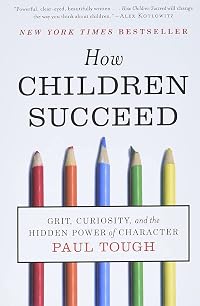
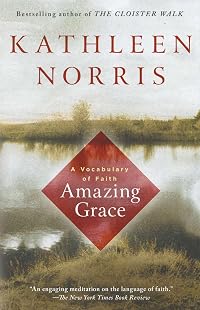
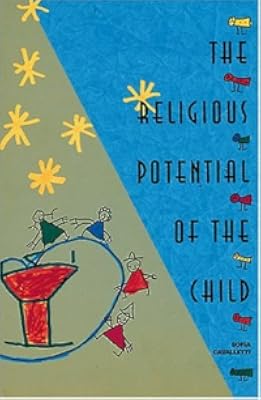
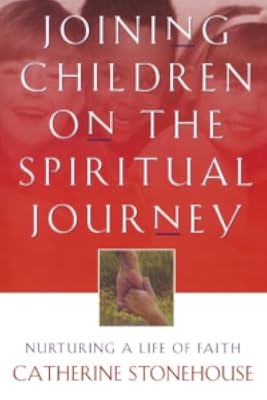



Member Recommendations
paradoxosalpha Coles gestures toward the conventionally moral/metaphysical as "spiritual," but Hillman discusses the real spirit in children as impulses toward personal destiny.
Member Reviews
Child psychiatrist and author Coles strongly identifies himself with a liberal humanitarian ethic, which isn't what draws me to his work. In fact, it's part of what defeated an earlier attempt of mine to read a different book by him, The Call of Service. Even so, I held out hope that The Spiritual Life of Children would be an entertaining and/or informative read for me, since it purports to offer intimate accounts of the religious and spiritual perspectives of children aged six to thirteen, a range which includes my own daughter at its lower end. While the book did have some value for me, it was mostly disappointing.
In the end, it seemed like the book was really about Robert Coles: how he negotiated his condition as a secular, show more skeptically-conditioned intellectual vis a vis pious and spiritually curious children. I did not object to (enjoyed, actually) the first chapter on the vexed and shifting status of the psychoanalytic tradition's judgments about religion. Similarly, I appreciated the authorial reflexivity in the second chapter on method, describing his conflicts, hesitancies, and difficulties in eliciting children's real views on matters important to them. But that matter became an unceasing refrain throughout the book while recounting his interviews with children, e.g. "I began thinking of some words to speak..." (50), "I found myself wondering..." (102), "I gave myself an inward lecture..." (214), "Now I felt impelled to speak" (282). Perhaps this mode of reportage is an inevitable byproduct of Coles' psychoanalytic orientation, but I got seriously tired of it.
Also, despite Coles' evident efforts to devote attention--entire chapters, even--to Jewish, Muslim, and vaguely secular children (plus one Hopi girl), there were far too many pages dedicated to kids talking on and on about Jesus. Certainly, this is no invalidation of the book relative to its likely readership. But while I was once a Christian child myself, Christian children are something I neither have nor want, and so their clearly dominant presence in the book became another source of fatigue for me as a reader.
In his effort to focus on "spirituality not religion," Coles avoided any substantial discussion about children's experiences of religious ritual or worship, and only glancingly addressed the issue of religious instruction. At the same time, all of the accounts in the book were overtly circumscribed by the religious affiliation (or lack thereof) of the children involved. The omission of their ceremonial and catechumenal lives was a significant loss, as far as I was concerned.
I didn't regret holding on for the final chapters, one on "Secular Soul-Searching" and the last on "The Child as Pilgrim." These had some of the more interesting conversations, as well as more general applicability to my own situation. The endnotes are constructed to direct readers to a wider range of texts that engage some of the important questions that could only receive passing attention in this one, and there may be two or three books there that I will pursue. show less
In the end, it seemed like the book was really about Robert Coles: how he negotiated his condition as a secular, show more skeptically-conditioned intellectual vis a vis pious and spiritually curious children. I did not object to (enjoyed, actually) the first chapter on the vexed and shifting status of the psychoanalytic tradition's judgments about religion. Similarly, I appreciated the authorial reflexivity in the second chapter on method, describing his conflicts, hesitancies, and difficulties in eliciting children's real views on matters important to them. But that matter became an unceasing refrain throughout the book while recounting his interviews with children, e.g. "I began thinking of some words to speak..." (50), "I found myself wondering..." (102), "I gave myself an inward lecture..." (214), "Now I felt impelled to speak" (282). Perhaps this mode of reportage is an inevitable byproduct of Coles' psychoanalytic orientation, but I got seriously tired of it.
Also, despite Coles' evident efforts to devote attention--entire chapters, even--to Jewish, Muslim, and vaguely secular children (plus one Hopi girl), there were far too many pages dedicated to kids talking on and on about Jesus. Certainly, this is no invalidation of the book relative to its likely readership. But while I was once a Christian child myself, Christian children are something I neither have nor want, and so their clearly dominant presence in the book became another source of fatigue for me as a reader.
In his effort to focus on "spirituality not religion," Coles avoided any substantial discussion about children's experiences of religious ritual or worship, and only glancingly addressed the issue of religious instruction. At the same time, all of the accounts in the book were overtly circumscribed by the religious affiliation (or lack thereof) of the children involved. The omission of their ceremonial and catechumenal lives was a significant loss, as far as I was concerned.
I didn't regret holding on for the final chapters, one on "Secular Soul-Searching" and the last on "The Child as Pilgrim." These had some of the more interesting conversations, as well as more general applicability to my own situation. The endnotes are constructed to direct readers to a wider range of texts that engage some of the important questions that could only receive passing attention in this one, and there may be two or three books there that I will pursue. show less
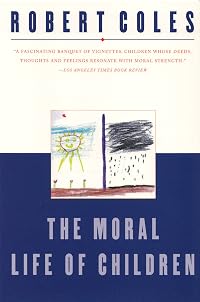
In this eighth and final volume in his Pulitzer Prizewinning Children of Crisis series, Coles examines the religious and spiritual lives of children. By using children's own words and pictures, Coles presents their deepest feelings.
I always wanted to meet him. I wonder, now ....2018. I believe Coles lived/s in Concord. dh
Ratings
Members
- Recently Added By
Lists

Youth: Spirituality
115 works; 1 member
Author Information

112+ Works 10,544 Members
Boston-born psychiatrist and author Robert Martin Coles devoted his professional life to the psychology of children. Coles has been associated with the Harvard University Medical School since 1960. Winner of the Pulitzer Prize for his five-volume series entitled Children in Crisis, Coles has contributed hundreds of articles to popular magazines, show more as well as writing over thirty books for adults and children. Other books include The Mind's Fate, Flannery O'Connor's South, and Walker Percy: An American Search. (Bowker Author Biography) Robert Coles is a professor of psychiatry and medical humanities at the Harvard Medical school and a research psychiatrist for the Harvard University Health Services. His many books include the Pulitzer Prize-winning five-volume Children of Crisis and the bestselling The Moral Intelligence of Children. He is also the James Agee Professor of Social Ethics at Harvard. He lives in Massachusetts. (Publisher Provided) Robert Coles is a professor of psychiatry & medical humanities at the Harvard Medical School, a research psychiatrist for the Harvard University Health Services, & the James Agee Professor of Social Ethics at Harvard College. His many books include the Pulitzer Prize-winning "Children of Crisis" series as well as the best-selling "The Spiritual Life of Children" & "The Moral Intelligence of Children". Dr. Coles is a founding editor of the award-winning magazine "DoubleTake". (Publisher Provided) show less
Awards and Honors
Distinctions
Series

Common Knowledge
- Dedication
- To Jane; To our sons, Bob, Danny, Mike; and In memory of Walker Percy
- Blurbers
- Greeley, Andrew M.; Sanoff, Alvin P.
Classifications
- Genres
- Religion & Spirituality, Nonfiction, General Nonfiction
- DDC/MDS
- 291.4 — Religion Other religions [Formerly: General Religious Topics] Religious experience, life, practice
- LCC
- BL625.5 .C64 — Philosophy, Psychology and Religion Religions. Mythology. Rationalism Religions. Mythology. Rationalism Religious life
- BISAC
Statistics
- Members
- 758
- Popularity
- 37,083
- Reviews
- 4
- Rating
- (4.11)
- Languages
- English, French, Italian
- Media
- Paper, Ebook
- ISBNs
- 9
- UPCs
- 1
- ASINs
- 3