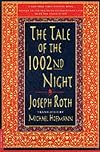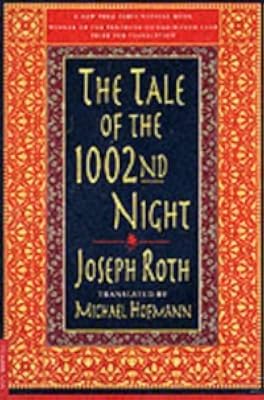
The Tale of the 1002nd Night
by Joseph Roth
On This Page
Description
While visiting Vienna, the Shah of Persia falls for a beautiful countess. The Austrian officials arrange for him to spend the night with the countess, but unbeknown to the Shah she is a prostitute who merely resembles the countess. From this night follows a chain of ruinous consequences.Tags
Recommendations
















Member Reviews
"A fairy story that has swallowed a novel..." Michael Hofmann, in the Introduction to his translation of Die Geschichte der 1002en Nacht sums up Joseph Roth's artistry admirably. Roth's writing is indeed Dickensian in style "but at a third of the length" - an even more admirable quality in my books. This volume published by Granta books London is delightful to hold and delightful to read. It is not without its disturbing qualities. And by disturbing I don't mean scary or unpalatable; I mean disquieting, uncomfortable and rousing the reader to deep contemplation of the world and its human occupants. The story is set in 18-- and for the most part in Vienna. It starts in Persia however with the Shah-in-Shah who is "sick". His Chief Eunuch show more diagnoses boredom but not in so many words and so the royal delegation and all its retinue head off to Vienna in search of variety. The Shah's visit has unintended consequences for various unsuspecting individuals which I won't reveal for fear of spoiling the story. This is my first experience of Roth. I will definitely be going back for more. So many of the passages in this book are spine-chilling in their accurate observations of human frailty. His characters often commit "monstrous" acts and yet the reader is still compelled to observe them with compassion if only out of a knowledge of shared weaknesses. Here is one little quote: "Experiences, when one encountered them, looked bright, colourful, floating. You held on to them as to a balloon on a string, for as long as they were fun. Then, when you got bored, you let go. They floated off prettily into the air, you watched them go with gratitude and affection, and they they went quietly pop somewhere in the clouds. But a few hadn't gone pop at all. Instead, treacherous and invisible, they had hung around somewhere for years, in defiance of all the rules of Nature. And then, full of ballast, they fell back like lead weights on the head of poor Taittinger." Roth's observation of humanity is almost scientific in its accuracy but mercifully he softens it with a large dollop of droll humour. Enjoy! show less
In Persia sono state scritte le novelle delle 1001 notte, e Roth ci regala invece quella che dovrebbe essere la milleduesima novella della serie.
La Persia è però solo un pretesto, dato che è lo Scià di Persia, preso da giovanile inquietudine esistenziale, a dare avvio agli avvenimenti recandosi a Vienna, capitale dell'Impero.
Presunto avvio, in realtà, che il vero avvio degli avvenimenti è frutto della noia e della nobiliare vanagloria di un inutile barone, vero e proprio paradigma dello spleen dell'Impero nel momento del suo tramonto.
E ognuno dei personaggi pensa di fare del suo meglio, e invece fa del suo peggio, o meglio, esattamente quello che serve per andare in rovina.
Così il barone e così lo Scià, che tornerà a Vienna, e show more non capirà perché ci è venuto la prima volta.
L'unico che sa esattamente che cosa fare, e l'inutilità del farlo, è l'eunuco di corte, e solo perché, come dice egli stesso all'inizio, è un castrato.
L'ambiente in cui si muove Roth è lo stesso di Marai, ma la sua scrittura è più moderna e scevra di artifici, e ci fa vedere meglio il nulla in cui si dibatte la società di cui parla. show less
La Persia è però solo un pretesto, dato che è lo Scià di Persia, preso da giovanile inquietudine esistenziale, a dare avvio agli avvenimenti recandosi a Vienna, capitale dell'Impero.
Presunto avvio, in realtà, che il vero avvio degli avvenimenti è frutto della noia e della nobiliare vanagloria di un inutile barone, vero e proprio paradigma dello spleen dell'Impero nel momento del suo tramonto.
E ognuno dei personaggi pensa di fare del suo meglio, e invece fa del suo peggio, o meglio, esattamente quello che serve per andare in rovina.
Così il barone e così lo Scià, che tornerà a Vienna, e show more non capirà perché ci è venuto la prima volta.
L'unico che sa esattamente che cosa fare, e l'inutilità del farlo, è l'eunuco di corte, e solo perché, come dice egli stesso all'inizio, è un castrato.
L'ambiente in cui si muove Roth è lo stesso di Marai, ma la sua scrittura è più moderna e scevra di artifici, e ci fa vedere meglio il nulla in cui si dibatte la società di cui parla. show less
I really like Joseph Roth's books about the decay of the old Habsburg Empire. In this one, the Shah of Persia visits Vienna and lusts after a Countess at a ball. To satisfy him without sullying the Countess, a courtier suggests that they pull a switch and loan the Shah the courtier's former lover, who resembles the Countess; the Shah rewards her with a string of pearls, which are promptly sold.
Selling is the unifying theme--the pearls are sold, Mizzi's virtue is sold (over and over), pamphlets retelling the story of the Shah's affair and the crass character of a court where this could occur are sold to a voracious readership, then used to blackmail the courtier, and on it goes. Almost no one here has any backbone: everyone goes along show more making vague schemes to get by, to choose the most expedient solution, to sell themselves, and to steal or blackmail. The only solid person is a soldier "of the people", a breath of decency in the novel, whose advancement can only happen if he leaves the centre and goes off to the fringes of the empire to work as a paymaster in the army.
This probably sounds horribly depressing, but it isn't. There's a kind of satirical gaiety to it that got me through. show less
Selling is the unifying theme--the pearls are sold, Mizzi's virtue is sold (over and over), pamphlets retelling the story of the Shah's affair and the crass character of a court where this could occur are sold to a voracious readership, then used to blackmail the courtier, and on it goes. Almost no one here has any backbone: everyone goes along show more making vague schemes to get by, to choose the most expedient solution, to sell themselves, and to steal or blackmail. The only solid person is a soldier "of the people", a breath of decency in the novel, whose advancement can only happen if he leaves the centre and goes off to the fringes of the empire to work as a paymaster in the army.
This probably sounds horribly depressing, but it isn't. There's a kind of satirical gaiety to it that got me through. show less
Joseph Roth once again (as in his earlier The Radetsky March) tells a story of downfall in the latter period of the Austro-Hungarian Empire, although this book extends over perhaps less than twenty years while the earlier book covers more than fifty. The premise of the novel is the visit to Vienna by the Shah of Persia (as Iran was then called) during the 1870s. This is based on a historical visit by the Shah to Europe about that time. Sandwiched between the Shah's first and second visits, two decades apart, the novel recounts the events set in motion among certain Austrian characters who come in contact with the Shah. Roth uses this premise to explore the decadent society that he nevertheless loved, even while he was able to explore show more its cyniicism with an ironic wit. These characters, by the way, have great names. I am quite taken with Mizzi Shinagl, the shop girl who is indirectly introduced to the Shah by her lover Baron and Captain Alois Franz von Taitinger, an upper-class twit whose material wealth does not quite match what everyone expects from his aristocratic rank.
Roth is by turns poetic, socially critical and yet sympathetic to his characters. Even as he shows them at their meanest, he seems to know that they are doing the best that they can. It is the interaction of these self-serving but surprisingly often well-meaning people that creates the inevitable crises that bring each of them down until one of them cannot get up again. show less
Roth is by turns poetic, socially critical and yet sympathetic to his characters. Even as he shows them at their meanest, he seems to know that they are doing the best that they can. It is the interaction of these self-serving but surprisingly often well-meaning people that creates the inevitable crises that bring each of them down until one of them cannot get up again. show less
There is a tremendous sense of the decline of an empire here.
An arogant army officer, so out of touch with the real world that he doesn't realise he has become bankrupt - both financially and morally - fathers an illegitimate child, arranges a sordid encounter for the 'Shah of Shahs' and, through a failure to act, not only spirals to his own distruction but takes several other people with him.
The personal tale clearly reflects the state the 'state' is in.
The characters are finely drawn with an economy of words which makes this a very sharp edged tale.
An arogant army officer, so out of touch with the real world that he doesn't realise he has become bankrupt - both financially and morally - fathers an illegitimate child, arranges a sordid encounter for the 'Shah of Shahs' and, through a failure to act, not only spirals to his own distruction but takes several other people with him.
The personal tale clearly reflects the state the 'state' is in.
The characters are finely drawn with an economy of words which makes this a very sharp edged tale.
Maybe I wasn't in the right mood for this book, since I've enjoyed everything else by Joseph Roth I've read, but it just didn't grab me: I kept putting it down, forgetting who the characters were, etc. It tells the tale of what happens after the Shah makes a visit to the Emperor in Vienna in the 1800s, spends the night with a prostitute masquerading as a countess he fancies, and through his Chief Eunuch gives her a valuable string of pearls. The consequences then unfold over the course of several years for a variety of characters, who are said to paint a picture of life in Vienna and the Austro-Hungarian Empire before its decline. Roth has some really wonderful turns of phrase, and acidic insight into the empty-headedness and greed of show more some of his characters, but I never got into the story. I would hazard a guess that Roth was trying to make a larger point about history and the consequences of actions and the decline from grandeur to almost farce, but that didn't make a big impact on me either.
Finally, I note that the translator is the much commented-on Michael Hoffman. Not only did he write what for me was an annoying introduction, but there was one place where the translation itself irritated me: there is a low-life character who doesn't speak good German, and Hoffman renders his speech in contemporary and late 20th century street slang -- it was jarring to me. I'm sure there's a way of showing that someone is speaking that way without jumping over 100 years into the future. show less
Finally, I note that the translator is the much commented-on Michael Hoffman. Not only did he write what for me was an annoying introduction, but there was one place where the translation itself irritated me: there is a low-life character who doesn't speak good German, and Hoffman renders his speech in contemporary and late 20th century street slang -- it was jarring to me. I'm sure there's a way of showing that someone is speaking that way without jumping over 100 years into the future. show less
With its many gracious passages this novel too is a half-decent showcase of the talents of Joseph Roth, but apart from the beginning the characters just aren't very engrossing. Elegiac setting in the last times of the old Vienna of the Austro-Hungarian Empire, melancholic episodes, wonderful in details but as a whole falls short of Roth's best work.
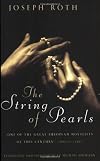
The same translation of this work has been published under two different names: _The String Of Pearls_ and _The Tale of the 1002nd Night_. (By the by, another case of this is Roth's book of reports from France.)
The same translation of this work has been published under two different names: _The String Of Pearls_ and _The Tale of the 1002nd Night_. (By the by, another case of this is Roth's book of reports from France.)
Members
- Recently Added By
Lists

Literature in Translation
113 works; 5 members

1001 Books You Must Read Before You Die
1,448 works; 1,137 members
Author Information

233+ Works 13,242 Members
Author and journalist Joseph Roth was born on September 2, 1894. During World War I, he served in the Austro-Hungarian army from 1916 to 1918. Afterwards, he worked as a journalist in Vienna and in Berlin. His best-known works are The Radetzky March and Job. He died in Paris on May 27, 1939 and is buried in Thiais Cemetery. (Bowker Author show more Biography) Joseph Roth is the author of such classics as The Radetzky March and The Emperor's Tomb. He died in Paris in 1939. (Publisher Provided) show less
Some Editions
Awards and Honors
Awards
Series
Belongs to Publisher Series
KiWi (140)
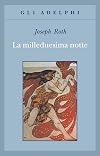
Biblioteca Adelphi (69)
Bibliothek des 20. Jahrhunderts (Dt. Bücherbund) (Roth, Joseph)
Tascabili [Bompiani] (294)
Work Relationships
Common Knowledge
- Canonical title
- The Tale of the 1002nd Night
- Original title
- Die Geschichte von der 1002. Nacht
- Alternate titles
- The String of Pearls
- Original publication date
- 1939
- Important places
- Vienna, Austria
- Related movies
- Die Geschichte der 1002. Nacht (1969 | TV | IMDb)
- First words*
- Nella primavera dell'anno 18.. lo Sciahan-scià, il grande, eccelso, sacro monarca, l'assoluto sovrano e imperatore di tutti gli Stati della Persia, cominciò a sentire un disagio mai prima conosciuto.
- Quotations*
- Erano passati appunto duecento anni da quando il più feroce di tutti i musulmani si era spinto fin sotto Vienna. Allora l'Austria era stata salvata da un miracolo, ma ora i prussiani, assai più terribili che una volta i tur... (show all)chi, minacciavano la vecchia Austria, e sebbene fossero quasi più infedeli dei musulmani (erano protestanti), Dio non faceva miracoli contro di loro. Non c'era più ragione ora di temere i figli di Maometto più dei protestanti; un'altra più terribile epoca si era iniziata, quella dei giannizzeri di Lutero e di Bismarck. Veramente sulle loro bandiere bianco-nere, tutti e due colori di lutto stretto, non c'era la mezzaluna, bensì una croce; ma per l'appunto una croce di ferro. Anche i loro simboli cristiani erano armi mortali.
I due sovrani, l'ospitato e l'ospitante, avanzarono come attraverso un campo di spighe ricurve. Ambedue sorridevano come richiede la tradizione; sorridevano a destra e a sinistra benché nessuno potesse vedere la loro affabil... (show all)ità; sorridevano a pettinature femminili bionde e brune, a lucide calvizie di uomini, a scriminature rigorose.
I suoi piedi sentivano ancora il terreno, la sua mano destra il manico dell'ombrellino, la sua sinistra la borsetta; ma i suoi pensieri non avevano più alcun punto d'appoggio, come un branco di uccelli impazziti essi si leva... (show all)vano a volo e si confondevano in una sorta di chiasso silenzioso, cozzavano fra loro con la testa e le ali, sparivano all'improvviso e ritornavano in rinnovata confusione.
È vero che stava ancora in piedi davanti al tavolino nell'atrio dell'albergo e sembrava ancora una specie di servitore, ma già osava appoggiare ambedue le mani sulla spalliera imbottita di una sedia libera. Era come se alme... (show all)no le sue mani avessero già il permesso di prender posto. - Last words*
- (Click to show. Warning: May contain spoilers.)Ecco quello che vogliono, i mostri!
- Original language*
- Duits; Tedesco
*Some information comes from Common Knowledge in other languages. Click "Edit" for more information.
Classifications
- Genres
- General Fiction, Fiction and Literature, Historical Fiction
- DDC/MDS
- 833.912 — Literature & rhetoric German & related literatures German fiction 1900- 1900-1990 1900-1945
- LCC
- PT2635 .O84 .G413 — Language and Literature German, Dutch and Scandinavian literatures German literature Individual authors or works 1860/70-1960
- BISAC
Statistics
- Members
- 432
- Popularity
- 71,545
- Reviews
- 9
- Rating
- (3.85)
- Languages
- 11 — Danish, Dutch, English, French, German, Italian, Polish, Portuguese, Russian, Spanish, Turkish
- Media
- Paper, Audiobook, Ebook
- ISBNs
- 31
- ASINs
- 12