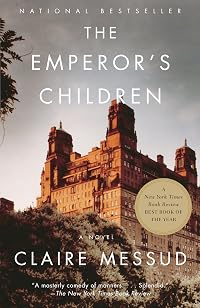
The Emperor's Children
by Claire Messud
On This Page
Description
A bestselling, masterful novel about the intersections in the lives of three friends, now on the cusp of their thirties, making their way—and not—in New York City.There is beautiful, sophisticated Marina Thwaite—an “It” girl finishing her first book; the daughter of Murray Thwaite, celebrated intellectual and journalist—and her two closest friends from Brown, Danielle, a quietly appealing television producer, and Julius, a cash-strapped freelance critic. The delicious show more complications that arise among them become dangerous when Murray’s nephew, Frederick “Bootie” Tubb, an idealistic college dropout determined to make his mark, comes to town. As the skies darken, it is Bootie’s unexpected decisions—and their stunning, heartbreaking outcome—that will change each of their lives forever.
A richly drawn, brilliantly observed novel of fate and fortune—of innocence and...
. show less
Tags
Recommendations
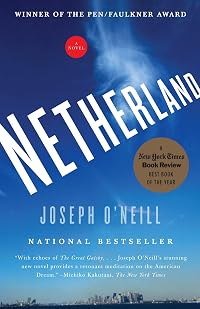
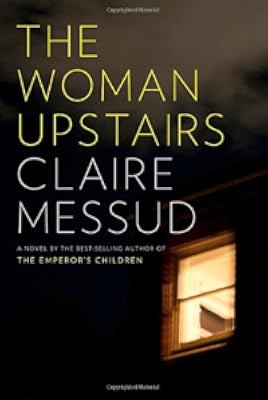
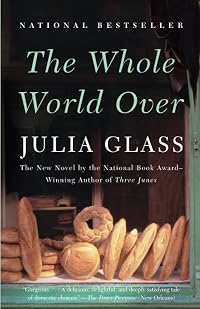
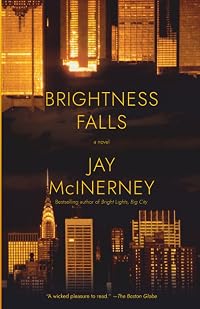

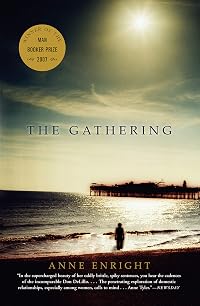
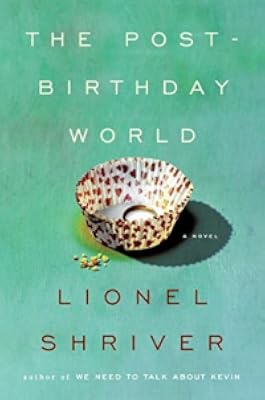

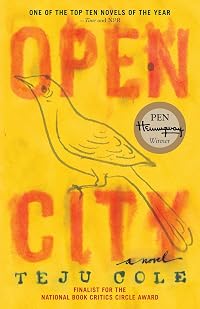
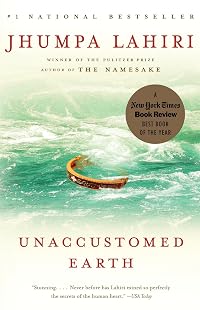
Member Recommendations
Member Reviews
Claire Messud's "The Emperor's Children" is a novel about d world-changing events told through the smallest details. The novel takes place during the summer months of 2001, in the shadow of September 11, but it's real concerns are more personal and center on the lives of its characters. Messud takes time and care sketching her protagonists, and the voice she uses to do so is light and knowing without being crassly comical or becoming too cute for its own good. Still, she's not afraid to keep her focus on the small stuff. She will, for example, spend a paragraph or two describing the particularities of a certain character's facial expression, or a page or two tracing the path of another character's thought process. Messud's got a lovely show more sentence, too: long, winding and graceful, it complements her novel's well-informed, slightly amused, tone. When the attack on the towers finally ocurrs, in the novel's final third, it's not the perfect-for-television spectacle that so many of us not living in New York at the time experienced. Messud lets us see how this event transforms each one of her characters' lives in ways both big and small. It seems that we haven't had too many writers who've been able to take on the events of September, 2001 head-on. Messud's decision to illustrate the aftermath of that terrible event in the miniature of these characters' lives seems wise and skilfully handled.
"The Emperor's Children" isn't, mind you, a mere update of an Austen novel. Her characters often find themselves faced with uniquely contemporary dilemmas, and Messud seems to have an extraordinarily complete understanding of that strange mix of education, wealth, prestige and cultural buzz that equals power in today's intelligensia. As befits any comedy of manners, Messud also offers her own take on the composition of personality and its relationship to the way her characters' interact with each other. While she describes the inner life of all of her characters in admirable detail, she is, in some ways, more interested in the neuroses and delusions they use to keep the truth hidden from both themselves and others. Her characters' true selves are obscured by numerous levels of artifice and pretense, and while doesn't exactly shy away from their duplicity, she's also surprisingly gentle with them. It still takes time and patience to learn the truth about Messud's characters, though, even if she is, in some senses, quite forthright with her reader. Indeed, she seems to argue that some amount of self-deception is necessary in life. In its final pages, when its most idealistic character spins out of the novel's social orbit, "The Emperor's Children" makes the argument that a certain hypocrisy, or a gradual lowering of one's expectations, is essential to the process of growing up, growing wiser, and getting on in the world. Call this a universal truth limned from a set of delicately arranged, highly specific circumstances. I'll call "The Emperor's Children" a skilfull, satisfying novel very much worth reading. show less
"The Emperor's Children" isn't, mind you, a mere update of an Austen novel. Her characters often find themselves faced with uniquely contemporary dilemmas, and Messud seems to have an extraordinarily complete understanding of that strange mix of education, wealth, prestige and cultural buzz that equals power in today's intelligensia. As befits any comedy of manners, Messud also offers her own take on the composition of personality and its relationship to the way her characters' interact with each other. While she describes the inner life of all of her characters in admirable detail, she is, in some ways, more interested in the neuroses and delusions they use to keep the truth hidden from both themselves and others. Her characters' true selves are obscured by numerous levels of artifice and pretense, and while doesn't exactly shy away from their duplicity, she's also surprisingly gentle with them. It still takes time and patience to learn the truth about Messud's characters, though, even if she is, in some senses, quite forthright with her reader. Indeed, she seems to argue that some amount of self-deception is necessary in life. In its final pages, when its most idealistic character spins out of the novel's social orbit, "The Emperor's Children" makes the argument that a certain hypocrisy, or a gradual lowering of one's expectations, is essential to the process of growing up, growing wiser, and getting on in the world. Call this a universal truth limned from a set of delicately arranged, highly specific circumstances. I'll call "The Emperor's Children" a skilfull, satisfying novel very much worth reading. show less
Marina, Danielle, and Julius were classmates at Brown University and are all now approaching 30, and making their way in New York City. Marina is the daughter of Murray Thwaite, a famous journalist. She has been working on her first book for many years, and has never held a "real job." She lives with her parents, having recently moved back home after ending a long-term relationship. Julius is a gay freelance writer who lives lives in a squalid apartment and finds work through a temp agency while waiting for his next writing assignments. Danielle produces television programs, and is the only one with a steady income. The Emperor's Children follows these three over the course of a year. While they rarely cross paths in their day-to-day show more lives, the bonds of friendship are strong and they do call on each other for help and support. Another key figure in this story is Frederick "Bootie" Tubb, Murray's nephew, who has dropped out of university, and came to New York hoping to find himself and make a living. Murray provides Bootie a place to live, and takes him on as his secretary. Danielle is instrumental in finding Marina a job with a magazine startup, and Marina offers both Julius and Bootie the chance to write an article for the inaugural issue. Julius meets romantic interest David through one of his temp jobs, and begins to move in very different social circles. All of the young people look up to Murray as a role model of the successful and wealthy writer. Meanwhile, Murray is dealing with a bit of a mid-life crisis, and struggles to control everyone around him.
Messud draws an intriguing portrait of a certain social class. The characters in this novel are are shallow, superficial, and materialistic. It was difficult to care much about any of them, but I still found myself oddly drawn to their stories -- like watching an impending train wreck. But this book takes place in 2001 (and remember, in New York City). So of course September 11 was like the elephant in the room the entire time I was reading this book. On several instances, characters discussed events planned for September, which I just knew wouldn't turn out as planned. I was curious how Messud would address this pivotal event in the novel. After finishing the book I was left wondering if setting the novel in 2001 was just an afterthought, a convenient way to tie up the plot. The year is casually thrown into the text about 50 pages in. September 11 occurs 60 pages from the end of the book, and while it understandably changes the characters' lives, it was an all-too-easy way to catalyze certain events and bring the novel to a close. While this was a light read and somewhat pleasurable, it wasn't quite my thing. show less
Messud draws an intriguing portrait of a certain social class. The characters in this novel are are shallow, superficial, and materialistic. It was difficult to care much about any of them, but I still found myself oddly drawn to their stories -- like watching an impending train wreck. But this book takes place in 2001 (and remember, in New York City). So of course September 11 was like the elephant in the room the entire time I was reading this book. On several instances, characters discussed events planned for September, which I just knew wouldn't turn out as planned. I was curious how Messud would address this pivotal event in the novel. After finishing the book I was left wondering if setting the novel in 2001 was just an afterthought, a convenient way to tie up the plot. The year is casually thrown into the text about 50 pages in. September 11 occurs 60 pages from the end of the book, and while it understandably changes the characters' lives, it was an all-too-easy way to catalyze certain events and bring the novel to a close. While this was a light read and somewhat pleasurable, it wasn't quite my thing. show less
When I came across this novel at a library fundraising sale I didn’t know how polarizing it is. People in the publishing world love it (not surprising since both are New York city-centric) and people in the regular world don’t. At least that’s how it looks on the surface. While I didn’t love it, I didn’t hate it either. For a book about three young, elite fuck ups and one young, non-elite fuck up, it has its redeeming qualities. If you can get over and around the unwieldy sentence structure. A model of clear writing Messud is not. Ironically she has Marina’s father Murray give her this advice about writing - “Clarity is key.” p 71
I also caught too many words and phrases that Brits and possibly Canadians use, but that show more American’s don’t. “Over the road” instead of across the street, “bobble” instead of pom-pom (the thing on a hat), “Meccano” should be Erector Set or possibly Tinker-toy, we would put our shoes in the closet not the cupboard. Stuff like that is easy to edit out and rankled every time I found one - lazy.
There is a lot of character and scene setting that has to be got through. Between that and the congested writing I almost didn’t, but then the stories started getting interesting and I stuck with it. Lo and behold some of them grow up. It’s a slice of life type of book with an open ending only because life is like that and there wasn’t a specific goal to the action.
My notes on characters and situations as I read - mild spoilers!
Julius = overblown sense of himself and weirdly a pretty strong streak of self-loathing, he is surprised he’s still an unrecognized genius, having no life to make him interesting will try David’s patience, I think. Vigorously destroying the relationship he says he wants so much (and has engineered to occur). The self-loathing turned to self-destruction and the bathroom hook up was too much. D’s reaction was harsh, but J was asking for something dramatic and he got it.
Marina = so used to her looks getting her everything she wants that she has developed nothing else in the way of talent/expertise and now her looks are fading things could get dire. The future with Ludo will be trying and difficult as she is coming to realize post-9/11 and the demise of his great ambition. At least she used his angle to finish her stupid book and good for her for going ahead with publication despite daddy’s withering advice.
Danielle = nervous ninny with a surprising lack of salesmanship or real belief in her projects that is not good for a documentary film producer. Her fling with M was really icky and desperate, but the 9/11 disaster gave her cover for her meltdown when he went to Annabel on the day of the attacks. What else did she think he’d do?
Bootie = muddled thinker mistaking disdain for rugged individualism, has a really odd idea of self-reliance (sponging off Uncle Murray and Aunt Annabel), horrendously selfish and cruel in the end. So childish and inexperienced in his judgement of Murray, who of course isn’t a perfect being; surprise! - he’s human. What an idiot. Doesn’t know what he doesn’t know and is too blind and full of hubris to know he doesn’t.
Murray = the Emperor, a man of consequence who either inspires admiration or condemnation depending on your situation. He’s an institution to some extent and not still full of new ideas or thinking, but that pretty much is part of being human. We tend to wind down and get comfortable in our ruts as we age. Almost everyone who knows him changes opinions on him as the book progresses; mostly for the worse. As a character I found him remote and difficult to relate to. show less
I also caught too many words and phrases that Brits and possibly Canadians use, but that show more American’s don’t. “Over the road” instead of across the street, “bobble” instead of pom-pom (the thing on a hat), “Meccano” should be Erector Set or possibly Tinker-toy, we would put our shoes in the closet not the cupboard. Stuff like that is easy to edit out and rankled every time I found one - lazy.
There is a lot of character and scene setting that has to be got through. Between that and the congested writing I almost didn’t, but then the stories started getting interesting and I stuck with it. Lo and behold some of them grow up. It’s a slice of life type of book with an open ending only because life is like that and there wasn’t a specific goal to the action.
My notes on characters and situations as I read - mild spoilers!
Julius = overblown sense of himself and weirdly a pretty strong streak of self-loathing, he is surprised he’s still an unrecognized genius, having no life to make him interesting will try David’s patience, I think. Vigorously destroying the relationship he says he wants so much (and has engineered to occur). The self-loathing turned to self-destruction and the bathroom hook up was too much. D’s reaction was harsh, but J was asking for something dramatic and he got it.
Marina = so used to her looks getting her everything she wants that she has developed nothing else in the way of talent/expertise and now her looks are fading things could get dire. The future with Ludo will be trying and difficult as she is coming to realize post-9/11 and the demise of his great ambition. At least she used his angle to finish her stupid book and good for her for going ahead with publication despite daddy’s withering advice.
Danielle = nervous ninny with a surprising lack of salesmanship or real belief in her projects that is not good for a documentary film producer. Her fling with M was really icky and desperate, but the 9/11 disaster gave her cover for her meltdown when he went to Annabel on the day of the attacks. What else did she think he’d do?
Bootie = muddled thinker mistaking disdain for rugged individualism, has a really odd idea of self-reliance (sponging off Uncle Murray and Aunt Annabel), horrendously selfish and cruel in the end. So childish and inexperienced in his judgement of Murray, who of course isn’t a perfect being; surprise! - he’s human. What an idiot. Doesn’t know what he doesn’t know and is too blind and full of hubris to know he doesn’t.
Murray = the Emperor, a man of consequence who either inspires admiration or condemnation depending on your situation. He’s an institution to some extent and not still full of new ideas or thinking, but that pretty much is part of being human. We tend to wind down and get comfortable in our ruts as we age. Almost everyone who knows him changes opinions on him as the book progresses; mostly for the worse. As a character I found him remote and difficult to relate to. show less
Viewed from a distance The Emperor's Children could be mistaken for another hackneyed tale of self-absorbed twentysomethings coming of age in the big city. It is in fact a sharp, artful group portrait in which each protagonist, every action and motivation is convincing. Messud's drawing of character is vivid and utterly real; her shifting scenes and perspectives may be cinematic, but her sentences are Proustian and poetic. Subtle, clear-eyed and critical, The Emperor's Children is a brilliant snapshot of a society hovering on the brink of history.
A tale of New York's intellectual elite leading up to 9/11. In fact, I decided 9/11 wasn't actually going to show up in the novel after a while and thought maybe I remembered the wrong review. Anyway, the book is a case of the poor little rich girl except not every one is rich and not every one is a girl, but you get the idea. They torture themselves with not being brilliant enough, with not being young enough, with not being loved enough, etc. Most of the action revolves around an elder celebrated journalist of the baby boom generation. While he wrenched himself from his small town (WI?) upbringing and molded himself into the truth telling adventurer, his daughter has languished - beautiful, brilliant, but unable to accomplish a thing. show more Her best friend is often relegated to her shadow until she is able to supplant the daughter in an affair with the father. Then there's the gay friend, also languishing, until he finds 'love' and ends up even more tortured. Maybe none of this sounds terribly tempting, but Messud writes those quick chapters that jump from perspective to perspective and successfully keep me reading. I found the characters compelling despite themselves (I didn't mention one of the main drivers of the story - the young cousin from said small town). In fact, I like them and respected them for the truths they mirrored. PS She did have a very odd writing style, her sentences built upon themselves each idea being modified in a rolling pyramid of words. show less
I waited a while to let this one sink in before writing a little review. I really, really like the story in this novel. I liked the characters, I thought they were logically introduced, gradually illustrated, nothing felt forced. The way their stories intertwined was genuinely interesting to me.
Then instead of closing out the stories satisfyingly, Messud used a plot device that effectively stopped every story short. It was surprising, but not in a good way. Just because it wasn't entirely predictable (when it probably should have been) doesn't mean it's a clever plot device. I found myself frustrated by the fact that I would never get a well-written end for any of the plots and subplots. I still give it three out of five, even with show more that drawback because I couldn't put it down, and I do feel that it has some of the best chapter structure I've seen. Each chapter could be seen as a vignette really. But sadly this was overshadowed by the disappointing ending (or lack therof). show less
Then instead of closing out the stories satisfyingly, Messud used a plot device that effectively stopped every story short. It was surprising, but not in a good way. Just because it wasn't entirely predictable (when it probably should have been) doesn't mean it's a clever plot device. I found myself frustrated by the fact that I would never get a well-written end for any of the plots and subplots. I still give it three out of five, even with show more that drawback because I couldn't put it down, and I do feel that it has some of the best chapter structure I've seen. Each chapter could be seen as a vignette really. But sadly this was overshadowed by the disappointing ending (or lack therof). show less
This book could not be more pretentious. By the time I was finished with it, my brain felt like mud, which is exactly what it felt like to read - trudging through mud.
The characters...sheesh, the characters. There's not one single redeeming quality among them. All of them are so self-absorbed, so blind to each other, so completely in love with his or herself that after awhile you begin to wonder what the point is of reading this book. I kept trying to figure out who the emperor was, then I realized that they are all followers. None of them has the sense to realize that whoever it is that they are following that day - that's the emporer that is running around naked and they have chosen to not wear his or her clothes too.
But that's just show more semantics. Is that what we're supposed to take from this book? That many of us are all followers tripping along doing whatever anyone tells us to do? That's a pretty pretentious statement from the author. Then again, after you've read the fifth sentence in the book and it's the fifth time that you're being smacked by parentheses, commas, semi colons, colons, more paretheses, sentences within sentences! Oy vey!
The characters are not well defined. They are all overly flawed. Marina is a 2D charicature of Paris Hilton. Danielle is a stuck up, pretentious, know it all. Murray is a combination of Oprah, Barbara Walters, Larry King and Dan Rather - just telling the people what they want to hear without an original thought to his brain. Julius is every gay man written by a New York socialite "author". Silly, flamboyant, teetering on the verge of joblessness, and a prostitute/coke fiend. (A good deal of the gay men I know are nothing like this. Maybe it's a New York Gay Man thing, I don't know.)
The only interesting character is "Bootie", the Thwaite's nephew. But quickly I became rather bored of his entitlement issues, his holier than thou/smarter than everyone attitude and lazy ways. Yes, no one wants to have to work but no one wants a fat ass taking up their time and space as well. I had high hopes for his character but he turned out just like everyone else - a disappointment.
I was honestly angry and disappointed when I got done reading this book. I thought, "hey, finally someone is writing a book about people like me searching for their life's ambition and purpose." Could not be farther from the truth! It's almost as if the author was completely out of touch with her audience, unless her audience was Paris and Nicole wannabes. show less
The characters...sheesh, the characters. There's not one single redeeming quality among them. All of them are so self-absorbed, so blind to each other, so completely in love with his or herself that after awhile you begin to wonder what the point is of reading this book. I kept trying to figure out who the emperor was, then I realized that they are all followers. None of them has the sense to realize that whoever it is that they are following that day - that's the emporer that is running around naked and they have chosen to not wear his or her clothes too.
But that's just show more semantics. Is that what we're supposed to take from this book? That many of us are all followers tripping along doing whatever anyone tells us to do? That's a pretty pretentious statement from the author. Then again, after you've read the fifth sentence in the book and it's the fifth time that you're being smacked by parentheses, commas, semi colons, colons, more paretheses, sentences within sentences! Oy vey!
The characters are not well defined. They are all overly flawed. Marina is a 2D charicature of Paris Hilton. Danielle is a stuck up, pretentious, know it all. Murray is a combination of Oprah, Barbara Walters, Larry King and Dan Rather - just telling the people what they want to hear without an original thought to his brain. Julius is every gay man written by a New York socialite "author". Silly, flamboyant, teetering on the verge of joblessness, and a prostitute/coke fiend. (A good deal of the gay men I know are nothing like this. Maybe it's a New York Gay Man thing, I don't know.)
The only interesting character is "Bootie", the Thwaite's nephew. But quickly I became rather bored of his entitlement issues, his holier than thou/smarter than everyone attitude and lazy ways. Yes, no one wants to have to work but no one wants a fat ass taking up their time and space as well. I had high hopes for his character but he turned out just like everyone else - a disappointment.
I was honestly angry and disappointed when I got done reading this book. I thought, "hey, finally someone is writing a book about people like me searching for their life's ambition and purpose." Could not be farther from the truth! It's almost as if the author was completely out of touch with her audience, unless her audience was Paris and Nicole wannabes. show less
Members
- Recently Added By
Lists

Booker Prize
491 works; 62 members

2000s (the decade, not the century)
184 works; 11 members

Contemporary Fiction
109 works; 7 members

2000s decade
85 works; 7 members

Dysfunctional Families
133 works; 7 members

Man Booker Prize Longlist 2006
19 works; 2 members

September 11, 2001
19 works; 4 members

Books with Noble Titles
179 works; 11 members

Novels featuring Fathers
56 works; 7 members

Books Read in 2006
422 works; 8 members

Books Read in 2019
4,052 works; 108 members

Not the NYT list of top 100 21st century books
100 works; 6 members
Shannon's Read-Alikes List
71 works; 8 members

Unread books
1,063 works; 82 members
Author Information

16+ Works 7,783 Members
Claire Messud is the author of six works of fiction. A recipient of Guggenheim and Radcliffe Fellowships and the Strauss Living Award from the American Academy of Arts and Letters, she lives in Cambridge, Massachusetts, with her family.
Some Editions
Awards and Honors
Awards
Distinctions
Series
Belongs to Publisher Series
A tot vent (462)
Gallimard, Folio (4946)
Common Knowledge
- Original publication date
- 2006
- People/Characters
- Danielle Minkoff; Marina Thwaite; Julius Clarke
- Important places
- New York, New York, USA
- Important events
- September 11 Attacks (2001-09-11)
- Related movies
- The Emperor's Children (2011 | IMDb)
- First words
- “Darlings! Welcome! And you must be Danielle?” Sleek and small, her wide eyes rendered enormous by kohl, Lucy Leverett, in spite of her resemblance to a baby seal, rasped impressively.
- Last words
- (Click to show. Warning: May contain spoilers.)He would.
- Publisher's editor*
- Proa
*Some information comes from Common Knowledge in other languages. Click "Edit" for more information.
Classifications
Statistics
- Members
- 3,742
- Popularity
- 4,283
- Reviews
- 105
- Rating
- (3.13)
- Languages
- 14 — Catalan, Chinese, Czech, Dutch, English, French, German, Italian, Lithuanian, Polish, Portuguese, Spanish, Swedish, Turkish
- Media
- Paper, Audiobook, Ebook
- ISBNs
- 40
- ASINs
- 9