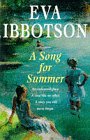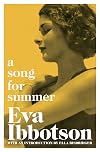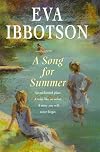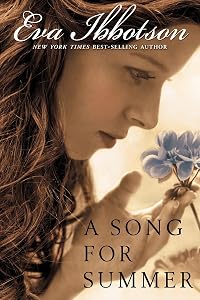
A Song for Summer
by Eva Ibbotson
On This Page
Description
On the eve of World War II, a young Englishwoman takes a job as housemother in a boarding school in Austria. She falls in love with the groundsman who is in reality a Czech composer. The arrival of the Nazis leads to drama, the lovers are separated but they will reunite. By the author of Madensky Square.Tags
Recommendations














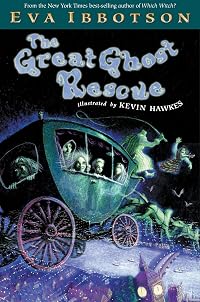
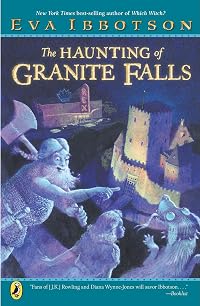
Member Recommendations
Member Reviews
Ellen's suffragette mother and aunts hope that she will be a brilliant scholar or a rising star in some field, but to their horror, what she really wants to do is keep house. When she takes a position as a house-mother for an experimental school in southern Austria, she finds herself charmed by the somewhat feral children and the hapless staff -- and then she meets Marek, the groundskeeper. There's more to him than first meets the eye, and he's in Austria for some very specific reasons -- one of which is smuggling people out of the country as Hitler's influence spreads across Europe. With war looming, what will become of the school -- and of Marek and Ellen's budding romance?
More delightful writing, quirky characters, and a fun setting show more from Ibbotson. This is one of my top three of her romances, for although it shares many of the predictable elements of other books, it feels fresh to me. Who wouldn't love Marek's habit of defenestrating Nazis, for instance? And while I do find parts of the ending frustrating, it's notable that the lovers aren't kept apart by a mere miscommunication. All in all, a satisfying light read. show less
More delightful writing, quirky characters, and a fun setting show more from Ibbotson. This is one of my top three of her romances, for although it shares many of the predictable elements of other books, it feels fresh to me. Who wouldn't love Marek's habit of defenestrating Nazis, for instance? And while I do find parts of the ending frustrating, it's notable that the lovers aren't kept apart by a mere miscommunication. All in all, a satisfying light read. show less
If you have read any of my previous reviews of books by Eva Ibbotson, you already more or less know the plot: The protagonist is a young, beautiful girl who is well-born but eschews her status as part of her love and appreciation for the little joys in life, including domesticity, nature, and rewards reaped from kindness. She is loved by all, including the surly, the old, the young, the birds and the bees. Along comes a princely type who falls for her goodness and simplicity as well as her beauty. Alas, he believes he belongs to another, and she believes he belongs to another, and they go their separate ways. But they never forget each other, and in the end, their love triumphs.
Ibbotson’s books are very, very similar. And yet, there show more are enough differences in each to make the predictability seem familiar and endearing rather than annoying. It’s amazing to me that this is the case, and yet, other Ibbotson fans concur: we love Eva Ibbotson in spite of the fact that we can safely and reliably predict the arc of every single story.
In A Song For Summer, Ellen Carr, in her early twenties, fits the usual Ibbotson profile of small, thin, blonde, and beautiful. Additionally, she has big brown eyes, and is known for being both clever and kind. (In a departure from other Ibbotson heroines, Ellen is not ditsy.) Ellen answers an ad to take a domestic post in Corinthia in the southern end of Austria, in a school at Schloss Hallendorf specializing in music, dama, and dance. (Ibbotson’s books tend to be set in castles, and always involve music, opera, and ballet.) There are flowers everywhere, tended by the mysterious, kind, resourceful and handsome Marek Tarnowsky, age 29, who looks like every other Ibbotson hero: broad-shouldered, with blunt, irregular features, and penetrating eyes.
Marek turns out to be leading a secret life – one both exceptional and noble: he is helping stranded European Jews escape from the Nazis. Moreover, he is a music prodigy. And yet, here he is doing landscaping at the castle. Ellen suspects there is more to Marek than meets the eye, and doesn’t shirk from danger when she too has an opportunity to help save Jews. There are some notable moments in this book when both Marek and Ellen work to rescue the talented violinist Isaac Meierwitz. Marek claims that Isaac is his friend and he “can’t allow” Ellen to take this risk:
"’Don’t!’ She turned on him furiously. ‘Just don’t dare to say this is no job for a woman. My mother and my aunts didn’t get kicked by police horses and thrown to the ground [in the struggle for women’s rights] for you to go around treating me as an imbecile. Furthermore, if war comes no one will bother to distinguish between men and women. Ask the women of Guernica whether anyone cared what sex they were when they bombed the marketplace. Getting Isaac out is part of fighting Hitler and I won’t be left out of it.’”
I liked the fact that Ibbotson balanced Ellen’s love of cooking and cleaning and sewing with a firm commitment to rights for women.
I also liked the insight conveyed when, at one point, Isaac wonders why their contacts – religious Jews – would take risks on Isaac who was practically an atheist:
"But he knew. He himself had scarcely set foot in a synagogue; his mother had been baptized, but Hitler had created a new kind of Jew – someone who existed to be hunted and killed – and [therefore] these unknown men had accepted him as a brother.”
I thought that was an exceptionally perceptive observation.
Isaac, like everyone else, falls in love with Ellen, with “her strange mixture of softness and steel.” But it is only Marek that she wants....
Evaluation: This book has all the usual Eva Ibbotson bare bones, fleshed out by a story of courage and enduring love. I adore all of her books. In spite of their sameness, each one has a bit of something new, and both parts are equally appealing. show less
Ibbotson’s books are very, very similar. And yet, there show more are enough differences in each to make the predictability seem familiar and endearing rather than annoying. It’s amazing to me that this is the case, and yet, other Ibbotson fans concur: we love Eva Ibbotson in spite of the fact that we can safely and reliably predict the arc of every single story.
In A Song For Summer, Ellen Carr, in her early twenties, fits the usual Ibbotson profile of small, thin, blonde, and beautiful. Additionally, she has big brown eyes, and is known for being both clever and kind. (In a departure from other Ibbotson heroines, Ellen is not ditsy.) Ellen answers an ad to take a domestic post in Corinthia in the southern end of Austria, in a school at Schloss Hallendorf specializing in music, dama, and dance. (Ibbotson’s books tend to be set in castles, and always involve music, opera, and ballet.) There are flowers everywhere, tended by the mysterious, kind, resourceful and handsome Marek Tarnowsky, age 29, who looks like every other Ibbotson hero: broad-shouldered, with blunt, irregular features, and penetrating eyes.
Marek turns out to be leading a secret life – one both exceptional and noble: he is helping stranded European Jews escape from the Nazis. Moreover, he is a music prodigy. And yet, here he is doing landscaping at the castle. Ellen suspects there is more to Marek than meets the eye, and doesn’t shirk from danger when she too has an opportunity to help save Jews. There are some notable moments in this book when both Marek and Ellen work to rescue the talented violinist Isaac Meierwitz. Marek claims that Isaac is his friend and he “can’t allow” Ellen to take this risk:
"’Don’t!’ She turned on him furiously. ‘Just don’t dare to say this is no job for a woman. My mother and my aunts didn’t get kicked by police horses and thrown to the ground [in the struggle for women’s rights] for you to go around treating me as an imbecile. Furthermore, if war comes no one will bother to distinguish between men and women. Ask the women of Guernica whether anyone cared what sex they were when they bombed the marketplace. Getting Isaac out is part of fighting Hitler and I won’t be left out of it.’”
I liked the fact that Ibbotson balanced Ellen’s love of cooking and cleaning and sewing with a firm commitment to rights for women.
I also liked the insight conveyed when, at one point, Isaac wonders why their contacts – religious Jews – would take risks on Isaac who was practically an atheist:
"But he knew. He himself had scarcely set foot in a synagogue; his mother had been baptized, but Hitler had created a new kind of Jew – someone who existed to be hunted and killed – and [therefore] these unknown men had accepted him as a brother.”
I thought that was an exceptionally perceptive observation.
Isaac, like everyone else, falls in love with Ellen, with “her strange mixture of softness and steel.” But it is only Marek that she wants....
Evaluation: This book has all the usual Eva Ibbotson bare bones, fleshed out by a story of courage and enduring love. I adore all of her books. In spite of their sameness, each one has a bit of something new, and both parts are equally appealing. show less
Well, that was immersive, wonderful, and utterly heart-wrenching. I'm seriously impressed, as I'm reading Ibbotson's works, that while a lot of thematic elements recur, there's no sense of repetition, and I've yet to find a lead character I wasn't able to invest in significantly. That's some fine skill indeed, and this book exemplifies it well.
Usually I like Eve Ibbotson and am a devoted reader. This one just annoys the snot out of me -- it's like she took her other heroines and went as far out to the logical extreme as she could go. Ellen is jsut the perfect pinnacle of the housewifely arts -- and that would be ok, maybe, since she seems to have some spirit when it comes to disciplining children. But she's such a doormat emotionally, so flat and passive and self-sacrificing in all her romantic endeavors that I could not like her, and I liked Marek even less.
I'll be honest, I fell in love with the cover of this book (as well as several of Ibbotson's other novels) and the title. I drooled over it for a months online, hoping the library would pick it up. When nobody ever did, I bought it myself, to see if it's as good as it looks and to get a feel for Ibbotson's style. Oh man. I am hooked.
The premise of the story is interesting in and of itself - pre-WWII Europe, a handsome man with a secret, a beautiful girl with a heart of gold. I love WWI and WWII stories, so I was already interested. Even knowing it involved WWII ideas, which frequently become quite heart-gripping, I never expected to become so emotionally attached to this novel and/or its characters. In Ellen, I recognized some of myself show more - a desire to see and not become blinded by any one thing/love/person. In Marek -- well, quite simply, in Marek is frank examination of our very humanity. But not in a daunting way. Nothing about this tale is daunting. It feels real. I lived the story. I was caught unawares by the shifts and changes, I got to know the characters as they got to know each other and themselves. I thought about things while reading, and after. And I have made the decision to read more of Ibbotson's novels, because if they are all this good, it's worth tracking them down. show less
The premise of the story is interesting in and of itself - pre-WWII Europe, a handsome man with a secret, a beautiful girl with a heart of gold. I love WWI and WWII stories, so I was already interested. Even knowing it involved WWII ideas, which frequently become quite heart-gripping, I never expected to become so emotionally attached to this novel and/or its characters. In Ellen, I recognized some of myself show more - a desire to see and not become blinded by any one thing/love/person. In Marek -- well, quite simply, in Marek is frank examination of our very humanity. But not in a daunting way. Nothing about this tale is daunting. It feels real. I lived the story. I was caught unawares by the shifts and changes, I got to know the characters as they got to know each other and themselves. I thought about things while reading, and after. And I have made the decision to read more of Ibbotson's novels, because if they are all this good, it's worth tracking them down. show less
A Song for Summer, Ibbotson's latest novel, has traces of all her previous, excellent work, but is something else again. It is billed as a YA, and unselfconsciously hurls adult references and humour in with a classic YA/fairy tale set up (we see our heroine through her whole childhood in the first few pages, to better understand her as an adult. Nevertheless, it also has that charm of a child's story.
In a nutshell, Ellen is a daughter of intellectual women, and grows up in the 1920's and 30's in a houseful of suffragettes and bluestockings. She devastates her fiesty family when she turns out to have a talent for... housework. Her greatest influence is her grandfather's Austrian housekeeper/mistress, and she inevitably turns towards that show more country for her future. On the eve of war in Europe, as the Nazis begin to exercise their dreadful power, Ellen becomes the housekeeper of a strange, alternative school in Austria, where rich people send their problem children to learn Arts and Drama.
The school is populated with an anarchic bunch of students and staff who could give the St Trinians girls a run for their money, but Ellen soon whips them into shape. Occasionally, you could be forgiven for thinking that you are in the Sound of Music, but this is a far more interesting story.
A Song for Summer is a romance (in the true adventurous use of the term as well as a love story) about patisseries and opera. The novel is peopled with wacky, sweet and strange characters, including some truly appalling women. It's about sex and love and the intellect, and music, and domesticity. And, of course, it's about war and what it does to everyday, ordinary people, and how it can even spoil a perfect love story, and corrupt a hero.
But it's also a romance that plays with the conventions of romance, expertly pulling the rug out from under the reader while appearing to be all simple and rustic. It contains some of the most impressively effortless use of the omniscient third person POV used in a post-19th century novel. It's tragic and funny and strange.
It's a page turner. And it has marzipan animals in it. show less
In a nutshell, Ellen is a daughter of intellectual women, and grows up in the 1920's and 30's in a houseful of suffragettes and bluestockings. She devastates her fiesty family when she turns out to have a talent for... housework. Her greatest influence is her grandfather's Austrian housekeeper/mistress, and she inevitably turns towards that show more country for her future. On the eve of war in Europe, as the Nazis begin to exercise their dreadful power, Ellen becomes the housekeeper of a strange, alternative school in Austria, where rich people send their problem children to learn Arts and Drama.
The school is populated with an anarchic bunch of students and staff who could give the St Trinians girls a run for their money, but Ellen soon whips them into shape. Occasionally, you could be forgiven for thinking that you are in the Sound of Music, but this is a far more interesting story.
A Song for Summer is a romance (in the true adventurous use of the term as well as a love story) about patisseries and opera. The novel is peopled with wacky, sweet and strange characters, including some truly appalling women. It's about sex and love and the intellect, and music, and domesticity. And, of course, it's about war and what it does to everyday, ordinary people, and how it can even spoil a perfect love story, and corrupt a hero.
But it's also a romance that plays with the conventions of romance, expertly pulling the rug out from under the reader while appearing to be all simple and rustic. It contains some of the most impressively effortless use of the omniscient third person POV used in a post-19th century novel. It's tragic and funny and strange.
It's a page turner. And it has marzipan animals in it. show less
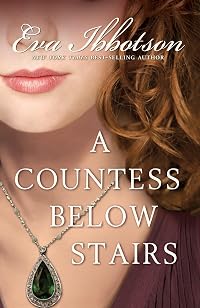
I promptly went out and bought this book after reading the previous one. This book has equally good writing, but I found the plot to be just a tiny bit less satisfying. Ellen leaves her family in England in order to teach at a progressive school in Austria. There she encounters lovably zany teachers, confused young students with hidden depths and talents, and the mysterious gardener Marek. Ellen soon finds her niche at the school, but matters are complicated by the rise of Hitler and the Nazis. Again, the romantic angle of the story was sweet and satisfying, but a little more tragic given the shadow of World War II. For this reason I didn't enjoy the plot quite as much as that of A Countess Below Stairs: I felt like this book couldn't show more decide whether it wanted to be about Ellen and Marek or about the Nazi persecution of Jews. I did really enjoy the music angle, though; Ibbotson clearly has some knowledge and love of it, and as a musician myself I was able to relate to those parts of the book. If you read/have read Countess and like it, you'll probably like this one as well. show less
Members
- Recently Added By
Lists

Books Read in 2013
1,630 works; 51 members

Dishonourable Mentions of 2013
189 works; 63 members

Books Read in 2017
4,249 works; 130 members

Books Read in 2015
3,299 works; 129 members

Best School Stories
219 works; 22 members

Women in War
148 works; 30 members

Books about World War II
241 works; 22 members
Author Information

40+ Works 22,429 Members
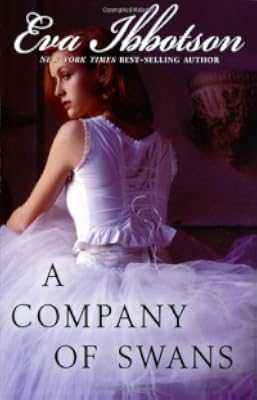
Eva Ibbotson was born in Vienna, Austria, on January 21, 1925. She graduated from Bedford College, London with a degree in physiology in 1945 and the University of Durham with a degree in education in 1965. Her first book, The Great Ghost Rescue, was published in 1975. She primarily wrote children's book and romance novels for adults and young show more adults. Her other works include The Secret of Platform 13, The Star of Kazan, Which Witch?, Island of the Aunts, Dial-a-Ghost, The Ogre of Oglefort, A Company of Swans, and A Song For Summer. She won the Nestlé Smarties Book Prize for Journey to the River Sea. She died on October 20, 2010 at the age of 85. (Bowker Author Biography) show less
Some Editions
Awards and Honors
Notable Lists
Common Knowledge
- Canonical title
- A Song for Summer
- Original publication date
- 1997
- People/Characters
- Ellen Carr; Marek Tarnowsky; Isaac Meierwitz
- Important places
- Vienna, Austria
- Important events
- World War II (1939 | 1945)
- Dedication
- For my family, with love and gratitude
- First words
- In a way they were born to be aunts.
- Last words
- (Click to show. Warning: May contain spoilers.)Marek and Ellen looked at each other. Then: 'I don't see why not,' said Marek, and the three of them linked hands and went to find the boat.
Classifications
Statistics
- Members
- 998
- Popularity
- 26,217
- Reviews
- 23
- Rating
- (3.77)
- Languages
- English, French, German, Spanish
- Media
- Paper, Audiobook, Ebook
- ISBNs
- 26
- ASINs
- 5