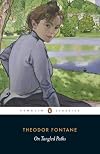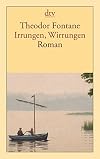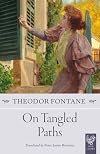
Trials and Tribulations
by Theodor Fontane
On This Page
Description
"In 1870s Berlin, an aristocratic officer in a glamorous cavalry regiment and a seamstress supporting herself and her invalid foster-mother with piecework defy convention by falling seriously in love."--P. [4] of cover.Tags
Recommendations







































Member Recommendations

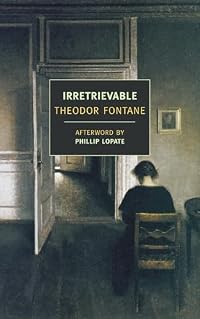
MissBrangwen Although the stories are very different, the main characters, Jane and Lene, reminded me of each other.
Member Reviews
Irrungen, Wirrungen was Fontane's breakthrough novel, written when he was nearly seventy. It feels like a very loosely structured book, more interested in naturalistic description and dialogue than in conventional plotting, and that's really what gives it its charm for modern readers. Fontane gives us long passages of really beautifully observed, inconsequential conversation, the sort of thing we could easily imagine overhearing if we were on a street-corner or in a drawing-room in Berlin in the 1870s, and he tells us in lively detail about what we would see if we drove though the city in a horse-cab or travelled out to a pleasure-resort on the river.
The story itself isn't much - a pleasant romance between a young officer and a show more working-class girl is broken up, by mutual consent, for both of them to marry people of their own class. No big fuss, no divine retribution, just a few sighs on both sides, and the sentimental stuff is left for the reader to invent. And we're also left to work out for ourselves that, even in Prussia, society isn't very far away from getting to a point at which that kind of renunciation would seem ridiculous. The book was controversial when it first appeared because Fontane neither conceals nor criticises the way Botho and Lene share a room at the riverside inn where they've gone for the weekend, but I doubt if that would upset many people today. Very charming. show less
The story itself isn't much - a pleasant romance between a young officer and a show more working-class girl is broken up, by mutual consent, for both of them to marry people of their own class. No big fuss, no divine retribution, just a few sighs on both sides, and the sentimental stuff is left for the reader to invent. And we're also left to work out for ourselves that, even in Prussia, society isn't very far away from getting to a point at which that kind of renunciation would seem ridiculous. The book was controversial when it first appeared because Fontane neither conceals nor criticises the way Botho and Lene share a room at the riverside inn where they've gone for the weekend, but I doubt if that would upset many people today. Very charming. show less
Theodor Fontane is generally considered to be the pinnacle of the realist novel in Germany, something like the German equivalent of Balzac and Dickens. There is one marked difference between his novels and that of his French and English counterparts, though – Fontane’s novels lack any trace of the sensational novel and of melodrama that run so strongly through the work of the other two. There never is much in the way of plot, and even if characters die through suicide or in duels, there is never really any sense of drama to it – even tragic events appear business as usual, pieces of miscellaneous news on the last page of the morning paper whose perusal hardly raises an eyebrow. Depending on the reader’s bias, the resulting show more novels have been called true to life, poetic, or plain boring, but for the most part, Fontane is considered on of the most important German language writers of the late 19th century.
Irrungen, Wirrungen fits quite well into this (the common English translation of this title as “Trials and Tribulations” is quite far off the mark, by the way, ”Delusions, Confusions” is much closer to the German original, while “Entanglements” follows the spirit even as it strays from the letter). The novel, one of Fontane’s earlier ones, does not have an antagonist, does not even really have any conflict – it is about a pair of lovers separated by class, petit bourgeois Lene and aristocratic Botho who spend some time together but then go on to marry someone more appropriate to their social status. In the end, everyone just agrees to do the reasonable thing, and while they might bear some regrets both of the novel’s protagonists see societal conventions as something that cannot be circumvented or rebelled against but only submitted to. Even the reader is left behind wondering if this outcome isn’t the best for everyone concerned after all.
I used to intensely dislike Fontane; after struggling through two of his novels (struggling to stay awake, mostly), I filed him under “terminally boring” and gave up on him. It was somewhat to my surprise, then, that I not only felt the sudden urge to re-read something by Fontane but also found myself actually enjoying it – I suppose this is an indication that I’m getting old.
The plot of Irrungen, Wirrungen, such as it is, is almost reminiscent of Henry James, with class barriers playing the part of the gap between the Old and the New World, but the authorial temperaments of Fontane and James could hardly be more different. Where James constructs a hyper-subtle, extremely close third person point of view, Fontane’s narrator is omniscient and his tone genial and conversational – the German word “gemütlich” nails it quite precisely, evoking some kindly old grandfather figure sitting by the fireplace wrapped in a blanket and with his feet up telling stories from his life and times. But as it turns out, that congeniality is not really to be trusted – it masks just how relentless and without hope of escape a grip social conventions have on the novel’s protagonists. As one of the novel’s minor figures, Frau Dörr, puts it (in an entirely different context but the image seems clearly intended as an emblem for Prussian society in the late 19th century), “It’s a swamp that just pretends to be a meadow.” show less
Irrungen, Wirrungen fits quite well into this (the common English translation of this title as “Trials and Tribulations” is quite far off the mark, by the way, ”Delusions, Confusions” is much closer to the German original, while “Entanglements” follows the spirit even as it strays from the letter). The novel, one of Fontane’s earlier ones, does not have an antagonist, does not even really have any conflict – it is about a pair of lovers separated by class, petit bourgeois Lene and aristocratic Botho who spend some time together but then go on to marry someone more appropriate to their social status. In the end, everyone just agrees to do the reasonable thing, and while they might bear some regrets both of the novel’s protagonists see societal conventions as something that cannot be circumvented or rebelled against but only submitted to. Even the reader is left behind wondering if this outcome isn’t the best for everyone concerned after all.
I used to intensely dislike Fontane; after struggling through two of his novels (struggling to stay awake, mostly), I filed him under “terminally boring” and gave up on him. It was somewhat to my surprise, then, that I not only felt the sudden urge to re-read something by Fontane but also found myself actually enjoying it – I suppose this is an indication that I’m getting old.
The plot of Irrungen, Wirrungen, such as it is, is almost reminiscent of Henry James, with class barriers playing the part of the gap between the Old and the New World, but the authorial temperaments of Fontane and James could hardly be more different. Where James constructs a hyper-subtle, extremely close third person point of view, Fontane’s narrator is omniscient and his tone genial and conversational – the German word “gemütlich” nails it quite precisely, evoking some kindly old grandfather figure sitting by the fireplace wrapped in a blanket and with his feet up telling stories from his life and times. But as it turns out, that congeniality is not really to be trusted – it masks just how relentless and without hope of escape a grip social conventions have on the novel’s protagonists. As one of the novel’s minor figures, Frau Dörr, puts it (in an entirely different context but the image seems clearly intended as an emblem for Prussian society in the late 19th century), “It’s a swamp that just pretends to be a meadow.” show less
The plot is pretty basic: working-class girl meets aristocrat, they fall in love and have one enchanted summer, then reality steps in and he marries an heiress to save the family estate and his own easy, comfortable life. Usually this ends dramatically with either the girl pregnant and/or dead and the jilting lover smitten with remorse or worse. Not so here. Lene enters into the affair with her eyes open, they part amicably, and go their own ways. They never meet again, but they bear no grudges, and the most amazing thing for a novel of this time is that Lene is allowed to find another sort of happiness in marriage.
This novella is a classic for sure. Not much "action", more a slice of life, treating of the spring/summer affair of a working-class seamstress, Lene, and a feckless aristocratic cavalryman, Baron Botho von Rienäcker, set in the 1870s. Each is in love with the other, but each is bound by the class strictures of those days and so chooses to remain in it. Botho marries a rich young lady to save his family estate, and Lene knows they should part--a hint is given when on an overnight trip together, Lene sees the pictures in their hotel room and can't read the English inscription; she realizes he is "untouchable" as marriage material. She does marry a worthy man of her class and Botho suffers in his suffocating marriage with the show more empty-headed Käthe. When a friend comes to Botho for advice on a situation similar to Botho's own, he is advised, although it might bring pain, it is best to stay in his class. In the author's descriptions, Berlin of that time comes to life, and he is a master of dialogue [inner and outer] bringing out the character of his protagonists. This was unforgettable; I don't understand any low ratings. This was a respite from the exciting action-packed, gory book I just finished and maybe I was in the mood for something quiet.
Most highly recommended. show less
Most highly recommended. show less
Una historia de amor sencilla y sin pretensiones pero profunda, de amores que se dejan y dejan honda huella. Entre las frases y citas destacables: "Ha sido un espacio de tiempo corto y hermoso y no olvidaré nada de el". "Fue aquel un día muy hermoso y nunca he estado tan alegre ni he sido tan feliz, Ni antes ni después", "Sí, el recuerdo es mucho, lo es todo. Y ese lo tengo y sigue siendo mío. Y ya no me lo pueden quitar". "Y si esta hora era la última, pues bien, era la última. ¿No era ya un privilegio haber podido vivir un día así? Aún cuando fuera sólo una vez, una única vez.".
Not a review, just to note that this is a translation of Fontane's "Irrungen, Wirrungen". Most other translations are closer to the original German with titles such as "Confusions, Delusions" or "Trials and Tribulations". "On tangled paths" seems quite a free translation of the title !
Acabo de llegir aquest llibre de maduresa de Theodor Fontane que he trobat molt interessant per la descripció acurada i plena de suggeriments d'una societat que tot i ser, per a mi, molt llunyana puc entendre al conèixer una mica la història d'Alemanya de l´època de Bismark (finals del segle XIX).
Els conflictes de classe, una manera discreta de definir els conflictes d'interessos, es present en tot el llibre i Fontane amb una habilitat extraordinària no cau mai en el pamflet o la crítica directa. Amb un contingut distanciament ens explica una història d'amor que en altres mans podria ésser del tot fútil, però ell l'explica amb contenció, de manera que ens permet jutjar per nosaltres mateixos els esdeveniments alhora que ens show more dóna tots els detalls, inclús els més petits.
Això doncs, aquesta saviesa en el domini de la forma literària fa que l`obra mantingui el lector tot el temps interessat, encara que el desenllaç es faci més que previsible des de les primeres pàgines.
Ha estat la meva primera incursió en l'obra de Fontane i penso seguir-ho fent amb altres obres.
He de dir que tant la traducció, que he trobat exquisida, d'Ana Pérez així com la seva presentació i comentaris de l'obra a l'inici
del llibre han estat eines molt útils per a entendre-ho millor i amb precisió. Un bravo també per l'editorial "Catedra. Letras universales"
Miquel show less
Els conflictes de classe, una manera discreta de definir els conflictes d'interessos, es present en tot el llibre i Fontane amb una habilitat extraordinària no cau mai en el pamflet o la crítica directa. Amb un contingut distanciament ens explica una història d'amor que en altres mans podria ésser del tot fútil, però ell l'explica amb contenció, de manera que ens permet jutjar per nosaltres mateixos els esdeveniments alhora que ens show more dóna tots els detalls, inclús els més petits.
Això doncs, aquesta saviesa en el domini de la forma literària fa que l`obra mantingui el lector tot el temps interessat, encara que el desenllaç es faci més que previsible des de les primeres pàgines.
Ha estat la meva primera incursió en l'obra de Fontane i penso seguir-ho fent amb altres obres.
He de dir que tant la traducció, que he trobat exquisida, d'Ana Pérez així com la seva presentació i comentaris de l'obra a l'inici
del llibre han estat eines molt útils per a entendre-ho millor i amb precisió. Un bravo també per l'editorial "Catedra. Letras universales"
Miquel show less
Jul 8, 2010Catalan
Members
- Recently Added By
Author Information

596+ Works 7,080 Members
Fontane's fictional studies of nineteenth-century Berlin society, written in his late maturity, secured him a firm place in literature as a master of the German realist novel; his declared aim was to show "the undistorted reflection of the life we lead." "He introduced his people in spirited conversations at picnics and banquets, and developed a show more broad and yet intimate perspective of background conditions; he was less interested in plots, and often would make a point by silence" (Ernst Rose). Effi Briest (1895), his masterpiece, is a revealing portrait of an individual victimized by outmoded standards. Fontane, on whom Sir Walter Scott had made a deep impression, traveled to England as a journalist and wrote two books based on his experiences: A Summer in London (1854) and Across the Tweed (1860). He also wrote historical novels, poetry, and dramatic criticism. (Bowker Author Biography) show less
Some Editions
Awards and Honors
Notable Lists
Series
Belongs to Publisher Series
Work Relationships
Is contained in
Cécile + Irrungen, Wirrungen + Jenny Treibel + Mathilde Möhring + The Poggenpuhls + Stine + Woman Taken in Adultery by Theodor Fontane
Schach von Wuthenow - Irrungen und Wirrungen - Aus der Serie: Deutsche Klassiker - Bibliothek der literarischen Meisterwerke by Theodor Fontane
Bibliothek deutscher Klassiker Band 51, Theodor Fontane, Werke in vier Bänden, Zweiter Band by Theodor Fontane
Effi Briest + Irretrievable + Irrungen, Wirrungen + Jenny Treibel + The Stechlin + Woman Taken in Adultery by Theodor Fontane
Cécile + Effi Briest + Irrungen, Wirrungen + Jenny Treibel + Mathilde Möhring + Stine + Woman Taken in Adultery by Theodor Fontane
FONTANES WERKE 5 BÄNDEN. 1: Gedichte, Meine Kinderjahre, Erinnerungen, Aufsätze und Kritiken. 2: Schach von Wuthenow, L'Adultera, Stine. 3: Irrungen - Wirrungen, Frau Jenny Treibel. 4: Effi Briest. 5: Der Stechlin (Bibliothek Deutscher Klassiker) by Theodor Fontane
Has as a commentary on the text
Has as a student's study guide
Common Knowledge
- Canonical title
- Trials and Tribulations
- Original title
- Irrungen, Wirrungen
- Alternate titles
- On Tangled Paths; Entanglements; A Suitable Match; Diversions and Entanglements; La serena rinuncia
- Original publication date
- 1888
- People/Characters*
- Botho von Rienäcker; Lene Nimptsch
- Important places
- Berlin, Germany; Zeuthen, Dahme-Spreewald, Brandenburg, Germany
- Related movies*
- Ball im Metropol (1937 | IMDb)
- First words*
- An dem Schnittpunkte von Kurfürstendamm und Kurfürstenstraße, schräg gegenüber dem "Zoologischen", befand sich ind er Mitte der Siebzigerjahre noch eine große, feldeinwärts sich erstreckende Gärtnerei, deren kleines, ... (show all)dreifenstriges, in einem Vorgärten um etwa hundert Schritte zurückgelegenes Wohnhaus, trotz aller Kleinheit und Zurückgezogenheit, von der vorübergehenden Straße her sehr wohl erkannt werden konnte.
- Last words*
- (Click to show. Warning: May contain spoilers.)"Was hast du nur gegen Gideon, Käthe? Gideon ist besser als Botho."
- Original language
- German
- Disambiguation notice
- 345835221X 2008 softcover German insel taschenbuch 3521, Das blaue insel taschenbuch
*Some information comes from Common Knowledge in other languages. Click "Edit" for more information.
Classifications
Statistics
- Members
- 487
- Popularity
- 61,883
- Reviews
- 10
- Rating
- (3.58)
- Languages
- 8 — Danish, Dutch, English, French, German, Hungarian, Italian, Spanish
- Media
- Paper, Audiobook, Ebook
- ISBNs
- 71
- UPCs
- 1
- ASINs
- 23