On This Page
Description
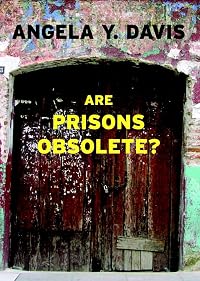
With her characteristic brilliance, grace, and radical audacity, Angela Y. Davis has put the case for the latest abolition movement in American life: the abolition of the prison. As she quite correctly notes, American life is replete with abolition movements, and when they were engaged in these struggles, their chances of success seemed almost unthinkable. For generations of Americans, the abolition of slavery was sheerest illusion. Similarly, the entrenched system of racial segregation show more seemed to last forever, and generations lived in the midst of the practice, with few predicting its passage from custom. The brutal, exploitative (dare one say lucrative?) convict-lease system that succeeded formal slavery reaped millions to southern jurisdictions (and untold miseries for tens of thousands of men, and women). Few predicted its passing from the American penal landscape. Davis expertly argues how social movements transformed these social, political, and cultural institutions, and made such practices untenable. In Are Prisons Obsolete?, Professor Davis seeks to illustrate that the time for the prison is approaching an end. She argues forthrightly for "decarceration," and argues for the transformation of the society as a whole. show lessTags
Recommendations

























Member Reviews
Best for: Those looking for a quick introduction to prison abolition.
In a nutshell: Scholar Angela Y. Davis provides, through six dense chapters, an overview of the problem with prison as the default response to crime, and urges us to consider alternatives.
Line that sticks with me: “A description of supermaxes in a 1997 Human Rights Watch report sounds chillingly like Dicken’s description of Eastern State Penitentiary. What is different, however, is that all references to individual rehabilitation have disappeared.”
Why I chose it: I’m still trying to learn more about prison abolition.
Review: This is a relatively short book at 115 pages, but Dr. Davis packs so much information into it. She provides a good background of how we got show more to this point in the U.S., where we have 5% of the world’s population but 25% of the worlds prisoners. She addresses the evolution from slavery to chain gangs (a concept that will be familiar to those of you who’ve watched “13th”), and looks at the way prison impacts people of color more than white people.
The book also delves into the prison-industrial complex, and how so much of our economy is tied up in the idea of incarceration. From private prisons that rely on keeping people incarcerated to make money, to the government-run institutions that make large purchases from multi-national corporations, prisons make bank on the backs of those most without power.
The final chapter brings into focus the theme that runs throughout: that we need to think about prison in a different way. Why do we assume that prison is necessary? Because we’ve grown up with it. It’s ingrained in our culture. But it isn’t helping the people in our society, so we need to radically change how we think about it. As in other books on prison, this section still leaves me with questions, but I’m getting there. show less
In a nutshell: Scholar Angela Y. Davis provides, through six dense chapters, an overview of the problem with prison as the default response to crime, and urges us to consider alternatives.
Line that sticks with me: “A description of supermaxes in a 1997 Human Rights Watch report sounds chillingly like Dicken’s description of Eastern State Penitentiary. What is different, however, is that all references to individual rehabilitation have disappeared.”
Why I chose it: I’m still trying to learn more about prison abolition.
Review: This is a relatively short book at 115 pages, but Dr. Davis packs so much information into it. She provides a good background of how we got show more to this point in the U.S., where we have 5% of the world’s population but 25% of the worlds prisoners. She addresses the evolution from slavery to chain gangs (a concept that will be familiar to those of you who’ve watched “13th”), and looks at the way prison impacts people of color more than white people.
The book also delves into the prison-industrial complex, and how so much of our economy is tied up in the idea of incarceration. From private prisons that rely on keeping people incarcerated to make money, to the government-run institutions that make large purchases from multi-national corporations, prisons make bank on the backs of those most without power.
The final chapter brings into focus the theme that runs throughout: that we need to think about prison in a different way. Why do we assume that prison is necessary? Because we’ve grown up with it. It’s ingrained in our culture. But it isn’t helping the people in our society, so we need to radically change how we think about it. As in other books on prison, this section still leaves me with questions, but I’m getting there. show less
Brilliant. Angela Davis is such a great writer. This book is concise, engaging, and offers a great start to considering and understanding prison abolition. The examination of underlying institutions and systems, and their relationships in making prisons seem such a "standard" part of society and occupy such an "inevitable" standing in our psyche is done so well in this work. Every paragraph, to me, was eye opening.
this is the perfect primer for beginning thought on prison abolition--a thorough yet concise introduction to the foundation of prison systems all the way through the current (as of 2001 but incredibly prescient & still extremely relevant) problems & influence of the US prison industrial complex. even as someone who has read a lot about abolitionist ideas & the PIC, there were a few moments that I'm going to be thinking about for weeks--davis's section on the history of women's "incarceration" in the domestic sphere alongside discussions of the idea of personal "freedom" & its impact on imprisonment for marginalized/oppressed populations were so thought provoking to me, plus the moment where Davis uses Marx to explain the introduction of show more the prison "sentence." i love u angela davis!!!!!!!!!!! show less
Just an incredible, succinct and deeply powerful read that lays out how prison cannot be reformed, and how it has in fact only increased incredibly in the last 30-40 years. Davis manages to weave history, her personal experiences with the prison system, and gendered analysis of prison into a tight and deeply compelling argument that we must replace the prison system with other forms of justice that do not involve disappearing the poor and racialized. Definitely accessible and a critical read I'd recommend to anyone who has not yet encountered it before--and even if you have, I'd recommend reading it again. I know I will.
Essential reading. By the time I read it, the book is almost 20 years old, and so many of the arguments I’ve heard before. But, it’s necessary and powerful to hear them from Davis, at a minimum to be reminded of the longstanding history of prison abolition that’s made clear just by the existence and persistence of this book. The chapter on gender was amazing and honestly embarrassing (as someone who works professionally in that space) to think how off-track mainstream women’s rights and gender equality spaces have become in the years since Davis wrote this book.
Overall I think this book was great. I really liked how the author discussed the history of American prisons, and how they form the latest link in a chain that includes segregation and Jim Crow laws, the Black Codes of the South, and ultimately slavery. Her point about how people of power - white people - could not imagine a different system for dealing with crime/"crime" than what was in place during their lives, and how these systems did ultimately change, is useful to keep in mind when thinking about prisons and crime in America.
However, I have a major problem with this book.
The author never gives adequate answers to the question of what to do when someone commits a crime. Throughout the book she discusses how we as a society need to show more become less racist, less sexist, and less discriminatory against poor people, and that this will prevent crime. The final chapter is titled 'Abolitionist Alternatives', and where one imagines she will finally elaborate on true ideas for prison alternatives. But no - in fact she chastises the reader for thinking that there should be a punishment when a crime is committed. The author then goes on to rehash her opinions that better education and job opportunities will make prisons obsolete, and then offers the well-worn ideas that making drug and prostitution legal will also make prisons obsolete.
What about those crimes that are truly crimes, like murder? She suggests that we enact some sort of reparative or restorative justice. Her example of this is of a murder in South Africa of a white American woman (an anti-apartheid activist) by a crowd of black South Africans. Her convicted murderers said they were sorry during the Peace and Reconciliation Commissions, and were eventually given cushy instructor/administrative jobs. That's all that happened when these people took away a person's life, and the author would like America to emulate this setup. I cannot agree with her because I think that we owe more to the victims and the victims' loved ones than a simple sorry.
So aside from my major problem with this book, I feel like this is an excellent read. show less
However, I have a major problem with this book.
What about those crimes that are truly crimes, like murder? She suggests that we enact some sort of reparative or restorative justice. Her example of this is of a murder in South Africa of a white American woman (an anti-apartheid activist) by a crowd of black South Africans. Her convicted murderers said they were sorry during the Peace and Reconciliation Commissions, and were eventually given cushy instructor/administrative jobs. That's all that happened when these people took away a person's life, and the author would like America to emulate this setup. I cannot agree with her because I think that we owe more to the victims and the victims' loved ones than a simple sorry.
So aside from my major problem with this book, I feel like this is an excellent read. show less
Davis does an admirable job demonstrating that prisons are racist, unjust, and a central component of a system of exploitation that damages American democracy and economic opportunity. But the fact that prisons are terrible, both in their effects on society and at achieving their stated mission of reducing crime and reforming criminals, does not mean that they are obsolete. The strengths of this book, in linking prisons to endemic American racism and a toxic nexus of political-corporate-senesationalist media power, are undermined by its failure to grapple critically with ideas of security, the failures of the court system, and how prisons both reify and 'correct' various forms of social and psychological deviance. At least its short.
Members
- Recently Added By
Published Reviews
ThingScore 100
In this brilliant, thoroughly researched book, Angela Davis swings a wrecking ball into the racist and sexist underpinnings of the American prison system. Her arguments are well wrought and restrained, leveling an unflinching critique of how and why more than 2 million Americans are presently behind bars, and the corporations who profit from their suffering.
added by krazy4katz
Lists

Phi Beta Kappa reading list
260 works; 8 members

The Black Archives: All Power To the People! Reading List
79 works; 10 members

Reading list
170 works; 1 member

Seven Stories Press
18 works; 1 member

Not the NYT list of top 100 21st century books
100 works; 6 members

United States
35 works; 1 member
Author Information

46+ Works 9,819 Members
Some Editions
Series

Work Relationships
Common Knowledge
- Canonical title
- Are Prisons Obsolete?
- Original publication date
- 2003
- First words
- I should not be listed as the sole author of this book, for its ideas reflect various forms of collaboration over the last six years with activists, scholars, prisoners, and cultural workers who have tried to reveal and con... (show all)test the impact of the prison industrial complex on the lives of people - within and outside prisons - throughout the world. (Acknowledgements)
In most parts of the world, it is taken for granted that whoever is convicted of a serious crime will be sent to prison. - Quotations
- The prison has become a black hole into which the detritus of contemporary capitalism is deposited.
How can we take seriously strategies of restorative rather than exclusively punitive justice? Effective alternatives involve both transformation of the techniques for addressing "crime" and of the social and economic conditio... (show all)ns that track so many children from poor communities, and especially communities of color, into the juvenile system and then on to prison. The most difficult and urgent challenge today is that of creatively exploring new terrains of justice, where the prison no longer serves as our major anchor. - Last words
- (Click to show. Warning: May contain spoilers.)According to Peter Biehl, "We tried to explain that sometimes it pays to shut up and listen to what other people have to say, to ask: 'Why do these terrible things happen?' instead of simply reacting."
- Original language
- English
Classifications
- Genres
- Sociology, Nonfiction, General Nonfiction, Politics and Government, Sexuality and Gender Studies
- DDC/MDS
- 365.973 — Society, government, & culture Social problems and social services Punishment History, geographic treatment, biography North America United States
- LCC
- HV9471 .D375 — Social sciences Social pathology. Social and public welfare. Criminology Social pathology. Social and public welfare. Criminal justice administration Penology. Prisons. Corrections By region or country
- BISAC
Statistics
- Members
- 1,511
- Popularity
- 15,297
- Reviews
- 29
- Rating
- (4.24)
- Languages
- 6 — Catalan, English, French, German, Portuguese, Spanish
- Media
- Paper, Audiobook, Ebook
- ISBNs
- 16
- UPCs
- 1
- ASINs
- 4