Black Noise: Rap Music and Black Culture in Contemporary America
by Tricia Rose
On This Page
Description
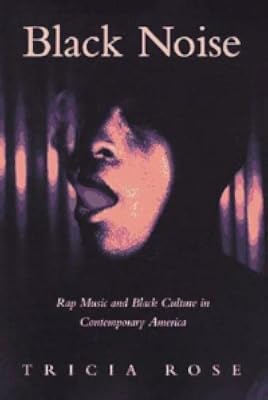
From its beginnings in hip hop culture, the dense rhythms and aggressive lyrics of rap music have made it a provocative fixture on the American cultural landscape. In Black Noise: Rap Music and Black Culture in Contemporary America, Tricia Rose, described by the New York Times as a "hip hop theorist," takes a comprehensive look at the lyrics, music, cultures, themes, and styles of this highly rhythmic, rhymed storytelling and grapples with the most salient issues and debates that surround show more it. Assistant Professor of Africana Studies and History at New York University, Tricia Rose sorts through rap's multiple voices by exploring its underlying urban cultural politics, particularly the influential New York City rap scene, and discusses rap as a unique musical form in which traditional African-based oral traditions fuse with cutting-edge music technologies. Next she takes up rap's racial politics, its sharp criticisms of the police and the government, and the responses of those institutions. Finally, she explores the complex sexual politics of rap, including questions of misogyny, sexual domination, and female rappers' critiques of men. But these debates do not overshadow rappers' own words and thoughts. Rose also closely examines the lyrics and videos for songs by artists such as Public Enemy, KRS-One, Salt N' Pepa, MC Lyte, and L.L. Cool J. and draws on candid interviews with Queen Latifah, music producer Eric "Vietnam" Sadler, dancer Crazy Legs, and others to paint the full range of rap's political and aesthetic spectrum. In the end, Rose observes, rap music remains a vibrant force with its own aesthetic, "a noisy and powerful element of contemporary American popular culture which continues to draw a great deal of attention to itself" [Publisher description]. show lessTags
Recommendations














Member Reviews
In Black Noise: Rap Music and Black Culture in Contemporary America, Tricia Rose offers a framework for critically examining rap music. Rose draws upon the work of Dick Hebdige and Mikhail Bakhtin’s concept of dialogism. She hopes “that this polyvocal approach will encourage other students of culture to deal head-on with the deeply contradictory and multilayered voices and themes expressed in popular culture; to use theoretical ideas in enabling and creative ways; and to try to occupy as many subject positions as possible” (pg. xii). Rose argues, “From the outset, rap music has articulated the pleasures and problems of black urban life in contemporary America. Rappers speak with the voice of personal experience, taking on the show more identity of the observer or narrator” (pg. 2). She continues, “Like all contemporary voices, the rapper’s voice is imbedded in powerful and dominant technological, industrial, and ideological institution” (pg. 2-3).
Of culture, Rose writes, “Cultural forms contain cultural ideas and ways of thinking that are already a part of social life” (pg. 24). To this end, “Hip hop replicates and reimagines the experiences of urban life and symbolically appropriates urban space through sampling, attitude, dance, style, and sound effects” (pg. 22). Addressing the spatial turn, Rose writes, “The postindustrial city, which provided the context for creative development among hip hop’s earliest innovators, shaped their cultural terrain, access to space, materials, and education” (pg. 34). Rose concludes, “In the postindustrial urban context of dwindling low-income housing, a trickle of meaningless jobs for young people, mounting police brutality, and increasingly draconian depictions of young inner city residents, hip hop style is black urban renewal” (pg. 61).
Of connections with larger black traditions, Rose writes, “These hybrids between black music, black oral forms, and technology that are at the core of rap’s sonic and oral power are an architectural blueprint for the redirection of seemingly intractable social ideas, technologies, and ways of organizing sounds along a course that affirms the histories and communal narratives of Afro-diasporic people” (pg. 64). She concludes, “Rap then, is not simply a linear extension of other orally based African-American traditions with beat boxes and cool European electronics added on. Rap is a complex fusion or orality and postmodern technology” (pg. 85). In this way, “Rappers are constantly taking dominant discursive fragments and throwing them into relief, destabilizing hegemonic discourses and attempting to legitimate counterhegemonic interpretations” (pg. 102). Finally, “Rap music’s desire to respond to social issues that pertain to black life in America is part of a long-standing tradition in black culture to refashion dominant transcripts that do not sufficiently address racial slights and insults” (pg. 123).
Addressing issues of gender, Rose writes, “These attacks on black women ultimately reinforce the social domination of black women and have no place in politically progressive struggles” (pg. 104). Rose argues, “By paying close attention to female rappers, we can gain some insight into how young African-American women provide for themselves a relatively safe free-play zone where they creatively address questions of sexual power, the reality of truncated economic opportunity, and the pain of racism and sexism” (pg. 146). Addressing feminist thought, she writes, “For these rappers, and many other black women, feminism is the label for members of a white women’s social movement that has no concrete link to black women or the black community. Feminism signifies allegiance to historically specific movements whose histories have long been the source of frustration for women of color” (pg. 177). show less
Of culture, Rose writes, “Cultural forms contain cultural ideas and ways of thinking that are already a part of social life” (pg. 24). To this end, “Hip hop replicates and reimagines the experiences of urban life and symbolically appropriates urban space through sampling, attitude, dance, style, and sound effects” (pg. 22). Addressing the spatial turn, Rose writes, “The postindustrial city, which provided the context for creative development among hip hop’s earliest innovators, shaped their cultural terrain, access to space, materials, and education” (pg. 34). Rose concludes, “In the postindustrial urban context of dwindling low-income housing, a trickle of meaningless jobs for young people, mounting police brutality, and increasingly draconian depictions of young inner city residents, hip hop style is black urban renewal” (pg. 61).
Of connections with larger black traditions, Rose writes, “These hybrids between black music, black oral forms, and technology that are at the core of rap’s sonic and oral power are an architectural blueprint for the redirection of seemingly intractable social ideas, technologies, and ways of organizing sounds along a course that affirms the histories and communal narratives of Afro-diasporic people” (pg. 64). She concludes, “Rap then, is not simply a linear extension of other orally based African-American traditions with beat boxes and cool European electronics added on. Rap is a complex fusion or orality and postmodern technology” (pg. 85). In this way, “Rappers are constantly taking dominant discursive fragments and throwing them into relief, destabilizing hegemonic discourses and attempting to legitimate counterhegemonic interpretations” (pg. 102). Finally, “Rap music’s desire to respond to social issues that pertain to black life in America is part of a long-standing tradition in black culture to refashion dominant transcripts that do not sufficiently address racial slights and insults” (pg. 123).
Addressing issues of gender, Rose writes, “These attacks on black women ultimately reinforce the social domination of black women and have no place in politically progressive struggles” (pg. 104). Rose argues, “By paying close attention to female rappers, we can gain some insight into how young African-American women provide for themselves a relatively safe free-play zone where they creatively address questions of sexual power, the reality of truncated economic opportunity, and the pain of racism and sexism” (pg. 146). Addressing feminist thought, she writes, “For these rappers, and many other black women, feminism is the label for members of a white women’s social movement that has no concrete link to black women or the black community. Feminism signifies allegiance to historically specific movements whose histories have long been the source of frustration for women of color” (pg. 177). show less
Ratings
Members
- Recently Added By
Lists

culture
320 works; 1 member
Author Information
8 Works 536 Members
Tricia Rose is a professor of American studies at the University of California at Santa Cruz.
Awards and Honors
Awards
Series
Belongs to Publisher Series
Common Knowledge
- Canonical title
- Black Noise: Rap Music and Black Culture in Contemporary America
Classifications
- Genres
- Music, Nonfiction, General Nonfiction, History
- DDC/MDS
- 782.42164 — Arts & recreation Music Vocal music Secular forms of vocal music Songs General principles and musical forms Traditions of secular songs {genres} Western popular songs
- LCC
- ML3531 .R67 — Music Literature on music Literature on music History and criticism Popular music
- BISAC
Statistics
- Members
- 278
- Popularity
- 116,256
- Reviews
- 1
- Rating
- (3.78)
- Languages
- English, Portuguese
- Media
- Paper, Ebook
- ISBNs
- 4
- ASINs
- 2