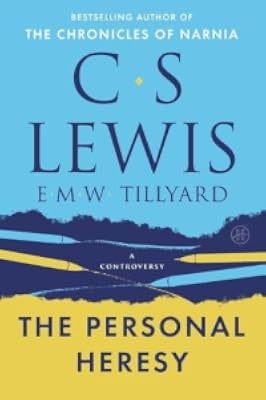
The Personal Heresy: A Controversy
by E. M. W. Tillyard, C. S. Lewis
On This Page
Description
"A repackaged edition of the revered author's set of dueling critical essays with fellow scholar E. M. W. Tillyard in which they debate the role of an author's biography in the critical appraisal of literature. C. S. Lewis--the great British writer, scholar, lay theologian, broadcaster, Christian apologist, and bestselling author of Mere Christianity, The Screwtape Letters, The Great Divorce, The Chronicles of Narnia, and many other beloved classics--challenges fellow scholar E. M. W. show more Tillyard on one of the most intriguing questions involving writers and writing. Is a work of imaginative literature primarily influenced by the author or by the subject matter? Lewis argues that the author's own personality and biography has little to no impact on the writing, while Tillyard contends the opposite: that the author's own imagination and story have an indelible influence on a piece of work. Clever, erudite, and enlightening, their debate may not definitively settle the issue, but it does offer invaluable insight and intellectual delight for all dedicated readers"-- show lessTags
Recommendations


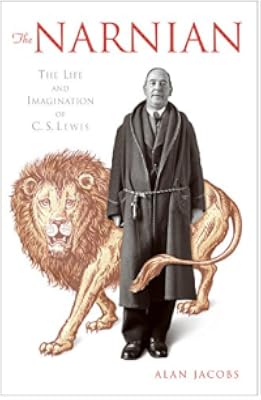
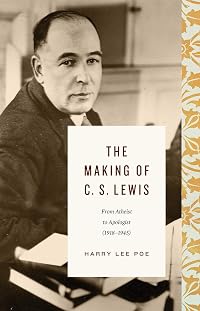
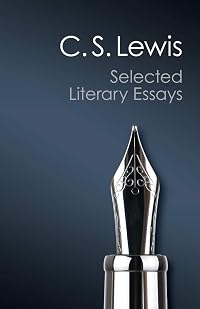

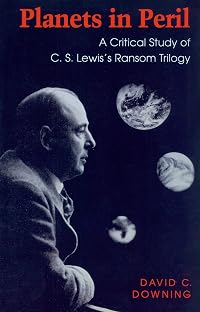














Member Reviews
Summary: A discussion of whether the personality of the author should enter into the criticism of a work of poetry.
In 1934 C. S. Lewis published an article in Essays and Studies to defend this assertion:
In this paper I shall maintain that when we read poetry as poetry should be read, we have before us no representation which claims to be the poet, and frequently no representation of a man, a character, or a personality at all.
The article was written for anyone to take up. E. M. W. Tillyard published a response in the following year that led to two more rounds of responses between Lewis and Tillyard, resulting in this book in its present form.
In a nutshell, the controversy between the two men concerned whether, in poetry, we have access show more to the personality or mind of the poet in some degree (Tillyard) or whether poetry is about something in the world (Lewis). Lewis contends that in poetry, the poet is saying "look at that" and not "look at me."
Tillyard proposes that in a poet's work, we encounter a certain "fixed state of mind." What makes the reading of and reflection upon poetry worthwhile is contact with particularly perceptive minds, and that in literary criticism, to attempt to discern the character of the poet's mind, as well as what that mind perceives is a valuable part of the critic's contribution to understanding a work.
What both strenuously object to is "poetolatry," and particularly using the biography of the poet as some kind of critical shortcut to understanding a work of poetry, without doing the hard work of study and reflection upon the poem itself. The subsequent discussion then is a back and forth between Lewis, who thinks personality does not enter in any important way in the understanding of a poem, and Tillyard, who tries to find various arguments and approaches and examples to persuade Lewis, and the reader, otherwise.
It is of a piece with works like The Abolition of Man, in Lewis's defense of the objective against the incursions of relativism and subjectivism. While I find myself in agreement with Lewis, and particularly with the slipperiness of assertions about an author's personality, I also recognize that the style and perception of different writers does reflect something of their unique personalities. The problem, it seems is saying just what this is, and in this case, I think we are wiser to stick with Lewis's approach, because the work, and what the poet has said in it about something is really all we have. Anything else seems largely a speculative venture, at least in my own critically untrained opinion!
One of the delights in reading this is to see two scholars sharpening each other's thoughts in dialogue, while respecting the person with whom they are in disagreement. It also strikes me as characteristic of many academic dialogues I have observed--while ideas are sharpened and clarified, positions rarely change, at least within the frame of such a discussion. The ground of disagreement may diminish, the areas of common agreement are more clearly articulated, but usually some fundamental disagreement remains. Even if you do not understand all the terms of the argument, this is a glimpse of the academic world at its best, as these closing words of E. M. W. Tillyard suggest:
...Mr. Lewis is an admirable person to disagree with; and I incline to admire his arguments as much when they seem wrong as when they seem right. He is, indeed, the best kind of opponent, good to agree with when one can, and for an enemy as courteous as he is honest and uncompromising; the kind of opponent with whom I should gladly exchange armour after a parley, even if I cannot move my tent to the ground where his own is pitched.
Would that the university world, and our public discourse were marked more by this kind of spirit! show less
In 1934 C. S. Lewis published an article in Essays and Studies to defend this assertion:
In this paper I shall maintain that when we read poetry as poetry should be read, we have before us no representation which claims to be the poet, and frequently no representation of a man, a character, or a personality at all.
The article was written for anyone to take up. E. M. W. Tillyard published a response in the following year that led to two more rounds of responses between Lewis and Tillyard, resulting in this book in its present form.
In a nutshell, the controversy between the two men concerned whether, in poetry, we have access show more to the personality or mind of the poet in some degree (Tillyard) or whether poetry is about something in the world (Lewis). Lewis contends that in poetry, the poet is saying "look at that" and not "look at me."
Tillyard proposes that in a poet's work, we encounter a certain "fixed state of mind." What makes the reading of and reflection upon poetry worthwhile is contact with particularly perceptive minds, and that in literary criticism, to attempt to discern the character of the poet's mind, as well as what that mind perceives is a valuable part of the critic's contribution to understanding a work.
What both strenuously object to is "poetolatry," and particularly using the biography of the poet as some kind of critical shortcut to understanding a work of poetry, without doing the hard work of study and reflection upon the poem itself. The subsequent discussion then is a back and forth between Lewis, who thinks personality does not enter in any important way in the understanding of a poem, and Tillyard, who tries to find various arguments and approaches and examples to persuade Lewis, and the reader, otherwise.
It is of a piece with works like The Abolition of Man, in Lewis's defense of the objective against the incursions of relativism and subjectivism. While I find myself in agreement with Lewis, and particularly with the slipperiness of assertions about an author's personality, I also recognize that the style and perception of different writers does reflect something of their unique personalities. The problem, it seems is saying just what this is, and in this case, I think we are wiser to stick with Lewis's approach, because the work, and what the poet has said in it about something is really all we have. Anything else seems largely a speculative venture, at least in my own critically untrained opinion!
One of the delights in reading this is to see two scholars sharpening each other's thoughts in dialogue, while respecting the person with whom they are in disagreement. It also strikes me as characteristic of many academic dialogues I have observed--while ideas are sharpened and clarified, positions rarely change, at least within the frame of such a discussion. The ground of disagreement may diminish, the areas of common agreement are more clearly articulated, but usually some fundamental disagreement remains. Even if you do not understand all the terms of the argument, this is a glimpse of the academic world at its best, as these closing words of E. M. W. Tillyard suggest:
...Mr. Lewis is an admirable person to disagree with; and I incline to admire his arguments as much when they seem wrong as when they seem right. He is, indeed, the best kind of opponent, good to agree with when one can, and for an enemy as courteous as he is honest and uncompromising; the kind of opponent with whom I should gladly exchange armour after a parley, even if I cannot move my tent to the ground where his own is pitched.
Would that the university world, and our public discourse were marked more by this kind of spirit! show less
I’m torn on how to rate this book because I’m not entirely confident I grasped all the academic nuances. This text is a collection of essays spanning several years, presenting a dialogue between two prominent scholars about how literature—especially poetry—should be approached. The core of the debate is whether it is essential to understand an author’s personal life and experiences in order to fully appreciate their work, or if the work can be understood on its own merits. I personally find myself aligning more with C.S. Lewis’s perspective, that the work itself holds the key to interpretation, independent of the author’s biography. However, I must admit, some of the academic discussions were challenging to fully follow.
Ratings
Members
- Recently Added By
Author Information

23+ Works 1,774 Members

535+ Works 523,881 Members
C. S. (Clive Staples) Lewis, "Jack" to his intimates, was born on November 29, 1898 in Belfast, Ireland. His mother died when he was 10 years old and his lawyer father allowed Lewis and his brother Warren extensive freedom. The pair were extremely close and they took full advantage of this freedom, learning on their own and frequently enjoying show more games of make-believe. These early activities led to Lewis's lifelong attraction to fantasy and mythology, often reflected in his writing. He enjoyed writing about, and reading, literature of the past, publishing such works as the award-winning The Allegory of Love (1936), about the period of history known as the Middle Ages. Although at one time Lewis considered himself an atheist, he soon became fascinated with religion. He is probably best known for his books for young adults, such as his Chronicles of Narnia series. This fantasy series, as well as such works as The Screwtape Letters (a collection of letters written by the devil), is typical of the author's interest in mixing religion and mythology, evident in both his fictional works and nonfiction articles. Lewis served with the Somerset Light Infantry in World War I; for nearly 30 years he served as Fellow and tutor of Magdalen College at Oxford University. Later, he became Professor of Medieval and Renaissance English at Cambridge University. C.S. Lewis married late in life, in 1957, and his wife, writer Joy Davidman, died of cancer in 1960. He remained at Cambridge until his death on November 22, 1963. (Bowker Author Biography) show less
Some Editions
Common Knowledge
- Original publication date
- 1939
Classifications
- Genres
- Nonfiction, Literature Studies and Criticism, Fiction and Literature, Religion & Spirituality
- DDC/MDS
- 808.1 — Literature & rhetoric Literature, rhetoric & criticism Rhetoric and collections of literary texts from more than two literatures Rhetoric of poetry
- LCC
- PN1031 .T455 — Language and Literature Literature (General) Literature (General) Poetry Theory, philosophy, relations, etc.
- BISAC
Statistics
- Members
- 114
- Popularity
- 285,591
- Reviews
- 2
- Rating
- (3.90)
- Languages
- English
- Media
- Paper, Ebook
- ISBNs
- 5
- ASINs
- 2