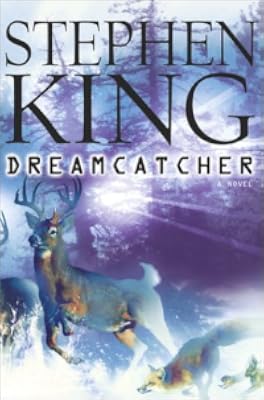
Dreamcatcher
by Stephen King
On This Page
Description
Four men who reunite every year during hunting season in the woods of Maine, encounter a disoriented, incoherent stranger who drags the men into a terrifying struggle with a creature from another world, and their only chance for survival lies in their shared past.Tags
Recommendations











Member Reviews
In Dreamcatcher, four men, friends since childhood, are out hunting in the woods of Maine. A lone hunter stumbles upon their cabin sputtering nonsense about mysterious "lights in the sky" while being plagued with the worst case of gas ever imaginable. It's Stephen King so you know what's coming.
The first third of the book is great. King hooks us right in and then beats a frantic pace: a snowmobile barreling through the woods with the reader being dragged gleefully through the snow. We can't help but stay up late turning those pages to find out what happens next. He seems merciful when he idles down the pace for the middle third so that we can catch our breath and brush off some of that snow.
But it dawns on me that some of this landscape show more seems familiar. We're given backstory on the protagonists, a group of men who've been friends since childhood, albeit a bit more distant (It). We get the long-winded side trip flashback, a King staple, where the boys confronted an evil back then (though it was a different evil) and now, as adults, face an evil alien threat in the woods (Tommyknockers). And then there's the psychotic government agent who becomes obsessed with one of the protagonists (Firestarter) and starts to hunt him down. Stephen King is one of the most prolific writers of our age. So, it shouldn't come as a surprise that he began re-using some elements of past stories. But I was willing to let all this slide if the book ended well.
The final chase consumes the last third of the book, but it drags. And when the crisis is resolved, it felt anti-climactic. Although King doesn't use the old "it was all a dream" cliche, the ending, for me at least, was just as insulting. I had to re-read it a couple times just to make sure I was reading it right. Maybe this was some kind of catharsis for King. He wrote this story while recovering from the accident where he was struck by a minivan (which is paralleled by one of the characters here). I haven't read any other of his post-accident works and after reading this I'm not sure when I will. show less
The first third of the book is great. King hooks us right in and then beats a frantic pace: a snowmobile barreling through the woods with the reader being dragged gleefully through the snow. We can't help but stay up late turning those pages to find out what happens next. He seems merciful when he idles down the pace for the middle third so that we can catch our breath and brush off some of that snow.
But it dawns on me that some of this landscape show more seems familiar. We're given backstory on the protagonists, a group of men who've been friends since childhood, albeit a bit more distant (It). We get the long-winded side trip flashback, a King staple, where the boys confronted an evil back then (though it was a different evil) and now, as adults, face an evil alien threat in the woods (Tommyknockers). And then there's the psychotic government agent who becomes obsessed with one of the protagonists (Firestarter) and starts to hunt him down. Stephen King is one of the most prolific writers of our age. So, it shouldn't come as a surprise that he began re-using some elements of past stories. But I was willing to let all this slide if the book ended well.
The final chase consumes the last third of the book, but it drags. And when the crisis is resolved, it felt anti-climactic. Although King doesn't use the old "it was all a dream" cliche, the ending, for me at least, was just as insulting. I had to re-read it a couple times just to make sure I was reading it right. Maybe this was some kind of catharsis for King. He wrote this story while recovering from the accident where he was struck by a minivan (which is paralleled by one of the characters here). I haven't read any other of his post-accident works and after reading this I'm not sure when I will. show less
I've got good news and bad news. The good news is, Dreamcatcher is not just a rehash of It. The bad news is it's a rehash of The Tommyknockers, too, which is perhaps my least favorite of all of King's works.
All right, maybe that's not quite fair. Dreamcatcher does involve aliens, a secret in the woods, and telepathy, but it's not exactly a carbon copy of The Tommyknockers. It re-uses pieces of many of King's works. There's the "adults who bonded as children and did a great thing" theme from It. There's also the "child with a great secret power" trope from The Shining and/or Firestarter. Granted, Duddits is technically an adult, but he is retarded and therefore retains, quite literally, the mind of a child, as evidenced by everyone show more calling him by his childhood name. Duddits is also reminiscent of Tom Cullen from The Stand, as another example of the sweet and noble retarded person who, after enduring great hardship, saves the day, or at least a piece of it. Speaking of The Stand, let's talk about a nasty, virulent disease that wipes out around 99% of the population. Granted, in this case the "disease" is actually a creature, and the affected area is relatively small, but within that area, the terminal rates are about the same.
So what's the big deal, you ask? King has always re-used certain themes in his work: kids in danger, life in Maine, narrators who are writers; why am I harping on this one book in particular? I'm harping on it because he doesn't bring anything new to plate this time. In the past, these themes were simply a framework of familiarity to hang a new story on. It was fun for long-time readers to get the references to previous characters and stories, and to feel like they knew the territory. We've been to Derry and Castle Rock so many times it feels like we belong there. But in Dreamcatcher, it doesn't feel like King's using similar elements. It feels like he's telling the same stories, albeit in bits and pieces and mixed around some. You know how you feel when you watch a movie adaptation of a Stephen King book? With a few notable exceptions, they just don't get it right. The casting is a little bit off or the script keeps the wrong parts of the story (or loses the wrong parts). The bones of the book you loved are there, but the mad doctor put them together all wrong, attaching a femur to a vertebra, or the skull to a kneecap. That's how Dreamcatcher felt to me: right pieces, wrong place.
King is an amazing storyteller; he always has been. Even the books I didn't particularly like, I finished. I find that I get caught up in his stories despite myself, and I have to follow through to the end. Maybe that's the crux of my displeasure with Dreamcatcher; I know King is capable of so much more. Authors aren't perfect. Some books are going to be better than others. You just hope that over the course of a career, the good books outweigh the weak ones. show less
All right, maybe that's not quite fair. Dreamcatcher does involve aliens, a secret in the woods, and telepathy, but it's not exactly a carbon copy of The Tommyknockers. It re-uses pieces of many of King's works. There's the "adults who bonded as children and did a great thing" theme from It. There's also the "child with a great secret power" trope from The Shining and/or Firestarter. Granted, Duddits is technically an adult, but he is retarded and therefore retains, quite literally, the mind of a child, as evidenced by everyone show more calling him by his childhood name. Duddits is also reminiscent of Tom Cullen from The Stand, as another example of the sweet and noble retarded person who, after enduring great hardship, saves the day, or at least a piece of it. Speaking of The Stand, let's talk about a nasty, virulent disease that wipes out around 99% of the population. Granted, in this case the "disease" is actually a creature, and the affected area is relatively small, but within that area, the terminal rates are about the same.
So what's the big deal, you ask? King has always re-used certain themes in his work: kids in danger, life in Maine, narrators who are writers; why am I harping on this one book in particular? I'm harping on it because he doesn't bring anything new to plate this time. In the past, these themes were simply a framework of familiarity to hang a new story on. It was fun for long-time readers to get the references to previous characters and stories, and to feel like they knew the territory. We've been to Derry and Castle Rock so many times it feels like we belong there. But in Dreamcatcher, it doesn't feel like King's using similar elements. It feels like he's telling the same stories, albeit in bits and pieces and mixed around some. You know how you feel when you watch a movie adaptation of a Stephen King book? With a few notable exceptions, they just don't get it right. The casting is a little bit off or the script keeps the wrong parts of the story (or loses the wrong parts). The bones of the book you loved are there, but the mad doctor put them together all wrong, attaching a femur to a vertebra, or the skull to a kneecap. That's how Dreamcatcher felt to me: right pieces, wrong place.
King is an amazing storyteller; he always has been. Even the books I didn't particularly like, I finished. I find that I get caught up in his stories despite myself, and I have to follow through to the end. Maybe that's the crux of my displeasure with Dreamcatcher; I know King is capable of so much more. Authors aren't perfect. Some books are going to be better than others. You just hope that over the course of a career, the good books outweigh the weak ones. show less
This novel is just a hot freaking mess. It's hot garbage. It's a dumpster fire.
The first time I read this, I remember being not overly impressed, but I didn't actually hate the thing.
This time around, I was ready to just stop at least five times...in five days. Through the entire miserable experience, I kept wondering if this was a trunk novel he'd had kicking around during his drug-addled days. After I finished I found out he wrote it longhand while recovering from the accident.
My problems are many with this novel, but there's a couple of overriding elements that just ruined this experience for me.
The first is, King can't really write SF. He obviously loves the genre, and it's obvious that he tries to bring a human element into it. He show more tried it with TOMMYKNOCKERS and he'll give passing nods to it down the road in UNDER THE DOME and a little less in THE INSTITUTE. But, at least for me, while it always starts out really promising, it never works out.
The second reason—again, just for me—that it doesn't work out, and why this book is so much of a dumpster fire is because of all the "in the head" stuff that King slathers into this novel. We're in Henry's head. We're in Jonesy's head. We're in Mr. Gray's head. There's rooms in there. And boxes. And fax machines.
And it, to me, comes across as really amateurish and boring.
There's other stuff. The chase scene that runs about a third of the novel. Even the set up that runs a third of the novel before the military shows up. Kurtz is easily one of the worst characters King's ever dreamed up.
And yet...
There's smaller, far less important (and often completely unneeded) scenes, mostly centred around the four guys and Duddits when they were young that hinted at the incredible writer King can be.
This, at times, felt like a twisted IT pastiche, and I also (once again, personal opinion) feel that, had King done alternating young group/older group chapters, it would have been a better paced novel.
It's absolutely not the worst book that has Stephen King's name on it (that is, and always will be the toilet paper replacement GWENDY'S FINAL TASK) however, I'd always considered King's other SF travesty TOMMYKNOCKERS as his worst solo novel. I've reconsidered that. It's now only second worst.
This one now sits comfortably in that spot. show less
The first time I read this, I remember being not overly impressed, but I didn't actually hate the thing.
This time around, I was ready to just stop at least five times...in five days. Through the entire miserable experience, I kept wondering if this was a trunk novel he'd had kicking around during his drug-addled days. After I finished I found out he wrote it longhand while recovering from the accident.
My problems are many with this novel, but there's a couple of overriding elements that just ruined this experience for me.
The first is, King can't really write SF. He obviously loves the genre, and it's obvious that he tries to bring a human element into it. He show more tried it with TOMMYKNOCKERS and he'll give passing nods to it down the road in UNDER THE DOME and a little less in THE INSTITUTE. But, at least for me, while it always starts out really promising, it never works out.
The second reason—again, just for me—that it doesn't work out, and why this book is so much of a dumpster fire is because of all the "in the head" stuff that King slathers into this novel. We're in Henry's head. We're in Jonesy's head. We're in Mr. Gray's head. There's rooms in there. And boxes. And fax machines.
And it, to me, comes across as really amateurish and boring.
There's other stuff. The chase scene that runs about a third of the novel. Even the set up that runs a third of the novel before the military shows up. Kurtz is easily one of the worst characters King's ever dreamed up.
And yet...
There's smaller, far less important (and often completely unneeded) scenes, mostly centred around the four guys and Duddits when they were young that hinted at the incredible writer King can be.
This, at times, felt like a twisted IT pastiche, and I also (once again, personal opinion) feel that, had King done alternating young group/older group chapters, it would have been a better paced novel.
It's absolutely not the worst book that has Stephen King's name on it (that is, and always will be the toilet paper replacement GWENDY'S FINAL TASK) however, I'd always considered King's other SF travesty TOMMYKNOCKERS as his worst solo novel. I've reconsidered that. It's now only second worst.
This one now sits comfortably in that spot. show less
For all those people who call this a shitweasle of a novel, I would like like point out that it does exactly what it sets out to do. Maybe the usual King fan comes to the chopping block expecting nothing but detailed flawed characters and some rather heartwrenching stuff before a paranormal beastie chomps down.
But I would like to posit that SK IS a fan of Science Fiction. :) Sure, a few of his SF tales like Lawnmower Man and Tommyknockers might not get the love that they deserve, but remember, he also wrote that little epic called the Dark Tower. :)
So let's break this down a bit. We literally get to the heart of the novel through our guts at the beginning, Shitweasels and all, playing on all the paranoid fantasies of... um... SO MANY show more PEOPLE... by bringing in anal probing aliens. With a particularly gross twist, thank you very much, Mr. King. And then we get into the whole telepathy thing, the Aliens-type setup, and even a Theodore Sturgeon *More Than Human* homage with a very special special person holding this group of old friends together.
For the longest time I got the idea that it was kinda a Tommyknockers part 2, but then I laughed aloud when we got a massive direct reference to the boys and girl from IT, including Pennywise, and then I started seeing a lot more combined references to all his other novels. As per usual, but nicely solid and world-buildy. :)
In the end, I'm frankly rather amazed at what King pulls off here. Massive military action, chases, alien invasions and spore people and shitweasles and more, we even get a Battle For Your Mind. :) Dreamcatcher, indeed.
What is this book? A traditional horror as per usual? Nope. This is a great mashup that builds on the full Crimson King mythology, thank you very much. :) Pretty hardcore, too.
So why does it get a lot of hate?
Parts are juvenile and crass and other parts are free-range weird. But I like both on ocassion, so this is something I can snuggle up to. *ahem* or stay on the pot with. :) show less
But I would like to posit that SK IS a fan of Science Fiction. :) Sure, a few of his SF tales like Lawnmower Man and Tommyknockers might not get the love that they deserve, but remember, he also wrote that little epic called the Dark Tower. :)
So let's break this down a bit. We literally get to the heart of the novel through our guts at the beginning, Shitweasels and all, playing on all the paranoid fantasies of... um... SO MANY show more PEOPLE... by bringing in anal probing aliens. With a particularly gross twist, thank you very much, Mr. King. And then we get into the whole telepathy thing, the Aliens-type setup, and even a Theodore Sturgeon *More Than Human* homage with a very special special person holding this group of old friends together.
For the longest time I got the idea that it was kinda a Tommyknockers part 2, but then I laughed aloud when we got a massive direct reference to the boys and girl from IT, including Pennywise, and then I started seeing a lot more combined references to all his other novels. As per usual, but nicely solid and world-buildy. :)
In the end, I'm frankly rather amazed at what King pulls off here. Massive military action, chases, alien invasions and spore people and shitweasles and more, we even get a Battle For Your Mind. :) Dreamcatcher, indeed.
What is this book? A traditional horror as per usual? Nope. This is a great mashup that builds on the full Crimson King mythology, thank you very much. :) Pretty hardcore, too.
So why does it get a lot of hate?
Parts are juvenile and crass and other parts are free-range weird. But I like both on ocassion, so this is something I can snuggle up to. *ahem* or stay on the pot with. :) show less
Four lifelong friends head off into the woods for their annual reunion and hunting trip. Separated by a snowstorm they run into a stranger with a serious flatulence problem. The hilarious farting soon turns into something more sinister as a deadly alien parasite emerges and the landscape becomes covered in patches of a red fungus-like material which infects anyone who comes into contact with it. Two of the friends perish, but Jonesy, immune to the fungus is taken over as a vehicle for the alien contagion to escape from a brutal quarantine zone established by the army. Henry forms a telepathic bond with a disaffected soldier and between them they try to stop the aliens taking over the planet.
Dreamcatcher is quite unusual for a Stephen show more King novel. There are no ghosts, vampires or monsters and no alcoholic writers and this is pretty much a tale about alien invasion and the heavy handed response of the US military, with a bit of supernatural thrown in at the edges. It's an interesting read as King threads together a partnership between the friends who must destroy each other to save the world, the mad, bloodthirsty army commander and a dying boy with what I assume is Downs Syndrome. In reading it your sympathies for the characters are constantly shifting and the boundaries between the good guys and the bad guys are extremely blurred. Too long by 100 pages or so. show less
Dreamcatcher is quite unusual for a Stephen show more King novel. There are no ghosts, vampires or monsters and no alcoholic writers and this is pretty much a tale about alien invasion and the heavy handed response of the US military, with a bit of supernatural thrown in at the edges. It's an interesting read as King threads together a partnership between the friends who must destroy each other to save the world, the mad, bloodthirsty army commander and a dying boy with what I assume is Downs Syndrome. In reading it your sympathies for the characters are constantly shifting and the boundaries between the good guys and the bad guys are extremely blurred. Too long by 100 pages or so. show less
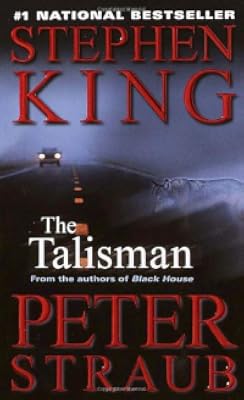
Whew... There's a lot that I want to say about this book, and I'm not really sure where to start. I first read this book back in... oh, 2002 or 2003, maybe, and I can absolutely say that I did NOT get much out of it. Sure, it's still a thrill ride, still entertaining, but it was definitely not his best, in my, somewhat oblivious opinion. But see... I was something of a King Re-reader back then. I had my favorites - 'The Stand', 'The Shining', 'The Talisman', 'Needful Things' - to name a few, and I read, and re-read, and re-read those favorites, so, I wasn't as well versed on my King Universe back then as I am now.
Now, having read many more of King's "inter-related" books, I see the threads that bind them all together. Reading this show more again now was like... well, kind of like meeting a cool person at a bar, having a really interesting conversation with them, and then 7 years later finding out they are a long lost relative. That feeling of recognition is the same, although probably toned down a little since this is a book and NOT a long lost relative. Many, many times though, my eyes popped open and I'm like "OH! That's a reference to...!" or "WOW! I see where he's going!" etc.
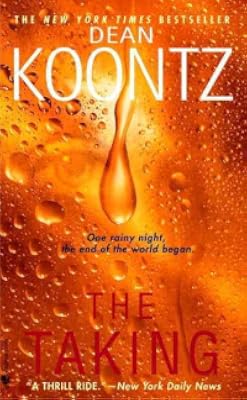
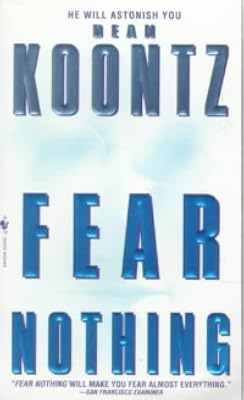
For instance, the number 19 crops up many times, as does the color red (or crimson, if you like that better), as does the theme of children bonding for life and for better or for worse, no matter where their adulthood may take them, King's own accident, etc. But in addition to the many references to King's other works and life (which I've barely even touched on), there are references here to many external things that I never recognized before. Things like twice calling Duddits a "tribble", which is a reference to Star Trek, or like the red growth that is very reminiscent of the mossy red flora from 'The War of the Worlds' by H.G. Wells (and speaking of, Dean Koontz borrowed the idea for his semi-recentish book 'The Taking'), or the "Turn the dial up to 11" line from the movie "This is Spinal Tap".
Aside from all of these references, the story itself was a "pisser", as Beaver would say. Three parts sci-fi, one part fantasy and a tablespoon-full of tongue-in-cheek prophecy, it's definitely a rollercoaster. I mentioned to friends when I started this book (or maybe I just wrote it down, I dunno) that it reads like a movie. Lots of King's books do, which is possibly why so many have been adapted, but this one especially felt that way to me. I would set the book down for a minute, to freshen my drink, or move a cat-paw that was creeping oh-so-subtly onto the page because everyone knows that cats can't sleep next to a reading human unless they are obstructing the view in some way, and it would be just like I pressed the pause button. When I pick the story back up, I'm right back where I was, like the interruption never occurred.
We start out meeting Pete, Beaver, Jonesy and Henry as adults, and then throughout the story we find out about their childhood and what (and who) bonded them together. Beaver is my favorite character. Dubbed such an appealing and cool nickname due to his habit of always chewing on a toothpick, he has a foul mouth and a heart of gold. I love the way King describes Beaver, and shows us his general character in three sentences: "His glasses started to unfog then, and he saw the stranger on the couch. He lowered his hands, slowly, then smiled. That was one of the reasons Jonesy had loved him ever since grade school, although the Beav could be tiresome and wasn't the brightest bulb in the chandelier, by any means: his first reaction to the unplanned and unexpected wasn't a frown but a smile." This passage makes me love him too. He's got a bit of innocence about him... and a kind of raunchy purity.
I'm not going to go into the rest of the guys, that would take a long time... but I would like to talk about the characters. Suffice it to say that each of the friends are perfect and flawed in their own ways, but none of them are as dear to me as Beaver. I love Duddits too, who is really innocent perfection epitomized. He's got Down Syndrome, and with that a kind of extrasensory ability that makes him special- probably more special than anyone else.
Roberta Cavell, Duddits's mom, is another of my favorite characters. She's got very small parts in this story, but each and every one of them touch my heart. The woman is almost saintly! When Duddit's leaves with Henry, and Roberta crumples, it just breaks my heart. King spent barely two pages on this, but I felt it as if it was happening to me.
Abe Kurtz, the main military madman, is plain old crazy like a fox and as unpredictable as a tornado. Owen Underhill is Kurtz's right hand man, but one who happens to still have a spark of humanity in him. And speaking of humanity, this brings me to Mr. Gray...
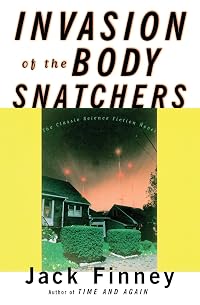
Mr. Gray is an alien life form whose sole purpose is to survive by any means necessary. Not just himself, but his race. These aliens are alien in every sense of the word. They are inhuman, don't understand humans, don't understand our emotions or thoughts or anything. They just seek to continue to exist and emotionlessly do what it takes to ensure that. They are smart, but in a wily, calculating way. Mr. Gray finds and infiltrates Jonesy's body, in a kind of "Invasion of the Body Snatchers" way. (This happens quite early in the story, so I'm not giving anything away, don't worry.) What happens then though, to Mr. Gray specifically, is very interesting to me.
King is really a master at showing us what humanity looks like. All parts of it. His stories are all people stories in which horror or gore or whatever is used to bring out the best and worst in us. If King ever had a theme, that's it. But here we have an inhuman, emotionless, calculating being who has none of that - only a relentless will to propagate. And then King shows us how this being starts to become human. And this I find fascinating, because it's one thing to plumb the depths of someone's soul and find out who they really are, but it's something else entirely to watch someone becoming that person.
"Becoming" is usually depicted as that which we know turning into something we don't know, something that terrifies or horrifies us. People turning into monsters, vampires, or werewolves are the most common supernatural cases. But slowly slipping into madness is another case, and 'The Shining' comes instantly to mind as Jack becomes more and more unstable and dangerous. But here we have an alien becoming human - craving food, thrilling in the human emotions that it's never before experienced, enjoying curiosity for the first time, feeling the rush of adrenaline and wanting more and more - and I thought it was fascinating to see humanity being the unknown and feared trait... to see things from the other perspective.
Anyway, I really did enjoy this story this time around. I enjoyed it the first time, but this time I feel like I got so much more out of it. This book is entertaining in its own right, but much much more so for the Constant Reader who can spot all the references embedded within it. :) show less
Now, having read many more of King's "inter-related" books, I see the threads that bind them all together. Reading this show more again now was like... well, kind of like meeting a cool person at a bar, having a really interesting conversation with them, and then 7 years later finding out they are a long lost relative. That feeling of recognition is the same, although probably toned down a little since this is a book and NOT a long lost relative. Many, many times though, my eyes popped open and I'm like "OH! That's a reference to...!" or "WOW! I see where he's going!" etc.
For instance, the number 19 crops up many times, as does the color red (or crimson, if you like that better), as does the theme of children bonding for life and for better or for worse, no matter where their adulthood may take them, King's own accident, etc. But in addition to the many references to King's other works and life (which I've barely even touched on), there are references here to many external things that I never recognized before. Things like twice calling Duddits a "tribble", which is a reference to Star Trek, or like the red growth that is very reminiscent of the mossy red flora from 'The War of the Worlds' by H.G. Wells (and speaking of, Dean Koontz borrowed the idea for his semi-recentish book 'The Taking'), or the "Turn the dial up to 11" line from the movie "This is Spinal Tap".
Aside from all of these references, the story itself was a "pisser", as Beaver would say. Three parts sci-fi, one part fantasy and a tablespoon-full of tongue-in-cheek prophecy, it's definitely a rollercoaster. I mentioned to friends when I started this book (or maybe I just wrote it down, I dunno) that it reads like a movie. Lots of King's books do, which is possibly why so many have been adapted, but this one especially felt that way to me. I would set the book down for a minute, to freshen my drink, or move a cat-paw that was creeping oh-so-subtly onto the page because everyone knows that cats can't sleep next to a reading human unless they are obstructing the view in some way, and it would be just like I pressed the pause button. When I pick the story back up, I'm right back where I was, like the interruption never occurred.
We start out meeting Pete, Beaver, Jonesy and Henry as adults, and then throughout the story we find out about their childhood and what (and who) bonded them together. Beaver is my favorite character. Dubbed such an appealing and cool nickname due to his habit of always chewing on a toothpick, he has a foul mouth and a heart of gold. I love the way King describes Beaver, and shows us his general character in three sentences: "His glasses started to unfog then, and he saw the stranger on the couch. He lowered his hands, slowly, then smiled. That was one of the reasons Jonesy had loved him ever since grade school, although the Beav could be tiresome and wasn't the brightest bulb in the chandelier, by any means: his first reaction to the unplanned and unexpected wasn't a frown but a smile." This passage makes me love him too. He's got a bit of innocence about him... and a kind of raunchy purity.
I'm not going to go into the rest of the guys, that would take a long time... but I would like to talk about the characters. Suffice it to say that each of the friends are perfect and flawed in their own ways, but none of them are as dear to me as Beaver. I love Duddits too, who is really innocent perfection epitomized. He's got Down Syndrome, and with that a kind of extrasensory ability that makes him special- probably more special than anyone else.
Roberta Cavell, Duddits's mom, is another of my favorite characters. She's got very small parts in this story, but each and every one of them touch my heart. The woman is almost saintly! When Duddit's leaves with Henry, and Roberta crumples, it just breaks my heart. King spent barely two pages on this, but I felt it as if it was happening to me.
Abe Kurtz, the main military madman, is plain old crazy like a fox and as unpredictable as a tornado. Owen Underhill is Kurtz's right hand man, but one who happens to still have a spark of humanity in him. And speaking of humanity, this brings me to Mr. Gray...
Mr. Gray is an alien life form whose sole purpose is to survive by any means necessary. Not just himself, but his race. These aliens are alien in every sense of the word. They are inhuman, don't understand humans, don't understand our emotions or thoughts or anything. They just seek to continue to exist and emotionlessly do what it takes to ensure that. They are smart, but in a wily, calculating way. Mr. Gray finds and infiltrates Jonesy's body, in a kind of "Invasion of the Body Snatchers" way. (This happens quite early in the story, so I'm not giving anything away, don't worry.) What happens then though, to Mr. Gray specifically, is very interesting to me.
King is really a master at showing us what humanity looks like. All parts of it. His stories are all people stories in which horror or gore or whatever is used to bring out the best and worst in us. If King ever had a theme, that's it. But here we have an inhuman, emotionless, calculating being who has none of that - only a relentless will to propagate. And then King shows us how this being starts to become human. And this I find fascinating, because it's one thing to plumb the depths of someone's soul and find out who they really are, but it's something else entirely to watch someone becoming that person.
"Becoming" is usually depicted as that which we know turning into something we don't know, something that terrifies or horrifies us. People turning into monsters, vampires, or werewolves are the most common supernatural cases. But slowly slipping into madness is another case, and 'The Shining' comes instantly to mind as Jack becomes more and more unstable and dangerous. But here we have an alien becoming human - craving food, thrilling in the human emotions that it's never before experienced, enjoying curiosity for the first time, feeling the rush of adrenaline and wanting more and more - and I thought it was fascinating to see humanity being the unknown and feared trait... to see things from the other perspective.
Anyway, I really did enjoy this story this time around. I enjoyed it the first time, but this time I feel like I got so much more out of it. This book is entertaining in its own right, but much much more so for the Constant Reader who can spot all the references embedded within it. :) show less
King mines his previous work to come up with elements of this story: imagine a cross between The Tommyknockers and IT, throw in the requisite bad language and gross-out scenes and the result is Dreamcatcher.
To be fair, the novel isn't as derivative as all that, but King covers some familiar territory here. Four men, friends since they were in grade school, share a past and an unusual friend which tie them together in an unexpected manner. While on their annual hunting expedition in northern Maine, they run into trouble of the alien kind. The military (or a rogue outfit thereof: the distinction is never quite clear) rolls in to clean up and cover up the incident, but the soldiers didn't catch everyone in their net...and the future of the show more world is at stake.
Since the four men are from Derry and the novel jumps back and forth between past and present, we are treated to a reference or three to IT, but nothing so crucial to the storyline that the reader need have previously read that book. And the story is reminiscent of The Tommyknockers in the sense of how the aliens incubate, and that the majority of the story takes place in the deep woods.
One of the best things about King's writing, in this and other works, is how he takes the reader inside his characters, especially the boys. He's very good at giving us the ins and outs, the ups and downs, the very thinking processes of his creations. Although there must be others, right now I can't think of another popular writer who depicts the adolescent American male in all his sweetness and vulgarity with such clarity and truth.
Alternately, one of the worst things about King's writing is his penchant for over-the-top gross-outs. Be prepared to grimace in disgust from time to time. Some scenes are just plain gruesome. Still, if you have the stomach for it, Dreamcatcher is well worth reading. show less
To be fair, the novel isn't as derivative as all that, but King covers some familiar territory here. Four men, friends since they were in grade school, share a past and an unusual friend which tie them together in an unexpected manner. While on their annual hunting expedition in northern Maine, they run into trouble of the alien kind. The military (or a rogue outfit thereof: the distinction is never quite clear) rolls in to clean up and cover up the incident, but the soldiers didn't catch everyone in their net...and the future of the show more world is at stake.
Since the four men are from Derry and the novel jumps back and forth between past and present, we are treated to a reference or three to IT, but nothing so crucial to the storyline that the reader need have previously read that book. And the story is reminiscent of The Tommyknockers in the sense of how the aliens incubate, and that the majority of the story takes place in the deep woods.
One of the best things about King's writing, in this and other works, is how he takes the reader inside his characters, especially the boys. He's very good at giving us the ins and outs, the ups and downs, the very thinking processes of his creations. Although there must be others, right now I can't think of another popular writer who depicts the adolescent American male in all his sweetness and vulgarity with such clarity and truth.
Alternately, one of the worst things about King's writing is his penchant for over-the-top gross-outs. Be prepared to grimace in disgust from time to time. Some scenes are just plain gruesome. Still, if you have the stomach for it, Dreamcatcher is well worth reading. show less
Members
- Recently Added By
Published Reviews
ThingScore 75
Der Fluss der Zeit geht durch diese Bücher, und man spürt, wie seine Strömung die einzelnen Identitäten auflösen muss. Der Roman ist mit dem Waterman-Patronen-Füller geschrieben, schon dadurch hat er eine starke Beziehung zum Flüssigen - "das hat mich der Sprache so nahe gebracht, wie ich es seit Jahren nicht mehr war. Eines Nachts, während eines Stromausfalls, habe ich sogar bei show more Kerzenlicht geschrieben." King leiht allen andern seine Stimme, so radikal, dass er als Autor fast verschwindet, wie Joyce und Proust, Céline und Faulkner. Bei keinem anderen modernen Autor hat man so intensiv das Gefühl, dass Amerika ein Land der Transzendenz ist: Wir sind die andern, die andern sind wir. Das ganze Land spricht in diesem Buch, ein unaufhörlicher, überpersönlicher "stream of consciousness". Wir sind "an eine Stromleitung angeschlossen, die statt Elektrizität Stimmen führt." show less
added by Indy133
Lists

Read the book and saw the movie
1,170 works; 195 members

Stephen King Bibliography
77 works; 3 members

Derry and Castle Rock Books By Stephen King
21 works; 3 members

To Read - Horror
137 works; 14 members

Read-alike - The laws of the skies by Gregoire Courtois
26 works; 1 member

Best Survival Stories
97 works; 15 members

Unread books
1,063 works; 87 members

2000s (the decade, not the century)
184 works; 11 members

Books Read in 2014
2,343 works; 86 members

Best Friendship Stories
205 works; 16 members
Fiction For Men
142 works; 11 members

Books Read in 2001
194 works; 4 members
Eerie eTales
192 works; 3 members

Sinister AudioTales
65 works; 1 member

Stephen King books
81 works; 1 member
Talk Discussions
Past Discussions
Oct. 2012's SK Flavor of the Month - Dreamcatcher in King's Dear Constant Readers (May 2013)
Author Information

Stephen King was born in Portland, Maine, on September 21, 1947. After graduating with a Bachelor's degree in English from the University of Maine at Orono in 1970, he became a teacher. His spare time was spent writing short stories and novels. King's first novel would never have been published if not for his wife. She removed the first few show more chapters from the garbage after King had thrown them away in frustration. Three months later, he received a $2,500 advance from Doubleday Publishing for the book that went on to sell a modest 13,000 hardcover copies. That book, Carrie, was about a girl with telekinetic powers who is tormented by bullies at school. She uses her power, in turn, to torment and eventually destroy her mean-spirited classmates. When United Artists released the film version in 1976, it was a critical and commercial success. The paperback version of the book, released after the movie, went on to sell more than two-and-a-half million copies. Many of King's other horror novels have been adapted into movies, including The Shining, Firestarter, Pet Semetary, Cujo, Misery, The Stand, and The Tommyknockers. Under the pseudonym Richard Bachman, King has written the books The Running Man, The Regulators, Thinner, The Long Walk, Roadwork, Rage, and It. He is number 2 on the Hollywood Reporter's '25 Most Powerful Authors' 2016 list. King is one of the world's most successful writers, with more than 100 million copies of his works in print. Many of his books have been translated into foreign languages, and he writes new books at a rate of about one per year. In 2003, he received the National Book Foundation Medal for Distinguished Contribution to American Letters. In 2012 his title, The Wind Through the Keyhole made The New York Times Best Seller List. King's title's Mr. Mercedes and Revival made The New York Times Best Seller List in 2014. He won the Edgar Allan Poe Award in 2015 for Best Novel with Mr. Mercedes. King's title Finders Keepers made the New York Times bestseller list in 2015. Sleeping Beauties is his latest 2017 New York Times bestseller. (Bowker Author Biography) Stephen King is the author of more than thirty books, all of them worldwide bestsellers. Among his most recent are "Hearts in Atlantis", "The Girl Who Loved Tom Gordon", "Bag of Bones", & "The Green Mile". "On Writing" is his first book of nonfiction since "Danse Macabre", published in 1981. He served as a judge for Prize Stories: The Best of 1999, The O. Henry Awards. He lives in Bangor, Maine with his wife, novelist Tabitha King. King's book, The Bazaar of Bad Dreams: Stories, made the 2015 New York Times bestseller list. (Publisher Provided) show less
All Editions
Awards and Honors
Distinctions
Series
Belongs to Publisher Series
Work Relationships
Has the adaptation
Common Knowledge
- Canonical title
- Dreamcatcher
- Original title
- Dreamcatcher
- Original publication date
- 2001
- People/Characters
- Douglas "Duddits" Cavell; Abraham Kurtz; Gary "Jonesy" Jones; Joe 'Beaver' Clarenden; Pete Moore; Dr. Henry Devlin
- Important places
- Derry, Maine, USA; Maine, USA
- Related movies
- Dreamcatcher (2003 | IMDb)
- Dedication
- This is for Susan Moldow and Nan Graham
- First words
- It became their motto, and Jonesy couldn't for the life of him remember which of them started saying it first.
- Last words
- (Click to show. Warning: May contain spoilers.)Then they walked down the steps and across the lawn side by side, Jonesy limping, Henry with the sleeping child in his arms, and for the moment the only darkness was their shadows trailing behind them on the grass.
- Original language
- English
- Canonical DDC/MDS
- 813.54
- Canonical LCC
- PS3561.I483
Classifications
Statistics
- Members
- 11,185
- Popularity
- 818
- Reviews
- 104
- Rating
- (3.34)
- Languages
- 22 — Bulgarian, Czech, Danish, Dutch, English, Finnish, French, German, Greek, Hungarian, Italian, Japanese, Norwegian (Bokmål), Norwegian, Polish, Russian, Serbian, Spanish, Swedish, Turkish, Ukrainian, Portuguese (Portugal)
- Media
- Paper, Audiobook, Ebook
- ISBNs
- 114
- ASINs
- 35