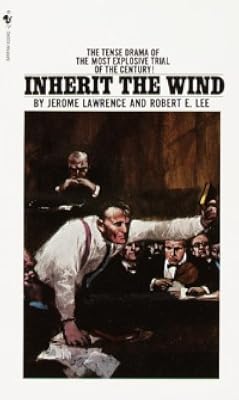
Inherit the Wind
by Jerome Lawrence (Playwright), Robert E. Lee (Playwright)
On This Page
Description
A play loosely based on the events which took place in Dayton, Tennessee during the Scopes Trial in July of 1925 focusing on the two lawyers, Bryan and Darrow.Tags
Recommendations



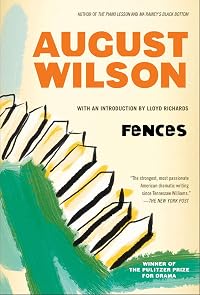
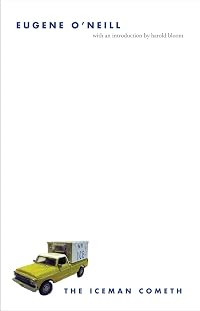
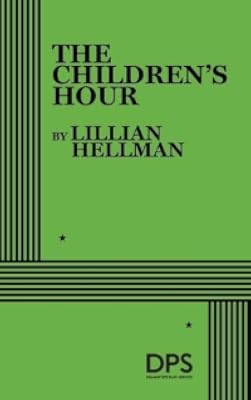
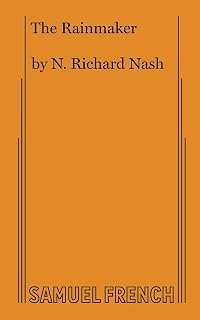





Member Recommendations
Member Reviews
A high school teacher in a small town in Tennessee is arrested and put on trial for telling students about evolution, which is illegal. Representing the state is Matthew Harrison Brady, religious Fundamentalist and celebrity orator. Representing the teacher is Henry Drummond, a famous defense attorney hired by a distant newspaper, the Baltimore Herald, to ensure an exciting trial. Denied access to any kind of expert testimony by a biased judge, Drummond calls Brady himself to the stand, exposing the hypocrisy of his Fundamentalism.
This play is based on a real trial from 1925, dramatized as a commentary on McCarthyism. As a play it’s pretty dry but is saved by the character of E. K. Hornbeck, a cocky and cynical journalist from show more Baltimore who speaks in verse while everyone else sounds folksy. As a commentary on McCarthyism I’m not sure it really works. As has been seen recently, many who profess to believe in freedom of thought and are concerned about government overreach are perfectly happy to weaponize it against others whenever possible and don’t care one bit about being hypocritical. The idea that a liberal’s rhetorical flourish could turn a modern-day populist into a laughingstock is itself laughable.
One thing I was really struck by in this reread, my first in several decades, is the fatphobia. Brady is constantly described as a large man, criticized and ridiculed for his overeating, and then he dies of it. What does that add to the story? Absolutely nothing. show less
This play is based on a real trial from 1925, dramatized as a commentary on McCarthyism. As a play it’s pretty dry but is saved by the character of E. K. Hornbeck, a cocky and cynical journalist from show more Baltimore who speaks in verse while everyone else sounds folksy. As a commentary on McCarthyism I’m not sure it really works. As has been seen recently, many who profess to believe in freedom of thought and are concerned about government overreach are perfectly happy to weaponize it against others whenever possible and don’t care one bit about being hypocritical. The idea that a liberal’s rhetorical flourish could turn a modern-day populist into a laughingstock is itself laughable.
One thing I was really struck by in this reread, my first in several decades, is the fatphobia. Brady is constantly described as a large man, criticized and ridiculed for his overeating, and then he dies of it. What does that add to the story? Absolutely nothing. show less
Inherit the Wind, a fictionalized account of the 1925 Scopes Monkey Trial in which a Tennessee high school teacher was put on trial for teaching Darwin’s theory of evolution in violation of state law, remains a compelling courtroom drama. With a winning combination of wise and powerful legal arguments and wry humor, this classic stage play by Jerome Lawrence and Robert E. Lee portrays an epic battle between science and theology. And given the Trump administration’s systematic diminution of science in its formulation of climate, energy, and environmental policies, Inherit the Wind has attained renewed relevance.
What makes _Inherit the Wind_ a memorable play is not that it skewers Christian fundamentalism - instead it goes after all of those who are too narrowminded to see an issue from another's point of view. This is demonstrated in the character of Hornbeck, a big city reporter who looks down his nose at the both the rubes of Hillsboro and the passion of Matthew Brady. This play is not a pro-evolution screed; rather, it is a testament to the importance of open-mindedness.
This volume contains the text of the play Inherit the Wind, as performed in 1955. I'm not sure how close it is to the movie version of the same name, since it's been at least a couple of decades since I've seen that. It is, of course, based on the (in)famous Scopes Monkey Trial, in which a schoolteacher was prosecuted for violating a law banning the teaching of evolution.
Although it's inspired by the real-life events, this story should not be mistaken for history (as an introductory note from the playwrights makes appropriately clear). It's probably not very realistic as a depiction of what goes on in courtrooms, either. And it's not exactly subtle about making its scientific inquiry-vs-religious dogma point. But is is a good drama, show more with some fantastic lines of dialog. And, subtle or not, the point it's making is certainly one I can get behind. I enjoyed it a lot. show less
Although it's inspired by the real-life events, this story should not be mistaken for history (as an introductory note from the playwrights makes appropriately clear). It's probably not very realistic as a depiction of what goes on in courtrooms, either. And it's not exactly subtle about making its scientific inquiry-vs-religious dogma point. But is is a good drama, show more with some fantastic lines of dialog. And, subtle or not, the point it's making is certainly one I can get behind. I enjoyed it a lot. show less
Overrated piece of political claptrap with thinly veiled characters that smears the reputation of some of the actual people it portrays. This is one of the books everyone seems to be forced to read in school in the United States. Maybe it's gone out of favor now. It's ostensibly a fictionalization of the Scopes "Monkey Trial" about the illegality of teaching evolution in Tennessee. It is really a dig at the then rampant McCarthy frenzy that was gripping the United States during the Cold War. I guess they made us read it because of its liberal cachet during the 60s and 70s. It really isn't a very good drama as literature goes, relying on its political and scientific goals to believe its bombast.
So what's so wrong with it? Its not really show more bad, its just not very good. I don't know why the writers just didn't write a play about McCarthyism or write a more factual drama about the Scope's trial. Why hide behind thinly veiled fictional names? I know why, so you can blow them up to be one dimensional cardboard cutouts and get away with it. If you had used their real names you would have had to put in the good AND the bad. All three real protagonists: William Jennings Bryan, Clarence Darrow, and H.L. Mencken, were important, and each in their own way, great men in their time. Each was also deeply flawed (aren't we all). The way the play portrays them is that Mencken and Darrow are the great good rationalist humanitarians and Bryan is an ultraconservative Bible-beating creationist bigot retard.
I'm no creationist but the Scopes Trial has always been given much more importance than it really had. The evolutionists actually lost and everyone claims it was a Pyrrhic victory for the creationists. The media jacked up its importance (it was the newspapers back then) because controversy sold not because they were the great defenders of rationality over religion.
Here's the real deal. Scopes never taught evolution to anyone - never ever. He was talked into standing trial as the defendant. Couldn't the ACLU find someone who had actually taught from the prohibited textbook? Scopes later became a Roman Catholic of his own volition. Clarence Darrow was a jury-rigging defense lawyer. He was an avowed agnostic not an atheist. He was also a champion of civil rights. H.L. Mencken, an avowed atheist, was a notorious drunk, racist, and antisemite and elitist who opposed the New Deal. He was also one of the staunchest First Amendment supporters and wasn't afraid to take on anyone in an intellectual dogfight for the rule of reason over irrationality. And William Jennings Bryan was actually a populist and pacifist who believed an inflationary monetary policy would jerk the country out of recession. He also was a Bible-based creationist. Sucks to be human, doesn't it.
Inherit the Wind is ultimately that, a lot of simplistic, not very well written, melodramatic, political hot air that tells us almost nothing about McCarthyism, Evolution, Politics, Press, or anything else. I hate red-baiters, I think creationists are crazy, and I think this isn't a very good play. show less
So what's so wrong with it? Its not really show more bad, its just not very good. I don't know why the writers just didn't write a play about McCarthyism or write a more factual drama about the Scope's trial. Why hide behind thinly veiled fictional names? I know why, so you can blow them up to be one dimensional cardboard cutouts and get away with it. If you had used their real names you would have had to put in the good AND the bad. All three real protagonists: William Jennings Bryan, Clarence Darrow, and H.L. Mencken, were important, and each in their own way, great men in their time. Each was also deeply flawed (aren't we all). The way the play portrays them is that Mencken and Darrow are the great good rationalist humanitarians and Bryan is an ultraconservative Bible-beating creationist bigot retard.
I'm no creationist but the Scopes Trial has always been given much more importance than it really had. The evolutionists actually lost and everyone claims it was a Pyrrhic victory for the creationists. The media jacked up its importance (it was the newspapers back then) because controversy sold not because they were the great defenders of rationality over religion.
Here's the real deal. Scopes never taught evolution to anyone - never ever. He was talked into standing trial as the defendant. Couldn't the ACLU find someone who had actually taught from the prohibited textbook? Scopes later became a Roman Catholic of his own volition. Clarence Darrow was a jury-rigging defense lawyer. He was an avowed agnostic not an atheist. He was also a champion of civil rights. H.L. Mencken, an avowed atheist, was a notorious drunk, racist, and antisemite and elitist who opposed the New Deal. He was also one of the staunchest First Amendment supporters and wasn't afraid to take on anyone in an intellectual dogfight for the rule of reason over irrationality. And William Jennings Bryan was actually a populist and pacifist who believed an inflationary monetary policy would jerk the country out of recession. He also was a Bible-based creationist. Sucks to be human, doesn't it.
Inherit the Wind is ultimately that, a lot of simplistic, not very well written, melodramatic, political hot air that tells us almost nothing about McCarthyism, Evolution, Politics, Press, or anything else. I hate red-baiters, I think creationists are crazy, and I think this isn't a very good play. show less
Once again, I find myself reading a book at just the right time. I just found out that today (November 24) is the anniversary of the publication of Darwin's On the Origin of the Species, which is the main cause of the trouble in the play.
This is a great read, and the way Lawrence and Lee set the timing of the play: "It might have been yesterday. I could be tomorrow," is so true, as there is a recent push by certain religious groups to teach Creationism in Science class.
But more than anything, Drummond's argument is about allowing people to think, and think for themselves, and how Truth is more important than Right; as this is exactly what the original Scopes trial, of which this is a dramatization, really boiled down to.
Also, I really show more enjoyed the character of Hornbeck, based on H.L. Mencken, although to my mind he reminded me of another newsman, Hunter S. Thompson, especially the way he treats Brady as the sycophants fawn over him.
Again, this is such a great read, and it stays relevant even today. show less
This is a great read, and the way Lawrence and Lee set the timing of the play: "It might have been yesterday. I could be tomorrow," is so true, as there is a recent push by certain religious groups to teach Creationism in Science class.
But more than anything, Drummond's argument is about allowing people to think, and think for themselves, and how Truth is more important than Right; as this is exactly what the original Scopes trial, of which this is a dramatization, really boiled down to.
Also, I really show more enjoyed the character of Hornbeck, based on H.L. Mencken, although to my mind he reminded me of another newsman, Hunter S. Thompson, especially the way he treats Brady as the sycophants fawn over him.
Again, this is such a great read, and it stays relevant even today. show less
A movie that makes my Top 100 list—reading the script of the play was almost as good.
For those who have never had the fun of watching Spencer Tracy and Fredric March thunder at each other in black and white (my apologies, but I cannot countenance any of the three TV remakes *smile*), this is a story based upon the events of Scopes v. State of Tennessee, testing whether it was legal to prohibit the teaching of evolution in schools.
The broad strokes of the story line are close enough to the original trial that many folks simply refer to the main characters as Darrow and Bryant, instead of Henry Drummond and Matthew Harrison Brady. The details and dialogue, however, are punched up for better drama. And, quite simply, once we get to the show more courtroom, there is plenty of drama. Brady stands firm on his certainty that the Word has been revealed and he has interpreted it correctly. Drummond, faced with an unambiguous law, hostile crowd, and unsympathetic judge and jury, pursues his guerilla warfare, little by little picking apart his opponent's position.
I was surprised at how much I enjoyed reading the play. You can sit and reflect about the events and arguments, or simply re-read the delightful sallies of Drummond's one-liner wit:
"If, in the beginning, there were just Cain and Abel, and Adam and Eve, where did this extra woman come from? ... You figure somebody else pulled another creation over in the next county somewhere?"
One of my favorite aspects of the play is the deliberate ambiguity as to whether Drummond is an exponent of secular or religious Humanism. Though the trial's official verdict is against evolution (as it was in reality), there is no doubt in the reader's mind which side won this battle. Had it ended with Drummond striding out the moral victor, it would still have been good. But, I think it was better that it ended with the realization that Drummond fought, not against the Bible, but for the right of a man to think.
"In a child's ability to master the multiplication table, there is more holiness than all your shouted hosannas and holy of holies." show less
For those who have never had the fun of watching Spencer Tracy and Fredric March thunder at each other in black and white (my apologies, but I cannot countenance any of the three TV remakes *smile*), this is a story based upon the events of Scopes v. State of Tennessee, testing whether it was legal to prohibit the teaching of evolution in schools.
The broad strokes of the story line are close enough to the original trial that many folks simply refer to the main characters as Darrow and Bryant, instead of Henry Drummond and Matthew Harrison Brady. The details and dialogue, however, are punched up for better drama. And, quite simply, once we get to the show more courtroom, there is plenty of drama. Brady stands firm on his certainty that the Word has been revealed and he has interpreted it correctly. Drummond, faced with an unambiguous law, hostile crowd, and unsympathetic judge and jury, pursues his guerilla warfare, little by little picking apart his opponent's position.
I was surprised at how much I enjoyed reading the play. You can sit and reflect about the events and arguments, or simply re-read the delightful sallies of Drummond's one-liner wit:
"If, in the beginning, there were just Cain and Abel, and Adam and Eve, where did this extra woman come from? ... You figure somebody else pulled another creation over in the next county somewhere?"
One of my favorite aspects of the play is the deliberate ambiguity as to whether Drummond is an exponent of secular or religious Humanism. Though the trial's official verdict is against evolution (as it was in reality), there is no doubt in the reader's mind which side won this battle. Had it ended with Drummond striding out the moral victor, it would still have been good. But, I think it was better that it ended with the realization that Drummond fought, not against the Bible, but for the right of a man to think.
"In a child's ability to master the multiplication table, there is more holiness than all your shouted hosannas and holy of holies." show less
Members
- Recently Added By
Lists

Best Historical Fiction
620 works; 257 members

Books Featured on Gilmore Girls
307 works; 21 members

Blue Pyramid 1,276 Best Books of All Time
1,248 works; 32 members
Plays I Like
230 works; 29 members

Rory Gilmore Book Club
193 works; 5 members

Next Plays / 2025
352 works; 1 member

The Complete Rory Gilmore Reading List
506 works; 5 members
My Play Collection
769 works; 3 members
Essential/Recognized Stage Plays
115 works; 4 members
1:28 p.m.'s 350 Stage Plays Challenge
94 works; 3 members

1950s
340 works; 22 members
Stage Plays/Screenplays/Dialogues/Anything Dialogue-Storytelling Related
81 works; 2 members

Plays about science and scientists
33 works; 2 members

Mensa for Kids Excellence in Reading Award Program (Grades 9-12)
116 works; 3 members
Mensa for Kids Excellence in Reading Award Program (Grades 9-12)
116 works; 5 members

American Lit for Eng 11 Research Project
368 works; 6 members

Legal Stories
84 works; 12 members

Next Plays to Watch
50 works; 1 member
Author Information

Jerome Lawrence was born July 14, 1915, in Cleveland, Ohio, into a literary family. As a teenager, Jerome Lawrence studied writing with Eugene C. Davis. After graduating from Glenville High School in Cleveland in 1933, Lawrence went on to study with Harlan Hatcher, Herman Miller, and Robert Newdick at Ohio State University. He graduated Phi Beta show more Kappa from Ohio State in 1937. Between 1937 and 1939, Lawrence was a graduate student at the Universty of California at Los Angeles. Together, Jerome Lawrence and Robert E. Lee have written famous works of American drama, including Inherit the Wind, The Night Thoreau Spent in Jail, and Auntie Mame. For their work as playwrights, they have won two Peabody Awards, the Variety Critics Poll Award, multiple Tony Award nominations, and many more awards. Both Lawrence and Lee were fundamentally shaped by their participation in World War II. Staff Sergeant Lawrence served as a consultant to the Secretary of War and later as an Army correspondent in North Africa and Italy. In addition to his service in themilitary, he worked as a journalist, reporter, and telegraph editor of small Ohio daily papers and as a continuity editor at KMPC in Beverly Hills. Before World War II, he had worked from 1939 to 1941, as a senior staff writer for CBS Radio, experience that became useful when he and Lee founded Armed Forces Radio. Lawrence's interest in drama extends back to his high school and college days, when he acted in and directed school and summer theater productions. Working together on Armed Forces Radio, Lawrence and Lee produced the official Army-Navy radio programs for D-Day, VE-Day, and VJ-Day. After the war, they created radio programs for CBS, including the series "Columbia Workshop." They also co-wrote radio plays including The Unexpected in 1951, Song of Norway in 1957, Shangri-La in 1960, a radio version of Inherit the Wind in 1965, and Lincoln the Unwilling Warrior in 1974. Inherit the Wind earned Lawrence and Lee numerous awards in the year after its production. The play won the Donaldson Award, the Outer Critics Circle Award, the Variety New York Drama Critics Poll Award, and the Critics Award for Best Foreign Play and was nominated for a Tony Award. Since its publication, the play has been translated into thirty languages. Lawrence and Lee's excellence in theatre has been rewarded by the Ohioana Award, the Lifetime Achievement Award from the American Theatre Assocation, and a number of honorary degrees. Lawrence is the recipient of honorary doctorates from Villanova, the College of Wooster, Farleigh Dickinson University, and Ohio State University. Together, Lawrence and Lee have won numerous Tony nominations, in two separate instances keys to the city of Cleveland, the Moss Hart Memorial Award for Plays of a Free World, a US State Department Medal, an Ohio State Centennial Medal, a Pegasus Award, the Ohio Governor's Award, and a Cleveland Playhouse Plaque. Lawrence was a visiting professor at Ohio State and a master playwright at New York University, Baylor University, and the Salzburg Seminar in American studies. He died in 2004 from complications from a stroke. (Bowker Author Biography) show less

Some Editions
Awards and Honors
Awards
Series
Belongs to Publisher Series
Work Relationships
Is contained in
Has the adaptation
Is a reply to
Has as a study
Common Knowledge
- Canonical title
- Inherit the Wind
- Original title
- Inherit the Wind
- Original publication date
- 1955
- People/Characters
- Matthew Harrison Brady (corresponds to William Jennings Bryan); Henry Drummond (corresponds to Clarence Darrow); E. K. Hornbeck (corresponds to H. L. Mencken); Bertram Cates; Rachel Brown; Reverend Jeremiah Brown (show all 11); The Judge; Howard Blair; Melinda Loomis; Tom Davenport; The Mayor
- Important places
- Hillsboro (fictional place); Southeastern USA
- Important events
- Scopes Trial (1925-07)
- Related movies
- Inherit the Wind (1960 | IMDb); Hallmark Hall of Fame: Inherit the Wind (1965 | TV | IMDb); Inherit the Wind (1988 | TV | IMDb); Inherit the Wind (1999 | TV | IMDb)
- Epigraph
- He that troubleth his own house
Shall inherit the wind.
Proverbs 11:29 - First words
- In and around the Hillsboro Courthouse.
- Last words
- (Click to show. Warning: May contain spoilers.)Slowly, he climbs to the street level and crosses the empty square.
- Original language
- English US
- Canonical DDC/MDS
- 812.54
- Canonical LCC
- PS3523.A934
Classifications
Statistics
- Members
- 2,643
- Popularity
- 7,077
- Reviews
- 34
- Rating
- (3.96)
- Languages
- English, Greek
- Media
- Paper, Ebook
- ISBNs
- 26
- UPCs
- 1
- ASINs
- 38