
On This Page
Description
Winston Churchill recounts the end of WWII and its aftermath, in the conclusion of his majestic six-volume history. In Triumph and Tragedy, British prime minister Winston Churchill provides in dramatic detail the endgame of the war and the uneasy meetings between himself, Stalin, and Truman to discuss plans for rebuilding Europe in the aftermath of devastation. Beginning with the invasion of Normandy, the heroic landing of the Allied armies and the most remarkable amphibious operation in show more military history, Churchill watches as the uneasy coalition that had knit itself together begins to fray at Potsdam, foreshadowing the birth of the Cold War. Triumph and Tragedy is part of the epic six-volume account of World War II told from the viewpoint of a man who led in the fight against tyranny, and enriched with extensive primary sources including memos, letters, orders, speeches, and telegrams, day-by-day accounts of reactions as the drama intensifies. Throughout these volumes, we listen as strategies and counterstrategies unfold in response to Hitler's conquest of Europe, planned invasion of England, and assault on Russia, in a mesmerizing account of the crucial decisions made as the fate of the world hangs in the balance. show lessTags
Recommendations














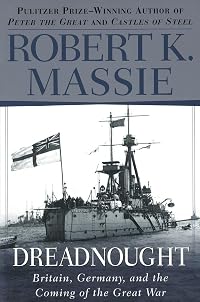


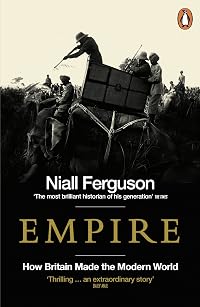
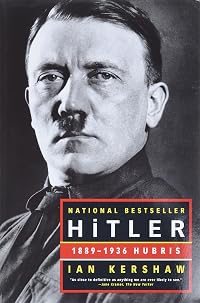
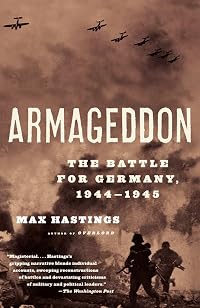


Member Recommendations

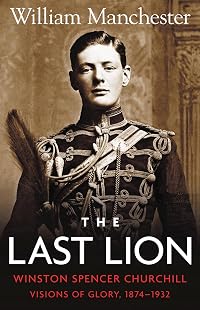
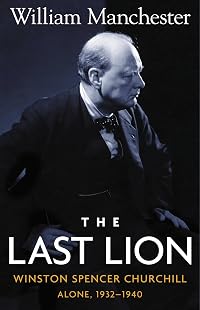
Scotland This book is a good narrative of what happened to Churchill, the man, after the war years. As well, the creation and process of Triumph and Tragedy is mentioned multiple times throughout this book.
Member Reviews
The sixth and final volume of Churchill’s memoirs of the Second World War opens with the D-Day assault on Normandy and closes with the collapse of Nazi Germany, the opening moves of the Cold War, and the electoral defeat of Churchill’s Conservative Party. Churchill’s tenure as Prime Minister ended two weeks before the atomic bombings of Japan, and this is where the series ends – before the final defeat of Japan. This would be a very strange place to end a history of a war, but it makes sense given Churchill’s purpose: to record his memories and craft his place in history as British Prime Minister during the war. His memoirs end at the point his leadership of the nation ended.
Churchill’s frustration with the conclusion of the show more war is palpable. By the time Hitler died and the Germans surrendered, the American military dominated the war effort, giving American aims and ideology a dominant role in the evolving collapse of relations with Stalin’s Soviet Union. As the Germans were crushed ever deeper into their homeland within the Allied vice, Churchill portrays himself as waging a desperate but futile battle to awaken the Americans to the Communist threat. He repeatedly mourns the diversion of force from the Italian campaign to the ancillary invasion of southern France, and effort which doomed his hopes of a quick victory in northern Italy that would’ve allowed the western allies to swing north and east into Central Europe, forestalling a Stalinist entrenchment in the heart of the continent.
It’s hard to fully accept Churchill’s unsubtle blaming of America given his agreement with Stalin to divide eastern Europe into spheres of influence. Granted, there wasn’t much else the West could’ve done. The Russians were militarily dominant in Romania and Bulgaria, and extracting Stalin’s promise not to meddle in Greece – a promise which Stalin surprisingly kept – was probably the best one could hope for. Still, American generals and politicians no doubt had their own constraints of realpolitik, and I suspect Churchill could’ve been more fair to the Americans had he not been so concerned to paint himself in the best possible light.
Still, this is an invaluable insight into the mind of one of history’s greatest leaders. While acknowledging his imperialist and colonialist mindset which is no longer in fashion today, a mindset tinged with more than a hint of racial prejudice and British chauvinism, there should be no doubt that he was the right man for his time and place. He recognized Hitler’s threat far sooner than most, held his nation to the sticking point when she stood virtually alone against the dark master of Europe, and helped forge one of the greatest multicultural alliances in human history to defeat a monster bent on global tyranny and worldwide genocide. Winston Churchill deserves his place in the sun, and this final volume is a fitting conclusion to the memoirs of a remarkable man who, when his country most needed him, rose to the challenge with nothing to offer but blood, toil, tears, and sweat. show less
Churchill’s frustration with the conclusion of the show more war is palpable. By the time Hitler died and the Germans surrendered, the American military dominated the war effort, giving American aims and ideology a dominant role in the evolving collapse of relations with Stalin’s Soviet Union. As the Germans were crushed ever deeper into their homeland within the Allied vice, Churchill portrays himself as waging a desperate but futile battle to awaken the Americans to the Communist threat. He repeatedly mourns the diversion of force from the Italian campaign to the ancillary invasion of southern France, and effort which doomed his hopes of a quick victory in northern Italy that would’ve allowed the western allies to swing north and east into Central Europe, forestalling a Stalinist entrenchment in the heart of the continent.
It’s hard to fully accept Churchill’s unsubtle blaming of America given his agreement with Stalin to divide eastern Europe into spheres of influence. Granted, there wasn’t much else the West could’ve done. The Russians were militarily dominant in Romania and Bulgaria, and extracting Stalin’s promise not to meddle in Greece – a promise which Stalin surprisingly kept – was probably the best one could hope for. Still, American generals and politicians no doubt had their own constraints of realpolitik, and I suspect Churchill could’ve been more fair to the Americans had he not been so concerned to paint himself in the best possible light.
Still, this is an invaluable insight into the mind of one of history’s greatest leaders. While acknowledging his imperialist and colonialist mindset which is no longer in fashion today, a mindset tinged with more than a hint of racial prejudice and British chauvinism, there should be no doubt that he was the right man for his time and place. He recognized Hitler’s threat far sooner than most, held his nation to the sticking point when she stood virtually alone against the dark master of Europe, and helped forge one of the greatest multicultural alliances in human history to defeat a monster bent on global tyranny and worldwide genocide. Winston Churchill deserves his place in the sun, and this final volume is a fitting conclusion to the memoirs of a remarkable man who, when his country most needed him, rose to the challenge with nothing to offer but blood, toil, tears, and sweat. show less
"In War: Resolution, In Defeat: Defiance, In Victory: Magnanimity, In Peace: Goodwill" - Winston S. Churchill
This is the final volume of Churchill's six-volume work. The opening was for me the least interesting because it dealt with places and a period of the war that I am least familiar with so it took a lot of concentration and a few google searches for background information. Then, thanks to Churchill's outstanding writing, it became completely engrossing. He has a way of describing multiple complex events that are happening simultaneously in a straightforward manner that makes it easy to comprehend. And he includes some insightful reflections that did not often reach the news or common knowledge at the time or since. It appeared show more that discussions for peace by the allies took more effort and diplomacy than fighting the war did. If you find the subject interesting, this is a terrific work that I'm glad I invested the time spent reading all six volumes. show less
This is the final volume of Churchill's six-volume work. The opening was for me the least interesting because it dealt with places and a period of the war that I am least familiar with so it took a lot of concentration and a few google searches for background information. Then, thanks to Churchill's outstanding writing, it became completely engrossing. He has a way of describing multiple complex events that are happening simultaneously in a straightforward manner that makes it easy to comprehend. And he includes some insightful reflections that did not often reach the news or common knowledge at the time or since. It appeared show more that discussions for peace by the allies took more effort and diplomacy than fighting the war did. If you find the subject interesting, this is a terrific work that I'm glad I invested the time spent reading all six volumes. show less
Churchill describes the final phase of World War II in his usual diligent manner, sparing neither himself nor his allies - this becomes especially clear in his report about the decision to use atomic bombs in the war against Japan. At the time of writing he was still convinced of having made the correct decision together with the U.S. - one has to wonder, whether he still thought so later in his life.
The whole book, which one would think to be a story of victory, success and relief is overshadowed from the start by the failure of the victorious powers to not just win the war but establish a mutually beneficial peace.
In hindsight it is clear that Churchill's fears and worries about the world order after 1945 were well justified. Europe show more was to be divided by the infamous 'Iron Curtain' and the Cold War would turn former allies into bitter enemies.
The final volume in this series is an excellent read and the whole series should not be missing from your book shelves. show less
The whole book, which one would think to be a story of victory, success and relief is overshadowed from the start by the failure of the victorious powers to not just win the war but establish a mutually beneficial peace.
In hindsight it is clear that Churchill's fears and worries about the world order after 1945 were well justified. Europe show more was to be divided by the infamous 'Iron Curtain' and the Cold War would turn former allies into bitter enemies.
The final volume in this series is an excellent read and the whole series should not be missing from your book shelves. show less
This is the last of Churchill's volumes on WWII. This one had a different tone than the other ones. Perhaps because the issues in this volume had not been resolved at the time of writing, or perhaps because Churchill himself was disappointed at how things ultimately turned out (apart from winning the war that is). The theme of this volume is telling:
How the great democracies triumphed, and so were able to resume the follies which had so nearly cost them their life.
Not bitter about being kicked out of office as soon as the war was over, is he?
Because this book opened with D-Day, Hitler was soon reduced to a paper villain, unimportant because his fall was inevitable. The real evil of the time was Stalin. Even if you add all the show more fatalities of WWII at Hitler's feet, Stalin still killed more people. He was shrewd, cunning and a virtuoso at public appearances. He could lie to your face and smile. He openly called for the underground of Warsaw to rebel against the Germans, then left his armies 10 miles away until they had all been slaughtered to enter the city. Though it trivializes the war a bit, the image that keeps coming to mind is Hitler's Count Dooku to Stalin's Darth Sidious.
The present ineffectual design of the United Nations is the result of maneuvering to get Russia to join it. Field Marshall Smuts, who was tasked with finding a compromise that Russia would accept in forming the UN, optimistically wrote to Churchill,
The principle of unanimity will at the worse only have the effect of a veto, or stopping action where it may be wise, or even necessary. Its effect will be negative; it will retard action. But it will also render it impossible for Russia to embark on courses not approved of by the USA and the United Kingdom.
Russia soon proved that it would do as it liked and operated through its proxy states, even as early as before the Germans capitulated. Marshall Tito nearly got into open combat with Allied soldiers over the Italian port of Trieste, even though they were supposedly on the same side. When Churchill asked Stalin to reign in his underling, Stalin denied he had any influence over Tito at all.
It didn't help that France was actively empire-building and resisting all calls to free Syria and other held possessions and Greece was close to anarchy, with only British troops able to keep the peace. I think Churchill felt the war had only been paused and forsaw a rapid decline into anarchy with Russia a vulture, eager to devour the spoils.
Though the death of Roosevelt and Churchill's loss of political power enabled Stalin to set up puppet states all through eastern Europe, the Iron Curtain (Churchill coined the phrase) did not result in another world war. I think Churchill would have been surprised that the ideological conflict between democracy and communism never erupted into more than regional conflicts.
Through all of his distrust of Stalin, he was still as swayed by the dictator's personal magnetism as any. At the meeting where Truman told Stalin of the atomic bomb, Churchill reports, "I was certain that at that date Stalin had no special knowledge of the vast process of research upon which the united States and Britain had been engaged for so long." We know now that Stalin knew all about it. He had a spy at Los Alamos for years.
It is intriguing to think what would have happened if during the post-war negotiations, the Conservative party had stayed in office. The animosity between the US and USSR that developed would have been shared more equally by Great Britain it is almost certain. show less
How the great democracies triumphed, and so were able to resume the follies which had so nearly cost them their life.
Not bitter about being kicked out of office as soon as the war was over, is he?
Because this book opened with D-Day, Hitler was soon reduced to a paper villain, unimportant because his fall was inevitable. The real evil of the time was Stalin. Even if you add all the show more fatalities of WWII at Hitler's feet, Stalin still killed more people. He was shrewd, cunning and a virtuoso at public appearances. He could lie to your face and smile. He openly called for the underground of Warsaw to rebel against the Germans, then left his armies 10 miles away until they had all been slaughtered to enter the city. Though it trivializes the war a bit, the image that keeps coming to mind is Hitler's Count Dooku to Stalin's Darth Sidious.
The present ineffectual design of the United Nations is the result of maneuvering to get Russia to join it. Field Marshall Smuts, who was tasked with finding a compromise that Russia would accept in forming the UN, optimistically wrote to Churchill,
The principle of unanimity will at the worse only have the effect of a veto, or stopping action where it may be wise, or even necessary. Its effect will be negative; it will retard action. But it will also render it impossible for Russia to embark on courses not approved of by the USA and the United Kingdom.
Russia soon proved that it would do as it liked and operated through its proxy states, even as early as before the Germans capitulated. Marshall Tito nearly got into open combat with Allied soldiers over the Italian port of Trieste, even though they were supposedly on the same side. When Churchill asked Stalin to reign in his underling, Stalin denied he had any influence over Tito at all.
It didn't help that France was actively empire-building and resisting all calls to free Syria and other held possessions and Greece was close to anarchy, with only British troops able to keep the peace. I think Churchill felt the war had only been paused and forsaw a rapid decline into anarchy with Russia a vulture, eager to devour the spoils.
Though the death of Roosevelt and Churchill's loss of political power enabled Stalin to set up puppet states all through eastern Europe, the Iron Curtain (Churchill coined the phrase) did not result in another world war. I think Churchill would have been surprised that the ideological conflict between democracy and communism never erupted into more than regional conflicts.
Through all of his distrust of Stalin, he was still as swayed by the dictator's personal magnetism as any. At the meeting where Truman told Stalin of the atomic bomb, Churchill reports, "I was certain that at that date Stalin had no special knowledge of the vast process of research upon which the united States and Britain had been engaged for so long." We know now that Stalin knew all about it. He had a spy at Los Alamos for years.
It is intriguing to think what would have happened if during the post-war negotiations, the Conservative party had stayed in office. The animosity between the US and USSR that developed would have been shared more equally by Great Britain it is almost certain. show less
The closing book of Churchill's magnificent series on World War II, this book is masterful in coloring the nuances of the final year of the war. Sprinkled throughout the book are numerous letters between Roosevelt, Churchill, Stalin and later Truman - the narrative weaves between these letters filling in gaps and explaining context.
The book ends somewhat abruptly, as Churchill is unexpectedly voted out of office, and the tone of the book changes somewhat as if Churchill is uninterested in events if he isn't personally involved in them.
Regardless, the impending dread of the Iron curtain and Britain's powerlessness to stop the Iron curtain looms over this book. The death of Roosevelt, Stalin's deceit, and Britain's impotence all fatefully show more lead down one path - the 50 year Cold War. show less
The book ends somewhat abruptly, as Churchill is unexpectedly voted out of office, and the tone of the book changes somewhat as if Churchill is uninterested in events if he isn't personally involved in them.
Regardless, the impending dread of the Iron curtain and Britain's powerlessness to stop the Iron curtain looms over this book. The death of Roosevelt, Stalin's deceit, and Britain's impotence all fatefully show more lead down one path - the 50 year Cold War. show less
The end of WWII, inexorable and at the same time of a piece with what came before; Churchill is deep in the details of figuring out what should happen to Poland as he invents the phrase “the Iron Curtain,” which appears several times here. Churchill is as always bloody-minded; of one particular ploy, he says, “The carriers were short of both planes and pilots, but no matter. They were only bait, and bait is made to be eaten.”
A massive Memoir, somewhat disguised as a history of WWII! But a necessary part of the Canon. WSC is a good writer, with a fine style that does veer into the oratorical. There's no one better positioned to tell of the British interests in the War. It goes quickly for a big book. It is written without acknowledgement of the Enigma intelligence. It seems I read it thrice!
Members
- Recently Added By
Lists

al.vick-parents books
301 works; 1 member

Wishlist
99 works; 1 member
Author Information

561+ Works 34,715 Members
Sir Winston S. Churchill (1874-1965) was Prime Minister of the United Kingdom on two occasions, from 1940-1945 and again from 1951 to 1955. Celebrated as one of the greatest leaders of the twentieth century, he was also a gifted orator, statesman and historian. The author of more than 40 books, he was awarded the Nobel Prize for Literature in 1953 show more and in 1963 was made an honorary citizen of the United States. show less
Some Editions
Awards and Honors
Distinctions
Series

Belongs to Publisher Series
Work Relationships
Common Knowledge
- Canonical title
- Triumph and Tragedy
- Original publication date
- 1953-11-30
- People/Characters
- Winston Churchill; Harold Alexander, 1st Earl Alexander of Tunis; Clement Attlee; Max Aitken, Lord Beaverbrook; Omar N. Bradley; Alan Brooke, 1st Viscount Alanbrooke (show all 32); Chiang Kai-shek; Mark W. Clark; Duff Cooper; Stafford Cripps; Anthony Eden; Dwight D. Eisenhower; Charles de Gaulle; George VI, King of the United Kingdom; Averell Harriman; Adolf Hitler; Harry Hopkins; Hastings Ismay, 1st Baron Ismay; Ernest J. King; Douglas MacArthur; George C. Marshall; Vyacheslav Molotov; Bernard Law Montgomery; Louis Mountbatten Earl Mountbatten of Burma; Dudley Pound; George S. Patton; Erwin Rommel; Franklin Delano Roosevelt; General Bedell Smith; Joseph Stalin; Joseph Stilwell; Harry S. Truman
- Related movies
- Winston Churchill: The Valiant Years (1960 | IMDb)
- Epigraph
- MORAL OF THE WORK
In War: Resolution
In Defeat: Defiance
In Victory: Magnanimity
In Peace: Good Will
THEME OF THE VOLUME
How the Great Democracies
Triumphed,
and so
Were able to Resume... (show all)
the Follies
Which Had so Nearly
Cost them their
Life - First words
- Our long months of preparations and planning for the greatest amphibious operation in history ended on D-Day, June 6,1944.
- Last words
- (Click to show. Warning: May contain spoilers.)It only remains for me to express to the British people, for whom I have acted in these perilous years, my profound gratitude for the unflinching, unswerving support which they have given me during my task, and for the many expressions of kindness which they have shown towards their servant.
Classifications
Statistics
- Members
- 1,849
- Popularity
- 11,716
- Reviews
- 23
- Rating
- (4.25)
- Languages
- 6 — Czech, English, German, Italian, Norwegian (Bokmål), Swedish
- Media
- Paper, Audiobook, Ebook
- ISBNs
- 31
- UPCs
- 3
- ASINs
- 57